Leggy Growth on African Violet: Causes, Checks & Fixes
Quick answer
Leggy African violets stretch toward weak light-long leaf stems, a leaning rosette, and a bare neck below the crown. First fix: move to brighter indirect light or add a grow light before repotting to bury the neck.
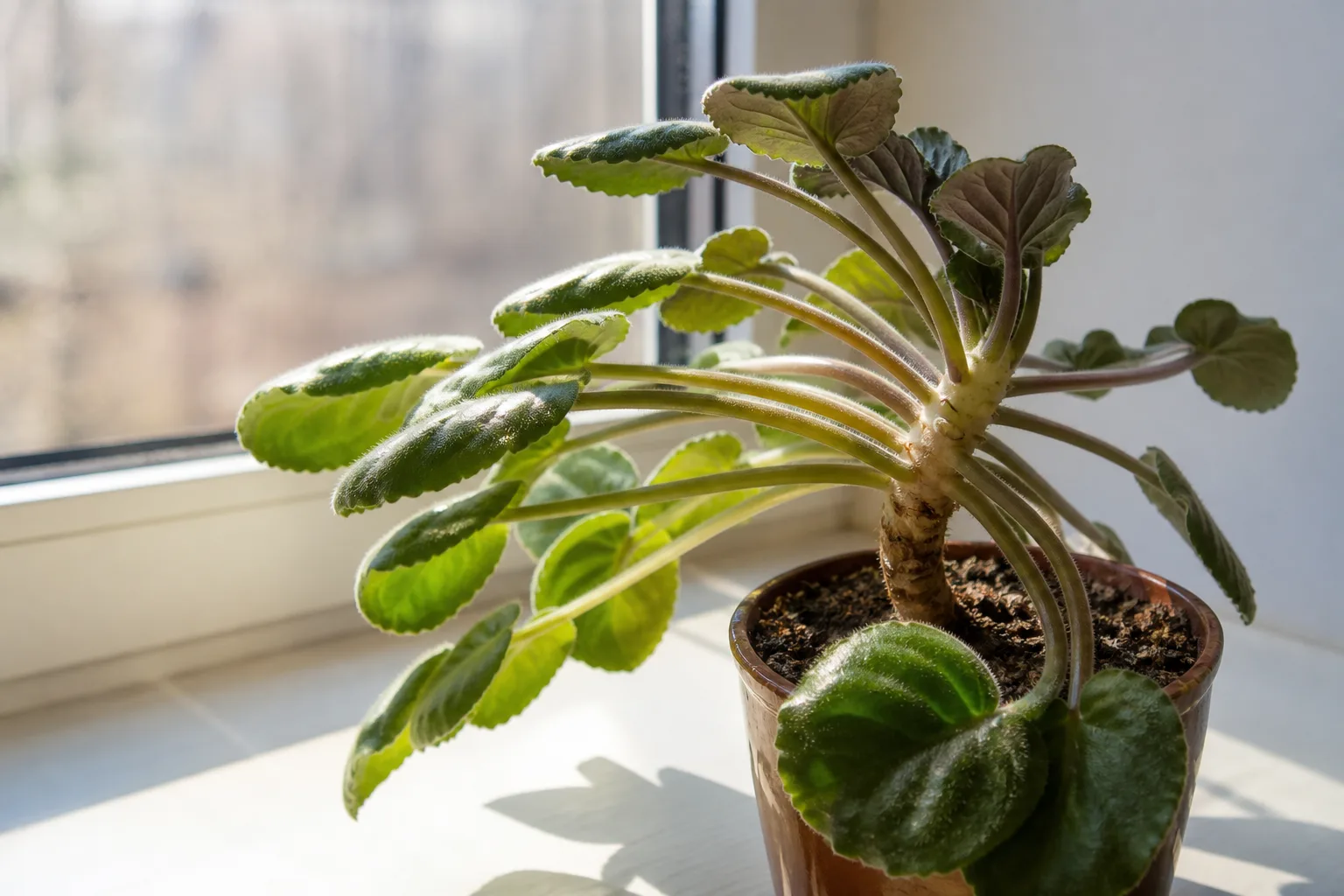
Leggy Growth on African Violet: Causes, Checks & Fixes
This guide covers leggy growth on African Violet. See also the general Leggy Growth guide, watering, and light pages for this plant.
Leggy Growth on African Violet: Causes, Checks & Fixes
Quick answer
Leggy growth on African Violet means the rosette is stretching for light-leaf petioles lengthen, new leaves look smaller, the plant leans toward the brightest side, and a bare neck may appear as lower leaves age off. Bloom count usually drops because African Violet overview needs steady bright indirect light to set buds.
First fix: improve light before anything else. Move the pot to a brighter location or add artificial light-a north, northeast, or east window, or fluorescent or LED grow lights above the crown. Only after light is adequate for two to three weeks should you repot deeper to bury an exposed neck.
What leggy growth looks like on African Violet
Healthy African violets form a flat, horizontal wheel of fuzzy leaves with the crown sitting near the pot rim. Leggy plants break that pattern:
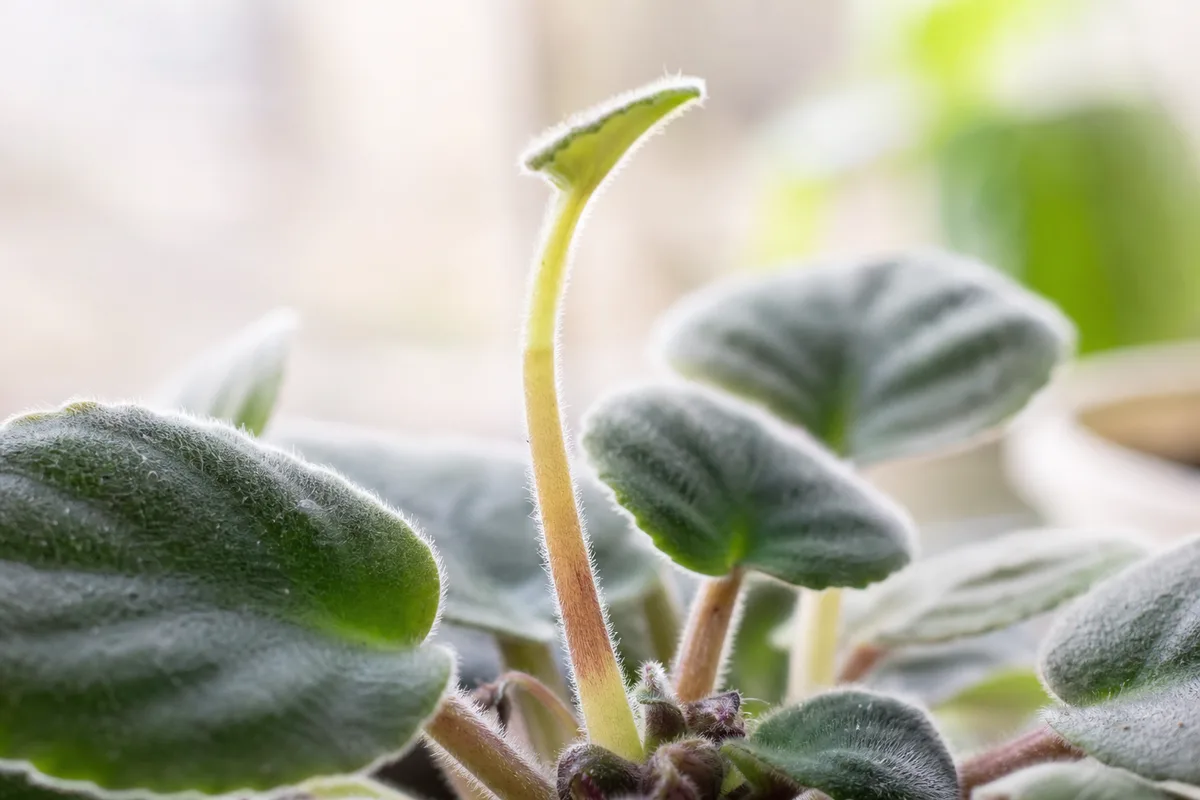
Unusually long leaf petioles stretching toward the window and a visible bare neck below the crown - classic etiolation from insufficient light.
- Long petioles - Leaf stems are noticeably longer than on older, compact growth at the base of the rosette.
- Upward reach - Leaves tilt or lean toward the window instead of lying in a flat spiral.
- Smaller top leaves - New foliage at the crown is narrower or lighter than mature leaves from when the plant had better light.
- Bare neck - A pale brown stem section sits between the soil line and the lowest living leaves as older bottom leaves die and drop.
- Few or no flowers - Buds fail to open or never form while the plant puts energy into stem elongation.
Compare side by side with a compact specimen: round velvety leaves, crown low in the pot, steady blooms when feed and moisture are balanced. Legginess rarely comes with mushy crowns or spotted leaves-that pattern suggests watering or disease problems instead.
Why African Violet gets leggy growth
African violets evolved in bright, filtered cloud-forest light. Indoors they behave like long-day bloomers: when intensity or duration falls short, the plant extends petioles to capture more photons-classic etiolation, not vigorous healthy growth.
Insufficient light is the dominant cause. Thin, dark, blue-green leaves with long petioles are a textbook low-light signal on this species. A pot on a distant shelf, a south window blocked by sheer curtains all day, or winter sun at a low angle often delivers less usable light than the rosette needs.
Cool room temperatures stack onto weak light. African violets grow best with daytime temps in the 70s °F and nights around 65–70 °F. Cooler rooms slow metabolism; combined with dim light, stretching worsens and flowering stops.
Uneven exposure produces one-sided legginess. Leaves on the shaded side stay shorter while the bright side stretches, twisting the whole rosette.
Natural neck formation is separate but looks worse on a leggy plant. As lower leaves age off, a stem elevates the crown-a normal part of rosette growth. Low light accelerates both narrow new leaves and visible neck length, so the plant looks tall and sparse instead of tight.
Over-fertilization does not fix legginess and can mimic other problems. Excess feed drives tight plant centers and rusty-colored leaves, not the open, reaching rosette of true etiolation.
How to confirm the cause
Work through checks in order so you treat light-not rot, pests, or feed gaps.
- Window audit - Note exposure (north, east, and northeast exposures work well when the plant sits close) and measure distance from glass. More than 12–18 inches back on a dim exposure usually means insufficient intensity.
- Lean test - If the rosette points one direction and petioles on that side are longest, uneven light is confirmed.
- Grow-light check - If you already use supplemental lights, verify height (often 4–12 inches above leaves depending on fixture) and timer length. Fewer than about 12 hours daily may still leave the plant wanting more.
- Temperature - A thermometer at pot level: nights below about 65 °F with dim light strongly supports a light-plus-cool diagnosis.
- Rule out over-feed - Tight, crowded center leaves with rusty margins point to fertilizer excess, not etiolation.
- Rule out root stress - Severely root-bound plants with mix drying in a day may look pale and sparse, but petioles are not typically as elongated as true low-light stretch unless light is also poor.
Confirmed diagnosis: long petioles, upward or one-sided lean, reduced blooms, and adequate moisture-with no pest or rot signs. Suspected if only winter stretch appeared; still increase light rather than waiting for spring alone.
First fix for African Violet
Move the plant to brighter indirect light or add artificial light-today. That single step addresses the cause. Do not repot, fertilize, or prune heavily on day one.
Practical targets:
- Place the pot within about 12 inches of a bright window-north, northeast, or east-or the brightest indirect spot you can offer without hot midday sun on the leaves.
- Or suspend fluorescent or LED grow lights above the crown, timed for roughly 12 to 16 hours daily depending on natural light already in the room.
- Rotate the pot a quarter turn weekly so the rosette fills evenly once light improves.
- If the room runs cool, raise ambient temperature toward the 70s °F during the day-light correction matters most, but warmth supports compact new growth.
Give the plant two to three weeks under improved light before African Violet repotting guide to bury a neck. Fixing the neck first without light invites repeat stretching on a taller buried stem.
Step-by-step recovery
After light is stable:
- Wait for new crown leaves - The first fresh leaves after the move should sit on shorter petioles; that tells you light is working.
- Remove spent blooms and dead leaves with tweezers to keep the crown tidy-do not pull living tissue.
- Repot to bury the neck when the bare stem is unsightly or toppling risk appears. Use fresh African violet mix, set the plant deeper in the pot burying the stem up to the lowest set of leaves, and keep the crown itself at soil level-not buried.
- Water from the bottom after repotting with room-temperature water; avoid wetting fuzzy leaves.
- Resume mild fertilizer only after the plant shows stable new growth-quarter-strength violet feed on a regular schedule, not as a legginess cure.
For severe necks, experienced growers sometimes use a decapitation repot-removing the top rosette, scraping the neck, and replanting deep. That is optional for advanced cases; burying the neck during a standard repot fixes most home plants once light is right.
Recovery timeline
Weeks 1–3: New leaves should emerge with shorter petioles if light is adequate; the plant may still lean until you rotate consistently.
Weeks 4–8: Rosette looks fuller from the top; blooms may return once day length and intensity stay steady-often six to eight weeks after light correction.
Neck repot: Gives an immediate cosmetic improvement the same day you bury the stem; full rosette density still requires a full growing cycle of compact new leaves.
Old stretched leaves: Permanent. Judge success by new growth shape, not older petioles shrinking.
Worsening signs: Continued elongation after light increase means intensity is still too low, or the plant sits in direct hot sun and stress has stalled growth. Soft crown tissue on wet soil is crown rot-dry down and repot if needed, not more light alone.
Lookalike symptoms
- No flowers only - Can mean low light, but also improper feed or temperature; leggy petioles confirm etiolation.
- Pale bleached leaves - Too much direct light, opposite of legginess; move away from harsh sun.
- Crowded rusty center - Over-fertilization, not stretch toward a window.
- Wilting on wet mix - overwatering on African Violet or root rot on African Violet; crown may collapse while leaves are not especially elongated.
- Cyclamen mite damage - Stunted, brittle, twisted new growth in the center; petioles may be short, not reaching for light.
What not to do
Do not treat legginess with extra fertilizer-that risks tight centers and leaf burn, not a compact rosette. Do not jump from a dim corner to harsh south-window sun; bleached leaves mean too much light, not a fix. Do not repot deeper before correcting light, or new leaves will stretch again on a taller buried neck. Do not mist leaves to “help” a struggling plant; wet foliage causes spots on African violets. Do not assume rapid stem length means healthy vigor-on this species it usually means the opposite.
How to prevent leggy growth next time
- Keep violets in bright, cool locations with consistent supplemental light in short winter days.
- Run grow lights on a timer so duration stays steady-roughly 14 to 16 hours of light daily combined with window light as needed for flowering.
- Rotate weekly for symmetrical rosettes.
- Repot when the neck exceeds about an inch-slightly root-bound plants bloom well, but a towering stem topples easily.
- Maintain even bottom watering and stable room temps in the comfort range this plant shares with people.
Conclusion
On African Violet, leggy growth is almost always a light problem wearing a structural disguise. Confirm long petioles, lean, and lost blooms; brighten exposure first, warm the room if needed, then bury the neck when repotting. Old stretch does not reverse, but new leaves tell you within weeks whether you solved it. A flat, fuzzy rosette at the rim of the pot-not a tower on a bare stem-is the goal.
When to use this page vs other African Violet guides
- African Violet watering guide - Use for routine moisture checks before assuming leggy growth is the main issue.
- African Violet problems hub - Browse all 52 common issues on this species.
- Leaf Drop on African Violet - Different entry point when symptoms overlap with leggy growth.
- Yellow Leaves on African Violet - Different entry point when symptoms overlap with leggy growth.