Root Bound on African Violet: Causes, Checks & Fixes
Quick answer
African violets often bloom best when roots are slightly snug-not loose in an oversized pot-but a solid root mat, stalled flowers, or a long bare neck mean it is time to refresh mix or upsize one step. First step: unpot after light watering and decide whether you need same-pot mix refresh only, one-size-up repot, or a neck reset-not an automatic jump to a larger container.
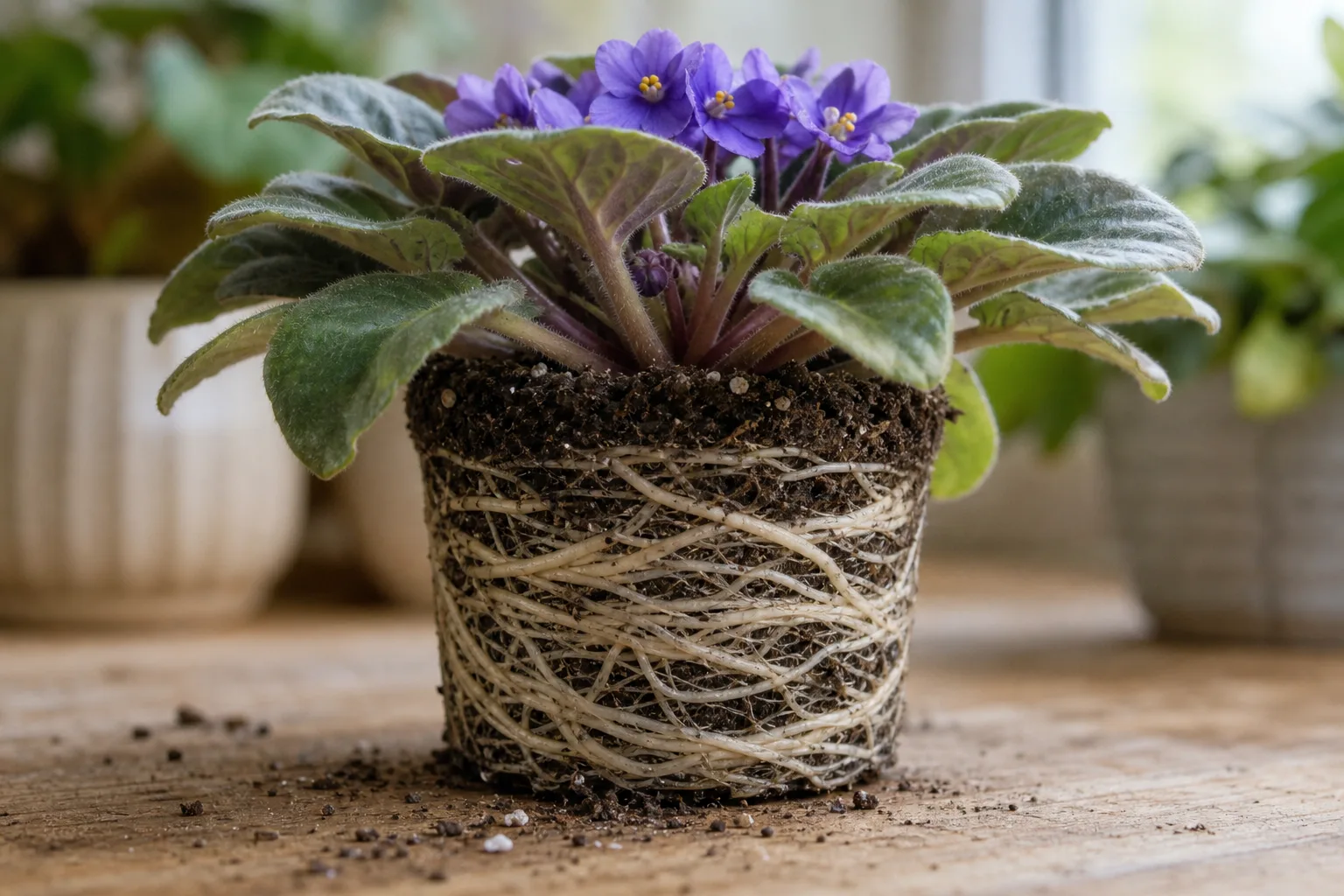
Root Bound on African Violet: Causes, Checks & Fixes
This guide covers root bound on African Violet. See also the general Root Bound guide, watering, and light pages for this plant.
Root Bound on African Violet: Causes, Checks & Fixes
Quick answer
Root bound on African violet is not always a problem. Saintpaulia hybrids often flower best when roots fill the pot without drowning in excess mix-a mild root squeeze can trigger bloom. Crisis starts when a solid root mat, stalled flowers, water that will not soak in, or a long bare neck shows the container has outlived its job.
First step: unpot after light watering and choose one path-same-pot mix refresh, one-size-up repot, or neck reset-not a jump to a much larger pot.
| What you see | Likely action |
|---|---|
| Still blooming, firm crown, mix drains evenly | Leave snug; schedule annual refresh |
| Stalled bloom + circling roots + stale mix | Same-pot refresh or one size up |
| Long neck, wobbly crown, leaf span wider than pot | Repot with neck management-see repotting guide |
| Wet wilt, soft crown, sour smell | Not a sizing issue-see root rot or crown rot |
For hands-on technique after you confirm binding, continue to the African violet repotting guide. For culture that keeps mix airy between refreshes, see watering and the African violet overview.
Why African Violet gets root bound - and why snug roots can help bloom
African violets carry fine, shallow roots that colonize a small pot quickly. In nature they grow in mossy rock crevices-not deep soil-so indoor culture keeps pots smaller than the leaf rosette. AVSA growers note that confining roots in a modest pot provides a mild stress that can trigger flowering, and WSU Extension summarizes that African violets bloom best when somewhat root bound.
That bloom benefit has limits. Potting mix breaks down chemically and physically over months-especially in small containers-so even a plant that still fits its pot needs fresh airy mix. AVSA recommends repotting violets in pots under 3 inches every 2–3 months and those in 4-inch or larger pots every 6–12 months to reset the root environment. University of Minnesota Extension likewise advises repotting in fresh mix once a year.
When roots circle heavily, the mix compacts, air spaces collapse, and water moves unevenly-too dry at the center or soggy at the bottom. UGA Extension notes that maintaining correct soil moisture becomes harder as plants outgrow their pots, and crowded plants should move to the next larger size when the root mass no longer fits.
On a violet rosette this means: a 4-inch standard cultivar still covered in buds may be happily snug; the same plant with no flowers for two months, roots visible at the drainage hole, and mix that smells flat or stays wet on top is past the helpful stage of binding.
What root bound looks like on African Violet
Early signs vs. a healthy snug plant
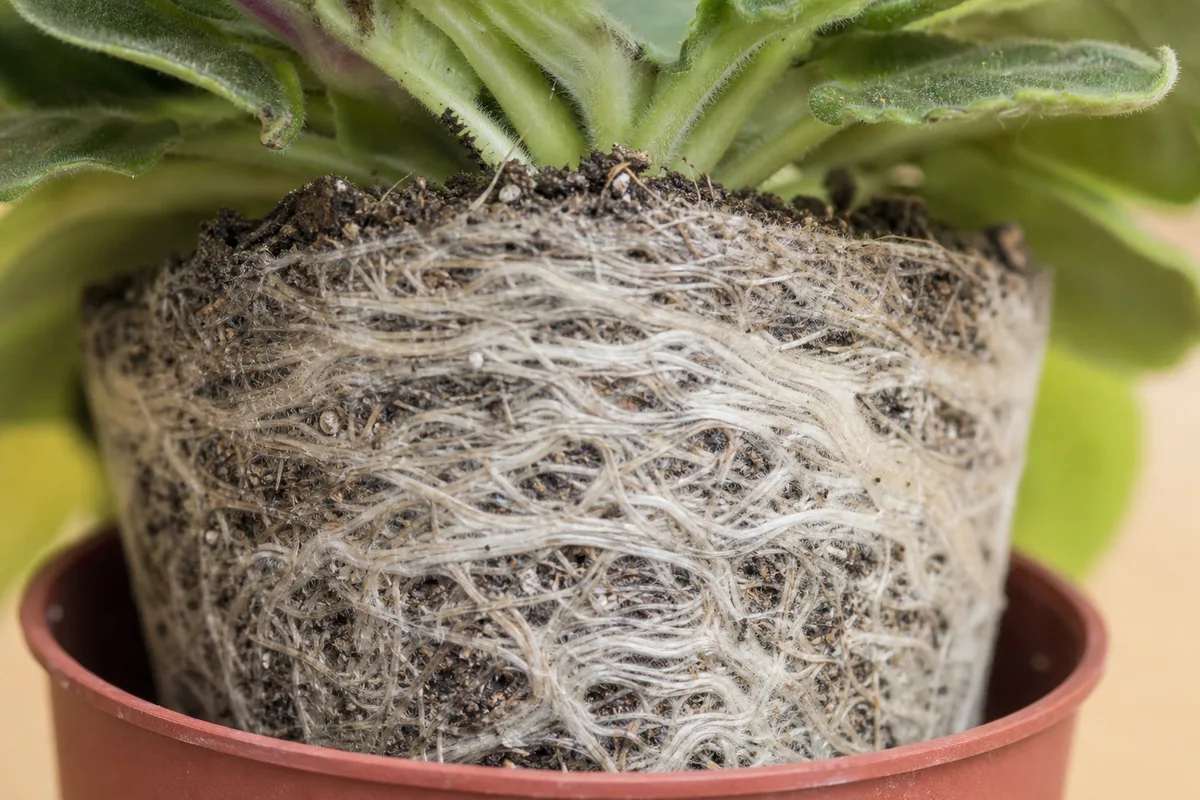
Root Bound symptoms on African Violet - compare with healthy tissue on the same plant.
Healthy snug (often fine to leave):
- Active center leaf growth and periodic bud stalks
- Leaves span the pot rim evenly without constant wilting
- Mix accepts water at the surface and drains within 20–30 minutes
- Firm crown; pot diameter roughly one-third the rosette width
Severely root bound (time to act):
- Stalled or absent flowering for six or more weeks despite adequate light and steady feeding
- Roots circling the soil surface or escaping drainage holes
- Wobbly plant in a pot clearly smaller than the leaf span
- Water pools on top and runs through the sides without moistening the center
- Long bare stem (“neck”) below the lowest leaves as older foliage ages off
Compare with a blooming snug plant: the rosette may look tight in the pot, but new center leaves keep emerging and peduncles still form. Binding stress shows up when growth and bloom stop while roots and mix condition worsen.
The neck as an aging signal
As lower leaves naturally age, the crown can rise above the pot rim, exposing a bare stem. UNH Extension describes removing dead lower leaves, trimming some lower roots, and replanting so lower leaves sit even with the pot top-a routine neck management step, not only an emergency. A short neck during annual refresh is normal; a long, wobbly neck combined with a dense root mat means repot with deliberate crown repositioning, not just watering harder.
Confirm root bound vs. other problems
Work through this checklist before you repot. Stop when one pattern clearly fits.
- Bloom status. Still flowering with firm leaves? Snug roots may be helping-schedule refresh but avoid oversizing. No buds for weeks with good light? Binding or stale mix rises on the list-see no flowers only after you rule out light and suckers.
- Unpot inspection. Water lightly the day before. Slide the plant out. A solid white root mat with little mix visible confirms binding; mushy brown roots mean root rot regardless of pot tightness.
- Mix smell and moisture. Sour or musty mix with a firm crown can indicate decay-check for crown rot. Hard, cracked dry mix with limp leaves may be underwatering or compacted peat, not circling roots alone.
- Water behavior. Evenly moist mix that drains well suggests snug-but-healthy. Water that races down the sides signals a root wall or hydrophobic old peat.
- Recent repot. Bloom pause within four weeks of repotting often reflects transplant shock-wait before diagnosing binding again.
Lookalike symptoms
| What you see | Likely issue | Key differentiator |
|---|---|---|
| No bloom, upward-reaching leaves | Low light | Long petioles, dark thin leaves-see not enough light |
| Limp plant, wet soil, soft crown | Root or crown rot | Mushy roots; bloom is secondary |
| Dry limp leaves, light pot | Underwatering | Mix pulls from edges; roots may be fine |
| Hard dry surface, no circling roots | Compacted or hydrophobic mix | Refresh mix in same pot may suffice without upsizing |
| Recent large repot, lush leaves, no buds | Oversized pot | Excess mix stays wet; energy goes to roots |
| Still blooming, tight white roots | Healthy snug | Annual refresh only |
Misdiagnosis to avoid: growers often repot a still-blooming violet into a much larger pot because leaves overhang the rim-show-standard plants are expected to be about three times wider than the pot (AVSA repotting guidance). Overhang alone is not binding.
First fix: refresh mix or upsize one step
First action: unpot, inspect the root ball, and repot into fresh African violet mix in the same cleaned pot or exactly one size larger-never several sizes up.
Same-pot annual refresh (most common fix)
Use this when the rosette still fits the pot but mix is stale, salt-heavy, or compacted-or as routine maintenance once a year.
- Gather supplies: fresh porous violet mix (commercial mix cut with extra perlite is common), the same pot washed clean, room-temperature water, and a workspace with good light.
- Unpot gently after light watering. Tease away loose old mix from the outer root ball; do not destroy healthy fine roots.
- Trim only mushy, brown, or dead roots. Leave firm white roots intact.
- Partially fill the pot with fresh mix. Set the plant so the crown sits slightly above the soil line-UGA Extension recommends the crown about ¼ to ½ inch below the pot rim.
- Firm mix lightly around the root ball. Heavy packing eliminates air pockets and slows growth (AVSA).
- Water from below or carefully from the top with room-temperature water; drain excess after 20–30 minutes per UGA watering guidance.
- Hold fertilizer for two weeks unless you used a pre-mixed soil with feed-see fertilizer guide.
When and how to upsize one step
Move up only one pot size (for example 3-inch to 4-inch) when the root ball is a solid mat, roots circle thickly, or leaf span has clearly outgrown the current diameter. Choose a pot about one-third the rosette diameter-a 12-inch-wide plant typically suits a 4-inch pot, not a 6-inch.
Tease outer circling roots lightly; do not rip the ball apart. Fill around roots with fresh mix and keep the crown at the correct depth.
Neck reset during repot
For a long neck, lowering the crown into fresh mix in the same pot is the routine fix-remove aged lower leaves, shorten any dead lower roots, and replant so healthy leaves sit just above the rim. Do not bury a long bare stem deep in a bigger pot; exposed stem tissue is vulnerable to rot (AVSA neck repotting article). Severe necks may need the more aggressive decapitation method described in our full repotting guide.
Wick and self-watering pots
If you grow on wicks or in self-watering containers, thread or replace the wick during repot so it reaches fresh mix-UMN Extension describes threading wet nylon string through drainage holes when repotting. After repot, keep the reservoir low until new roots establish; an oversized pot plus constant wick saturation is a common post-repot rot setup.
Continue here for photos, neck-reset detail, and aftercare: African violet repotting guide.
Recovery timeline and bloom expectations
Expect one to two weeks of paused center growth while fine roots settle into fresh mix. Mild wilt right after repotting is common when roots were disturbed; firm crown tissue and evenly moist-not soggy-mix are good signs.
Judge recovery by new center leaves, not by old outer foliage changing size. First peduncle nubs often appear four to six weeks after a successful refresh if light and feeding stayed steady-longer if you repotted during heat stress or into an oversized pot.
Signs improvement is working:
- Center leaves resume normal size and spacing
- Soil moisture stabilizes-neither bone dry nor wet for days
- First new bud stalk within a month or two on a previously stalled plant
Signs the problem is worsening:
- Crown softens while mix stays wet
- Persistent wilt despite moist soil
- Yellowing lower leaves that detach easily with sour smell-escalate to root rot or crown rot
What not to do
- Do not jump several pot sizes “to help it grow.” Excess mix stays wet around a small root system and invites rot-especially on wick systems.
- Do not tear apart a healthy root ball. Tease outer circling roots; aggressive separation damages the fine roots violets need.
- Do not repot into heavy garden soil or unamended potting mix. Violets need airy, porous blends-see the repotting guide mix section.
- Do not bury the crown to hide a long neck in a deeper pot. Reposition the crown or use a proper neck-reset technique instead.
- Do not fertilize heavily the week of repot on a stressed plant.
How to prevent root bound next time
- Refresh mix on a schedule-WSU Extension recommends repotting in fresh soil once per year for more blooms even when the pot size stays the same.
- Match pot to rosette: about one-third leaf span in diameter; depth usually 2–3 inches for standards.
- Inspect during bottom watering. When you set the pot in a saucer monthly, lift it occasionally and peek at drainage holes for escaping roots.
- Keep even moisture without saturation-see watering guide-so mix breaks down slowly rather than cycling wet-dry-wet in a dense block.
- Remove spent flowers and aging lower leaves on schedule so neck length stays manageable between annual repots.
Related tool
Use the Plant Problem Diagnosis Tool to narrow causes for root bound on this plant before changing multiple variables at once.
Related guides
- African violet repotting - step-by-step refresh, upsizing, and neck reset
- African violet watering - even moisture without rot
- No flowers on African violet - when stalled bloom is not binding
- Transplant shock - post-repot wilt and pause
- Root rot / Crown rot - wet collapse lookalikes
- African violet overview
When to use this page vs other African Violet guides
- African Violet watering guide - Use for routine moisture checks before assuming root bound is the main issue.
- African Violet problems hub - Browse all 52 common issues on this species.