Potassium Deficiency on African Violet: Causes, Checks &
Quick answer
On African violet, suspected potassium deficiency should stay a working diagnosis until you rule out salt buildup and fertilizer burn. If older leaves are yellowing from the edges inward, the safest first fix is usually to inspect for crusted salts and correct routine feeding rather than jump straight to stronger fertilizer.
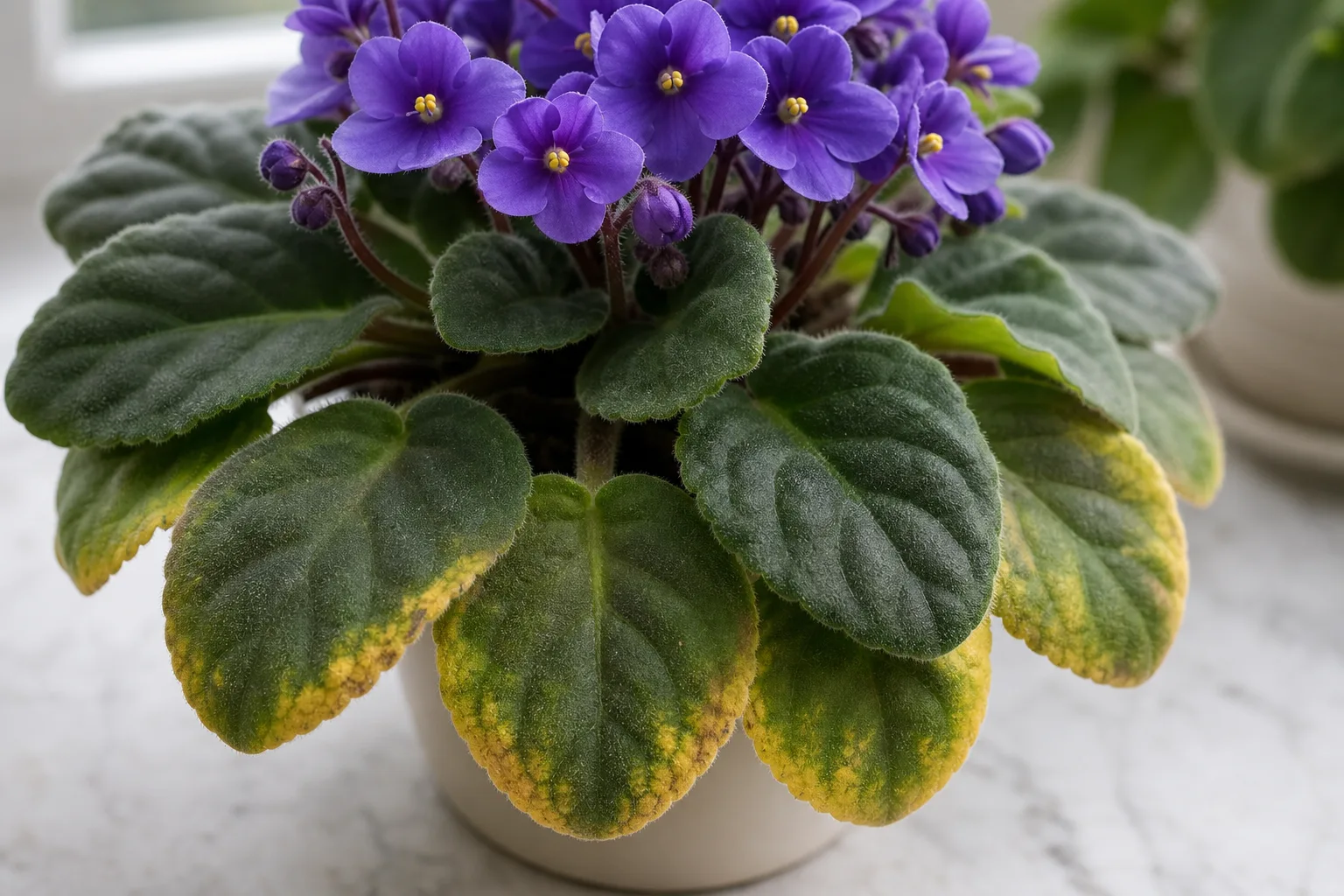
Potassium Deficiency on African Violet: Causes, Checks & Fixes
This guide covers potassium deficiency on African Violet. See also the general Potassium Deficiency guide, watering, and light pages for this plant.
Potassium Deficiency on African Violet: Causes, Checks & Fixes
Quick answer
Potassium is another mobile nutrient, so true deficiency tends to show first on older leaves, not the crown, a pattern described in Missouri IPM and Iowa State Extension. For general edge-scorch mechanics, see our potassium deficiency symptom hub. On African violet, that often means older leaves yellow from the margins inward, then develop brown edge scorch.
But on violets, that pattern has an important complication: salt buildup and fertilizer burn can look very similar. So the safest first fix is usually to check for crusted salts, review feeding history, and correct the root environment before you assume the plant needs a potassium-heavy product.
What It Usually Looks Like on African Violet
On a violet, possible potassium trouble tends to be an older-leaf edge problem:
- yellowing begins on the margins of older leaves
- the edges may turn brown or crisp
- the center often stays greener at first
- flowers may become smaller or less vigorous over time
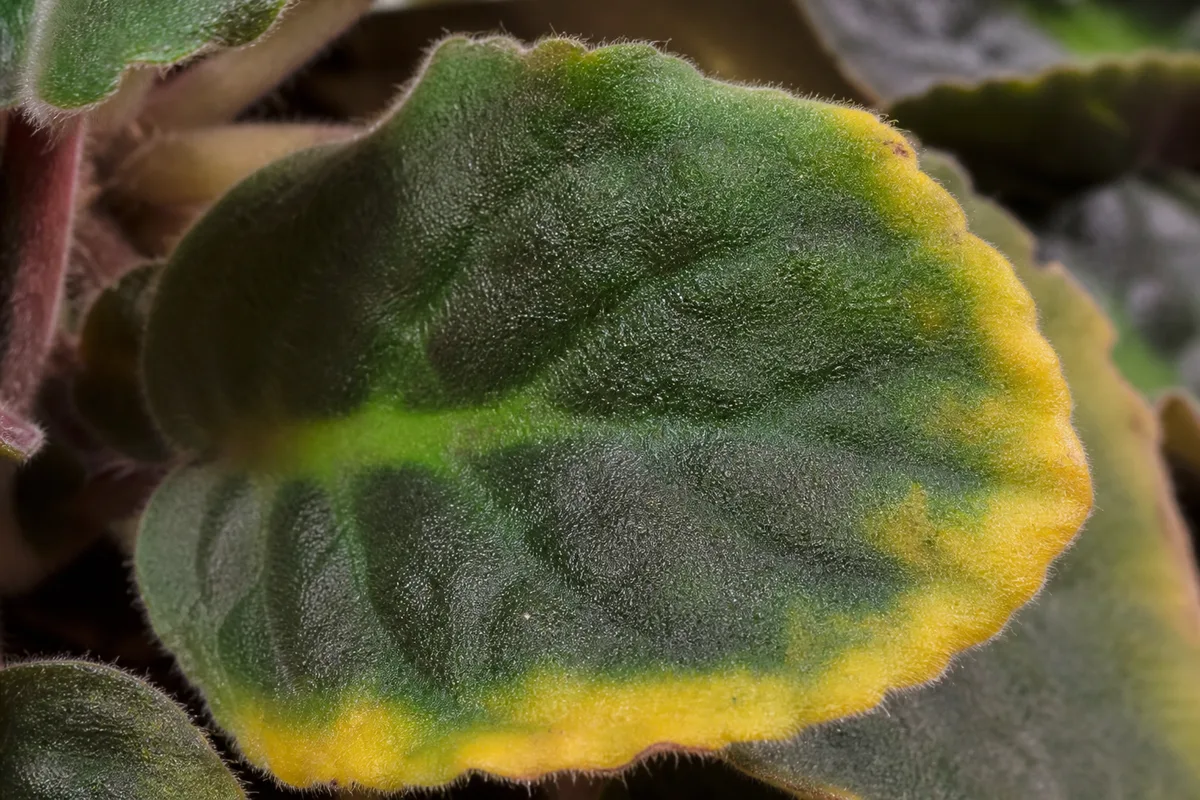
Older outer leaves matter most here. If the youngest center leaves are the first ones affected, look at a different diagnosis.
This is different from nitrogen deficiency on African violet, which usually looks more evenly pale across old leaves, and from iron deficiency on African violet, which hits the newest growth first.
Why Potassium Trouble Happens
In home-grown violets, apparent potassium deficiency usually comes from one of three situations:
- the plant has been underfed for too long
- the potting mix chemistry has drifted because it is old or salt-heavy
- the roots are injured enough that uptake is poor even when nutrients are present
University of Minnesota Extension recommends weak regular feeding and periodic flushing to prevent salt buildup in container violets. UF/IFAS likewise treats salt management as part of routine violet culture. Those recommendations matter because brown edges on old leaves are not enough, by themselves, to separate deficiency from salt injury.
Salt Buildup Is the Main Lookalike
If you bottom-water or wick-water frequently and rarely top-flush, salts can accumulate in the mix and on the pot rim. That can injure roots and create edge burn on older leaves that looks like low potassium.
Signs that push the diagnosis toward salt build up on African violet instead:
- white or yellowish crust on the pot rim
- white residue on the soil surface
- leaf petioles touching salty pot edges
- decline after enthusiastic feeding rather than after neglect
When those signs are present, adding more fertilizer is the wrong first move.
How to Check Whether Potassium Deficiency Is Plausible
Use this quick sequence:
- Map leaf age. Older leaves first fits potassium better than new leaves first.
- Look at the pattern. Edge-first scorch supports potassium or salt injury more than iron or nitrogen.
- Inspect the pot rim and soil. Crust supports salts.
- Review feeding habits. Long underfeeding supports deficiency; heavy feeding supports burn or salt stress.
- Check roots and moisture. Soggy mix and poor roots mean the plant may not be using nutrients normally at all.
If your first three answers point to salts rather than underfeeding, start with flushing or repotting, not stronger fertilizer.
First Fix: Correct the Root Zone Before You Correct the Element
If the pot shows visible salt deposits, flush with room-temperature water and let the pot drain completely. University of Minnesota Extension recommends periodic flushing for violets, and UF/IFAS emphasizes discarding excess drainage and avoiding concentrated fertilizer stress.
If there is no crust and the plant has simply been underfed, resume a weak balanced fertilizer at the normal low violet rate rather than reaching for a high-potassium rescue formula. On a houseplant this small, consistency usually matters more than chasing one number on the label.
When Repotting Is the Better Next Step
Choose repotting sooner when:
- the mix is old and compacted
- the pot smells sour
- the plant stays wet too long
- the rim stays crusted even after flushing
- new growth does not improve after routine care is corrected
Fresh African violet soil resets structure and chemistry faster than repeated fertilizer tinkering in a worn-out root ball.
Petiole contact with salty pot rims
On clay pots, fertilizer salts can crust the rim where African violet petioles rest against the edge. That localized burn mimics potassium edge scorch on older leaves even when the plant is otherwise fed adequately. Wipe crusted rims, flush the mix, and watch whether the next leaves open without margin injury before assuming a potassium-heavy fertilizer is the answer.
Recovery Timeline
Do not judge recovery by the old leaves. Brown edges stay brown.
The better signs are:
- the next leaves open without fresh margin scorch
- the center keeps growing instead of tightening
- flowering gradually returns to normal size and pace
That recovery usually takes longer than one watering cycle. Give the plant time to grow new tissue before you decide the fix failed.
What Not to Do
Do not treat every brown edge as potassium deficiency.
Do not add a stronger fertilizer before you have checked for salts.
Do not feed hard into dry mix or failing roots.
Do not ignore fertilizer burn on African violet when the damage started after feeding rather than before it.
Prevention
The prevention plan is the same steady culture that keeps most violet nutrition problems smaller:
- use weak regular fertilizer instead of occasional heavy doses
- flush periodically if you fertilize often
- repot before the root zone becomes old and crusted
- keep watering and drainage consistent
Those steps also reduce risk for overfertilization on African violet and brown tips on African violet.
When to Use This Page vs Other African Violet Guides
- Salt build up: use when the pot rim and soil are visibly crusted.
- Fertilizer burn: use when damage followed a feeding mistake.
- Nitrogen deficiency: use when older leaves fade more evenly rather than scorching at the edges.
- Iron deficiency: use when the newest leaves fail first.
- African Violet problems hub: use when the pattern still feels mixed.