Exposed Roots on African Violet: Causes, Checks & Fixes
Quick answer
Exposed roots on African Violet usually mean a bare neck has formed as lower leaves age off-not an emergency. First, measure neck length and crown firmness; bury a short neck in the same pot, or decapitate and reroot a long woody stem.
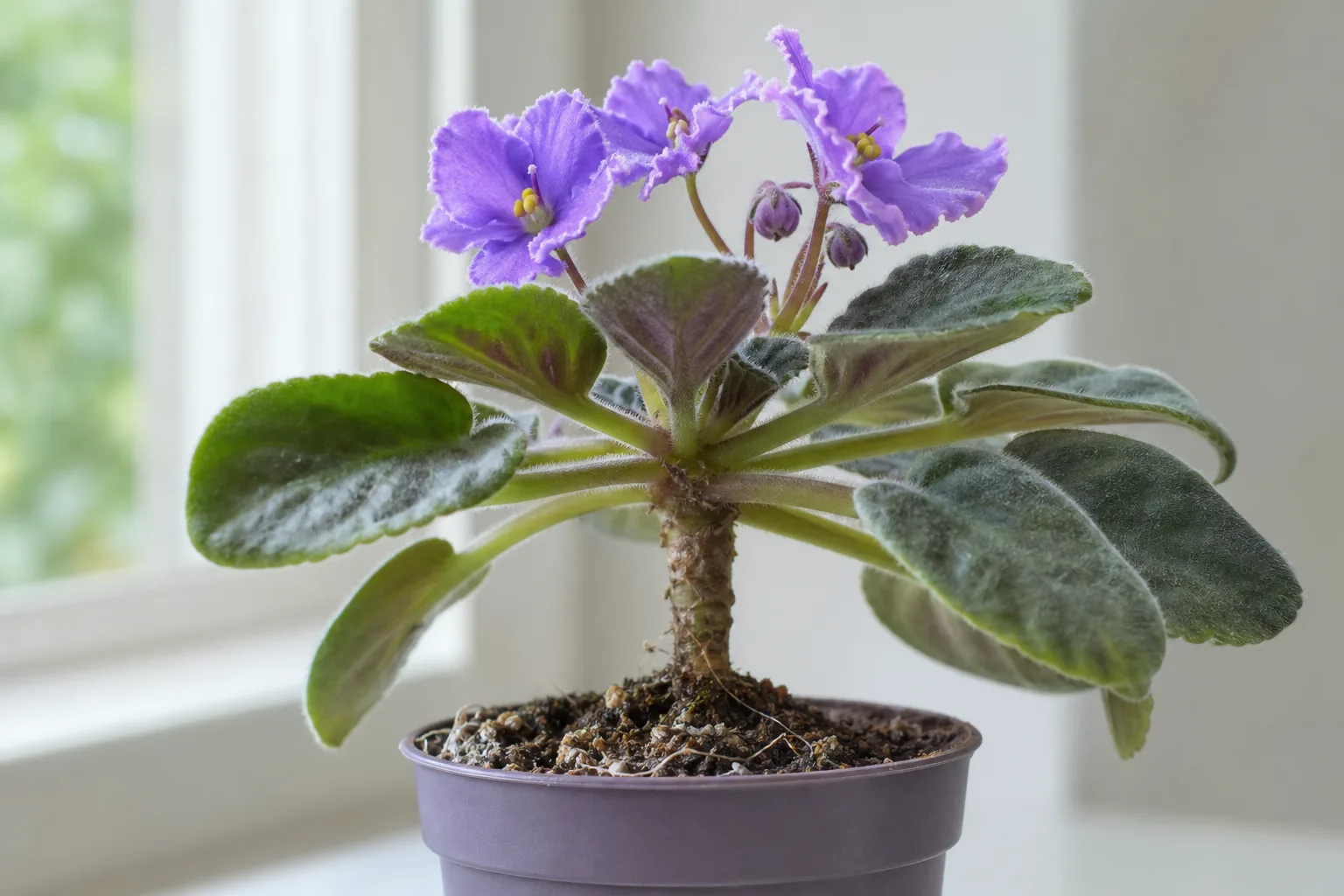
Exposed Roots on African Violet: Causes, Checks & Fixes
This guide covers exposed roots on African Violet. See also the general Exposed Roots guide, watering, and light pages for this plant.
Exposed Roots on African Violet: Causes, Checks & Fixes
Quick answer
Exposed roots on African Violet are usually a bare neck-a length of stem showing between the soil and the lowest fuzzy leaves-not a sign that the plant is dying. As lower leaves die and fall off, a long stem or neck can elevate the crown above the soil line. Your first step is to measure that neck and feel the crown: if tissue is firm and green when scraped, repot to bury the stem; if the neck is long, woody, or soft, use the decapitation restart instead of potting deeper into a larger container.
Why African Violet gets exposed roots
African Violets grow as tight rosettes, and outer leaves naturally senesce over time. [Necks on African violets are a natural part of growth-as leaf age and are removed, the stalk becomes exposed](https://africanvioletsocietyofamerica.org/learn/violets-101/[African Violet repotting guide](/plants/african-violet/repotting/)-a-violet-with-a-neck/). The plant does not sink back down on its own; without repotting, the bare section lengthens and the rosette becomes top-heavy.
Shallow fibrous roots add a second look. African violet roots generally do not grow deep or wide and grow epiphytically in nature, so they sit near the soil surface. Repeated bottom-watering, old mix breaking down, or brushing debris away can erode the top layer and reveal white root threads at the rim-different from a true neck but still a signal to refresh mix and check pot depth.
Less common triggers include pulling the plant up while grooming leaves, a pot that is too shallow for the root ball, or severe root binding that lifts the crown when you unpot. Those cases still need repotting, but the fix starts with anchoring roots-not only covering visible threads with dry mix.
What exposed roots look like on African Violet
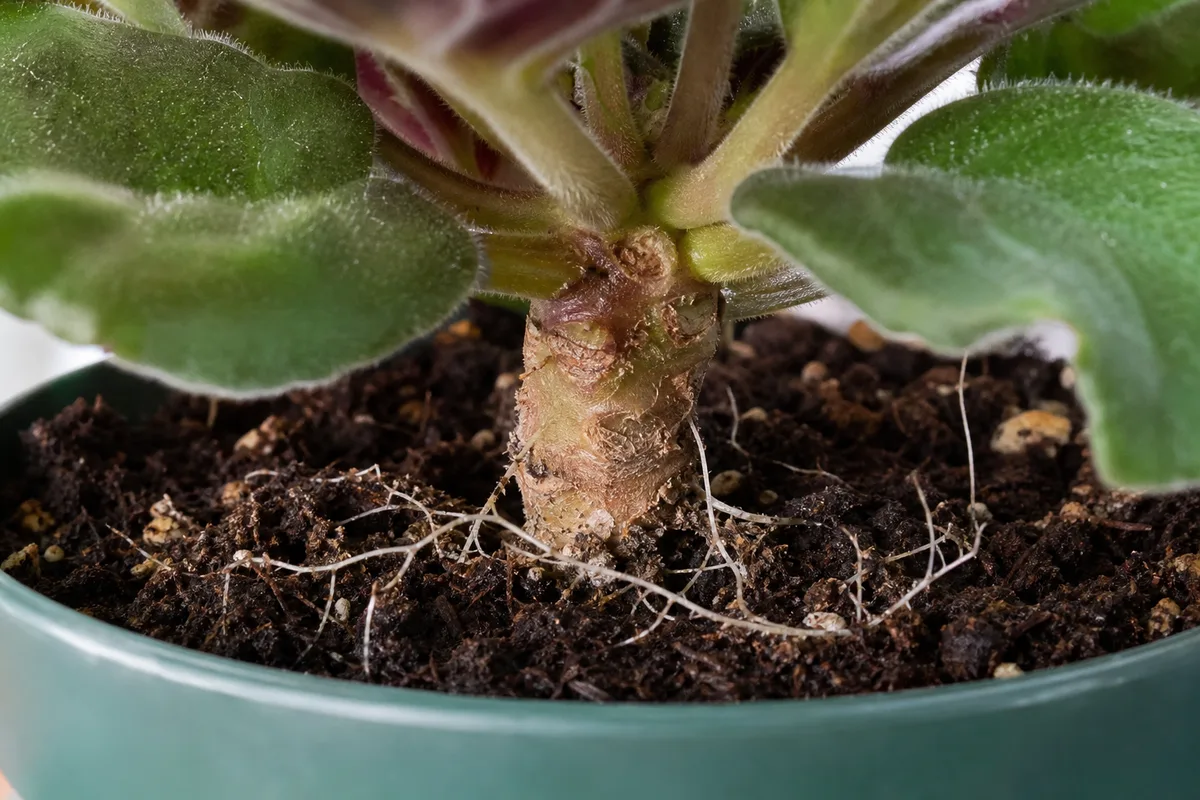
Bare neck stem between soil and lowest leaves, with fine white surface roots on settled mix - a normal aging pattern, not crown rot.
Short neck: one-half to one inch of bare brown or green stem below the lowest leaves, sometimes with old leaf scars and dry stubs along the length. The rosette may still bloom normally.
Long neck: the crown sits an inch or more above the pot rim; the plant wobbles when bumped. Lower leaves are sparse and the stem looks woody when scraped.
Surface roots: fine white or tan threads on top of the mix or creeping over the pot edge while the neck stays short. Often seen in older plants with settled, compacted mix.
Not the same as root rot on African Violet: rotting crowns show water-soaked, shriveled tissue at the center and a sour smell-not a dry bare stem with firm inner leaves.
How to confirm the cause
Run through this order before repotting:
- Measure neck length from soil line to lowest leaf. Under about one inch suggests a soft repot; much longer points to decapitation.
- Scrape the stem with a dull knife or fingernail. Scrape gently to smooth off old leaf stumps and remove dried surface tissue until you see green. Brown mushy pith means cut higher or discard below the rot line.
- Check the crown by pinching the center leaves. Firm, turgid tissue is safe to reroot; a wobbly crown with soft base tissue is urgent.
- Inspect the pot. The pot should always be smaller than the plant-roughly one-third the leaf span. If someone upsized only to hide a neck, soggy outer mix may hide without fixing the bare stem.
- Slide the plant partly out. Circling roots with little fresh mix mean refresh the soil even if the neck is still short. Black mushy roots are root rot, not simple exposure.
First fix for African Violet
Short firm neck (soft repot): Remove enough soil from the bottom of the root ball to equal neck length. Scrape the neck to green tissue. Repot and set the plant low in the container, burying the stem all the way up to the lowest set of leaves. Use the same pot or the same size with fresh light, porous African violet mix. Position the plant so all leaves and stems stay above the soil line and only the roots are buried.
Long or woody neck (decapitation restart): Remove faded lower leaves and flowers. Cut the stem about one-and-a-half to two inches below the lowest healthy leaves and discard the old root mass. Inspect the cut face for brown pith; cut higher if rot is present. Set the crown on moist mix in the same-size pot, seal in a clear bag for humidity about one month, and keep African Violet light guide without wetting leaves.
Do not jump to decapitation for a half-inch neck-that is a routine annual repot task for many growers.
Recovery timeline
Soft neck burials: new root activity often shows within two to four weeks with bottom-watering when the top inch of mix dries. Expect outer leaves or open blooms to droop briefly-disturbed roots may cause flowers to collapse until new roots form.
Decapitation restarts: keep the humidity tent closed about four weeks, then open gradually over two days. New center growth and firm crown tissue mean success. Hold fertilizer until the rosette looks stable for two weeks.
Lookalike symptoms
| What you see | Likely cause | Key difference |
|---|---|---|
| Bare stem below leaves | Neck from aging | Dry firm stem; green when scraped |
| White threads on mix surface | Shallow roots + settled soil | Neck still short; mix eroded at top |
| Roots circling inside pot | Root bound | Dense mat; may need same-size refresh |
| Mushy stem base, sour smell | Crown or root rot | Soft tissue, not a dry neck |
| Crown high right after repot | Planted too shallow | Happened suddenly, not over months |
What not to do
Do not bury a long neck deeper in a much larger pot without scraping green tissue-it is not advisable to bury the neck deeper in a bigger pot, since it is vulnerable to rotting which may spread up into the crown. Do not splash cold water on leaves during recovery. Do not fertilize a plant still in a humidity bag or one with a freshly cut stem. Do not confuse a cosmetic neck with root rot and drench a firm plant-check stem texture first.
How to prevent exposed roots next time
Repot into fresh mix every six to twelve months even if the pot size stays the same. Remove spent lower leaves before they leave a long bare section. Keep pots proportionally small so the rosette stays anchored. Use a loose, well-drained soilless mix and bottom-water when the top inch dries, draining excess water so the surface layer does not wash away and expose roots. Rotate the pot weekly for even growth so the neck does not lean and weaken on one side.
When to use this page vs other African Violet guides
- African Violet watering guide - Use for routine moisture checks before assuming exposed roots is the main issue.
- African Violet problems hub - Browse all 52 common issues on this species.