High Humidity on African Violet: Causes, Checks & Fixes
Quick answer
High humidity hurts African Violet when moist air combines with wet velvety leaves, poor airflow, or soggy soil-not from moderate 40–60% humidity alone. First step: move the plant to a spot with gentle air movement and keep foliage dry.
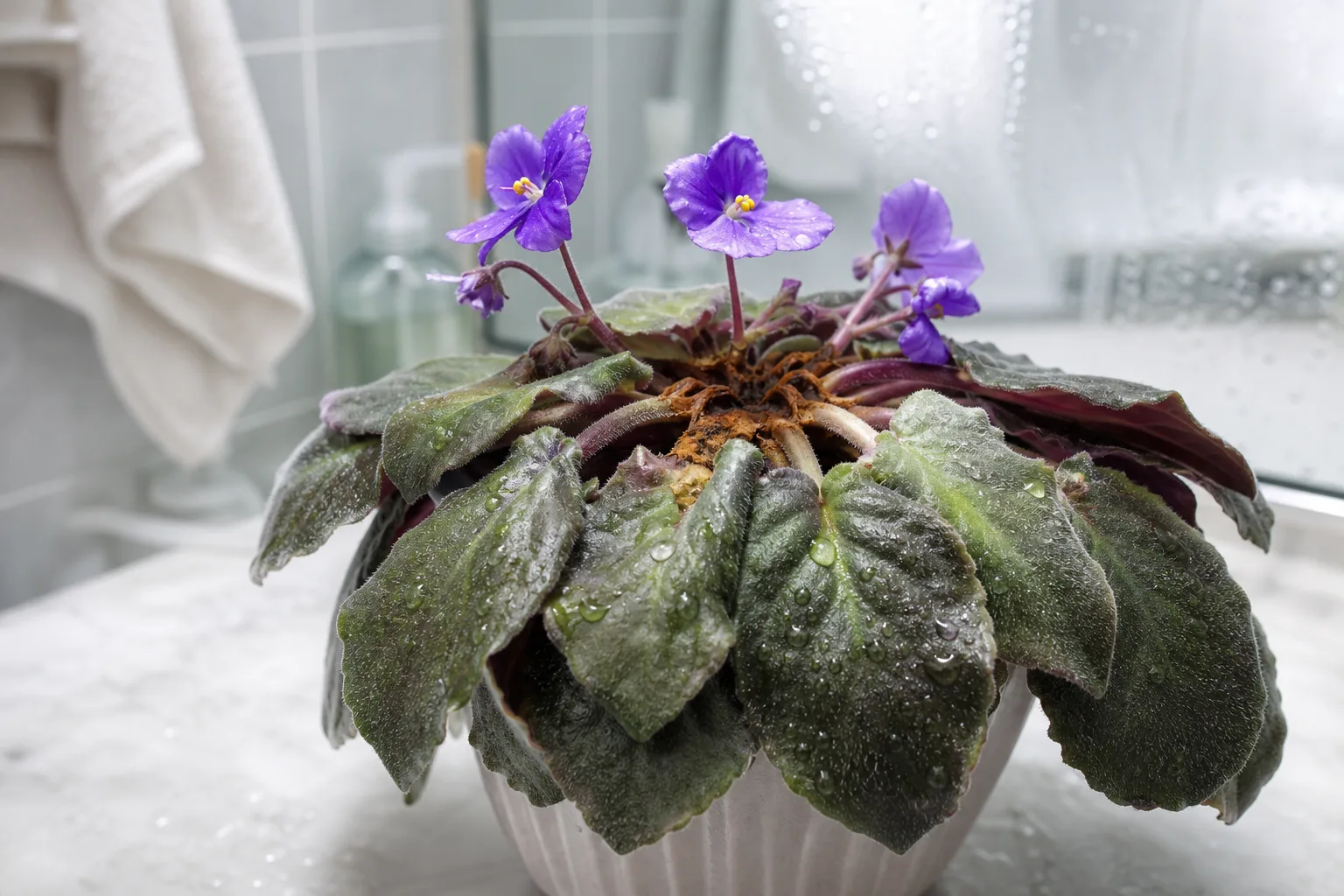
High Humidity on African Violet: Causes, Checks & Fixes
This guide covers high humidity on African Violet. See also the general High Humidity guide, watering, and light pages for this plant.
High Humidity on African Violet: Causes, Checks & Fixes
Quick answer
African Violet tolerates moderate humidity well-it evolved in cloud-forest air, not a sealed terrarium. Trouble starts when humid air pairs with wet velvety leaves, stagnant placement, or constantly soggy soil. Gray mold on blooms, water-soaked crown tissue, and spreading leaf spots are the usual warnings.
Decision hook: dry leaves plus a firm crown in 40–60% humidity is usually not a humidity crisis-look at overwatering or natural leaf aging instead.
First move: relocate the rosette where air moves gently and keep every leaf surface dry. Do not mist, shower, or top-water until foliage stays dry between drinks. For the full watering and humidity baseline this species needs, see African violet cultural baseline below.
What high humidity looks like on African Violet
Humidity damage on African Violet rarely shows up as a hygrometer reading alone. You see what excess moisture does to a tight, fuzzy rosette:
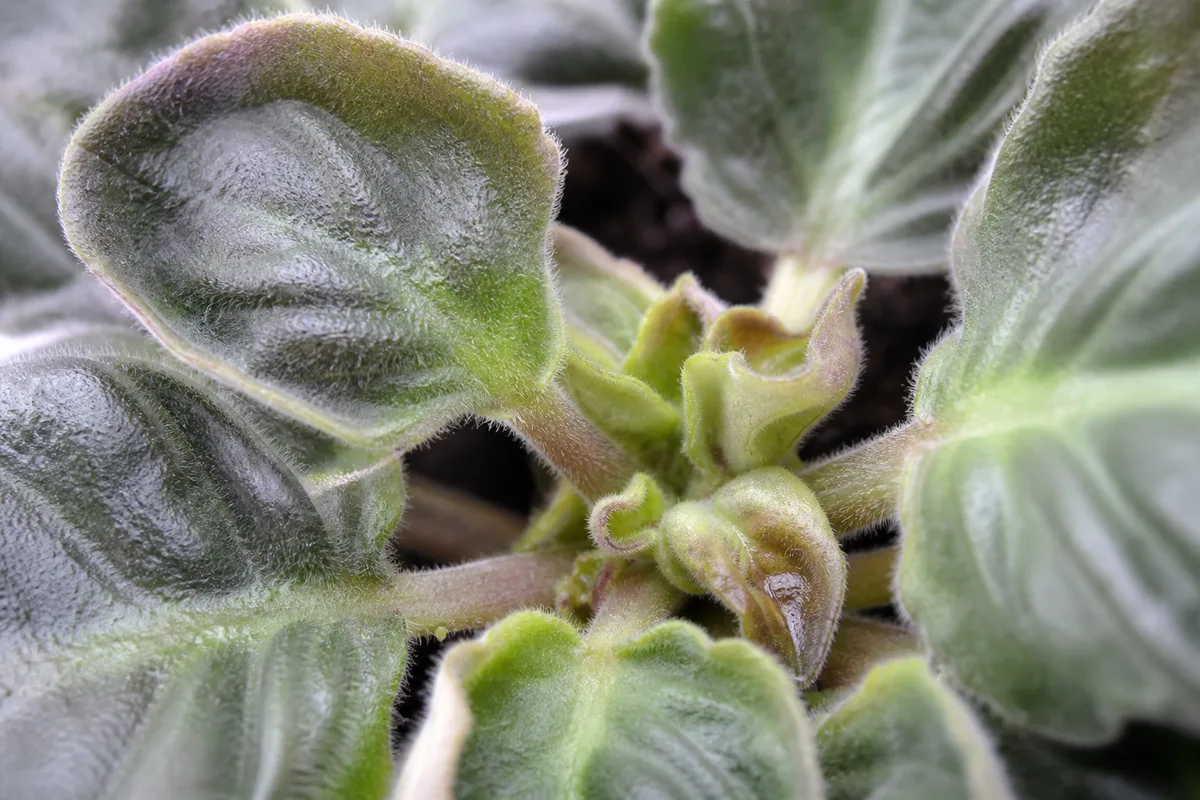
High Humidity symptoms on African Violet - compare with healthy tissue on the same plant.
Gray mold on blooms (botrytis)
Gray fuzzy mold on flowers or leaf edges is classic botrytis blight when cool, humid air lingers and petals or senescent tissue stay wet. Botrytis cinerea readily colonizes senescent leaves and flower parts before spreading to healthy tissue.
Water-soaked crown tissue
Translucent spots on lower leaves darken and spread after overhead watering or misting in a humid corner. When the center of the rosette goes soft while outer leaves still look green, you may be facing crown rot-escalate immediately if the heart smells sour or collapses.
Leaf spots after splashing
Velvety leaves hold water droplets longer than smooth foliage, so wet spots become fungal entry points in still air. Cold water on leaves causes white blotches; in humid stagnant conditions those wet patches invite botrytis.
Powdery mildew in stagnant air
White dusty growth on leaf surfaces can appear when humidity is high and airflow is weak. If the coating spreads as even powder rather than gray fuzz on spent blooms, see the powdery mildew guide for confirmation steps.
Musty smell from the pot
Soil that never dries between waterings in a humid room invites root and crown decay-and surface mold on soil often appears on the peat top layer at the same time.
During normal 40–60% humidity with dry leaves and a wet-dry soil cycle, African Violet should show firm leaves, steady center growth, and clean blooms. Worry when mold or water-soaked tissue appears while the pot stays damp and air around the plant feels still.
Why African Violet gets high humidity problems
Saintpaulia grows naturally in cool, humid cloud forests-but those forests also have moving air and excellent drainage through leaf litter. Indoor setups often copy the humidity without the airflow or dry-down cycle the plant expects.
Humidity becomes damaging in three linked ways:
- Wet velvety leaves - African violet foliage is covered in fine hairs that trap water. Splashes from top watering, misting, or cold water on leaves cause spotting; in humid, stagnant air those wet patches stay damp long enough for Botrytis cinerea to infect blooms, petals, and crowns.
- Stagnant moist air - Crowded plant trays, enclosed terrariums, bathroom corners without a fan, and pebble saucers where multiple pots share a humid microclimate trap moisture around the rosette. Botrytis spreads fastest when plants are crowded and ventilation is poor.
- Soggy soil plus humid air - Overwatering, submerged saucers, or heavy mix that stays wet compounds the problem. Roots and crowns decay when soil is saturated even if room humidity feels only moderately high.
Many growers push humidity above what African Violet needs-running humidifiers directly on the rosette, keeping pots in standing water on trays, or misting leaves to “help” the plant. Moderate humidity supports growth; excess moisture on leaves and in soil is what triggers disease.
A grower observation worth noting
On a crowded winter windowsill, three standard violets sharing one pebble tray often develop gray mold on spent blooms within a week of a single misting session-even when a room hygrometer reads only 55%. The tray raised humidity at crown height while still air trapped moisture between overlapping leaves. Moving each pot six inches apart and switching to bottom-watering through the tray (pot above the water line) typically stops new mold within days if the crown is still firm. Bathroom placement after top-watering shows the same pattern: wet velvety leaves plus steamy stagnant air convert moderate room humidity into a fungal incubator.
African violet cultural baseline for humidity
This species needs one consistent cultural setup-not repeated corrections scattered through every section. Anchor your fixes here:
| Practice | What to do | Why it matters for humidity |
|---|---|---|
| Ambient humidity | Target 40–60% | Enough for steady growth without saturated air at the crown |
| Watering | Bottom-water when the top inch of mix is dry | Keeps velvety leaves dry and prevents cold-water spotting |
| Pebble trays | Pot sits above the water line, never submerged | Raises ambient moisture without soaking roots or the crown zone |
| Leaf surfaces | Never mist; avoid top-watering | Wet fuzzy foliage in still air is the main botrytis trigger |
| Spacing | Several inches between rosettes on shelves | Lets air move between crowns on humid trays or in cabinets |
| Spent blooms | Remove promptly | Botrytis often starts on senescent flowers before moving to leaves |
If you overcorrect and buds shrivel or leaf edges crisp, you may have swung too far-see low humidity for safe ways to raise moisture without wetting leaves. Full watering technique lives in the watering guide.
How to confirm the cause
Work through these checks before reaching for fungicide:
- Leaf surface test - Two hours after your normal watering routine, are leaves still visibly wet or cool to the touch? If yes, wet foliage plus humid air is confirmed.
- Pot and saucer check - Does the pot drain freely? Is the bottom sitting in water left from bottom-watering or a pebble tray? Standing water raises humidity at the crown and keeps roots saturated.
- Airflow around the rosette - Are multiple violets packed on one shelf, or is the plant inside a closed container? Still air plus humidity is a high-risk combo.
- Soil moisture - Press the top inch of mix. If it stays cool and damp for days while you are not actively watering, slow dry-down in humid air may be keeping roots wet.
- Timing - Did gray mold or crown softening follow misting, top-watering, grouping with tropicals, or moving into a bathroom windowsill? Matching timing strongly points to humidity-related stress rather than light or fertilizer alone.
If leaves are dry, soil follows a normal wet-dry cycle, and the crown is firm, yellow lower leaves may be natural aging or overwatering in average humidity-not a humidity crisis.
The first fix to try
Move the plant to a spot with gentle airflow and stop getting water on the leaves.
That single change dries foliage faster and breaks the humid, stagnant pocket around the rosette. Open shelf space, a low fan on indirect setting, or simply pulling the pot away from a crowded humid tray often helps within a day. Apply the cultural baseline from that point forward.
Wait 24–48 hours and recheck: leaves should feel dry to the touch, and any musty smell from the pot should fade as the surface mix starts drying. If mold is limited to a few spent blooms and the crown is firm, hold off on fungicide until you see whether dry air stops spread.
Step-by-step recovery
After improving airflow and keeping leaves dry, add these steps in order-not all on the same day:
- Remove affected blooms and badly spotted leaves - Snip gray-moldy flowers and leaves with more than half their area damaged using clean tweezers or scissors. Bag and discard tissue; do not compost infected material near healthy violets.
- Bottom-water only when the top inch of mix is dry - Allow the top inch of soil to dry before sub-irrigating again. Set the pot in room-temperature water for 30 minutes, then drain completely.
- Space plants apart - Give each rosette a few inches of open air so moisture does not linger between crowns.
- Fungicide only if mold keeps spreading - After a week of dry leaves and improved airflow, see the fungicide section below. Fungicides do not restore already damaged leaves.
If the crown turns water-soaked or mushy at any point, switch to the crown rot guide-stop watering, remove soft tissue if possible, and let the plant dry in African Violet light guide. Severe crown involvement may not be reversible.
Fungicide escalation when cultural fixes fail
Chemical control of gray mold is rarely needed on most houseplants when sanitation and airflow are corrected first. Wait seven days after drying foliage and spacing plants. If gray mold still spreads to new blooms or center leaves despite dry velvet and firm soil dry-down:
- Read the label first - Use only products labeled for botrytis or gray mold on ornamentals. Home fungicide labels vary by state; your local extension office can confirm legal options.
- Test on fuzzy leaves - Spray two lower leaves and wait 48 hours under your normal grow lights. Velvet foliage can burn under bright light plus wet spray; watch for pale halos or curling before treating the full rosette.
- Keep spray off the crown - Wet fungicide pooling in the rosette center mimics the moisture problem you are trying to fix.
- Apply at label intervals - Over-spraying stressed violets causes more damage than a limited botrytis patch on spent blooms.
Do not combine fungicide, African Violet repotting guide, heavy pruning, and fertilizer on the same day. Stack one correction at a time.
Recovery timeline and what to expect
Spotted or gray-moldy leaves will not return to perfect velvet. Judge success by:
- Days 3–7 - No new mold on blooms or center leaves; existing lesions stop expanding; pot weight drops as mix dries on schedule.
- Weeks 2–4 - New center leaves emerge clean; buds open without gray fuzz; lower leaf drop slows.
If mold returns after a full week of dry foliage and corrected placement, consider a labeled fungicide or discard heavily infected plants to protect the collection. If the crown collapses, multiple leaves turn mushy at once, or mold returns despite cultural correction, the plant may not recover fully-salvage a healthy leaf cutting only if firm tissue remains outside the rot zone.
Botrytis vs crown rot vs powdery mildew vs overwatering
| Problem | Key visual cue | Crown feel | Soil | Escalation page |
|---|---|---|---|---|
| Botrytis (gray mold) | Gray fuzzy growth on spent blooms or wet leaf edges | Usually firm early | May be damp but crown intact | This guide - cultural fix first |
| Crown rot | Water-soaked, collapsing center; sour smell | Soft, mushy heart | Often wet for days | Crown rot |
| Powdery mildew | Even white/gray dust on leaf surfaces; returns after wiping | Firm | Can be normal moisture | Powdery mildew |
| Overwatering alone | Yellow lower leaves, limp plant; may lack visible mold | Firm until late stage | Wet, heavy pot | Overwatering |
Lookalike symptoms
| What you see | Often confused with | How to tell apart |
|---|---|---|
| Gray mold on flowers | Normal spent bloom aging | Botrytis: fuzzy gray growth spreads to nearby tissue in humid still air. Aging: dry brown petals only, no fuzz on leaves. |
| Leaf spots | Cold water rings | Cold splash leaves distinct ring-shaped marks that do not spread. Humidity spots enlarge and may show mold in stagnant conditions. |
| Limp lower leaves | underwatering on African Violet | Underwatering: light pot, dry mix. Humidity rot: wet mix, mushy tissue, musty smell. |
| White dusty leaves | Mineral deposits from hard water | Powdery mildew: even white coating in humid shade with poor airflow. Hard water: crusty spots where droplets dried. |
Mistakes to avoid
- Misting leaves to “balance” humidity - African Violet needs dry velvety surfaces; misting rewets foliage and invites botrytis.
- Keeping the pot in standing water on a pebble tray - Evaporation from submerged roots raises humidity at the crown and causes rot.
- Grouping violets tightly in a humid enclosure - Terrariums and closed shelves trap moisture without the airflow cloud-forest plants still receive.
- Increasing watering when leaves look limp in wet soil - Overwatering in humid air accelerates crown and root decay.
- Stacking fixes on day one - repotting, heavy pruning, fertilizing, and spraying fungicide together add stress when the plant needs dry stability first.
- Running a humidifier directly on the rosette when readings already exceed 60% - more ambient moisture rarely helps once leaves and soil stay wet.
How to prevent high humidity problems
Apply the cultural baseline consistently:
- Keep ambient humidity in the 40–60% range with pebble trays-not standing water.
- Bottom-water on schedule and space pots so air circulates between crowns.
- Run gentle airflow in bathrooms or plant cabinets where humidity runs high.
- Remove spent blooms promptly before botrytis colonizes senescent tissue.
- Inspect new plants before adding them to a shared humid tray or grow shelf.
For general species care beyond humidity, start with the African violet overview.
When to worry
Treat as urgent if:
- The crown looks water-soaked, sunken, or smells sour - follow crown rot steps immediately.
- Gray mold spreads to new leaves or blooms after you have kept foliage dry for several days.
- Lower leaves turn yellow and mushy while soil stays wet and the plant droops.
- More than half the rosette collapses within a week in warm, humid conditions.
Cosmetic spotting on a few outer leaves with a firm crown and clean new center growth is manageable-stay consistent with the cultural baseline rather than panicking.
Conclusion
High humidity on African Violet is a management problem, not a reason to abandon moderate moisture. The plant likes steady air in the 40–60% range but cannot tolerate wet leaves, stagnant placement, and soggy soil at the same time. Improve airflow, keep velvety foliage dry, and let the mix dry between bottom-waterings. New clean growth from the center-not old spotted leaves-tells you whether you have turned the corner. When the crown softens, escalate to the crown rot guide without waiting.
When to use this page vs other African Violet guides
- African Violet watering guide - Use for routine moisture checks before assuming high humidity is the main issue.
- African Violet problems hub - Browse all 52 common issues on this species.