Leaf Spot Disease on African Violet: Causes, Checks & Fixes
Quick answer
Pale rings that appear within a day of splashing water on velvety leaves are usually ring spot-a temperature shock, not fungus. Expanding water-soaked patches with gray fuzz in humid, still air point to Botrytis. First fix for both: keep water off the foliage and bottom-water with room-temperature water.
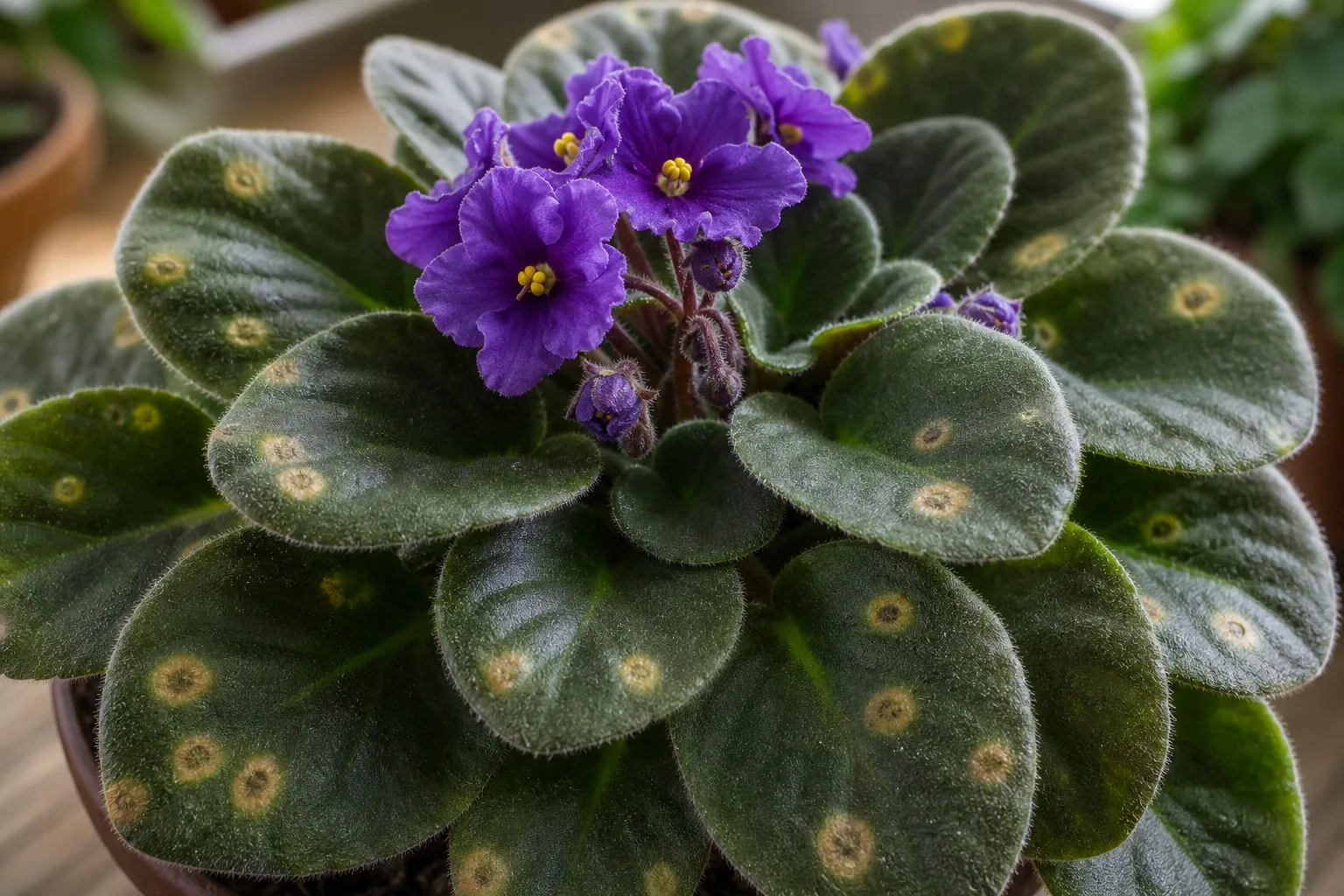
Leaf Spot Disease on African Violet: Causes, Checks & Fixes
This guide covers leaf spot disease on African Violet. See also the general Leaf Spot Disease guide, watering, and light pages for this plant.
Leaf Spot Disease on African Violet: Causes, Checks & Fixes
Quick answer
If you watered your Saintpaulia (African violet) and pale rings appeared within 24 hours, you are likely dealing with ring spot-physiological damage from water much colder or warmer than the velvety leaf surface, not an infection. If spots are water-soaked, enlarging, and developing gray fuzz in humid still air, suspect Botrytis cinerea gray mold instead.
Your first fix is the same for both: keep water off the foliage. Switch to bottom-watering with room-temperature water, gently dry any droplets on leaves, and improve airflow around the rosette. Do not reach for fungicide while leaves are still getting wet-that treats symptoms without removing the trigger African violets are famous for avoiding.
Ring spot vs. Botrytis - why they look similar but need different urgency
Both problems start as spots on velvety leaves, but the timeline and texture tell them apart quickly.
| Pattern | Timing | Spot feel | Urgency |
|---|---|---|---|
| Ring spot | Appears within hours of splash | Dry, pale ring; dead tissue inside; no spread | Low-cosmetic once leaves stay dry |
| Botrytis | Builds over days in humid air | Water-soaked, soft; may show gray clumped fuzz | Medium to high-can reach crown |
Ring spot is permanent on affected leaves but does not march across the rosette. Botrytis colonizes spent blooms, yellow lower leaves, and bruised petioles first, then can melt the crown if humidity and crowding persist. If you are unsure, keep leaves dry for one week: static dry rings favor ring spot; enlarging soft patches favor fungus.
Why African Violet gets leaf spot disease
African violet leaves are covered in fine hairs that hold water drops against the surface. That velvety texture makes the plant beautiful indoors, but it also means any splash sits longer than it would on smooth foliage. When cold water directly on the leaves hits those hairs, cells collapse and create ring-shaped dead patches that look like disease but are actually physical damage.
When wet spots-or the bruised tissue around them-sit in stagnant humid air, Botrytis cinerea colonizes senescent flowers, yellow lower leaves, and damaged petioles first, then spreads across blades. Crowded grow shelves, sealed terrariums, bathroom windows above 60% humidity, and pots touching on a wet pebble tray all extend the damp-leaf window that favors fungus. On a standard rosette, the lowest leaves often touch the rim or neighboring pots first-exactly where Botrytis enters before you notice crown symptoms.
Overhead watering, misting for humidity, and splashing during careless top-watering are the usual triggers. Less often, leaf spots follow fertilizer splash, insect injury that breaks the leaf surface, or petioles resting on soggy soil at the pot rim after repotting with the crown too low. Overwatering the mix does not directly paint spots on leaves, but constantly wet soil keeps humidity high around the crown and softens tissue Botrytis enters easily-see overwatering if lower leaves yellow while spots spread.
What leaf spot disease looks like on African Violet
Ring spot (cultural leaf spot)
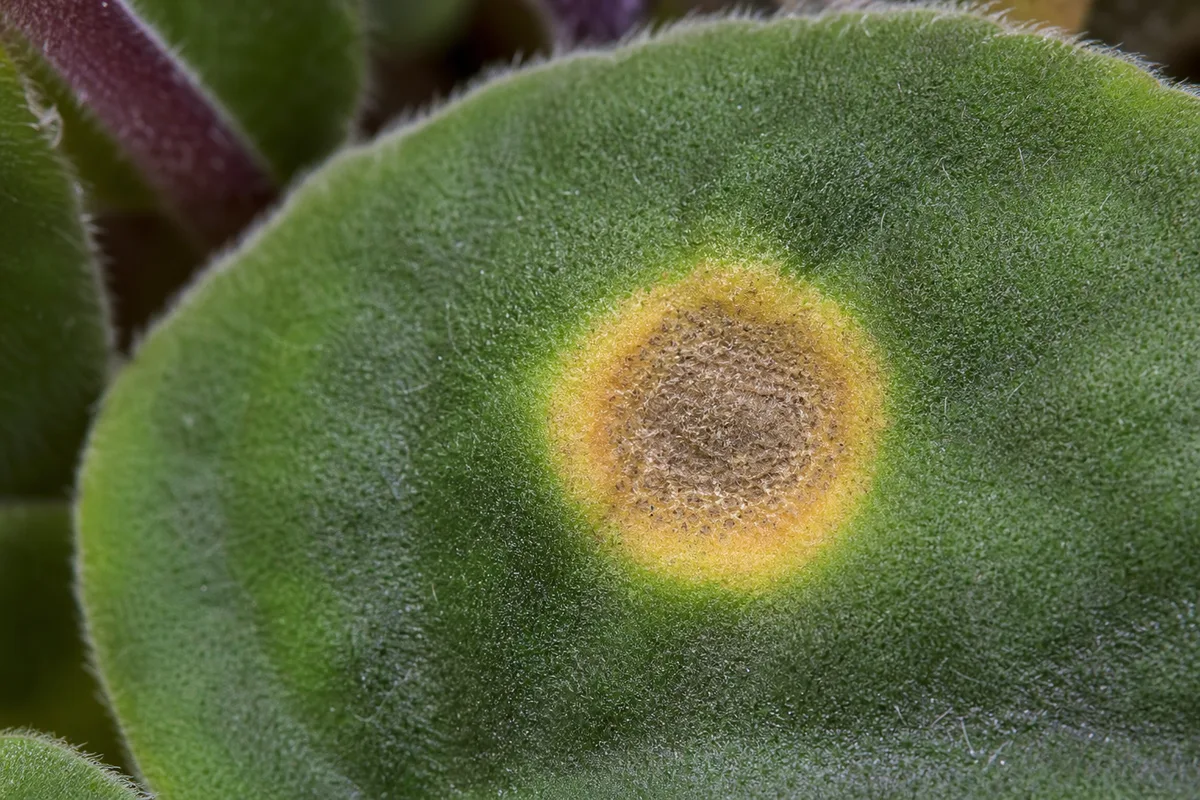
Leaf Spot Disease symptoms on African Violet - compare with healthy tissue on the same plant.
Ring spot shows as bright yellow, tan, or bleached circular patterns on otherwise healthy green leaves. The rings often appear exactly where a water drop landed after top-watering or misting. Cold tap water splashed on warm leaves-or the reverse-produces the classic halo. The tissue inside the ring is dead and will not green up again, but the spot usually does not spread once the leaf stays dry. This overlaps with cold damage when drafts chill wet leaves; ring spot is the splash-specific version on fuzzy tissue.
Botrytis and fungal leaf spotting
Fungal spotting often starts on the underside of a leaf or on a bruised petiole. Small water-soaked lesions enlarge until portions of the blade turn brown to black. Infected flowers fade prematurely and may carry white or gray spots that cannot be flicked off like dust. Under humid conditions, affected tissue can develop a clumped gray fungal growth-not a fine even powder like powdery mildew.
Spots stay on the leaf surface with a visible boundary on velvety tissue. Advanced Botrytis can move into the crown and look like the rosette is melting from the center outward-at that stage, treat it as crown rot urgency, not a leaf cosmetic issue.
Lookalikes worth ruling out
Leaf miners leave internal squiggly trails, not surface rings. Sunburn bleaches or scorches patches on the most exposed side without the water-drop ring pattern. Powdery mildew coats leaves in a uniform white to gray dust you can partially wipe away. Bacterial blight causes dark reddish brown to black greasy rot at the crown without the characteristic gray sporulation of Botrytis.
Dark oval or peanut-shaped patches with pale outlines, tan sunken areas on leaf undersides, or spots marching up the rosette over days often fit black spots causes-Rhizoctonia leaf spot or foliar nematodes-better than the ring-spot and Botrytis patterns this page emphasizes.
How to confirm the cause
Work through these checks in order:
- Timing after watering - Did spots appear within 24 hours of top-watering, misting, or cold water contact? Pale rings that match splash points strongly suggest ring spot.
- Spot behavior over one week - Keep leaves completely dry and watch. Ring spot and dried cultural damage stay static. Water-soaked patches that enlarge or develop fuzz point to active Botrytis.
- Flower and crown inspection - Fading blooms with mushy petals, or gray growth where spent flowers sit in the crown, support fungal blight over simple ring spot.
- Neighbor plants - Matching spot patterns on crowded violets sharing a humid tray suggest environmental fungus rather than a one-off splash.
- Leaf texture at the spot - Firm dead ring tissue with dry margins fits cultural damage. Soft, jelly-like tissue with gray fuzz confirms infection.
If only one or two leaves show dry rings after a known splash and the center crown keeps producing clean leaves, you likely do not need fungicide-just a watering correction.
First fix for African Violet
Stop top-watering and misting immediately. This single change removes the main trigger for both ring spot and the wet-tissue entry points Botrytis exploits.
Bottom-watering protocol
Set the pot in a bowl of room-temperature water about one inch deep until the soil surface feels moist, then drain thoroughly. Sub-irrigate from a saucer so cold water never touches leaves, and do not let the pot sit in standing water after the soak. If you must water from above, use a narrow spout to target only the mix and brush or shake off any droplets on leaves with a dry artist’s brush or soft cloth-the same technique extension guides recommend for keeping velvety foliage dry.
Remove the worst affected leaves with clean scissors, cutting at the petiole. Bag spotted tissue and discard it-do not compost indoors. Pull off spent blooms resting in the crown. Move the plant to a bright spot with gentle airflow-not a sealed case-and isolate it from other violets until new leaves stay clean for two weeks.
When to trim vs. wait
Trim leaves when rings are large enough to distract from the rosette shape or when Botrytis tissue is soft or fuzzy. Leave small dry rings alone if the crown is producing clean new growth-they are cosmetic. Never pull spotted leaves by hand on African violet; cut at the petiole to avoid crown tears.
Fungicide escalation (if spots persist on new leaves)
Wait before fungicide. Most home outbreaks stop once foliage stays dry and infected tissue is gone. If water-soaked spots keep appearing on new leaves despite dry care for two weeks, a houseplant fungicide labeled for ornamentals on indoor plants can protect healthy tissue-but it does not cure existing lesions.
Choose products with active ingredients commonly labeled for Botrytis on ornamentals, such as chlorothalonil, copper fungicides, neem oil, or thiophanate-methyl, and follow label rates for houseplants. Chemical control works best paired with cultural fixes such as removing blighted tissue and improving ventilation. Test-spray one leaf and wait 48 hours before treating the whole plant-velvety leaves under grow lights can show phytotoxicity from oils or heavy sprays. Keep fungicide off open blooms if you are showing the plant. Fungicide protects neighbors in a collection; it is not a substitute for removing mushy tissue and fixing humidity.
If gray mold reaches the crown despite dry care, discard severely infected plants to protect your shelf and restart from a healthy leaf cutting rather than repeated spraying.
Recovery timeline
New spotting should stop within days once leaves stay dry and damaged tissue is removed. Existing marks remain until you trim those leaves or they age out naturally. Expect four to eight weeks for the rosette to look full again after heavy trimming, depending on light and temperature. Blooming resumes once the crown produces several unblemished leaves.
Ring spot rings are permanent on affected leaves but do not spread. Botrytis recovery depends on how far infection reached-cosmetic leaf spots heal with care changes; crown involvement may require restarting from a healthy leaf cutting.
What not to do
Do not mist leaves to raise humidity-that worsens spotting on African violet. Do not use softened or cold tap water on foliage. Do not pack wet plants back onto a humidity tray where pots touch and leaves overlap. Do not fertilize heavily on stressed, spotted leaves. Do not overhead-shower the plant hoping to rinse spots away-that adds the moisture that caused the problem.
How to prevent leaf spot next time
Bottom-water as your default method-see the full watering guide for wick and self-watering pitfalls. Use room-temperature distilled water, rainwater, or reverse-osmosis water rather than cold tap or softened water. Group plants to conserve humidity or set pots on pebble trays while keeping pot bottoms above the water line-never let leaves rest in pooled moisture.
Space rosettes so adjacent leaves do not touch. Remove fading flowers and yellow lower leaves weekly before they rot in the crown. Run a small fan on low in humid rooms. Quarantine new violets for two weeks before placing them on a shared shelf.
When repotting, keep the crown above the soil line and avoid burying petioles-contact with wet mix at the rim is a common Botrytis entry point. After repotting, bottom-water only until the rosette stabilizes.
When to worry
Treat as urgent when gray mold spreads into the crown, petioles turn mushy, or most leaves develop expanding water-soaked patches within days. Those signs suggest active Botrytis or crown rot-not a cosmetic ring from one splash.
Single dry rings on one or two leaves after a known watering mistake are lower urgency. Correct technique first and reassess before chemical treatment. If the center crown stalls while outer leaves spot, or the plant collapses despite dry foliage, inspect for crown rot and consider discarding severely infected plants to protect your collection.
Leaf spot vs. black spots - which page to read
Use this page when spots are pale rings after splashing, water-soaked patches with gray fuzz, or you need the ring-spot versus Botrytis decision path on velvety leaves.
Switch to black spots when lesions are dark oval or peanut-shaped with pale outlines (Rhizoctonia), tan sunken patches on undersides that turn dull black (foliar nematodes), or multiple plants on one shelf show matching dark spots spreading upward. Both pages share bottom-watering prevention-the difference is which pathogen or injury pattern you are matching.
For general culture that keeps fuzzy leaves healthy, start with the African violet care guide.
How this guide was reviewed: Written by sai-ananth and reviewed by the LeafyPixels Review Board on 2026-06-17. Symptom patterns and cultural controls cross-checked with Penn State Extension, UF/IFAS, Iowa State Extension, Pacific Northwest Plant Disease Management Handbook, and University of Minnesota Extension resources cited inline above. See methodology note in frontmatter.
When to use this page vs other African Violet guides
- African Violet watering guide - Use for routine moisture checks before assuming leaf spot disease is the main issue.
- African Violet problems hub - Browse all 52 common issues on this species.