Bud Drop on African Violet: Causes, Checks & Fixes
Quick answer
Bud drop on African violet means developing flower buds shrivel and fall before opening-the plant aborted blooms under stress. First step: leave the pot in one stable bright indirect spot and bottom-water when the top inch of soil dries. Do not repot, rotate, or fertilize until a new bud stalk holds for two weeks.
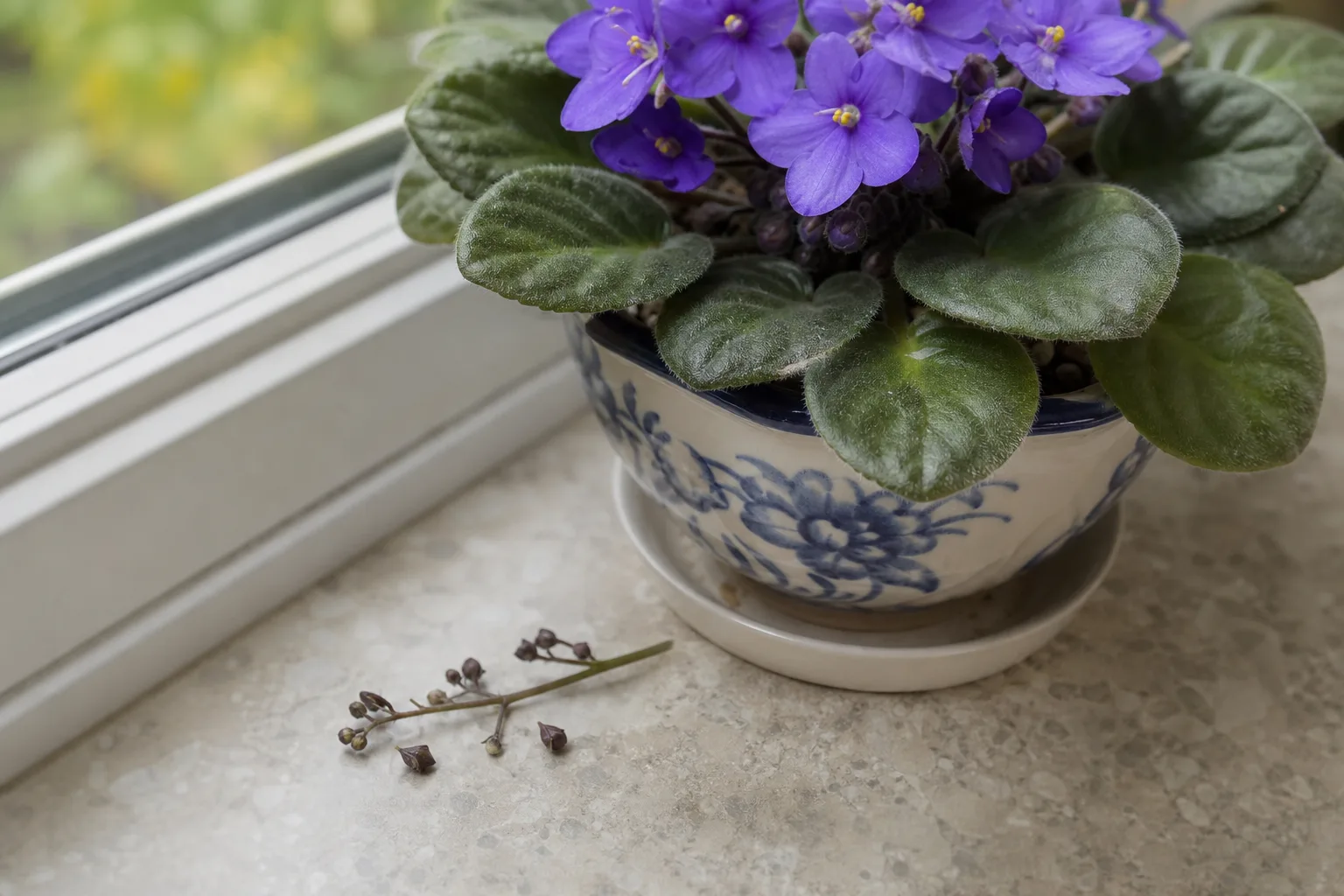
Bud Drop on African Violet: Causes, Checks & Fixes
This guide covers bud drop on African Violet. See also the general Bud Drop guide, watering, and light pages for this plant.
Bud Drop on African Violet: Causes, Checks & Fixes
Quick answer
Bud drop on Saintpaulia (African violet) means developing flower buds shrivel and fall before opening-the plant aborted blooms to conserve energy under stress. This is different from no flowers, where the plant never forms bud stalks at all.
The usual triggers are dry soil between bottom-watering sessions, temperature swings, weak light, root stress from soggy mix, ethylene exposure, thrips feeding on blooms, or moving the pot while buds form. In typical 2.5–4 inch pots, shallow roots dry out fast-intermittent drought is one of the most common bud-drop triggers indoors.
First step: leave the plant in one stable bright indirect spot and bottom-water with room-temperature water when the top inch of soil dries. Do not repot, rotate, or fertilize until a new bud stalk holds for two weeks.
Why African violet gets bud drop
Flower buds are metabolically expensive, and African violets drop them first when anything goes wrong. Several gesneriad-specific factors stack on top of generic houseplant stress.
Shallow roots and drought between bottom-waters
Small pots with porous mix lose moisture quickly at the surface. If you bottom-water on a fixed schedule without checking dryness, the top inch can go bone dry while the bottom stays damp-or the entire root ball can desiccate in a self-watering pot that was allowed to run empty. Dry potting mix can be hard to re-wet because peat tends to shed water once it dries completely, and buds fail before leaves show obvious wilt.
Temperature swings and drafts
African violets grow best with air temperatures between 65 and 80°F. Temperatures below 50°F can damage leaves, and prolonged heat above 85°F reduces growth and flowering. Cold drafts below about 65°F or hot air above 80°F from heating vents shock the crown and interrupt bud development.
Weak light and incomplete bud development
For best bloom, African violets need bright light-roughly 1,000 foot-candles or within 12–18 inches of a bright east or north window, or 8–12 inches under supplemental LEDs for 12–16 hours daily. Insufficient light lets plants grow but flower poorly-buds may start and then stall or abort rather than open.
Environmental shock (repot, move, rotate)
Moving, rotating, or African Violet repotting guide while buds form disrupts the steady conditions gesneriads need. Repotting can awaken a survival response but often drops active buds first-expect a bloom pause after any pot change. Even turning the pot weekly for even growth can abort buds on sensitive cultivars.
Root stress from overwatering on African Violet
Root diseases from overwatering show up as a limp, unthrifty plant before you notice bud loss. Crown rot from overwatered or recently repotted plants causes water-soaked, shriveling lower tissue and usually leads to plant death-bud drop with a soft crown and wet mix is a different urgency than cosmetic bloom loss.
Thrips and ethylene exposure
Thrips feed on African violet flowers and leave fine yellow pollen powder on petals. Optimara notes that thrips spill pollen from anthers as they feed, and streaked or blotchy petals often accompany bud failure. Ethylene from ripening fruit, gas appliances, cigarette smoke, or vehicle exhaust causes flower abscission on ethylene-sensitive plants even at low concentrations.
What bud drop looks like on African violet
Tiny green buds turn brown, shrink, and detach from the flower stalk while the leaf rosette looks otherwise healthy. Bare stalks may remain after buds fall-a clear sign buds formed and aborted, unlike no flowers where no stalk appears at all.
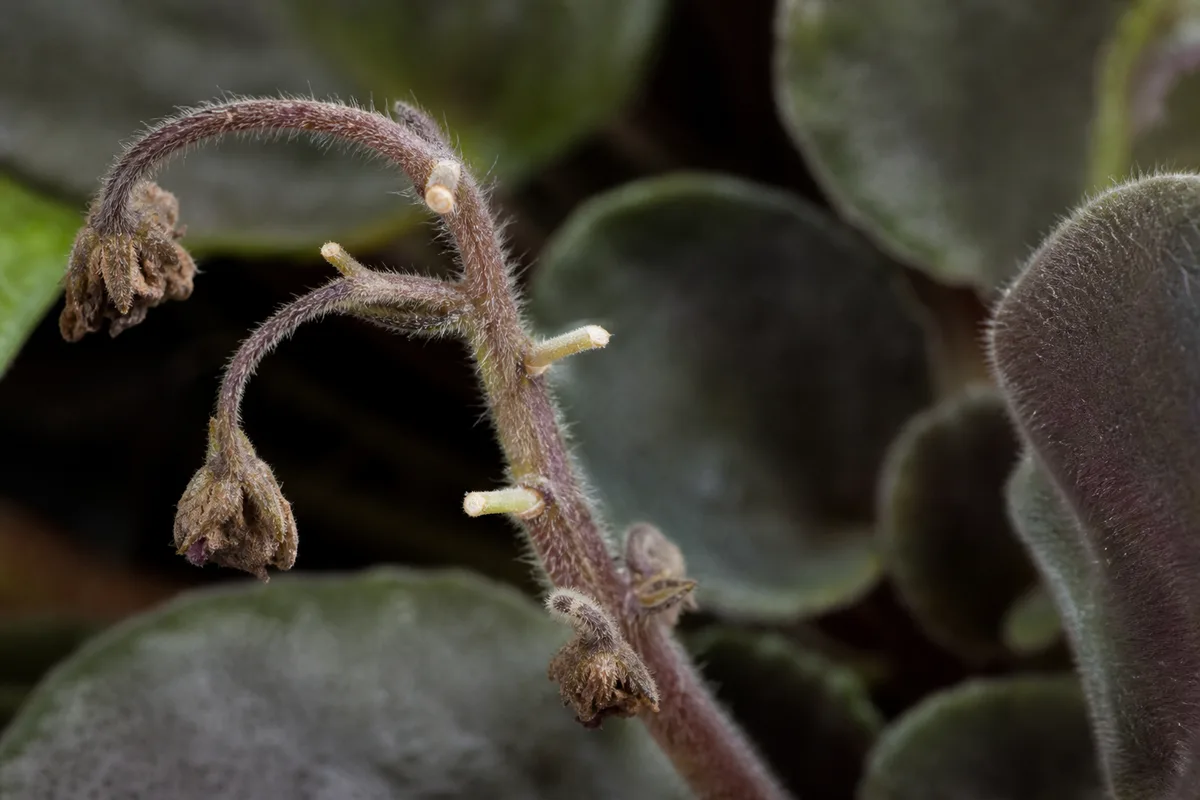
Bud Drop symptoms on African Violet - compare with healthy tissue on the same plant.
Typical patterns:
- Bud drop within a few days of moving the pot points to environmental change, not fungal disease
- Bud drop paired with wilting and wet soil suggests root rot or crown rot instead of a simple bloom pause
- Buds that form but never enlarge in a cool window draft signal temperature instability
- Fine yellow pollen dust on open petals with streaked blooms points to thrips-tap a bloom over white paper to check
- Twisted, gnarled new center growth with distorted bud stems may indicate cyclamen mites-UF/IFAS recommends discarding severely affected plants because control is very difficult
How to confirm the cause
Review the last two weeks of care before blaming disease. Work through this order:
- Soil moisture - Did the pot dry out completely? Lift the pot: light weight plus a dry surface confirms drought stress. A heavy pot plus yellow lower leaves suggests overwatering.
- Recent changes - Was the plant moved, rotated, or repotted? See transplant shock if repotting happened within the last four weeks.
- Air movement - Does it sit near a drafty window, heating vent, or air conditioner? Low humidity below 40% with a dry air draft can collapse buds even when leaves look fine.
- Light - Is exposure bright and indirect for most of the day-within a few feet of a north or east window, or under supplemental lights for 12–16 hours daily?
- Ethylene sources - Is the pot near a fruit bowl, gas range, or smoky area?
- Pests - Tap a bloom over white paper for thrips; inspect for pollen dust and petal streaks.
Symptom triage
| What you see | Likely cause | First action |
|---|---|---|
| Dry surface, light pot, recent missed watering | Drought between bottom-waters | Bottom-water 30 minutes, drain, stabilize location |
| Bud drop 2–7 days after move or repot | Environmental shock | Stop moving; hold water and light steady 4+ weeks |
| Firm crown, healthy leaves, no pests, stable care | Minor stress or ethylene | Remove fruit/smoke sources; wait for next stalk |
| Wet mix, yellow lower leaves, soft crown | Root or crown stress | Stop watering; inspect for root rot or crown rot |
| Pollen dust on petals, streaked flowers | Thrips | Isolate; see thrips guide |
| No buds ever form, upward-reaching leaves | Light deficit, not bud drop | Switch to no flowers checklist |
Lookalike symptoms and when to escalate
Bud drop vs. no flowers: Bud drop means stalks formed and buds aborted. No flowers means zero stalks for weeks-usually insufficient light, suckers, or an oversized pot after repot. Start with the no flowers guide if you never see peduncles.
Bud drop vs. crown rot: Cosmetic bud loss leaves a firm crown and healthy green leaves. Crown rot shows water-soaked, shriveled tissue at the center with wet, sour-smelling mix. That pattern is urgent-see crown rot before waiting for new buds.
Bud drop vs. transplant shock: Repotting within four weeks commonly drops blooms even when the plant is otherwise healthy. If leaves stay turgid and the crown is firm, stabilize care and wait. If wilt persists with wet soil, rule out root rot.
Bud drop vs. thrips: Thrips leave fine pollen powder and silver streaks on leaf undersides; environmental bud drop usually does not. Hold flowers over white paper-a gentle thump drops visible thrips onto the sheet. Streaked, blotchy petals that never open cleanly also point to thrips rather than drought alone.
When to escalate: Contact your local extension office or discard the plant if the center stays twisted and stunted after bud loss (possible cyclamen mites), if the crown softens with wet soil, or if a second flower stalk aborts after you stabilized care for six weeks-inspect roots before assuming the problem is only environmental.
First fix for African violet
Stabilize the environment before changing anything else: leave the pot in one bright indirect spot, hold temperatures at 65–75°F, and bottom-water with room-temperature water when the top inch of soil dries. Do not move, rotate, or repot until a new bud stalk forms and holds.
If soil was bone dry, bottom-water for 30 minutes and drain-then wait until the top inch dries before the next session. Remove ethylene sources (fruit bowls, smokers, unvented gas appliances) from the room. Pause fertilizer until new buds appear.
If thrips pollen dust is present, isolate the plant and follow the thrips treatment path-do not spray cold water on fuzzy leaves.
Recovery timeline
Once conditions stabilize, expect a new flower stalk in four to eight weeks. Slightly root-bound plants in a light mix often bloom more reliably than freshly repotted ones-though severely bound roots eventually need refresh; see root-bound when the neck elongates or mix breaks down.
The first new buds may still abort if stress recurs-watch whether the second stalk holds. If two consecutive stalks fail after stable care, unpot and inspect roots for decay before assuming the cause is only drought or drafts. Full bloom recovery typically takes one to two flowering cycles.
What not to do
Do not repot while buds are forming-transplant shock drops blooms. Do not apply high-nitrogen fertilizer to force flowers; it pushes leaves at the expense of buds. Do not place the plant near ripening fruit, gas appliances, or cigarette smoke. Do not top-water with cold water on leaves during recovery-cold water causes permanent spots on African violet foliage.
Do not assume bud drop means the plant will die. A firm crown with green leaves and stable moisture usually recovers. Do not treat with fungicides unless you confirm powdery mildew on bud stems-most bud loss is cultural, not fungal.
How to prevent bud drop next time
Keep the plant in a stable east- or north-facing window with bright indirect light for 12–16 hours daily, or run supplemental LEDs 8–12 inches above standard rosettes on a timer. Bottom-water on a consistent rhythm when the top inch dries-never let the pot go bone dry, but never leave it sitting in standing water. See the watering guide for wick and self-watering pitfalls.
Maintain 40–60% humidity and 65–75°F year-round. Avoid moving or rotating the pot while bud stalks are developing. Remove spent flowers promptly but wait to repot until the current bloom cycle finishes. Quarantine new plants before placing them near blooming violets to keep thrips from reaching open flowers.
Related African violet problems
- No flowers - no bud stalks form at all
- Thrips - pollen dust, streaked petals, bud failure with pests
- Transplant shock - bloom pause after repot or move
- Crown rot - soft crown, wet soil, urgent
- Root rot - yellow lower leaves, limp plant, wet mix
- Low humidity - dry air drafts collapsing buds
- African violet light - bloom-inducing exposure and supplemental setup
- African violet watering - bottom-water rhythm and self-watering traps
When to use this page vs other African Violet guides
- African Violet watering guide - Use for routine moisture checks before assuming bud drop is the main issue.
- African Violet problems hub - Browse all 52 common issues on this species.