Leaf Miners on African Violet: Causes, Checks & Fixes
Quick answer
Leaf miners on African Violet show as pale squiggly trails inside velvety leaves-the larvae feed between the surfaces where sprays cannot reach. First fix: isolate the plant and remove every mined leaf with sterilized tweezers before checking nearby gesneriads.
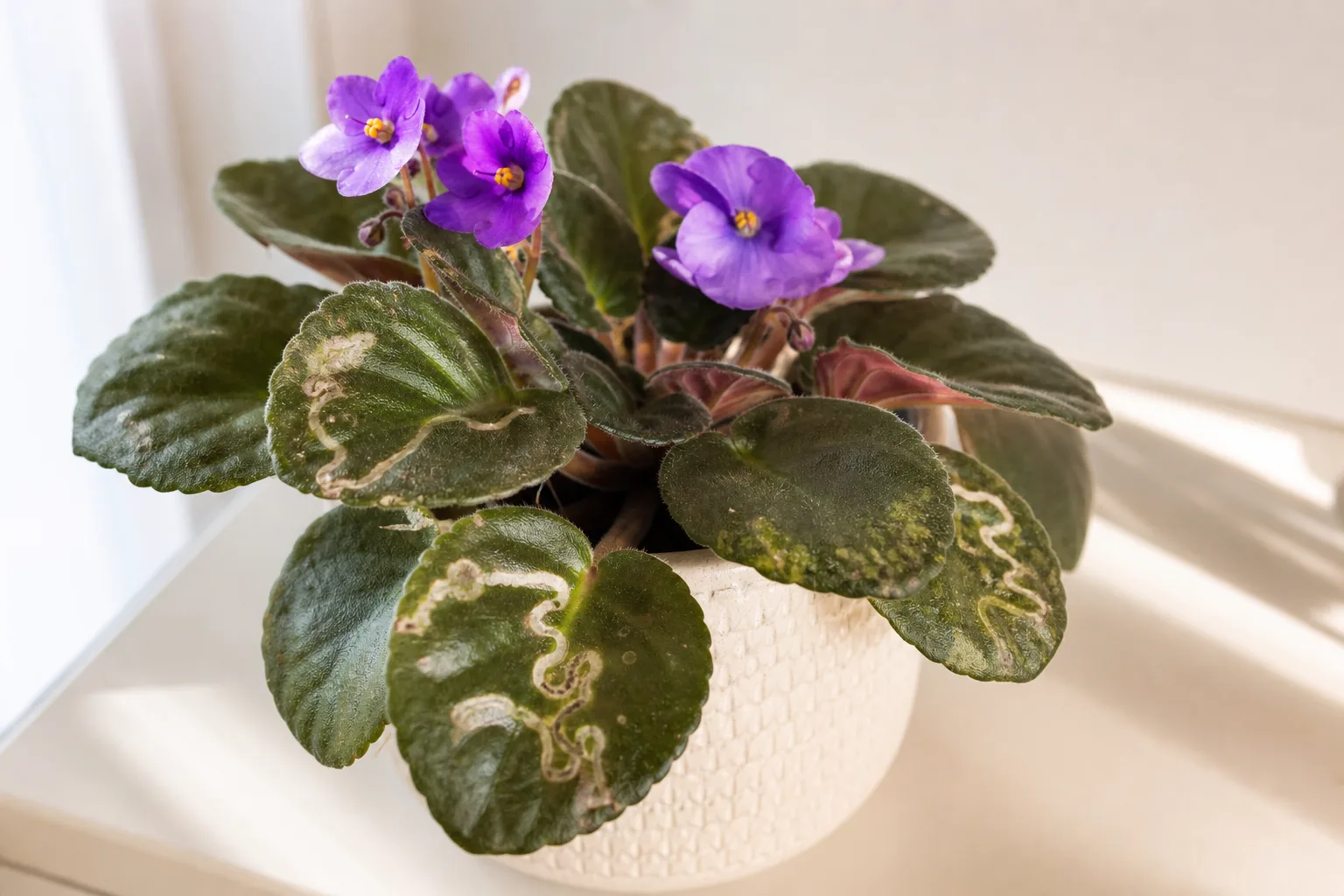
Leaf Miners on African Violet: Causes, Checks & Fixes
This guide covers leaf miners on African Violet. See also the general Leaf Miners guide, watering, and light pages for this plant.
Leaf Miners on African Violet: Causes, Checks & Fixes
Quick answer
Leaf miners on African Violet are fly larvae feeding between the upper and lower leaf surfaces, leaving winding pale trails in the velvety foliage. Because larvae stay inside the leaf, contact sprays miss them-and getting water on the leaves can cause permanent leaf spots on African Violet overview. First fix: isolate the plant and remove and destroy every leaf showing miner damage with sterilized tweezers.
What leaf miners look like on African Violet
The signature sign is a serpentine pale line that widens as the larva grows, or an irregular bleached patch on outer rosette leaves. Trails live inside the tissue-rub the fuzzy surface and the mark does not wipe off. Hold a suspect leaf toward a window: light shines through mined areas like thin parchment.
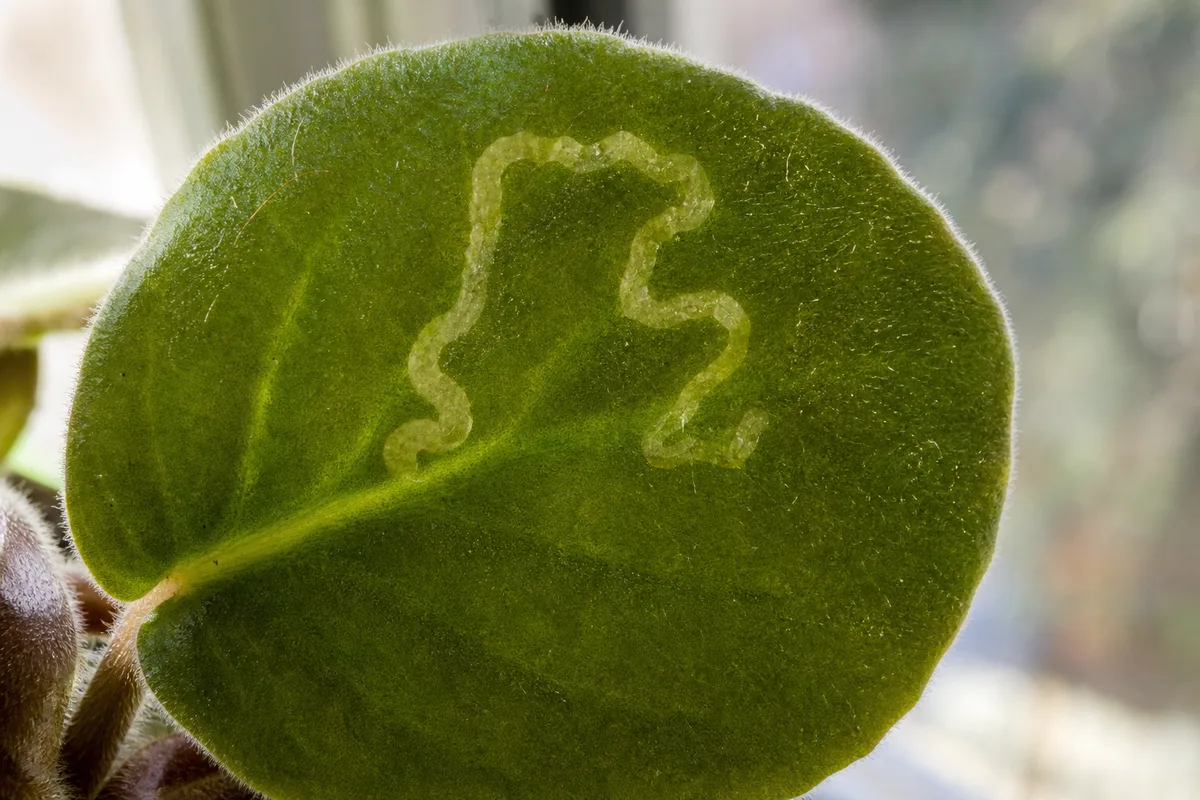
Serpentine pale tunnel inside the leaf tissue, visible when backlit - miner trails live between upper and lower surfaces and do not wipe off.
On African Violet, damage often starts on older outer leaves while the tight crown stays clean if you catch it early. You may also see tiny white stippling where adult flies punctured leaves to feed or lay eggs before mining begins. Heavy mining on multiple leaves makes the rosette look mottled from above, even though each trail is localized inside one leaf.
Why African Violet gets leaf miners
Leaf miner flies lay eggs on susceptible foliage; maggots tunnel inside as they feed. African Violet’s broad, relatively thin leaves give larvae room to mine, and the velvety surface makes trails easy to spot once tissue thins.
Infestations usually arrive on new nursery plants, open windows in warm months, or shared shelves with other gesneriads. Unlike cyclamen mite damage-which stunts and distorts new center growth-miners typically scar mature outer leaves first. Unlike crown rot from overwatering on African Violet, mined leaves feel dry and structurally intact except for the internal trail.
Although damage from these pests is unsightly, it is rarely serious on a healthy violet if caught early. The bigger risk on this plant is reaching for foliar sprays that wet the crown and trigger leaf spots or rot.
How to confirm the cause
Work through these checks before treating for fungus, mites, or nutrient problems:
- Backlight the leaf - Internal tunnels confirm miners; surface rings from water droplets have sharp edges and sit on top of the fuzz.
- Split a suspicious section - A clean blade through a fresh trail may reveal a tiny white or yellow larva.
- Track spread over a week - Active mines lengthen; old dry brown trails may be past damage with no live larva.
- Inspect the crown - Miners on outer leaves with clean new center growth point to a localized pest, not a systemic disease.
- Scan neighbors - Matching trails on gloxinias, streptocarpus, or other shelf mates suggest flies are still active in the room.
First fix for African Violet
Isolate the plant away from other gesneriads and flowering houseplants. Leaf miner flies are mobile; one affected violet on a crowded shelf can seed others within weeks.
Remove every mined leaf at the base with sterilized tweezers. Bag and discard debris-do not compost indoors where larvae can pupate and reinfect. Wipe tweezers with rubbing alcohol between cuts if several leaves are affected.
This manual removal is the safest first step on African Violet because larvae are protected inside leaf tissue, and most houseplant insect sprays are not designed for fuzzy gesneriad leaves that must stay dry. Monitor daily for two weeks and remove any new trails the moment they appear.
If mining persists after repeated leaf removal and you must escalate, systemic options applied according to label directions-such as soil-applied products labeled for leafminers on houseplants-avoid wetting foliage. Read labels carefully; many foliar products are not registered for African Violet.
Step-by-step recovery
After the first removal pass:
- Day 1–3: Check the rosette under bright light each morning. Remove leaves with any new pale line, however short.
- Week 1–2: Watch outer leaves and petioles for fresh stippling or trails. Keep the plant isolated even if no new damage appears-flies may still be present.
- Week 3–4: If no new mines appear, you can return the plant to its usual spot but continue weekly leaf inspections for one full month.
- Ongoing: Judge recovery by clean new leaves opening from the center, not by old scars fading-mined tissue never heals.
Blooming may pause while the rosette regrows after heavy leaf loss. That is normal; resume your usual bottom-African Violet watering guide and avoid fertilizing heavily until new growth looks stable.
Lookalike symptoms
- Cold-water leaf spots - Brown or tan rings on the leaf surface after splashing; not a winding internal trail.
- Cyclamen mite damage - Stunted, brittle, twisted new growth in the crown; no serpentine lines inside outer leaves.
- Fungal leaf spots - Surface lesions with defined edges, often after wet leaves or high humidity; do not meander like a mine.
- Thrips scarring - Silvery streaks or distorted buds and flowers; damage is external, not a tunnel between leaf layers.
Recovery timeline
New clean leaves may appear within one to two weeks after the last mined leaf is removed, depending on light and temperature. Severe infestations that stripped most of the rosette can take a month of vigilant picking before you trust the plant again.
Signs the problem is improving: tunnels stop lengthening, no fresh stippling on outer leaves, and the crown pushes unmarked foliage. Signs it is worsening: new mines on center leaves, trails appearing on neighboring violets, or larvae visible when you split fresh tunnels.
What not to do
Do not spray neem oil or insecticidal soap heavily across African Violet leaves to hit miners-the wetting risks leaf spots and crown problems. Do not ignore early trails hoping tissue will heal; it will not. Do not return the plant to a crowded shelf before two full weeks without new damage. Do not compost mined leaves in an indoor bin where pupae can survive.
How to prevent leaf miners next time
Isolate new purchases for at least two weeks before placing them beside established violets. Inspect leaves under bright light during weekly care, keep foliage dry with bottom watering, and remove old leaves that touch damp soil. If windows stay open in summer, check shelf plants weekly-adult flies can reach indoor collections from outdoor hosts.
Good airflow between pots reduces stress and makes weekly inspection easier. Prompt removal of the first mined leaf breaks the life cycle before several generations build up in a warm room.
When to worry
A single outer leaf with one trail is manageable. Escalate if tunnels spread through most of the rosette, center leaves are mined, or multiple violets and gesneriads show the same pattern. Heavy mining weakens blooming and leaves scarred tissue that can hold moisture if you later mist or splash the plant.
Discard is rarely necessary for one established plant, but a severely mined violet sharing a tight collection may be less risky to replace than to chase flies through a dozen neighbors.
Conclusion
Leaf miners on African Violet are confirmed by internal serpentine trails visible when leaves are backlit-not by surface spots or crown distortion. Isolate, remove mined leaves with dry tools, and monitor new growth rather than soaking fuzzy foliage with sprays. Clean center leaves within a few weeks mean you have broken the cycle; recurring trails mean flies are still present and removal must continue.
When to use this page vs other African Violet guides
- African Violet watering guide - Use for routine moisture checks before assuming leaf miners is the main issue.
- African Violet problems hub - Browse all 52 common issues on this species.