Purple Leaves on African Violet: Causes, Checks & Fixes
Quick answer
On African Violet, sudden purple or reddish leaves usually point to cold stress or excess light, not healthy growth. First, move the pot away from cold glass and direct sun.
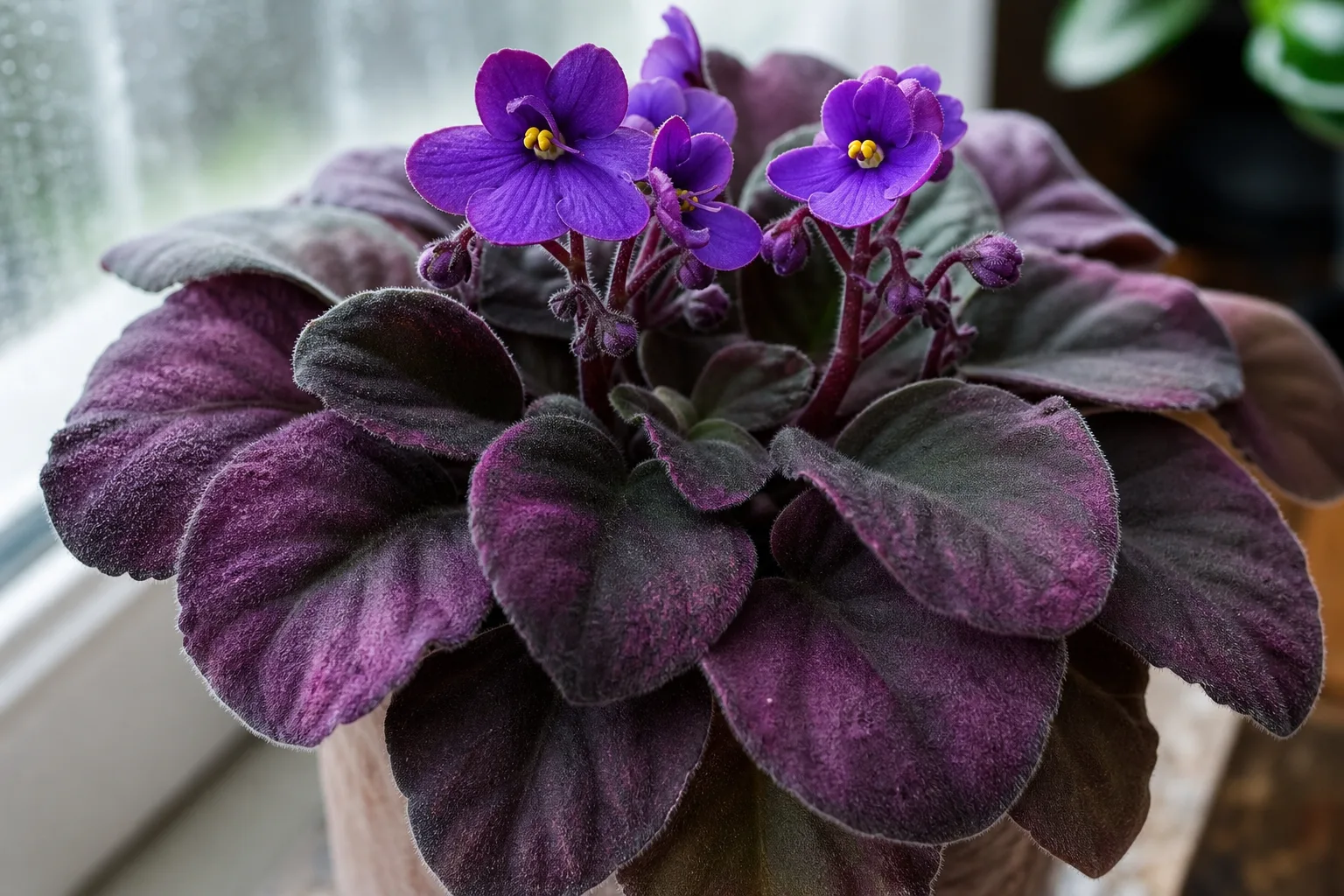
Purple Leaves on African Violet: Causes, Checks & Fixes
This guide covers purple leaves on African Violet. See also the general Purple Leaves guide, watering, and light pages for this plant.
Purple Leaves on African Violet: Causes, Checks & Fixes
Quick answer
When your Saintpaulia (African violet) develops sudden purple or reddish foliage, run three checks before anything else: overnight temperature at leaf level, contact with cold window glass, and recent light changes. On this species, those three variables explain most cases.
Purple or reddish color usually signals stress, not a healthier growth phase. Plants below 60°F develop curled, cupped, brittle foliage and may show purple on leaf undersides-especially on varieties with red reverses (Optimara). Excess direct light can bleach the upper surface while adding reddish stress tones (Iowa State Extension). Some cultivars naturally carry stable purple-red reverses that never change with the seasons (AVSA).
First fix: move the pot away from cold glass and direct afternoon sun, then hold conditions steady for 7 to 14 days before making other changes.
Is this normal cultivar color or stress purple?
Many African violet hybrids are bred with dark red or purple leaf reverses-the underside color is part of the variety, not a problem. Optimara notes that purple undersides on red-reverse varieties can be normal, which is why timing matters more than hue alone.
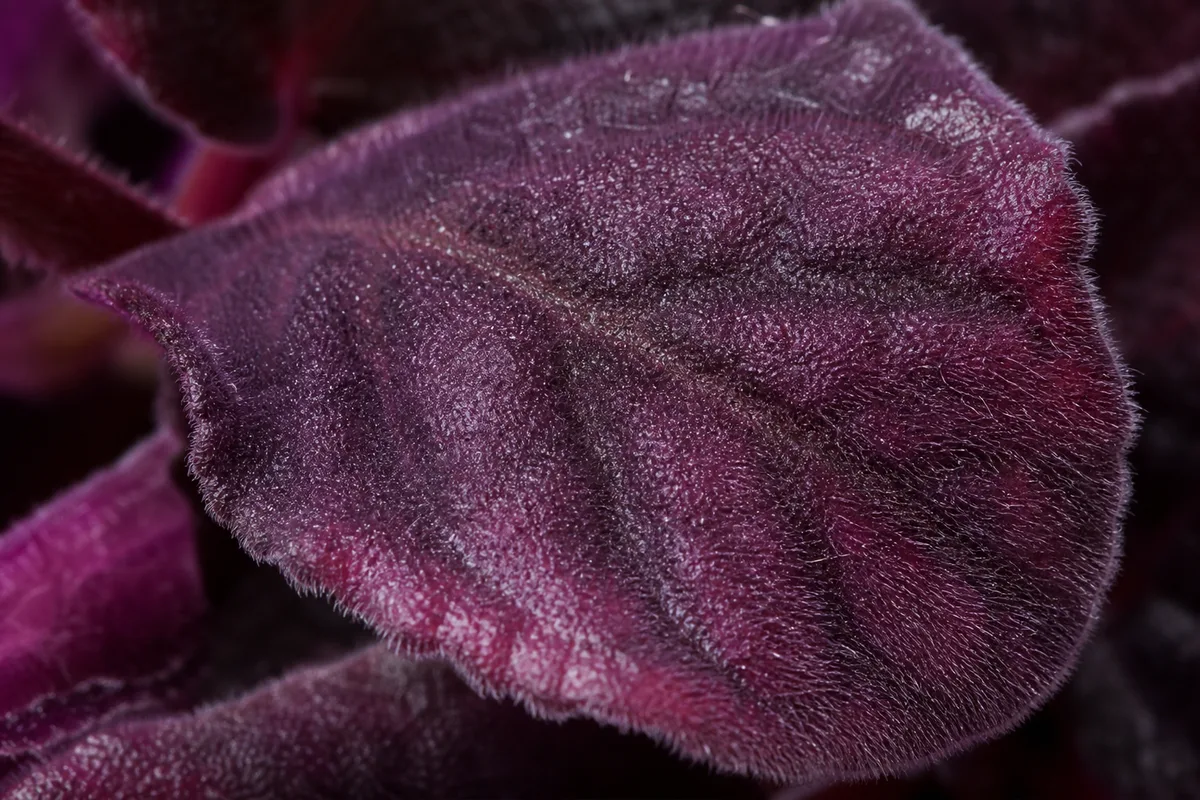
Purple Leaves symptoms on African Violet - compare with healthy tissue on the same plant.
Use this fast rule:
- Likely cultivar trait: The purple underside has looked the same since you got the plant, flowering is normal, and leaves feel supple-not brittle. Varieties marketed with “red reverse” or “boy” leaf types often show this pattern from the first mature leaf.
- Likely stress: Purple or reddish tones appeared within days of a cold night, a drafty windowsill, or a move to a sunnier window. The upper leaf surface may also look pale, bleached, curled, or stiff.
If the leaf surface is pale or bleached, treat it as stress first and read the pale leaves guide for light-bleaching patterns that overlap with reddish stress color.
Why African Violet leaves turn purple
On African violets, purple or reddish foliage usually traces to anthocyanin buildup-protective pigments plants produce under environmental stress (MSU Extension). On this rosette species, the practical triggers are almost always environmental:
- Cold stress: Drafts, night chill below about 60°F, or leaves pressed against cold window panes injure the shallow root zone and velvet foliage (UGA Extension). Purple undersides often appear before cupping and brittleness worsen.
- Excess light: Too much direct sun bleaches or scorches leaves; stressed tissue can show reddish or bronzed tones alongside pale patches (Iowa State Extension).
- Combined cold then light: A chilled plant moved into stronger sun to “help it recover” can show purple from chill and bleaching from light on the same leaves-treat cold first, then adjust light.
Stress purple appears suddenly after an environment change. Stable cultivar color does not.
Winter windowsill case (January 2026)
A grower in a Midwest apartment noticed purple-red undersides on outer leaves only after two January nights with the pot touching an east window. A thermometer at leaf level read 54°F at 6 a.m.; room air was 68°F. Leaves felt slightly stiff but not mushy. Moving the pot 6 inches back from the glass and watering with room-temperature water stopped new purple spread by day four. Healthy green center leaves emerged by day eleven. Outer marked leaves never reverted to full green-recovery was judged by new growth, not old color.
How to confirm the cause
Step-by-step checks
- Check overnight temperature at leaf level. If it drops near or below 60°F, cold stress is likely (UGA Extension). A room thermometer on the wall can read 65°F while the leaf touching glass is far colder.
- Check placement. Leaves or pot rim against cold window glass, or a draft from an HVAC vent, prioritize cold correction (UGA Extension).
- Check light pattern. Pale or bleached upper surfaces with small, crinkled growth point toward excess light (Iowa State Extension). Dark, stretched petioles with few blooms suggest the opposite-see not enough light.
- Check timing. Sudden color after a brighter window move is usually light related. Sudden color after a cold night is usually temperature related.
- Check new center growth. If the crown produces normal green leaves after environment fixes, your diagnosis is likely correct.
Cold vs light vs cultivar on African Violet
| Pattern you see | More likely cause | What to do first |
|---|---|---|
| Purple underside with curled, cupped, brittle leaves | Cold stress | Move away from glass/drafts; stabilize temps in the mid-60s to 70s°F |
| Purple with pale or bleached patches on the upper surface | Excess light | Filter sun with sheer curtain or relocate to bright indirect exposure |
| Purple underside stable since purchase; normal flowering | Cultivar trait | Monitor only; no aggressive treatment |
| Purple after chill, then moved to a sunny window; cupped + bleached mix | Combined cold then light | Fix warmth first; reduce light only after temps stabilize 3–5 days |
Purple leaves vs cold damage vs pale leaves
These three guides overlap in winter windowsill care but answer different questions:
| Your main symptom | Start here | When to switch guides |
|---|---|---|
| Sudden purple or reddish color; unsure if cultivar or stress | This page | - |
| Ring spots, cold-water splash marks, watersoaked tissue after a chill | Cold damage | Purple alone without rings or mush may stay on this page |
| Washed-out, bleached, or yellow-green upper leaves | Pale leaves | Reddish stress tones with bleaching still start here, then cross-check pale-leaves |
| Dark green, stretched petioles, no blooms | Not enough light | Purple from low light is uncommon; stretch points to light deficit instead |
If purple appears with tight, distorted crown growth after severe chill, escalate to crown rot checks-cool, wet crowns are vulnerable when temperatures drop (Optimara).
When purple is not cold or light
Most purple-leaf cases on African violet are temperature or light. Rule out these patterns before chasing rare causes:
- Phosphorus deficiency can purple leaf edges on many crops (MSU Extension), but on African violets it is uncommon when you feed lightly at each watering. If outer leaves purple at margins and growth has stalled for months with no cold or light trigger, review your watering and fertilizer routine before adding extra phosphorus.
- Heat stress from sustained highs above about 80–85°F slows growth and can distort flowers (Missouri IPM)-usually without classic purple undersides. See heat stress if the plant sits near a heat register or sun-baked west window in summer.
- Crown injury after deep chill: if the center softens, wilts, or stops producing leaves despite corrected temps, stop self-treatment and inspect for rot.
First fix for African Violet
Move the plant to a stable, bright-indirect location that avoids both direct afternoon sun and cold surfaces. This single move corrects the two most common causes at once. Keep temperatures in the species comfort range-roughly 65 to 80°F day and night, with night lows above 60°F (UMN Extension, UGA Extension).
On the next watering, use room-temperature water because cold water can mark leaves with ring spot when leaf and water temperatures differ sharply (UGA Extension). See the full watering guide for bottom-watering technique that keeps moisture off fuzzy leaves.
Do not stack multiple treatments on day one. No heavy fertilizing, no immediate African Violet repotting guide, and no intense grow-light “recovery blast.”
Step-by-step recovery
Days 1–3
- Relocate and stabilize temperature/light.
- Remove only obviously mushy or dead tissue.
- Keep routine watering steady; avoid sudden wet-dry extremes.
Days 4–14
- Watch the crown and newest leaves.
- Confirm purple spread has stopped.
- Verify no new bleaching appears in the new location.
Weeks 3–6
- Resume normal feeding only after active, healthy new growth returns.
- Prune older damaged leaves gradually, not all at once, so the rosette keeps enough leaf area for recovery.
Recovery timeline
Many plants show improvement within 1 to 2 weeks as new center growth normalizes. Existing purple-damaged leaves often stay marked, especially if cold injury was significant. A realistic success marker is not “old leaves turn green again” but new leaves emerge healthy and blooms resume.
If symptoms worsen after two weeks of corrected conditions-crown tightening, new mushy leaves, or spread to the center-reassess for combined draft exposure, ongoing high light, or crown injury. Collect photos and contact your local extension horticulture office or an African Violet Society of America chapter grower for cultivar-specific help.
Lookalikes and mistakes to avoid
African Violet stress can overlap with other problems:
- Mistake: assuming every purple underside is a deficiency. Many varieties naturally show red-purple reverses-compare against your cultivar’s baseline.
- Mistake: chasing color with fertilizer first. Stress recovery depends on environment before feeding.
- Mistake: placing a chilled plant under stronger light. That adds light stress before cold stress has resolved-see the combined-stress row in the table above.
- Mistake: ignoring crown behavior. Recovery is judged by new growth quality, not old leaf color alone.
- Mistake: confusing purple with pale bleaching. Upper-surface washout without purple undersides fits pale leaves better than this guide.
What not to do
Do not place a chilled plant directly under intense grow lights to “warm it up.” Do not fertilize heavily to force green color, and do not strip the rosette of all older leaves at once. Avoid moving the plant repeatedly between windows; African Violets perform best with consistent conditions.
How to prevent purple leaves next time
Build a winter-safe routine:
- Use bright, indirect light; north, northeast, and east filtered exposures are reliable (UMN Extension).
- Pull pots back from cold panes in winter and avoid draft corridors (UGA Extension).
- Keep temperatures steady and avoid prolonged lows below 60°F (UGA Extension).
- If using artificial lights, keep intensity appropriate and watch for bleaching signals (Iowa State Extension).
- Water with room-temperature water to reduce avoidable leaf injury risk (UGA Extension).
For year-round care context-light distance, feeding, and repot timing-see the African violet care overview.
How this guide was reviewed: Written by sai-ananth and reviewed by the LeafyPixels Review Board on 2026-06-17. Cold and light thresholds, cultivar-reverse guidance, and recovery pacing cross-checked with University of Georgia Extension, Iowa State Extension, University of Minnesota Extension, Optimara, and African Violet Society of America resources cited inline above.
When to use this page vs other African Violet guides
- African Violet watering guide - Use for routine moisture checks before assuming purple leaves is the main issue.
- African Violet problems hub - Browse all 52 common issues on this species.