Purple Plant Leaves: Causes, Diagnosis, and Care
'Leaf problems are often the first sign something is off with a houseplant. Purple Leaves can look alarming, but the fix depends on where symptoms start, how fast they spread, and what the soil and roots are doing. This guide walks through how to identify Purple or reddish tint due to stress, cold, or phosphorus deficiency, rule out look-alikes, and treat the underlying cause. Track weekly progress after you change care, and note watering, light, and repotting dates so you can tell whether the symptom is improving or returning.'. Compare upper versus lower leaves, new versus old growth, and soil moisture at root depth before you treat, because the same visible symptom can come from watering, light, pests, or normal aging on different plants.
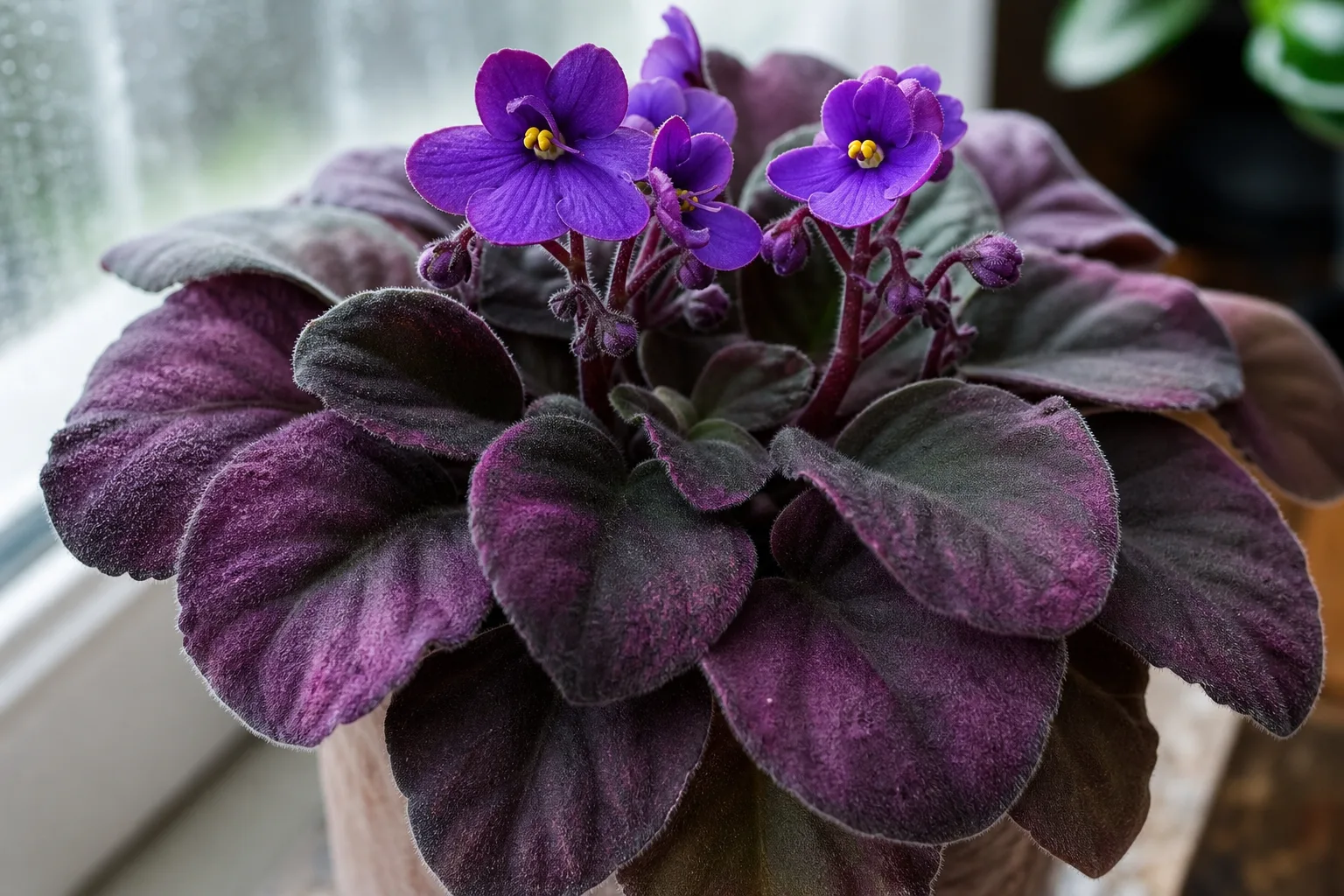
Purple Leaves on Houseplants
Still unsure?Match your symptoms to the most likely problems in under a minute.Run diagnosis →Understand and fix purple leaves
'Leaf problems are often the first sign something is off with a houseplant. Purple Leaves can look alarming, but the fix depends on where symptoms start, how fast they spread, and what the soil and roots are doing. This guide walks through how to identify Purple or reddish tint due to stress, cold, or phosphorus deficiency, rule out look-alikes, and treat the underlying cause. Track weekly progress after you change care, and note watering, light, and repotting dates so you can tell whether the symptom is improving or returning.'. Compare upper versus lower leaves, new versus old growth, and soil moisture at root depth before you treat, because the same visible symptom can come from watering, light, pests, or normal aging on different plants.
Overview
'Leaf problems are often the first sign something is off with a houseplant. Purple Leaves can look alarming, but the fix depends on where symptoms start, how fast they spread, and what the soil and roots are doing. This guide walks through how to identify Purple or reddish tint due to stress, cold, or phosphorus deficiency, rule out look-alikes, and treat the underlying cause. Track weekly progress after you change care, and note watering, light, and repotting dates so you can tell whether the symptom is improving or returning.'. Compare upper versus lower leaves, new versus old growth, and soil moisture at root depth before you treat, because the same visible symptom can come from watering, light, pests, or normal aging on different plants.
How to identify it
- Note which leaves are affected-oldest lower leaves vs newest growth
- Check whether spots are dry and crispy or soft and spreading
- Inspect leaf undersides for pests, webbing, or sticky residue
- Compare light exposure-did the plant move or get direct sun recently?
- Feel soil moisture before assuming the issue is only on the leaves
When to worry
Soft brown patches spreading fast, black stems, or more than a third of leaves declining in a week warrants urgent inspection for rot or disease.
Common causes
Watering stress
Both over- and underwatering show up on leaves first. Yellowing, browning, and drop often trace back to roots sitting too wet or too dry.
Low humidity or harsh tap water
Dry indoor air and mineral buildup cause brown tips and edges on sensitive plants like calatheas and peace lilies.
Incorrect light
Too little light weakens leaves; too much direct sun scorches them. Purple or reddish tint due to stress, cold, or phosphorus deficiency after a window move often points to light.
Pests or fungal disease
Stippling, webbing, spots with halos, or powdery patches mean the leaf damage may be infectious or insect-related-not just care stress.
Step-by-step fix
Document the pattern
Photograph affected leaves and note whether damage is on old growth, new growth, or one side of the plant.
Check soil, roots, and drainage
Confirm moisture at root level and that the pot drains. Many leaf issues resolve once watering stabilizes.
Adjust light and humidity
Move to bright indirect light if leggy or faded; pull back from harsh sun if scorched. Group plants or use a humidifier for crispy edges.
Treat pests or fungus if present
Isolate affected plants. Wipe leaves, use insecticidal soap for pests, and improve airflow for fungal spots.
Remove damaged tissue
Trim fully yellow or brown leaves at the base. Partial brown tips can be trimmed for appearance; they will not turn green again.
Prevention tips
- Water based on soil dryness, not leaf appearance alone
- Keep plants in appropriate light for their species
- Inspect leaves monthly for early pest signs
- Use filtered water on sensitive foliage plants
Common mistakes
- Removing all yellow leaves before fixing the root cause
- Fertilizing a stressed plant hoping leaves green up faster
- Spraying leaves at night, which encourages fungal spots
Purple leaves can be perfectly healthy, especially on cultivars bred for burgundy foliage or plants with naturally colored undersides. They can also appear after a cold night, a sharp increase in light, slowed root activity, or a nutrient-uptake problem. Color alone cannot separate those possibilities.
The common shortcut—purple equals phosphorus deficiency—creates more mistakes than clarity. Phosphorus shortage can be associated with purpling in some plants, but genetics, environment, development, and root function all change pigment expression. Adding fertilizer before checking those factors can create nutrient excess without fixing the cause.
This guide uses a conservative diagnostic method based on extension, horticultural, and plant-science guidance reviewed in July 2026. The two African violet images are visual references, not proof of a specific deficiency or the author’s firsthand diagnostic case. Identify the plant, compare leaf ages and surfaces, check roots and environment, and reconstruct the timing before treating.
Quick Diagnosis: Why Leaves Look Purple or Red
Leaves look purple or red when colored pigments are naturally present or become more visible in response to genetics, development, light, temperature, or stress. In some plants, nutrient limitation can contribute, but the color must be interpreted with growth, roots, and environmental history.
Start with this pattern map:
| Pattern | More likely explanations | Evidence to check | Decision |
|---|---|---|---|
| Stable purple cultivar with vigorous growth | Natural genetics | Plant identity and older photos | Accept as normal |
| Purple only on normal leaf undersides | Species or cultivar trait | Consistency across healthy leaves | Monitor; do not fertilize by color |
| Color intensifies after brighter light | Light-responsive pigmentation or stress | Exposure boundary, scorch, timeline | Monitor if firm; reduce exposure if scorched |
| Purpling after cold window exposure | Cold response or injury | Minimum temperature, tissue texture | Remove cold contact |
| Older leaves purple plus weak growth | Nutrient or root limitation | Roots, pH, feeding and substrate | Test before targeted feeding |
| Whole plant stunted in wet mix | Root dysfunction and reduced uptake | Drainage, root condition, odor | Correct drainage; inspect roots |
| Purple plus spots, distortion, or insects | Pest, disease, or chemical injury | Undersides, lesions, treatment history | Isolate and identify |
Penn State’s plant-problem diagnostic method emphasizes identifying the plant, examining symptom distribution, and considering both living and nonliving causes. That approach matters here because “purple” describes appearance, not mechanism.
Map Species, Leaf Age, Surface, and Timing
First, identify the species and cultivar. Tradescantia, purple passion plant, Oxalis triangularis, and many ornamental cultivars carry expected purple pigments. Some African violets naturally have reddish or purplish leaf backs; the University of Wisconsin horticulture profile notes that African violet leaves are often dark green with red-tinted undersides. That makes a stable underside color less concerning than a new change paired with weak growth or tissue damage.
Second, map where the color sits. Is it on new growth, old lower foliage, margins, veins, stems, the upper surface, or the underside? Uniform, stable coloration suggests a different explanation from a change that begins on cold-facing margins or older leaves.
Third, compare with earlier photographs. A phone image from the same plant is more useful than comparing it with a different specimen online. Note whether growth rate, leaf size, flowering, or root-zone behavior changed at the same time.
Finally, reconstruct the previous two to six weeks: window move, grow-light change, outdoor exposure, cold night, repotting, waterlogging, drought, fertilizer, or pesticide. The timeline often carries more diagnostic weight than the exact shade.
Natural Purple Foliage and Healthy New Growth
Natural coloration tends to repeat predictably. Leaves emerge with a similar pattern, the plant grows at an expected rate, roots and stems remain firm, and there is no expanding necrosis or distortion. Color may still vary with season and light without indicating disease.
Do not try to “green up” a purple cultivar. Increasing nitrogen or shading it heavily can alter growth and appearance but does not correct a defect that does not exist. Confirm the cultivar from a reliable nursery label, botanical-garden reference, or taxonomic description when possible.
Variegated and pigmented plants may change their balance of green and colored tissue under different light. A healthy change should still be evaluated for scorch or weak growth, but pigment intensity alone does not establish harm.
Use the wider image to compare canopy-wide distribution. Photographic white balance, surrounding colors, and screen settings can shift green toward purple, so inspect the actual plant under neutral light before concluding that its color changed.
What Anthocyanin Color Can—and Cannot—Tell You
Anthocyanins are pigments that can produce red, purple, and blue hues in plant tissues. Their expression depends on genetics and cellular conditions and may change with development or environment. A recent peer-reviewed review of anthocyanin regulation describes light, temperature, nutrients, and plant hormones as interacting influences, which is why color cannot be mapped to a single cause across species.
Anthocyanin accumulation is sometimes associated with high light, cool temperature, nutrient imbalance, or other conditions, but it is not a universal stress meter. The evidence is species- and context-dependent, and even proposed protective functions do not make a purple leaf proof that damage occurred. Two species in the same room can respond differently, and a purple cultivar may be healthiest when strongly colored.
Therefore, pigment is supporting evidence only. Combine it with growth rate, leaf texture, root condition, temperature, light history, and symptom distribution. Avoid claims such as “purple protects the plant” or “purple proves deficiency” without species-specific evidence.
Cold Stress and Chilled Root Zones
Cold can slow physiological processes and nutrient uptake, and some plants develop red or purple coloration during cool conditions. A pot beside cold glass may experience a lower root or leaf temperature than the room thermostat shows. Drafts can create brief exposure that averages fail to capture.
Measure temperature at plant level, especially overnight. Move foliage away from cold glass and doors while preserving suitable light. Warm conditions gradually; do not place a chilled plant directly against a heater.
Cold and wet mix are a difficult combination because water use slows while roots remain saturated. Reduce watering frequency according to actual drying, not by a fixed seasonal rule. Do not withhold water from a plant that is genuinely dry.
Separate Reversible Pigment From Cold Injury
Reversible pigmentation leaves tissue structurally sound: leaves remain firm, spots do not turn water-soaked or black, and new growth resumes under suitable conditions. Color may fade slowly or remain on old leaves even after the environment improves.
Cold injury is more concerning when tissue becomes translucent, water-soaked, dark, limp, or necrotic. Symptoms can appear after exposure rather than immediately. Penn State’s poor plant health diagnostic key includes cold damage among non-pest causes that can blacken and kill leaves.
Wait until the boundary between living and dead tissue is clear before heavy pruning. Remove collapsed material with clean tools, protect the plant from further chilling, and monitor stems and buds.
Bright Light, Sun Exposure, and Protective Pigmentation
Some plants produce stronger red or purple tones under higher light. This can be a normal acclimation response, but the same exposure may exceed a shade-adapted plant’s tolerance. Look for bleaching, crisp tan patches, curled margins, or damage sharply confined to the window-facing side.
If color intensified after a move and the plant is otherwise firm and growing, monitor before intervening. If scorch accompanies it, pull the plant back or diffuse the exposure, then acclimate gradually. Do not move directly from harsh sun to deep shade; choose the appropriate range for the species.
The University of Minnesota indoor-light guidance explains that plant light requirements vary and that distance, duration, and source affect usable light. Human perception of a “bright room” is not an accurate plant-light measurement.
Grow lights also create gradients. Check distance, heat, and duration, and follow manufacturer safety instructions. Purple color alone does not mean the plant wants either more or less light.
Phosphorus Deficiency Without the Shortcut
Phosphorus is essential to plant metabolism, and deficiency can be associated with reduced growth and purple coloration in some plants. Penn State’s phosphorus management reference describes purpling along lower leaf edges in young deficient crop plants, but a field-crop pattern is not a universal houseplant diagnosis.
Look for a cluster of evidence: poor growth, older-leaf involvement, a long period without nutrient replenishment, root-zone conditions compatible with reduced availability, and ideally testing. A vigorous naturally purple plant does not fit that cluster.
Do not add phosphorus, bone meal, or bloom booster merely from color. The Royal Horticultural Society nutrient guide says phosphorus deficiency is uncommon, can be mimicked by low temperature or waterlogged compost that hinders uptake, and should not prompt phosphorus-rich fertilizer without soil-analysis evidence. A container houseplant may differ from the crops and outdoor soils used in many deficiency examples, which makes root inspection and testing more reliable than color alone.
Roots, pH, and Nutrient Availability
A substrate may contain phosphorus while roots cannot acquire it efficiently. Cold roots, waterlogging, severe drought, root rot, unsuitable pH, compaction, or high salt conditions can limit uptake. Correcting root function may solve the apparent nutrient problem without adding more phosphorus.
Check drainage, moisture through the full root ball, root texture, pot size, and substrate age. Review water source and fertilizer history. Use species-appropriate substrate pH guidance; there is no single ideal value for every houseplant and medium.
For a valuable or repeatedly affected plant, substrate testing is more reliable than treatment by color. Tissue analysis may be appropriate in professional collections. Use the result to select a complete, balanced fertilizer or a specific correction rather than layering unmeasured amendments.
Watering Stress, Compaction, and Root Disease
Both prolonged dryness and chronic wetness can reduce root performance. A compact inner root ball may stay dry while surrounding new mix remains wet, creating confusing signals. Large pots can hold more water than a small root system uses.
Check with pot weight, a wooden skewer, and drainage inspection. If genuinely dry, rehydrate evenly and drain fully. If persistently wet, empty runoff and allow suitable drying; unpot only when evidence such as collapse, odor, stem softness, or root condition justifies the disturbance.
Soft, dark, sloughing roots support rot, though healthy color differs by plant and medium. Remove dead roots with clean tools and repot into a proportionate container and suitable fresh mix. Fertilizer should wait until healthy roots and active growth return.
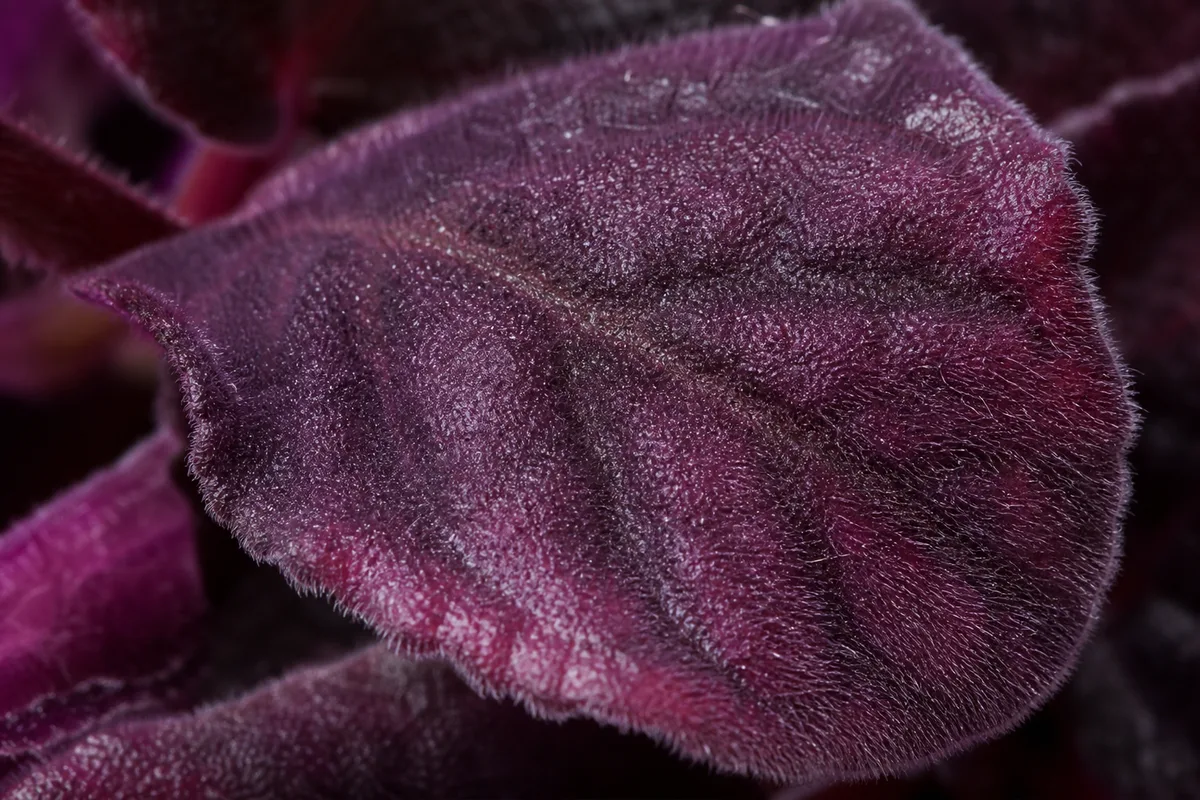
Use the close image to examine whether color is uniform, vein-associated, marginal, or paired with tissue damage. Confirm the same pattern under neutral light on the living plant.
Pests, Disease, and Chemical Look-Alikes
Spider mites can cause stippling and bronzing that reads as dull red-brown under some light. Thrips can silver and distort foliage, while scale or mealybugs weaken plants. Inspect undersides, veins, petioles, stems, and growing points with a hand lens.
True purple pigment usually looks different from dead spots, mosaic, blackening, or surface residue. Expanding lesions, ring patterns, severe distortion, stem damage, or decline across multiple plants justify isolation and expert diagnosis. Penn State’s plant disease overview distinguishes diseases from injury caused by nonliving factors and emphasizes the interaction of host, causal agent, and environment.
Chemical exposure can alter color or kill tissue after concentrated fertilizer, pesticide, household cleaner, or contaminated water. Keep the product, rate, date, and environmental conditions. Do not apply a second chemical to counter an unidentified first injury.
A First-Week Diagnosis and Care Plan
On day one, identify the plant and photograph it under neutral light. Map the colored leaves by age and surface, then record growth, temperature, light changes, watering, repotting, and products from the previous weeks.
Inspect root-zone moisture, drainage, pot size, and pest evidence. Correct immediate hazards such as standing water, an actually dry root ball, cold contact, hot airflow, or scorching exposure. Isolate only when pests or spreading disease are plausible.
For the rest of the week, maintain stable appropriate conditions and watch for progression. Avoid simultaneous fertilizer, repotting, pH adjustment, and relocation. The response to one justified correction is valuable evidence.
Record temperature at the leaf and pot, not only at a thermostat across the room. Note the overnight minimum, hours of direct sun or grow-light exposure, and how long the root ball remains wet. A short cold event or newly intense light period can disappear from memory by the time color becomes noticeable.
Examine paired evidence under neutral light. Purple pigment without wilt, necrosis, distortion, or slowed growth may be benign, while a similar hue beside dead margins and a stagnant crown deserves investigation. Photograph both the upper and lower leaf surfaces because one may carry a normal cultivar trait the other does not.
Keep control plants in mind when several specimens share a shelf. If only one naturally pigmented cultivar changes, genetics or species sensitivity may dominate; if unrelated plants change together, temperature, light, water, or chemical exposure becomes more plausible. Do not deliberately stress another plant as a test.
When Fertilizer or Repotting Is Justified
Fertilizer is justified when the plant is actively growing, roots are healthy, environmental conditions are appropriate, and feeding history or testing supports insufficient supply. Prefer a suitable complete fertilizer at the labeled rate unless evidence supports a targeted amendment.
Repot when roots are clearly diseased, drainage cannot work, the medium has physically failed, or root confinement is severe and relevant to the symptoms. Choose a pot proportional to healthy roots and preserve sound tissue.
Wait when coloration is a stable genetic trait, the plant is acclimating without decline, or roots offer no evidence of trouble. Treatment should solve a demonstrated problem, not merely change a color.
If testing confirms a nutrient issue, correct it within a complete fertility plan. Adding only phosphorus may leave another shortage unresolved, and repeated amendments can alter substrate chemistry. Record the fertilizer analysis and dose so later symptoms can be interpreted accurately.
After repotting, avoid packing mix tightly around roots or burying the crown deeper than before. Water according to the new mix’s actual behavior and the remaining root mass. A container change can alter drying time enough that the previous schedule is no longer safe.
How to Measure Recovery
Recovery depends on the cause. Environmentally induced pigment may fade after temperature, light, or root function improves, but old leaves may keep their color. Dead or scorched tissue will not turn healthy again; naturally purple tissue should not.
Judge the plant by new growth, stem and root firmness, leaf size, symptom progression, and normal water use. Take weekly photographs in the same place and lighting. Compare leaves of the same age.
Do not expect a universal deadline. Species, season, light, temperature, and injury severity affect response. The first success may be no new discoloration rather than immediate greening.
Track growth rate and leaf size alongside hue. A naturally purple plant should still produce firm, appropriately sized foliage, while nutrient or root stress often appears as reduced growth in addition to color. Flowering can also vary for unrelated seasonal reasons, so do not use one missed bloom as proof of deficiency.
Old leaves preserve the conditions under which they developed. If new foliage grows normally after the root zone warms or light is moderated, persistent purple on older tissue may simply be historical. Avoid repeated corrective treatments when the trend is already favorable.
Evaluate flowering separately from foliage color. Some naturally pigmented plants flower well while purple, and a missed bloom can reflect season, maturity, light duration, or pruning rather than phosphorus. Treating pigment and flowering as proof of the same deficiency can lead to excessive inputs.
If color is fading but growth remains weak, keep investigating. The pigment response may have resolved while root damage, low light, or another limitation persists. Recovery requires the whole growth pattern to improve, not merely a shift toward green.
Prevent Unwanted Purple Discoloration
Know the plant’s normal coloration and keep reference photos. Match light and temperature to the species, acclimate after moves, keep foliage from cold glass and HVAC extremes, and adapt watering to actual root-zone drying.
Maintain a structured substrate, working drainage, and a pot size proportionate to roots. Feed according to active growth and label directions rather than pigment intensity. Test pH, salts, or nutrients when a sensitive plant repeatedly develops the same pattern.
Quarantine new plants, inspect regularly for pests, and record major changes. Prevention is less about keeping every leaf green than keeping the plant’s environment stable and noticing departures from its normal pattern.
Review fertilizer labels before combining products. A “bloom” formula, bone meal, and fortified potting mix may all contribute phosphorus, making the total harder to estimate. More input is not a substitute for checking whether roots can use what is already present.
For plants near windows, use a small stand or insulating separation when the surface becomes cold, while maintaining safe airflow and light. Move gradually before seasonal extremes arrive instead of reacting after visible tissue injury.
When to Test or Seek Expert Help
Seek a substrate or tissue test when purple coloration accompanies persistent stunting, root evidence is inconclusive, standard balanced nutrition has been appropriate, or a targeted nutrient treatment would be consequential. Testing is especially useful in valuable collections and repeated production problems.
Use a local extension diagnostic service when coloration comes with rapid collapse, blackening, spreading lesions, severe distortion, extensive root decay, or symptoms across many plants. Provide plant identity, full-canopy and close photos, root information, temperature and light history, and all recent products.
If several species change after the same cold night, water source, or spray, investigate the shared exposure. If only one cultivar stays purple while growing well, genetics becomes the stronger explanation.
Conclusion
Purple plant leaves can be natural, adaptive, or symptomatic. Species identity, leaf age, surface, timing, temperature, light, root condition, pH, growth, and pest evidence distinguish those possibilities far better than color alone.
Do not add phosphorus by reflex. Correct demonstrated environmental or root problems, test when the decision warrants it, and judge recovery by stable healthy growth—not by forcing every purple leaf to become green.
Plants commonly affected
These houseplants often struggle with purple leaves. Open a care guide or plant-specific troubleshooting page for tailored fixes.
 Medium
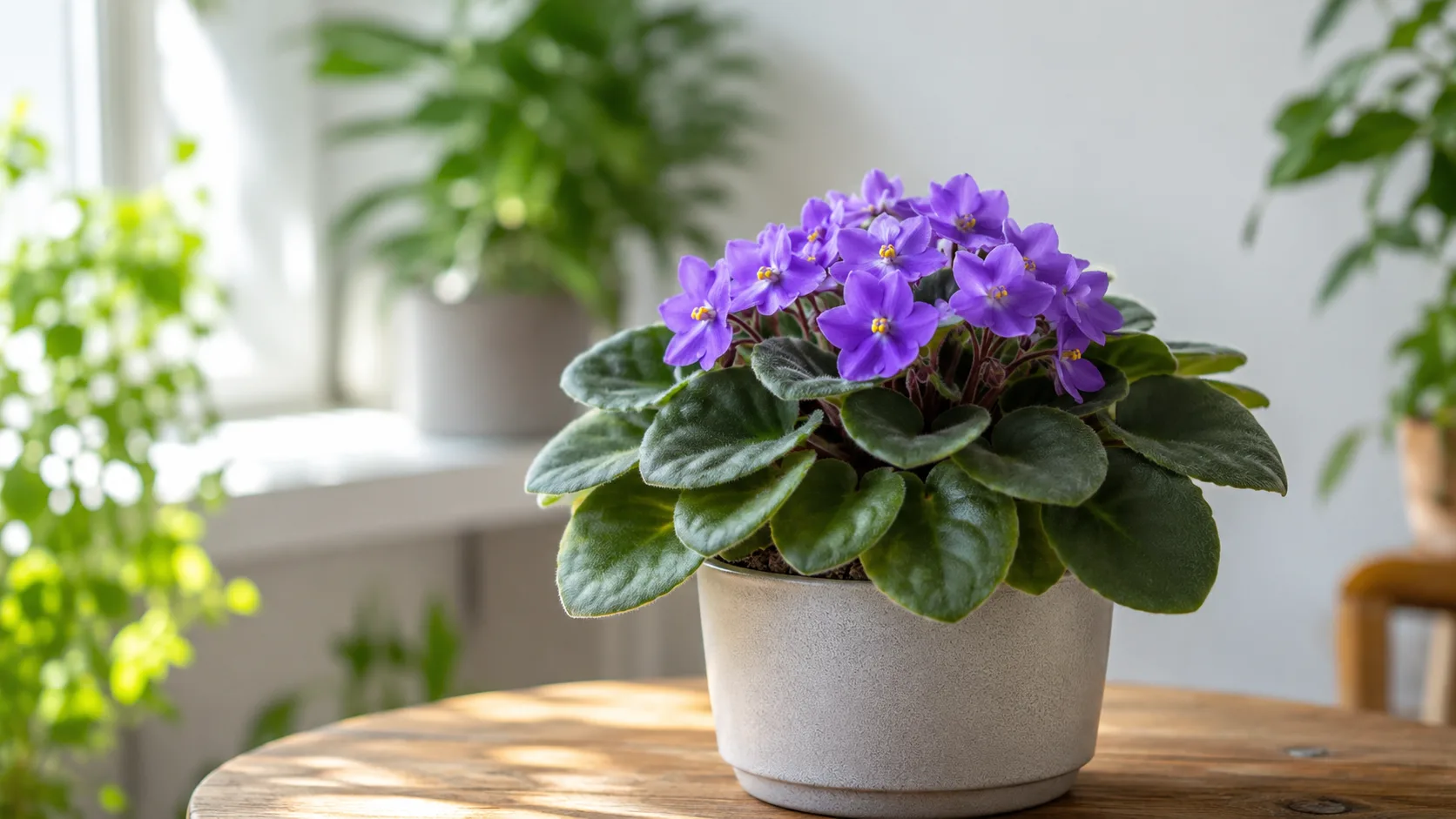
African Violet
Likely causePurple Leaves on African Violet: Devotion Devotion is a stunning purple African violet that blooms with large, showy flowers. This variety has double-bloom flowers and its petals are a rich shade of deep purple with darker veins. Its
Quick fixInspect African Violet, confirm purple leaves matches your symptoms, then adjust care or treat per authoritative guides.
 Medium
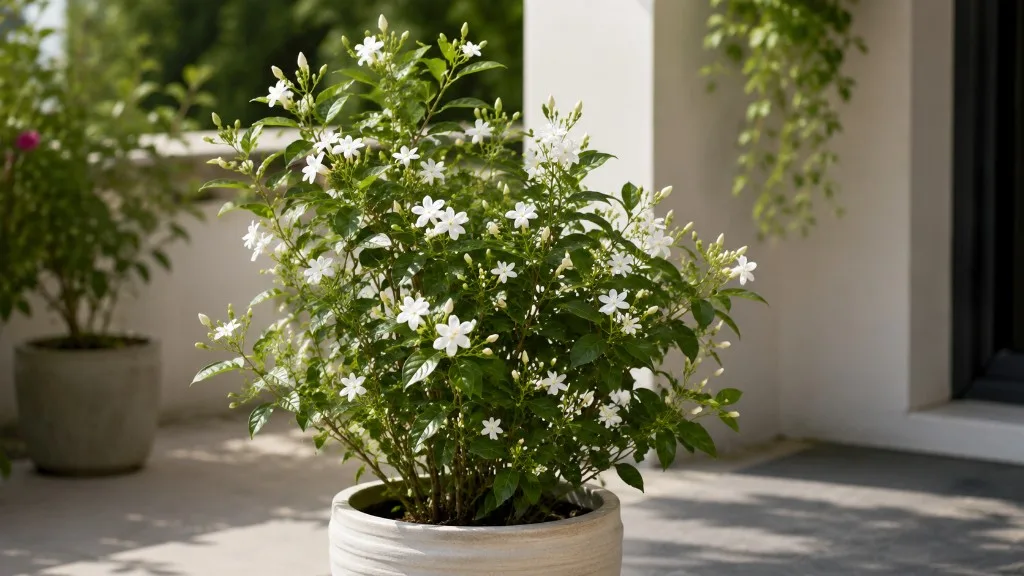
Jasmine
Likely causeCestrum elegans, the purple cestrum, red cestrum, or bastard jasmine, is a species of flowering plants in the genus Cestrum. Cestrum elegans belongs to the family Solanaceae. Solanaceae is derived from the Greek language meaning a plant of
Quick fixConfirm diagnosis on your Jasmine, then address the most likely care or pest factor described in current extension guidance.
 Easy
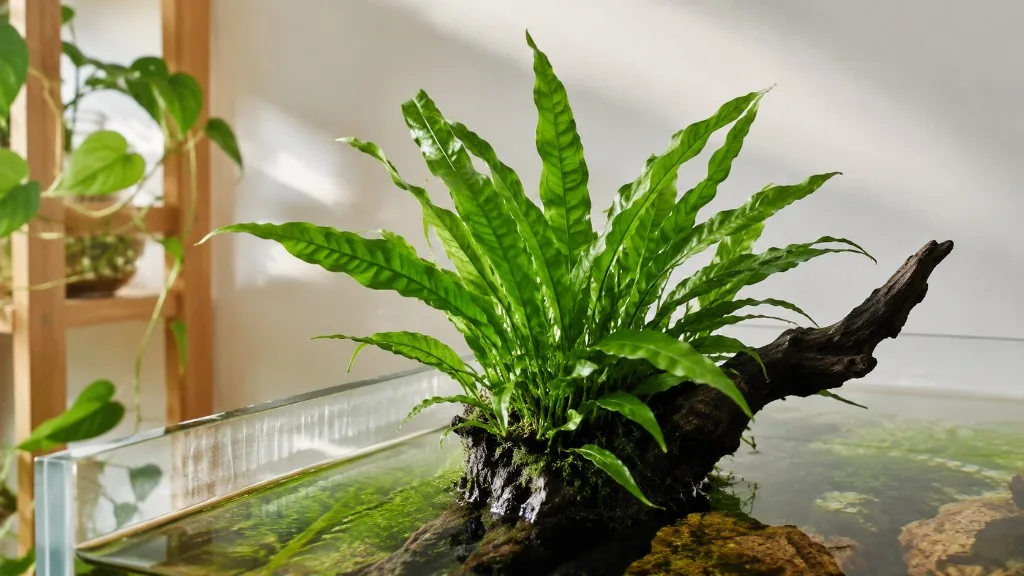
EasyJava Fern
Likely causeThe typical java fern consists of long, wavy leaves that can vary in color from medium to dark green. Some leaves may have black lines running through them, which is completely normal, or have black bumps on the surface, which indicate new
Quick fixConfirm diagnosis on your Java Fern, then address the most likely care or pest factor described in current extension guidance.
 Medium
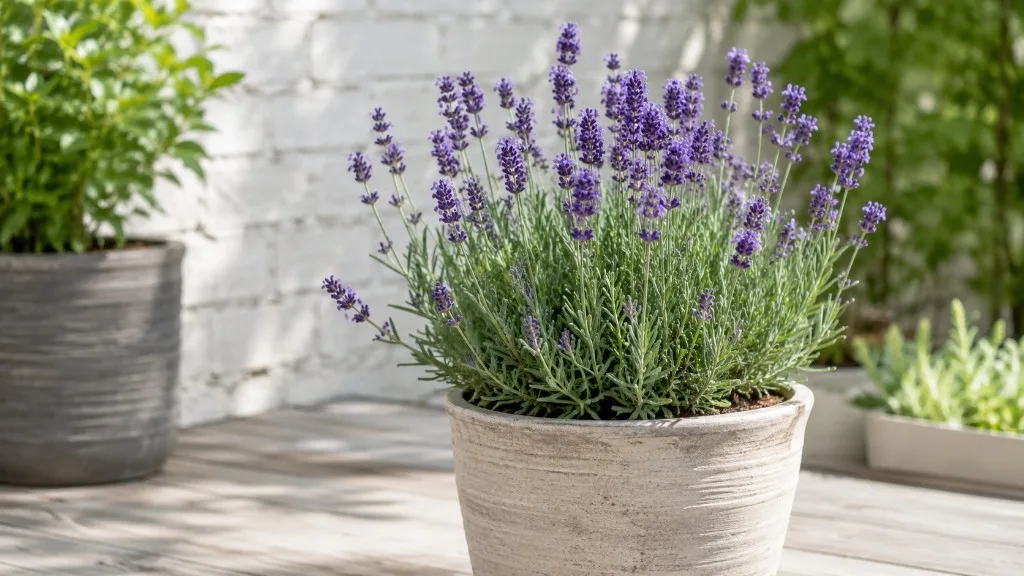
Lavender
Likely causeFoliage: The foliage of ‘Ellagance Purple ’ is a beautiful silver-green, providing a striking contrast to the vibrant purple flowers. The leaves are narrow, lance-shaped, and emit a pleasant aroma when brushed against or crushed.
Quick fixConfirm diagnosis on your Lavender, then address the most likely care or pest factor described in current extension guidance.
 Medium
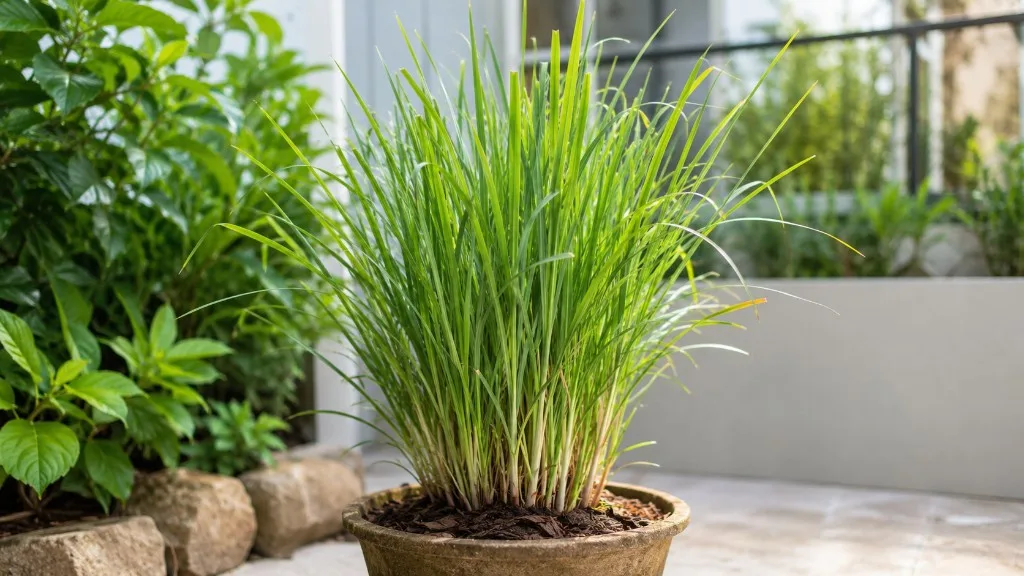
Lemongrass
Likely causeMay 4, 2025 · Learn this gardening post to know why the lemongrass plant turning purple , what are the main reasons and how to care for the lemongrass plant from this problem.
Quick fixConfirm diagnosis on your Lemongrass, then address the most likely care or pest factor described in current extension guidance.
 Medium
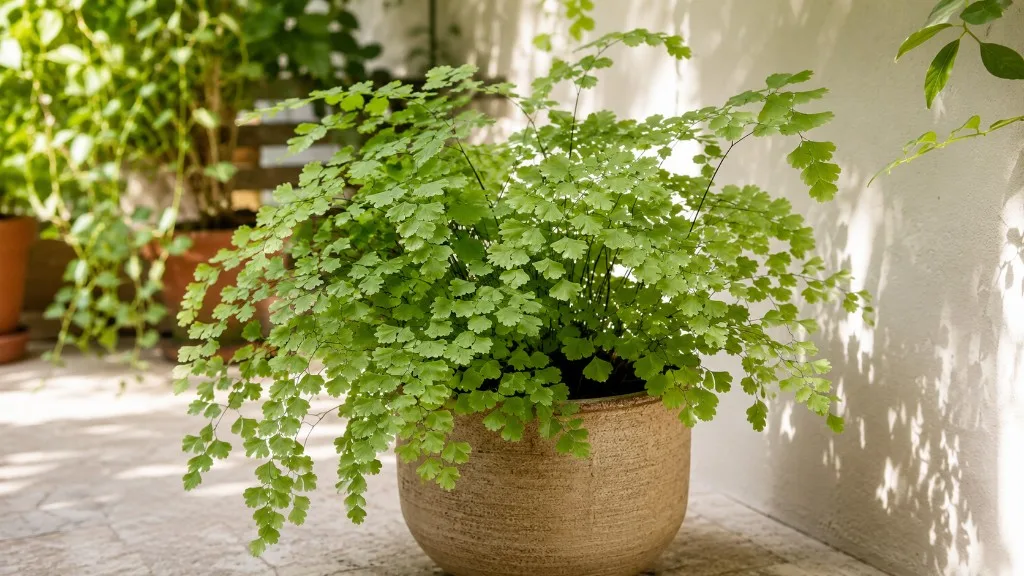
Maidenhair Fern
Likely causeMar 18, 2024 · Beneath the leaves , spores are produced during the summer months. When the weather is very dry or cold, the plant sheds its leaves . As with all ferns , maidenhair fern is non-flowering. There are about 250 species of Adiant
Quick fixFollow extension or botanical guidance for Maidenhair Fern purple leaves; adjust care before applying broad treatments.
 Medium
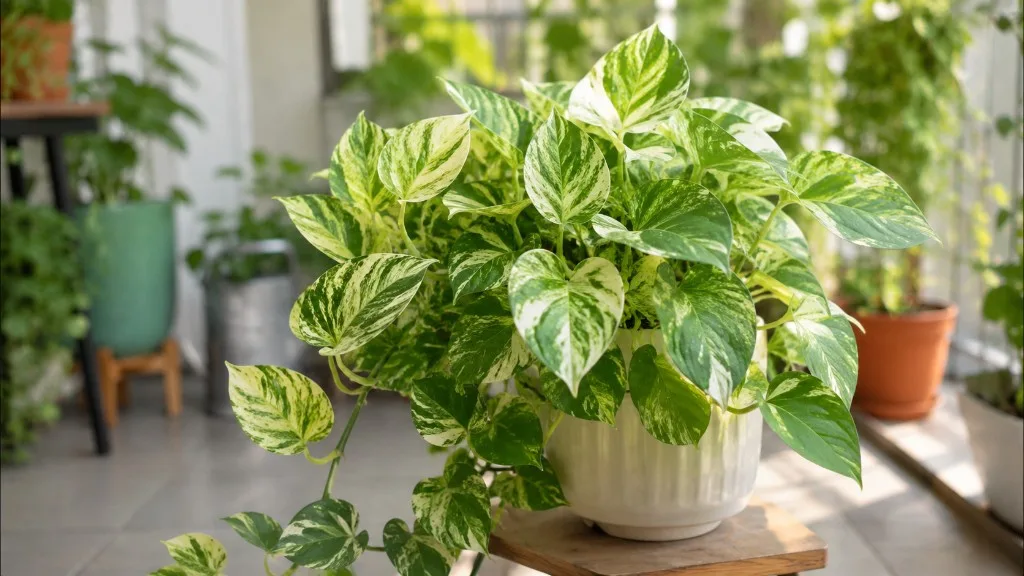
Manjula Pothos
Likely causeApr 11, 2024 · The rare and beautiful manjula pothos (Epipremnum aureum 'Manjula') is a great addition to any home. Learn how to grow them successfully indoors. The Manjula Pothos leaves are more white than green, whereas the pearls and jad
Quick fixFollow extension or botanical guidance for Manjula Pothos purple leaves; adjust care before applying broad treatments.
 Medium
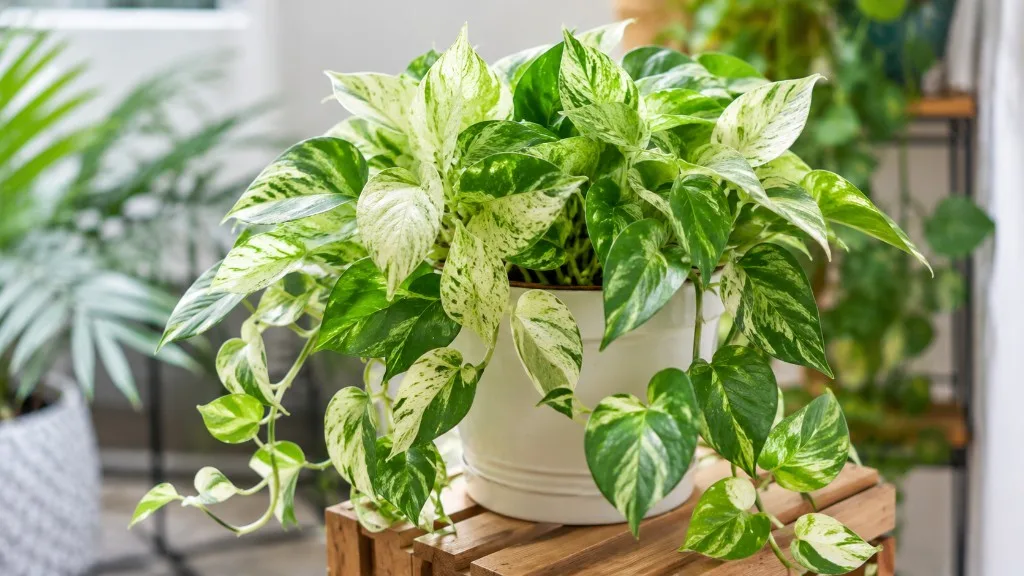
Marble Queen Pothos
Likely causeJul 5, 2022 · Looking for an interesting and unique houseplant? Look no further than the Marble Queen pothos ! This could very well be the perfect houseplant to add to your collection. Not only is it easy to care for, but its beautifully ma
Quick fixConfirm diagnosis on your Marble Queen Pothos, then address the most likely care or pest factor described in current extension guidance.
 Medium
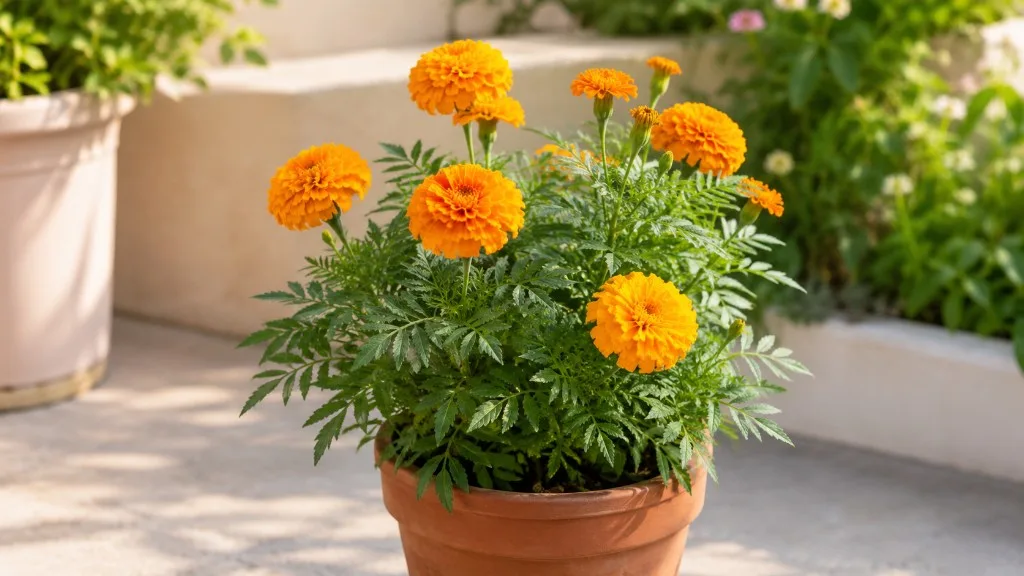
Marigold
Likely causeYou should understand the causes and remedies for marigold leaves turning purple . Your marigolds will continue to landscape all season long.
Quick fixConfirm diagnosis on your Marigold, then address the most likely care or pest factor described in current extension guidance.
 Medium
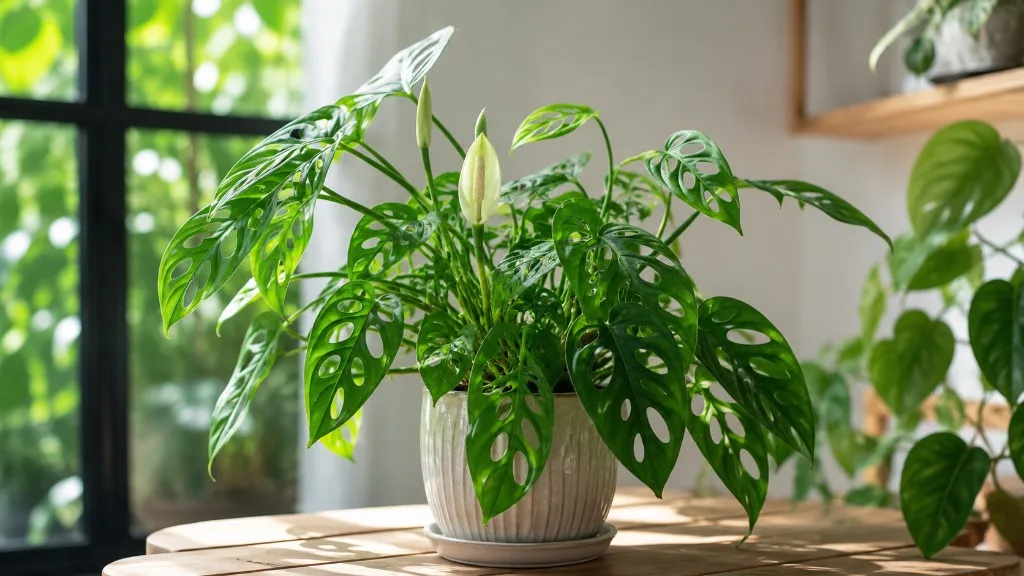
Monstera Adansonii
Likely causeMar 13, 2025 · Monstera deliciosa: The most popular variety, Monstera deliciosa, is known for its large, dark green leaves that can reach 2 feet or more across and are decorated with fenestrations, says …
Quick fixConfirm diagnosis on your Monstera Adansonii, then address the most likely care or pest factor described in current extension guidance.
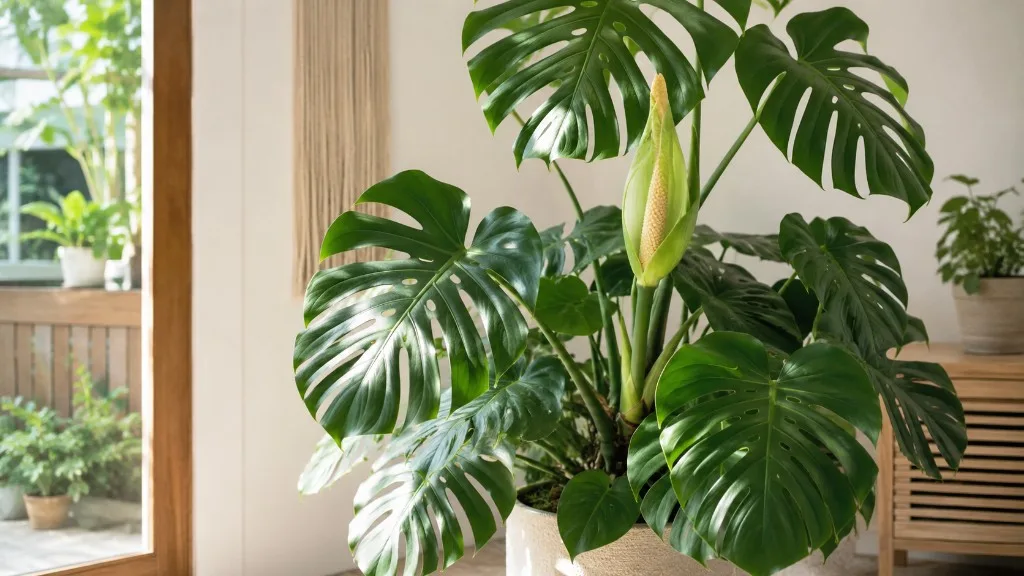 Medium
Monstera Deliciosa
Likely causeMar 13, 2025 · Monstera deliciosa: The most popular variety, Monstera deliciosa, is known for its large, dark green leaves that can reach 2 feet or more across and are decorated with fenestrations, says …
Quick fixConfirm diagnosis on your Monstera Deliciosa, then address the most likely care or pest factor described in current extension guidance.
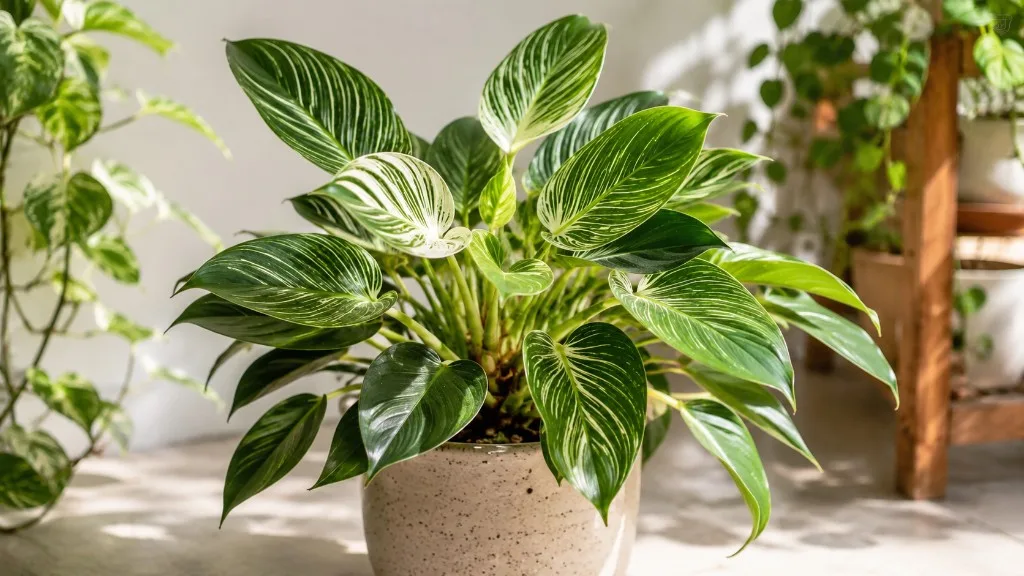 Medium
Philodendron Birkin
Likely causeSep 16, 2025 · What Does a Mature Philodendron Birkin Look Like? A mature philodendron birkin has likely grown taller (up to 3 feet tall) with leaves branching off the main stem in alternating directions, and less dense growth. Some leaves
Quick fixFollow extension or botanical guidance for Philodendron Birkin purple leaves; adjust care before applying broad treatments.