Purple Leaves on Maidenhair Fern: Causes, Checks & Fixes
Quick answer
Purple on Maidenhair Fern is often cold stress or normal dark stem color - not a nutrient crisis. First step: move the plant away from drafty windows, AC vents, and cold doorways, then confirm green pinnae are affected rather than the naturally dark wiry stems.
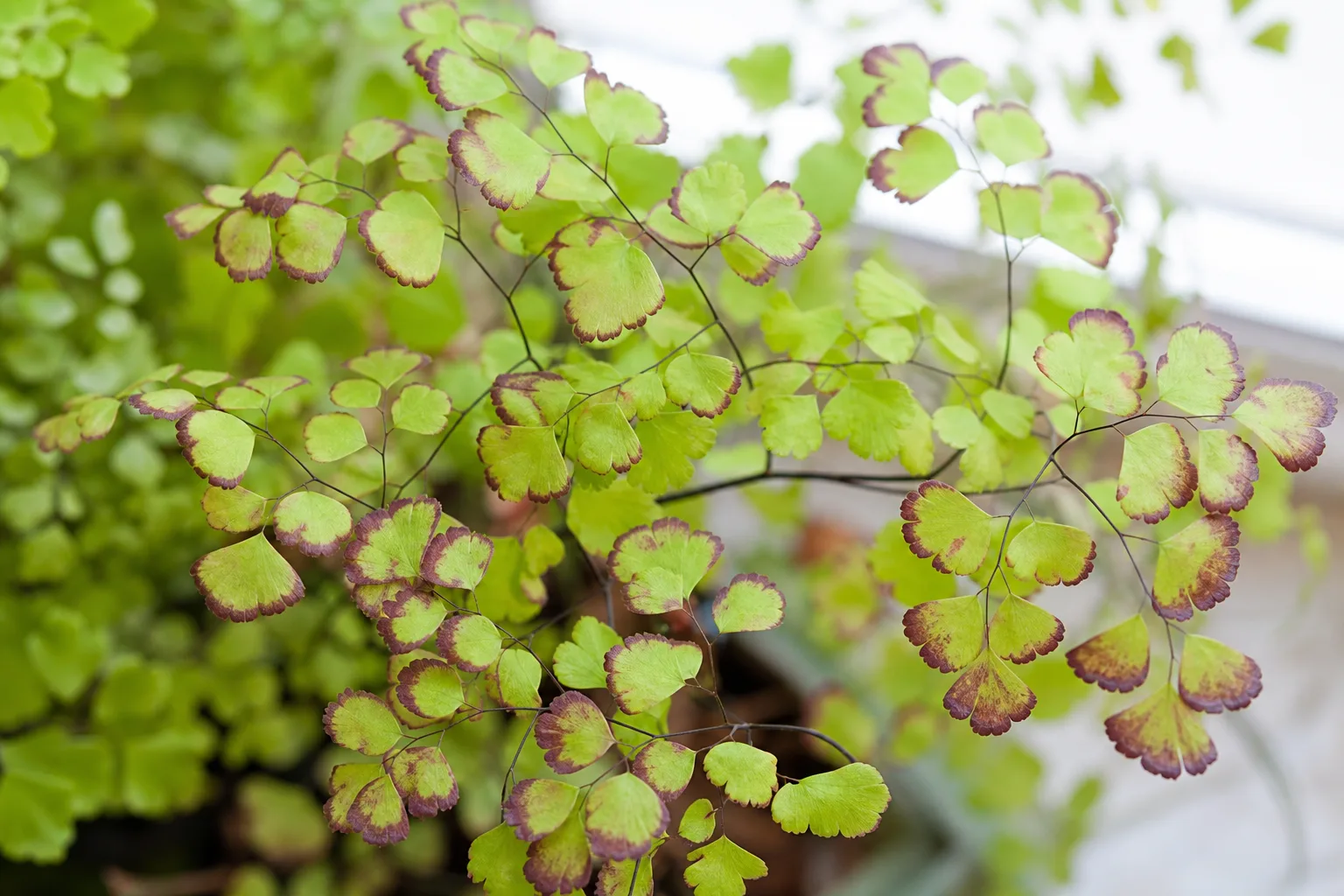
Purple Leaves on Maidenhair Fern: Causes, Checks & Fixes
This guide covers purple leaves on Maidenhair Fern. See also the general Purple Leaves guide, watering, and light pages for this plant.
Purple Leaves on Maidenhair Fern: Causes, Checks & Fixes
Quick answer
Purple leaves on Maidenhair Fern usually mean cold stress or a confused reading of normal stem color - not phosphorus deficiency or a fungal infection. First step: move the plant out of drafts and off cold window sills, then confirm whether green pinnae turned purple or you are seeing the fern’s naturally dark wiry stems.
Maidenhair Fern (Adiantum raddianum) is a tropical understory plant with thin, moisture-sensitive tissue. Brief cold exposure triggers protective red-purple pigments in leaf cells and can collapse fronds within hours. Before reaching for fertilizer, stabilize warmth and humidity.
What purple leaves look like on Maidenhair Fern
On Maidenhair Fern, purple color falls into two very different categories.
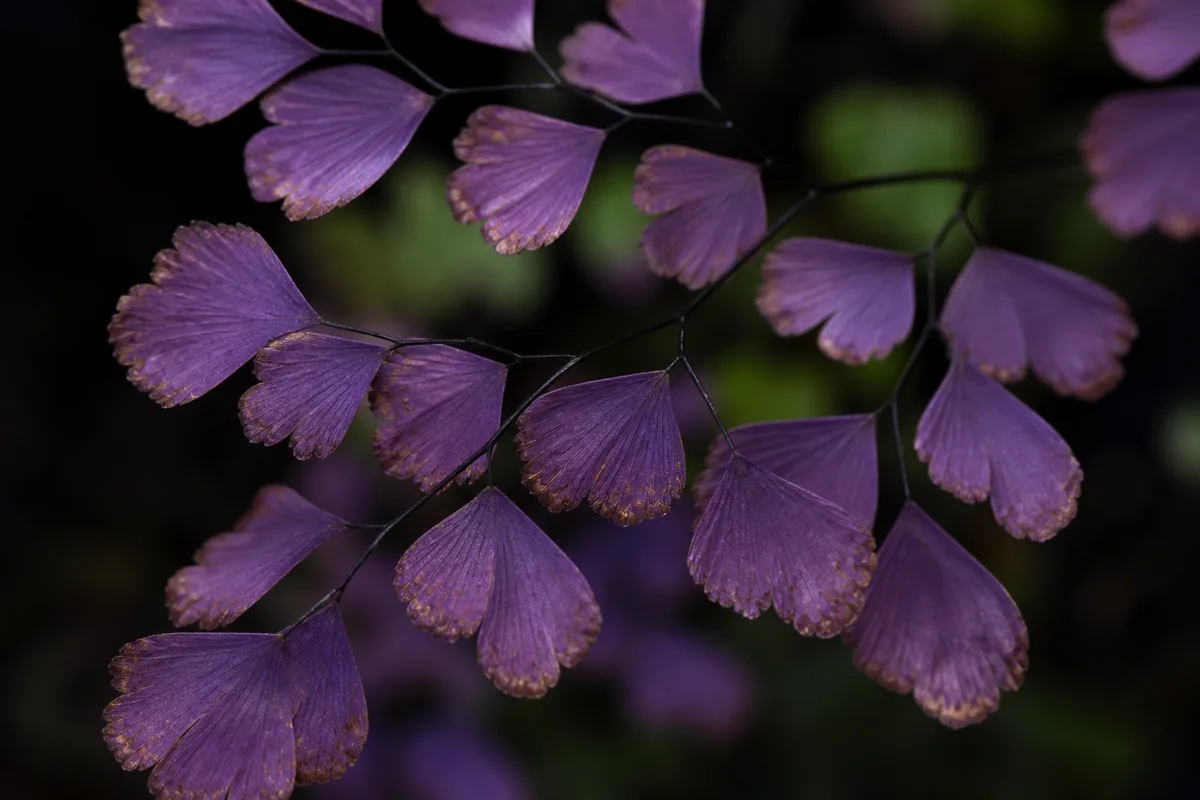
Purple Leaves symptoms on Maidenhair Fern - compare with healthy tissue on the same plant.
Normal purple-black stems. Black to dark purple wiry stipes and rachises are part of the species’ identity. Fan-shaped pinnae emerge light green but darken with age on those dark stalks. Unfurling fiddleheads often carry a pinkish or reddish cast that greens up as leaflets expand - that is developmental color, not a crisis.
Problem purple on green tissue. Concerning signs include:
- Green pinnae shifting burgundy, plum, or reddish-purple while stems stay their usual dark color
- Purple tint concentrated on the side facing a cold window, AC vent, or winter doorway
- New fronds that stall purple instead of opening to bright green
- Purple-tinged fronds that feel limp, then brown and collapse within a day or two
- Lower pinnae with purple margins after nights on an unheated sill
Unlike succulents that blush in sun, Maidenhair Fern more often purples from chill and unstable root-zone temperature, not from bright light alone. Direct sun on this fern typically scorches to brown-yellow rather than purple.
Why Maidenhair Fern gets purple leaves
Cold drafts and sudden temperature drops are the most common cause of abnormal purple on green fronds. Avoid placing the plant in drafty areas or near heat registers. Maidenhair Fern grows best around 16–24°C (60–75°F) and reacts badly to brief cold - winter window glass, opened doors, and air-conditioning blasts all qualify. Cool conditions can increase anthocyanin accumulation that shows as red-purple leaf coloration on sensitive foliage.
Winter window placement combines cold radiating from glass with fluctuating day-night temperatures. Even if the room feels comfortable, fronds touching cold glass or sitting in the microclimate of a sill can purple overnight.
Cold water or chilled root zone shocks fine fern roots. Watering with icy tap water or keeping the pot on a cold surface slows uptake and stresses tissue - especially when humidity is already low.
Wet, cool mix limits root function without drying the surface. Maidenhair Fern needs consistently moist soil, but mix that stays cold and stagnant in a dim corner can stress roots. Lower pinnae may show dull purple-bronze margins when roots struggle in cold, wet substrate - a pattern extension floriculture guides associate with impaired phosphorus uptake under poor root-zone conditions, not always true deficiency.
True nutrient deficiency is uncommon on Maidenhair Fern in fresh, compost-based mix. Purple from phosphorus lack usually follows months of plain water only, oversized pots with exhausted mix, or severe root damage - not a single cold week.
How to confirm the cause
Work through these checks in order:
- Stem vs pinnae - Are only the black-purple wiry stems visible, or did green leaflets change color?
- Placement history - Was the pot moved to a winter window, porch, or near a new AC vent in the last few days?
- Air temperature at the fronds - Hold your hand at frond height near the glass or vent; cold air you barely notice at chest height can chill delicate pinnae.
- Frond texture - Cold-stressed fronds feel limp before browning; firm purple stems with healthy green pinnae need no treatment.
- Soil temperature and moisture - Is the pot on a cold stone sill with wet, heavy mix? Does water run through too fast because roots are damaged?
- New growth direction - If only draft-side fronds purple while center fiddleheads stay green, cold placement is confirmed.
If purple pinnae appear with wet sour soil and mushy roots, shift diagnosis toward root rot on Maidenhair Fern - not simple cold tint.
First fix for Maidenhair Fern
Relocate to a stable, draft-free spot with Maidenhair Fern light guide and room-temperature conditions.
Move the fern away from window glass, HVAC vents, and frequently opened exterior doors. Place it where fronds receive bright indirect light - including diffused sun - without direct hot rays. If nights are cold, pull the pot back from the sill or use an insulating mat under the container.
Hold off on fertilizer, Maidenhair Fern repotting guide, and heavy pruning until the plant sits in stable warmth for at least one week. If soil is merely cool and wet, let the top centimeter dry slightly before the next drink using room-temperature filtered or rainwater.
Step-by-step recovery
- Move to bright indirect light away from all drafts.
- Insulate the pot from cold surfaces; avoid sitting directly on stone or metal sills.
- Switch to room-temperature water; empty saucers after watering.
- Raise humidity to 60%+ with a pebble tray or humidifier - not short mist bursts on hydrophobic fronds.
- Remove only fronds that are fully collapsed or brown at the soil line; leave purple-tinged but firm fronds until replacement growth appears.
- If widespread purple pairs with sour wet mix, unpot gently, trim mushy roots, and repot into fresh airy mix only when rot is confirmed.
Resume monthly half-strength fertilizer only after new green fronds unfurl steadily.
Recovery timeline
Once warmth and humidity stabilize, Maidenhair Fern often sends up new fiddleheads within 2–4 weeks. Existing purple pinnae will not revert to bright green.
Severe cold combined with dried-out roots can cause mass frond drop; the plant may still recover if rhizomes stay firm and pale. Total crown collapse with mushy roots gives a poor prognosis.
Lookalike symptoms
- Normal dark stems - Always present; not a symptom by themselves.
- Reddish new fiddleheads - Common on healthy plants; should green as they open.
- Brown tips from low humidity - Dry air browns margins; whole-frond purple is more cold-linked.
- Yellow fronds from too much sun or overwatering on Maidenhair Fern - Different care fix; sun scorch adds crispy brown patches.
- Cultivar color - Some named varieties carry naturally darker foliage; know your cultivar before treating.
Mistakes to avoid
Do not apply phosphorus fertilizer to cold-stressed fronds - it will not reverse chill damage and can salt-stress weak roots. Do not move the fern from a cold sill directly under hot heating vents; temperature swings worsen collapse. Avoid repotting on day one unless root rot is confirmed. Do not interpret every dark stalk as disease.
How to prevent purple leaves next time
Keep Maidenhair Fern in bright indirect light with steady moisture and high humidity. Roots must never be allowed to dry out, but avoid cold wet stagnation in dim corners.
In winter, treat window sills as cold zones even when indoor thermostats read 20°C. Use pebble trays or humidifiers rather than misting alone. Water with room-temperature filtered water to protect fine roots. Quarantine new ferns away from drafty entryways during the first month home.
Maidenhair Fern care cross-check
Purple fronds often mean placement changed faster than the fern could adapt - a new winter window, an AC season, or a door that now opens daily. Correct the coldest variable first, then wait two weeks before stacking repotting or feeding.
When to worry
Treat as urgent when the crown softens, most fronds purple and collapse within a week, or roots are mushy on inspection. Early purple on one draft-exposed side after a cold night is usually reversible with relocation alone.
Conclusion
Maidenhair Fern purple leaves are most often cold stress on thin tropical fronds - or the normal dark beauty of its wiry stems mistaken for decline. Confirm green pinnae changed color, move the plant out of drafts, stabilize warmth and humidity, and judge recovery by new green fronds rather than old tinted tissue.
When to use this page vs other Maidenhair Fern guides
- Maidenhair Fern watering guide - Use for routine moisture checks before assuming purple leaves is the main issue.
- Maidenhair Fern problems hub - Browse all 55 common issues on this species.