Purple Leaves on Jasmine: Causes, Checks & Fixes
Quick answer
Purple or reddish-purple jasmine leaves signal stress-cool nights near glass, cold soil limiting phosphorus uptake, or sudden strong sun on new growth-not the deep green healthy foliage should show. First step: note whether purple appears on newest or oldest leaves and match it to recent temperature or light changes before fertilizing.
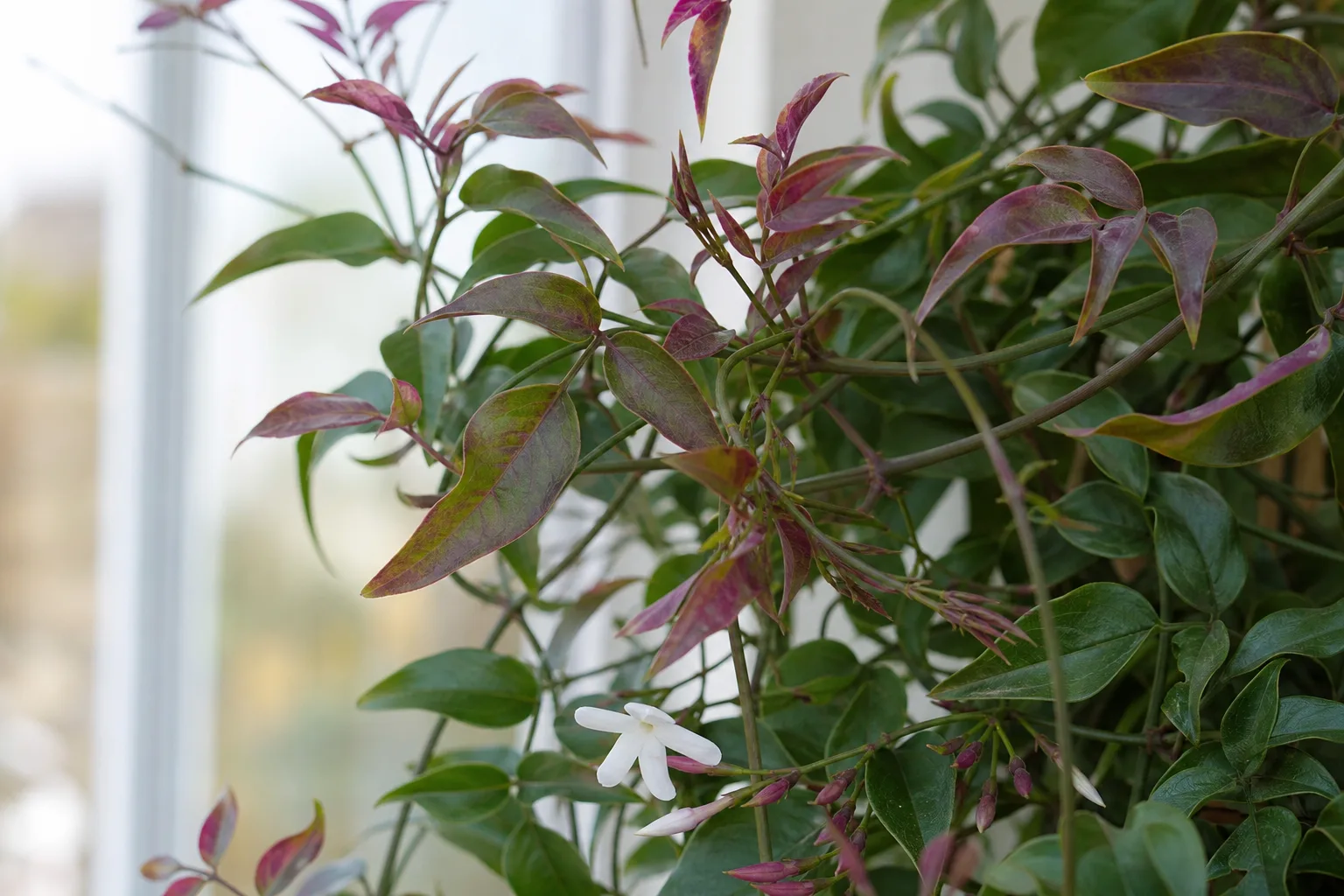
Purple Leaves on Jasmine: Causes, Checks & Fixes
This guide covers purple leaves on Jasmine. See also the general Purple Leaves guide, watering, and light pages for this plant.
Purple Leaves on Jasmine: Causes, Checks & Fixes
Quick answer
Healthy mature foliage on common jasmine (Jasminum officinale) is deep green. When leaves flush purple, reddish-purple, or violet-especially along veins, undersides, or margins-the plant is responding to environmental or nutritional stress, not showing its normal color.
The three most common triggers on jasmine vines are cool nights that trigger protective anthocyanin pigments, phosphorus uptake problems (often from cold soil or exhausted container mix rather than absent fertilizer), and sudden increases in direct sun on tender new growth after a move outdoors.
First step: identify which leaves are purple and what changed in the last week. Newest pairs after a cold snap point to chill stress. Older lower leaves with dull purple and weak bloom in an unchanged pot point to nutrition or root uptake limits. Do not reach for phosphorus fertilizer until you have ruled out temperature and light.
Why jasmine gets purple leaves
Common jasmine is a vigorous summer-flowering climber that prefers a warm, sheltered, sunny site and dislikes frost-prone exposure. Its normal leaf color is green-purple is a diagnostic flag, not a cultivar trait on true Jasminum species.
Cold and chill anthocyanins
When temperatures drop into the chilling range-above freezing but below what the plant prefers-many broad-leaved plants produce anthocyanin pigments that tint leaves red, purple, or bronze. Extension guidance on chilling injury notes that leaves can turn red, purple, or black when subtropical specimens experience temperatures in the roughly 0–13°C (32–55°F) band, depending on hardiness.
On jasmine sitting near a cold window in spring, a night in the low teens °C can purple the newest leaf pairs overnight while mature leaves stay green. The pigment acts as a protective response, not a disease.
Jasmine also needs a cool winter rest (roughly 7–13°C for several weeks) to set flower buds. That means the plant routinely experiences cooler nights than tropical houseplants-and may show brief purple flushes on young growth during the transition into or out of that rest period. Chill purpling differs from frost kill: chilled tissue tints but stays firm; frost turns leaves water-soaked, black, and limp.
Phosphorus stress and cold soil
Phosphorus deficiency classically shows as purplish color on older leaves, often along veins or on undersides, with stunted growth and reduced flowering. On container jasmine that has not been repotted in years, lower leaves may develop a dull purple cast while new tips stay pale green.
Important nuance: purple from phosphorus problems is not always because the fertilizer bag lacked phosphorus. Cold soil slows root activity, and roots take up less phosphorus even when it is present in the mix. Greenhouse and extension sources describe this pattern repeatedly-purple spring seedlings in cool benches often green up once roots warm, without any extra feed.
Jasmine in a cool conservatory or on an unheated porch in early spring is vulnerable to this temporary purple phase. Exhausted, root-bound mix in a pot that has gone years without refresh is the longer-term version: roots cannot access enough phosphorus because the medium is depleted and crowded.
Light and sun shock
Sudden moves from shade, indoors, or a dim winter position to unfiltered afternoon sun can bronze or purple exposed leaf tips and margins. The sun-facing side reddens or purples while the shaded side stays greener. Jasmine needs several hours of direct sun for vigor and bloom, but the increase must be gradual-especially on vines that spent winter in a cool indoor rest.
What this is not
Some plants sold with “jasmine” in the common name are not Jasminum species. Purple cestrum (Cestrum elegans, sometimes called bastard jasmine) has naturally reddish-purple flowers-but its foliage should still be green unless stressed. If your plant has purple flowers by design, verify the scientific name before applying common-jasmine fixes.
Purple leaves are also not the same problem as red leaves from aphid bronzing-though heavy aphid feeding can distort and discolor new tips. Sticky honeydew, ants on stems, or visible aphid clusters mean pests, not pigment stress alone.
What purple leaves look like on jasmine
Chill anthocyanins:
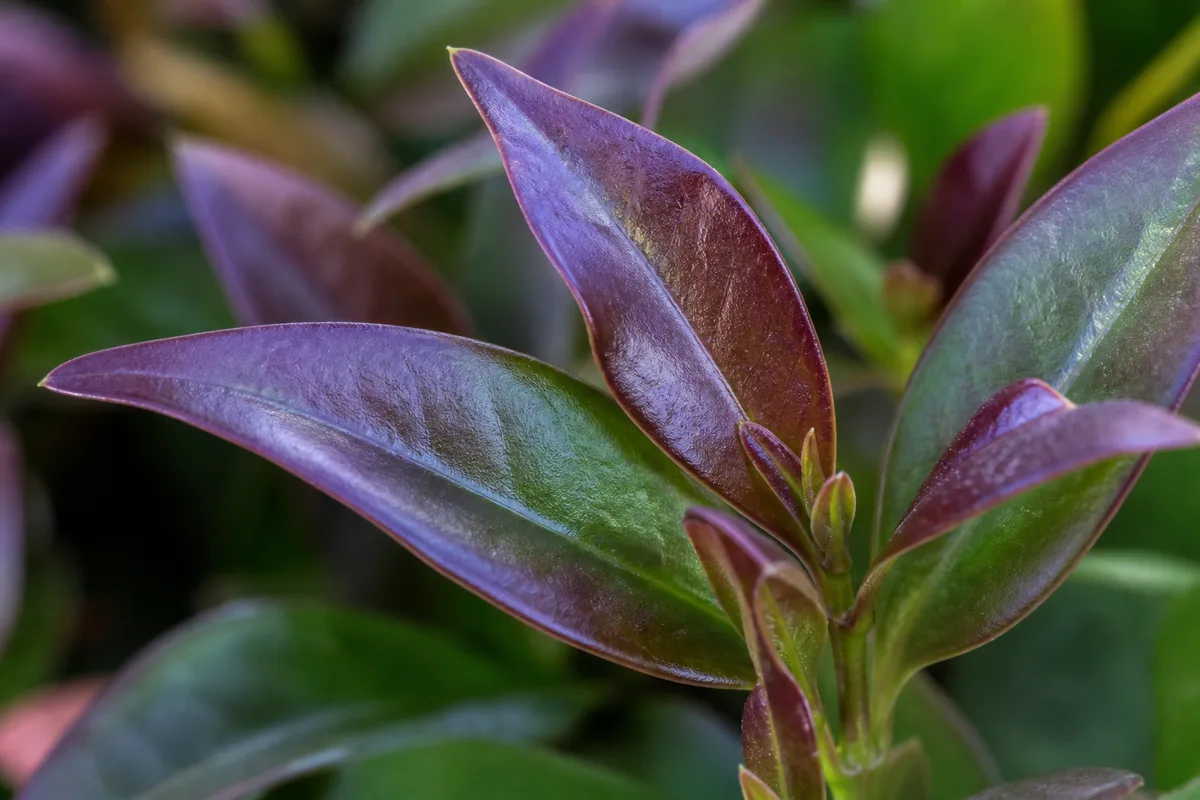
Purple Leaves symptoms on Jasmine - compare with healthy tissue on the same plant.
- Purple, violet, or reddish-purple cast on newest leaf pairs after cool nights
- Often visible on undersides or leaf margins first
- Uniform across the young flush, not spotty with insects
- Stems firm; no blackening or mushy tissue
- Clears on the next growth flush when nights warm
Phosphorus-related purple:
- Dull purple or reddish tint on older, lower leaves, sometimes strongest along veins or petioles
- Younger leaves may look dark green while lower ones purple
- Stunted shoots, weak flowering, or smaller than normal new leaves
- Common in long-unchanged containers or during cold early-spring growth in cool rooms
- Does not clear quickly on the same leaf-new growth must come in green
Sun or light stress:
- Purple-bronze on the sun-facing side after a sudden outdoor move
- Tips or margins color first; shaded side stays greener
- May overlap with slight afternoon wilting if roots cannot keep pace with heat
Frost or severe cold damage:
- Water-soaked, blackened tissue-not bright purple alone
- Stems die back from tips; leaves collapse rather than merely tint
- See cold-damage patterns if black mushy stems follow a freeze
Purple vs. red leaves on jasmine
Purple and red tones overlap because both can come from anthocyanin pigments, but on jasmine the pattern and timing still help you separate likely causes.
- Mostly purple on older lower leaves with weak vigor points more strongly to phosphorus stress or cold-soil uptake limits than to transient chill color.
- Red to bronze on the newest tips right after cool nights or a sudden move to stronger sun usually indicates stress pigment, not a standalone nutrient shortage.
- One-sided red-purple bronzing on the sun-facing side after relocation is usually light acclimation stress.
- Uniform discoloration plus sticky new growth should trigger a pest check, especially for aphids on soft shoot tips.
If your plant shows mostly red rather than purple, compare with red leaves on jasmine and use the same new-vs-old leaf check before feeding.
How to confirm the cause
Work through these checks in order:
- Which leaves - Newest pairs only = chill or sun on young tissue. Lower old leaves = phosphorus uptake limits, seasonal change, or exhausted mix. One side of the plant = light direction.
- Timeline - Did purple appear within 2–5 days of a cold snap, draft near glass, or move to Jasmine light guide? Environmental stress fits that window. Slow purple drift on lower leaves over months in the same pot suggests container exhaustion.
- Night temperature - Measure where the pot sits after dark. Repeated nights below about 10°C (50°F) can purple subtropical jasmine even indoors near single-pane glass.
- Soil temperature and moisture - Is the pot on a cold stone floor or unheated porch? Cold, wet mix limits phosphorus uptake. Feel the top 3 cm: bone-dry mix with purple margins can indicate drought compounding stress; soggy mix with purple and yellow leaves suggests root trouble-inspect before feeding.
- Container history - Has the vine lived in the same pot for more than two years without Jasmine repotting guide? Are roots circling the surface? Root-bound jasmine in depleted mix fits lower-leaf purple with weak bloom.
- Fertilizer history - When did you last feed during active growth? Chronic neglect plus cold spring soil fits temporary purple. Heavy recent feeding with crispy edges suggests burn, not deficiency.
- Pest check - Flip new shoots for aphids, honeydew, or ants. Purple with stickiness and curled distorted tips is pest-linked until proven otherwise.
- Stem health - Firm green-brown stems support pigment or nutrient stress. Soft black stems mean rot or frost damage-not a simple purple flush.
First fix for jasmine
Match purple leaves to the most recent stress-temperature, light, or container-before you fertilize or repot.
- If purple followed cool nights near glass, move the pot inward from the pane or block the draft. Hold placement for several nights above roughly 13–15°C (55–59°F) on tender indoor jasmines like J. polyanthum. Common jasmine tolerates cooler rest for bud set but still needs protection from repeated sub-10°C nights on new spring growth.
- If purple followed a sudden sun move, provide afternoon shade or a sheer curtain for one week, then increase direct sun by an hour or two every few days.
- If lower old leaves stayed purple through a cold spring in an unchanged pot, warm the root zone (raise the pot off a cold floor, move to a brighter slightly warmer spot) and wait for the next flush before deciding on fertilizer.
Do not apply phosphorus-heavy fertilizer on day one. Stressed jasmine pushed with nutrients produces soft growth that invites aphids and can worsen salt stress in an already struggling root zone.
Step-by-step recovery
After stabilizing the environment:
- Hold watering steady - Water when the top 3 cm of mix is dry. Overwatering cold, stressed roots extends purple symptoms; underwatering during a heat wave after sun shock can too.
- Wait for the next flush - Chill and sun purple often clears on new leaves grown after one to two weeks of stable conditions. Judge recovery by clean new pairs, not old purple ones.
- Warm roots before feeding - If lower leaves stay purple into late spring on a cold porch, move to a warmer bright spot until active growth resumes, then apply balanced liquid fertilizer at half strength.
- Repot in early spring if lower leaves remained dull purple all last season, roots circle the container, and flowering dropped despite good summer light. Use fresh well-draining mix at pH 6.0–7.5; do not feed for two weeks after repotting.
- Soil test before phosphorus supplements if environmental fixes fail and older leaves stay abnormally purple through summer. Add nutrients only when a test confirms deficiency-blind phosphorus feeding harms waterways and can imbalance other elements.
- Prune only after stabilizing - Remove frost-killed black stems back to firm wood. Do not hard-prune a vine still flushing purple from chill unless tissue is clearly dead.
Recovery timeline
Chill purple on new tips often fades within one to two weeks once nights stay consistently warmer. Sun-stressed purple-bronze may need two to three weeks and a full acclimation period before the next flush looks fully green.
Older leaves that turned purple from phosphorus stress or cold soil rarely revert-they remain until the vine sheds them or you prune after the plant stabilizes. New green growth is the reliable recovery signal.
Repotted container jasmine may need four to six weeks before lower purple leaves are replaced by fresh foliage and flowering rhythm normalizes.
Lookalike symptoms to rule out
Red leaves from chill or sun - Purple and red anthocyanin flushes overlap; the diagnostic path is the same. Focus on which leaves, what changed, and whether tissue is firm.
Yellow leaves from overwatering - Whole-plant yellowing with wet soil and soft stems points to root trouble, not anthocyanin purple. Check roots before assuming chill stress.
Sunburn scorch - Crisp brown patches on exposed leaves after extreme heat differ from reversible purple bronzing. Scorch tissue dies; anthocyanin flush often clears on new growth.
Iron deficiency chlorosis - Pale yellow leaves with green veins on alkaline or waterlogged mix differs from purple older leaves. Jasmine prefers pH 6.0–7.5; very alkaline mix can lock up iron and show interveinal yellowing, not classic purple veins.
Spider mites - Fine stippling and webbing on undersides in dry indoor air after the cool winter rest. Mites rarely produce uniform purple new flushes the way cold does.
For deeper comparisons, use these jasmine-specific guides: red leaves, iron deficiency, spider mites, and cold damage.
Mistakes to avoid
Do not assume every purple leaf needs phosphorus fertilizer. Extension sources emphasize that purple from cold soil often resolves with warmth alone, and blind phosphorus feeding is rarely beneficial in home container culture.
Do not leave frost-hit pots outdoors hoping purple clears-dieback may spread below hardiness limits. Move containers to shelter when hard frost is forecast.
Do not permanently shade a bloom vine to fix sun stress. Jasmine needs direct sun for vigor and flowers; acclimate instead of hiding the plant in dim light.
Do not repot on the day purple appears unless roots are clearly rotting in soggy mix. Repotting stacks stress on top of pigment stress.
Do not confuse purple flowers with purple leaves. Cestrum species and some ornamental cultivars have purple blooms; stressed Jasminum officinale should have white fragrant flowers and green leaves when healthy.
How to prevent purple leaves next time
Acclimate jasmine gradually each spring when moving containers outdoors-start with morning sun or dappled shade, then increase exposure over seven to ten days.
Keep indoor vines away from cold glass on spring nights when outdoor temperatures dip. A few inches inward or a thermal curtain reduces chill anthocyanins on new flushes.
Warm the root zone during early spring growth. Elevate pots off cold stone, avoid leaving containers on frosty porches while shoots are actively expanding, and resume balanced feeding only once growth is steady.
Maintain even watering through bloom season and reduce frequency during the cool winter rest without letting roots go bone dry during active spring flushes.
Repot every two years or when roots circle the pot, in early spring before the main growth surge-healthy roots absorb phosphorus predictably when soil warms.
Feed balanced liquid fertilizer during active spring and summer growth only when the plant is healthy-not as a reflex response to purple stress leaves.
If you have recurring discoloration patterns despite stable care, review nutrient lockout and potassium deficiency before increasing fertilizer concentration.
When to worry
Treat as urgent when purple follows hard frost and stems turn black or mushy, when more than a third of the canopy wilts within a week despite stable watering, or when purple patches spread with soft brown rot-not firm pigmented tissue.
Chill purple on new tips in spring, one-sided bronzing after a sun move, and temporary lower-leaf purple in a cold early spring are usually reversible-not emergencies.
Persistent purple on older leaves through a full summer growing season in a warm, well-lit spot warrants a soil test or repot assessment-not repeated fertilizer without diagnosis.
Conclusion
Purple leaves on jasmine are a stress signal, not a normal mature color. Match the pattern-new vs old, one-sided vs uniform, cold timeline vs exhausted pot-to chill, light, phosphorus uptake limits, or container decline before you treat. Stabilize temperature and sun first, warm roots before feeding, and let the next flush confirm recovery. That path avoids unnecessary fertilizer and keeps your fragrant vine on track for the cool rest and summer bloom cycle it needs.
Related jasmine problems
When purple leaves are only one part of a broader decline, use these related pages to narrow the diagnosis faster:
- Red Leaves on Jasmine for pigment stress with stronger red or bronze tones.
- Potassium Deficiency on Jasmine when older leaves show edge scorching along with discoloration.
- Iron Deficiency on Jasmine for interveinal yellowing on newer growth.
- Nutrient Lockout on Jasmine when fertilizer is present but symptoms persist.
- Cold Damage on Jasmine if purple shifts into black, water-soaked tissue.
When to use this page vs other Jasmine guides
- Jasmine watering guide - Use for routine moisture checks before assuming purple leaves is the main issue.
- Jasmine problems hub - Browse all 53 common issues on this species.