Iron Deficiency on Jasmine: Causes, Checks & Fixes
Quick answer
Iron deficiency on jasmine yellows the newest leaves while veins stay green, often when soil pH is too high or roots cannot absorb nutrients. First step: test soil pH and check whether the pot drains before applying chelated iron.
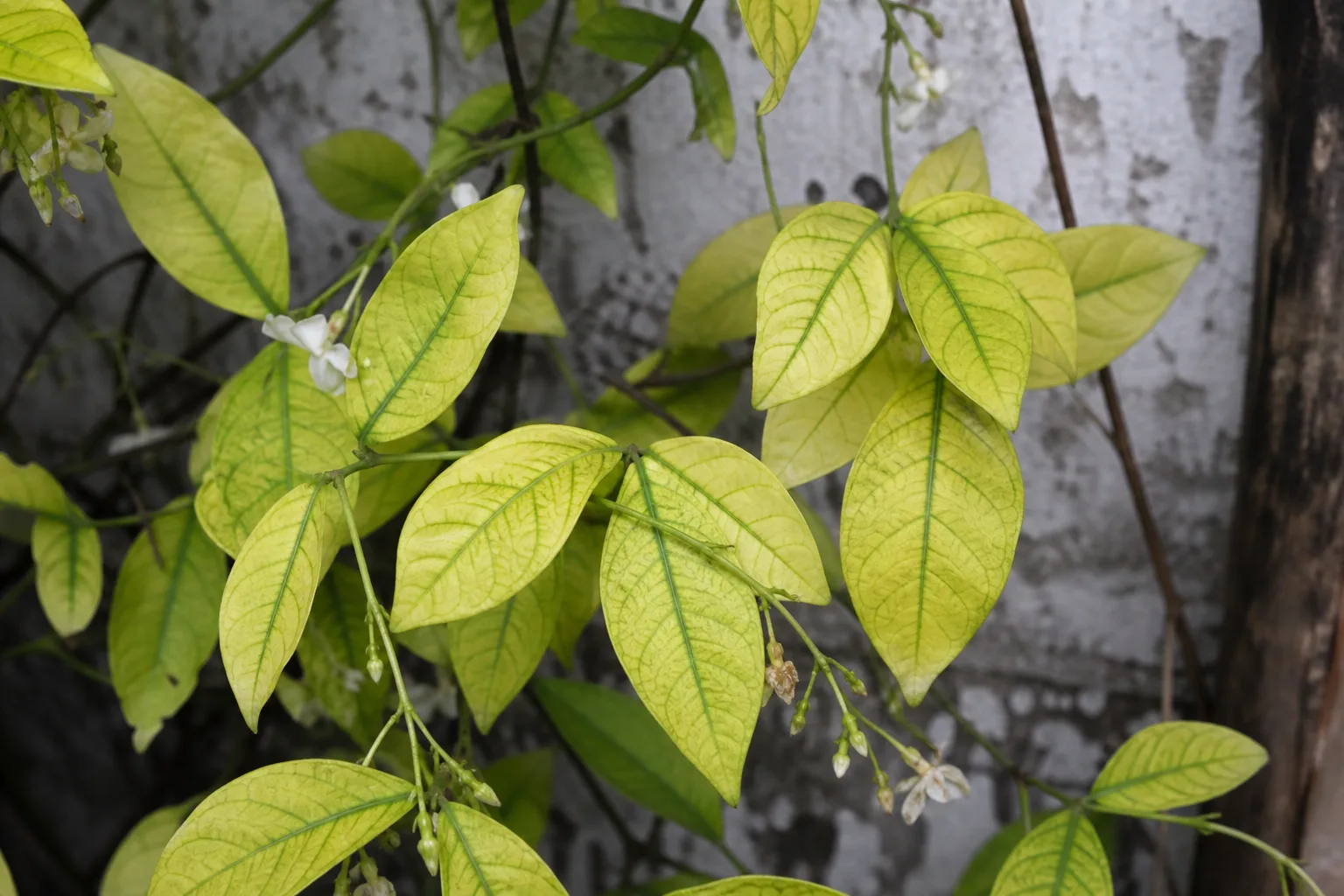
Iron Deficiency on Jasmine: Causes, Checks & Fixes
This guide covers iron deficiency on Jasmine. See also the general Iron Deficiency guide, watering, and light pages for this plant.
Iron Deficiency on Jasmine: Causes, Checks & Fixes
Quick answer
Iron deficiency on Jasminum officinale (common jasmine) shows on newest leaves first: yellow tissue between dark green veins while older foliage stays relatively green. Iron is immobile in the plant, so the vine tip bleaches before lower leaves change.
Jasmine prefers pH 6.0–7.5 and well-draining mix. When pH climbs above about 7.5, iron in the soil becomes unavailable even if fertilizer lists it-roots simply cannot absorb enough for chlorophyll production. Waterlogged or damaged roots make the same yellow pattern because uptake fails regardless of soil chemistry.
First step: test soil pH and check root-zone drainage. Do not spray chelated iron on leaves or dump supplements into the pot until you know whether alkaline soil, hard water, or soggy roots is blocking iron. Fixing the wrong cause wastes time while new growth keeps paling.
What iron deficiency looks like on jasmine
Above soil, iron chlorosis is a pattern, not a random yellow leaf. Watch the growing tip where jasmine pushes paired leaves on climbing stems.
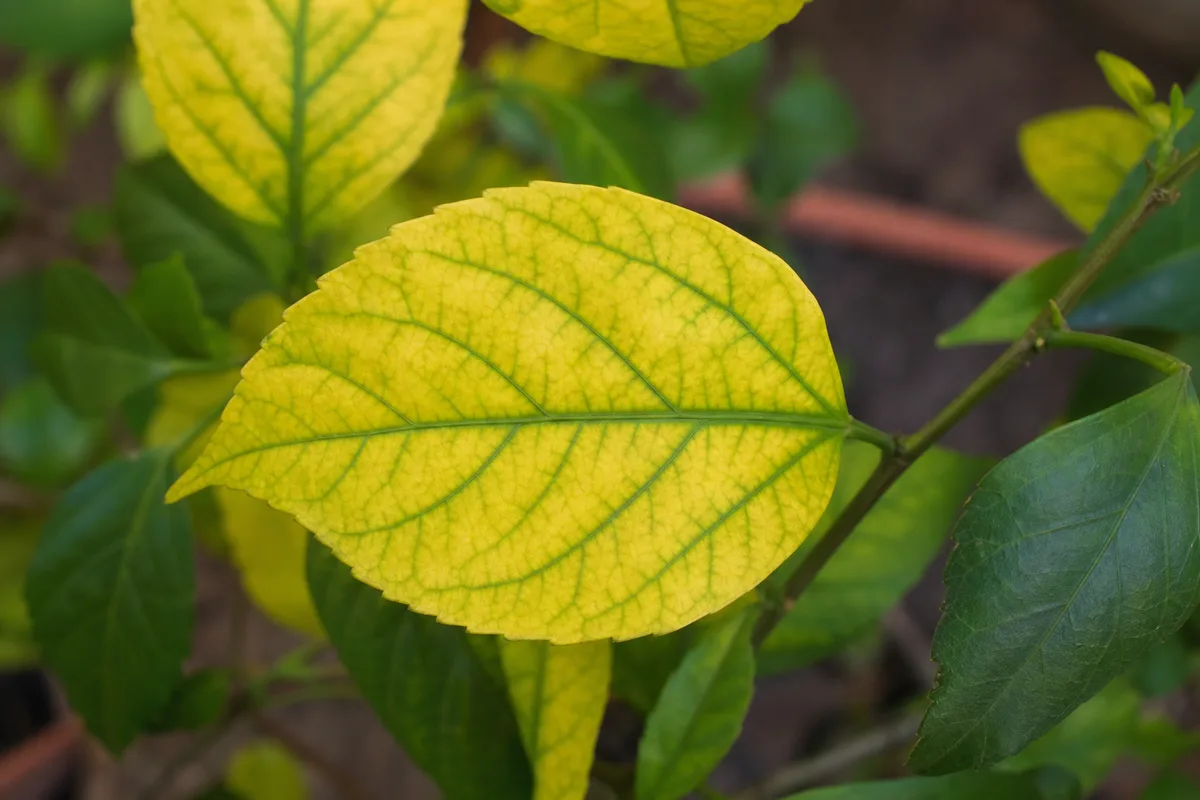
Iron Deficiency symptoms on Jasmine - compare with healthy tissue on the same plant.
Typical signs:
- Interveinal yellowing on expanding leaves at the vine tip-blades look striped, with veins staying dark green
- Older leaves remain greener for weeks while the problem spreads only on new flushes
- Pale or nearly white new leaves in severe cases, sometimes with brown edges as cells fail
- Stunted or thin new shoots because the plant cannot build enough chlorophyll
- Weaker bud set heading into spring bloom if chlorosis runs through the cool-to-warm transition
What iron deficiency does not look like:
- Uniform yellowing of old leaves first-that pattern fits nitrogen deficiency or natural aging lower on the vine
- Sticky residue, webbing, or distorted leaves-rule out aphids, whiteflies, and spider mites before treating nutrients
- Whole-leaf yellowing with wet, sour soil and soft stems-overwatering or root rot can mimic pale growth without the clear vein contrast
- Brown crispy margins on sun-exposed leaves only-sun scorch hits exposed surfaces, not just the newest interveinal tissue
On a container jasmine trained on a trellis indoors, chlorosis often appears in late winter or early spring when the plant wakes from its cool rest and pushes a flush of leaves-exactly when you want healthy tissue for fragrant summer flowers.
Why jasmine gets iron deficiency
Common jasmine is not a lime-loving Mediterranean shrub. It wants moderate pH and regular but not constant moisture. Several jasmine-specific habits make iron lockout more likely indoors than in the garden.
Alkaline soil or mix is the leading cause. Jasmine repotting guide with garden soil, limestone gravel, crushed shell, or lime-amended beds raises pH above jasmine’s comfort zone. Hard tap water leaves calcium carbonate in containers over months, especially when you top-water without flushing. Long-term, the root zone drifts alkaline even if the bagged mix started neutral.
Iron present but unavailable is the mechanism. Missouri Botanical Garden notes that iron chlorosis often occurs when iron exists in soil but cannot dissolve into forms roots absorb-high pH is the usual reason on ornamentals.
Overwatering and poor drainage block uptake without changing pH. Jasmine in a too-large pot, dense peat mix, or a saucer that stays full cannot breathe at the roots. During the cool winter rest-when you should reduce watering to every 10–14 days-extra moisture sits unused and stresses roots. Damaged roots show the same tip chlorosis as true deficiency.
Seasonal timing matters. After the cool period that sets buds, jasmine surges with new leaves in spring. If pH crept high over winter or roots sat cold and wet, the first warm flush exposes iron stress dramatically at the tip.
Less common triggers include root-bound pots with little fresh soil left to buffer pH, excess phosphorus from repeated bloom fertilizers tying up iron, and recent transplant shock when roots cannot pick up nutrients for several weeks.
How to confirm the cause
Work through these checks before buying iron products:
- Leaf age pattern - Yellow between green veins on youngest leaves strongly suggests iron. Yellowing on older leaves with green veins there points to magnesium or mobile nutrient issues instead.
- Soil pH test - Use a meter or send a sample. Readings above 7.5 with tip chlorosis fit alkaline iron lockout on jasmine. pH in the 6.0–7.5 range makes pure “high pH” less likely; look next at roots and watering.
- Moisture and drainage - Stick a finger 3 cm deep. Soil wet for days after one drink, a heavy pot, or sour smell suggests root stress mimicking deficiency. Terracotta drying faster than plastic is normal; perpetual sogginess is not.
- Water and repot history - Did you switch to hard tap water, top-dress with garden compost, or repot with “whatever was in the yard”? Alkaline inputs explain sudden spring chlorosis.
- Root inspection (if soil stays wet) - Slide the plant out gently. Healthy jasmine roots are firm and pale; brown mush means rot or chronic wet feet-fix drainage before iron sprays.
- Pest scan - Check leaf undersides and stem joints for aphids and mites. Nutrient sprays on a pest problem delay the real fix.
Confirmed iron deficiency requires both the interveinal new-leaf pattern and a plausible uptake blocker-high pH, hard-water drift, or impaired roots-not yellow leaves alone.
First fix for jasmine
Test soil pH and correct drainage before adding iron.
If pH reads above 7.5, the priority is lowering availability in the root zone-not foliar green-up alone. For a container plant, that usually means repotting into fresh well-draining standard potting mix in the 6.0–7.5 range rather than repeatedly spraying leaves.
If pH is in range but soil stays wet, stop watering until the top 3 cm dries and empty standing water from saucers. Let roots recover for one to two weeks while you watch whether the next tiny leaf pair emerges greener.
Only after pH and moisture look reasonable should you apply chelated iron per label rates for container ornamentals. On alkaline soils, extension guides recommend iron chelated with EDDHA because other chelates lose effectiveness above about pH 7.2–7.5.
Do not start with Epsom salt (magnesium), extra nitrogen, or full-strength bloom fertilizer-each can worsen the wrong deficiency or burn stressed roots.
Step-by-step recovery
Once diagnosis points to iron lockout or mild deficiency with healthy roots, proceed in order:
- Repot if pH is high or mix is exhausted - Early spring, before heavy bloom, is the best window-matching jasmine’s normal repot every two years schedule. Use standard potting mix with perlite or coarse sand for drainage; skip garden lime entirely.
- Flush existing pots if repot waits - Run lukewarm water through until it drains freely several times to leach surface salts from hard water. Let the pot dry to normal before the next scheduled drink.
- Apply chelated iron to soil - Follow label dilution for potted plants. Soil drench reaches roots better than repeated foliar-only treatment when pH is the root cause.
- Resume proper Jasmine watering guide - Water when the top 3 cm is dry; increase slightly during flowering, cut back during cool winter rest. Never let the pot sit in a full saucer.
- Hold aggressive fertilizer - Skip high-nitrogen pushes until new leaves look green for two flushes. Then return to balanced liquid feed every 3–4 weeks through active growth.
- Trim only dead tips - Remove leaves that turned brown or white at the margins for hygiene. Do not hard-prune a stressed vine before it stabilizes.
If roots were mushy on inspection, treat rot first-trim decay, repot dry, and delay iron until firm white roots reappear. Iron on failing roots rarely sticks.
Recovery timeline
Stabilization: one to two weeks after pH correction and drainage fix, the vine should stop producing progressively paler leaves at the tip.
Visible improvement: judge success by new flushes, not old bleached blades. Expect noticeably greener young leaves within two leaf pairs-often three to six weeks during spring active growth, longer if recovery started in cool late winter.
Old leaves: interveinal yellow tissue generally does not fully re-green. Lower leaves may stay slightly pale until they age off naturally.
Bloom impact: if chlorosis was corrected before buds swell, flowering can proceed normally. Severe white new growth through bud break may reduce flower count that season; focus on root-zone health for next year’s set.
Worsening signs: new leaves emerge whiter each flush, stems stay thin despite fixes, or wet soil persists with sour smell-escalate to full root inspection and possible repot into fresh mix immediately.
Lookalike symptoms
- Magnesium deficiency - Interveinal yellowing on older leaves first; Epsom salt helps only when this pattern is confirmed, not for tip chlorosis.
- Nitrogen deficiency - Uniform pale yellow on lower, older leaves while the tip may still look relatively normal.
- Overwatering / root rot - Yellow leaves often lack crisp green veins; soil wet deep down, soft stems, sour smell.
- Spider mites - Fine stippling and webbing on undersides; leaves may look dull or bronzed rather than cleanly striped between veins.
- Normal seasonal pale flush - Brief lighter green on first spring leaves in low light can look like mild chlorosis; if veins stay green and color deepens within a week in good light, watch before treating.
- Soil too alkaline (general lockout) - Overlaps heavily with iron deficiency; manganese and zinc may also be unavailable at high pH, but iron shows first on jasmine tips.
What not to do
Do not foliar-spray iron weekly without fixing soil pH or drainage-green wash on old leaves masks ongoing tip bleaching on new growth.
Avoid adding garden lime or limestone mulch to jasmine containers; both raise pH.
Do not pour vinegar or random acids into pots without a pH reading-root burn can follow.
Skip Epsom salt as a default iron substitute; magnesium targets a different leaf-age pattern.
Do not increase nitrogen fertilizer on chlorotic tips to “push growth”-soft new shoots on weak iron uptake stress the vine further.
Avoid repotting into a much larger pot “to help the plant”-extra wet soil volume slows drying and worsens root stress.
How to prevent iron deficiency next time
Use well-draining standard potting mix and repot on schedule before the root ball consumes all buffering capacity. In hard-water regions, flush the pot seasonally by watering until free drainage runs clear.
Collect rainwater or let tap water sit overnight if your supply is very alkaline-small habit changes slow pH drift in terracotta and plastic alike.
Keep jasmine in bright light with 4–6 hours of direct sun when possible; weak light slows water use and makes overwatering-and secondary nutrient stress-more likely.
Test pH when you see tip yellowing early rather than after leaves bleach white. Correcting mild interveinal chlorosis before the spring bloom flush protects both foliage and flower buds.
When to worry
Escalate if new leaves emerge nearly white for more than one flush, if stems collapse despite dry soil (advanced root failure), or if pH stays above 7.5 after repot and flush.
Correct iron stress before peak spring growth when you rely on the vine for fragrance; prolonged severe chlorosis reduces the energy available for bud formation.
If the plant fails to produce green new leaves within six to eight weeks after confirmed correction-and roots were firm on inspection-retest pH and consider a lab soil test for micronutrients rather than stacking more supplements.
Conclusion
Iron deficiency on jasmine is a new-leaf, green-vein problem tied to this vine’s preference for moderate pH and sharp drainage-not a mystery yellow-leaf curse. Test pH, fix wet roots, repot into appropriate mix when needed, then use chelated iron if the root zone is actually in range. Judge recovery on the next flushes at the tip, protect spring buds by acting early, and flush hard-water salts before the mix drifts alkaline again.
When to use this page vs other Jasmine guides
- Jasmine watering guide - Use for routine moisture checks before assuming iron deficiency is the main issue.
- Jasmine problems hub - Browse all 53 common issues on this species.