Cold Damage on Jasmine: Causes, Checks & Fixes
Quick answer
Cold damage on jasmine shows as water-soaked, blackened, or wilted leaves after frost or a sudden chill-container vines and swelling buds fail first. Move the plant to shelter above 4 °C, assess firm stems and green cambium, and wait for stable warmth before pruning.
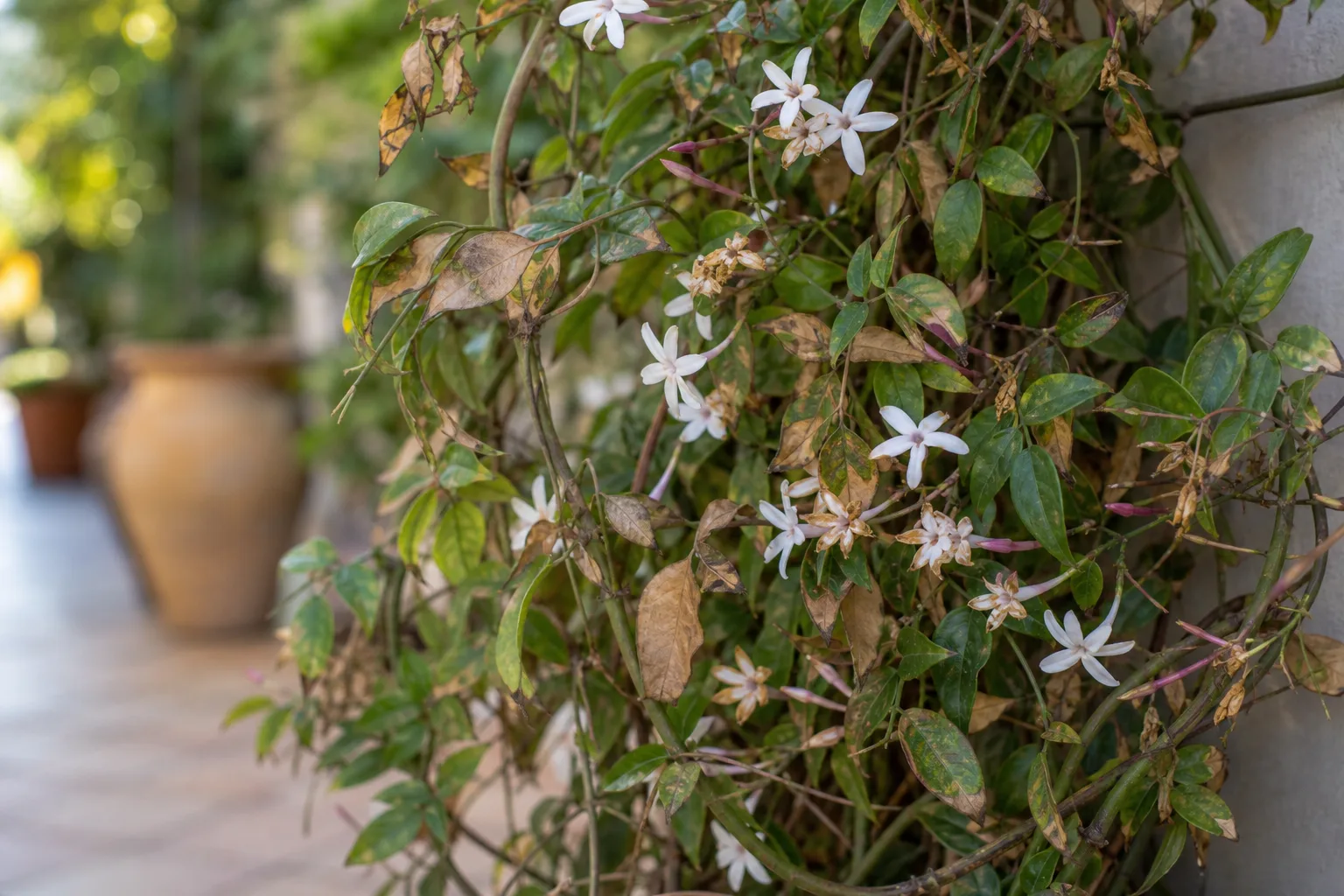
Cold Damage on Jasmine: Causes, Checks & Fixes
This guide covers cold damage on Jasmine. See also the general Cold Damage guide, watering, and light pages for this plant.
Cold Damage on Jasmine: Causes, Checks & Fixes
Quick answer
Common jasmine (Jasminum officinale) is a vigorous summer-flowering climber rated hardiness H5 (roughly USDA zones 7b–10) when established in the ground-but container roots freeze faster than in-ground roots, and tender new shoots on the outer twining stems blacken first. Cold during bud swell can drop the season’s bloom flush before leaf damage looks severe.
First step: move the plant to a sheltered spot above 4 °C (39 °F), stop fertilizing, and check which stems are firm versus mushy. Do not repot or hard-prune on day one.
H5 hardiness vs. container vulnerability
| Situation | Typical winter survival | What fails first |
|---|---|---|
| Established vine in ground, zones 7b–10, sheltered wall | Often survives; tip dieback on exposed shoots | Outer twining stems, late-season soft growth |
| Container on porch, patio, or unheated greenhouse | High risk below hard frost | Frozen root ball, then blackened top growth |
| Indoor winter rest (7–13 °C target) | No outdoor frost, but draft risk | Leaf margins on window-facing side |
| Bud swell in spring on outdoor pot | Bloom flush at highest risk | Bud drop before flowers open |
NC State Extension notes that common jasmine is not cold-tolerant beyond zone 7 in the ground but can be grown as a container plant brought inside to overwinter. The RHS growing guide confirms established J. officinale is hardy outside all winter, while tender jasmines need protection-on containers, the pot is always the weak point.
Why jasmine gets cold damage
Established ground vines vs. potted roots
Jasminum officinale evolved as a twining climber with opposite pinnate leaves on long stems. Outer shoots exposed to wind and sky chill before inner growth sheltered against a wall. In the ground, soil mass buffers roots; in a pot, the entire root zone can freeze in one night while the thermometer still reads “borderline.”
Sudden autumn frost can damage tender new growth before the plant hardens off-jasmine that pushed late soft shoots after summer pruning is especially vulnerable.
Winter-rest draft injury indoors
Indoor jasmine needs a cool winter rest-roughly 7–13 °C (45–55 °F) for several weeks-to set flower buds for the next season. That routine cool period means the plant sits closer to its chilling limit than tropical houseplants. A pot parked against single-pane glass on a freezing night shows margin burn on one side without any outdoor frost event. See the light guide for winter placement away from cold glass.
Bud-swell frost and bloom-flush loss
Jasmine flowers on old and new wood depending on timing; buds forming in spring are fragile. An unexpected cold night during bud swell often aborts flowers while mature leaves still look acceptable-container growers notice empty stems where buds were, sometimes before widespread blackening appears on ground vines with only tip dieback. Overlapping bud loss is covered in the bud drop guide.
Cold plus wet roots in a frozen or saturated pot compounds stress: chilled roots absorb poorly, and soggy mix in a cold room invites rot faster than the same watering in warm air. Review watering rhythm before assuming drought.
What cold damage looks like on jasmine
Outdoor frost vs. indoor draft patterns
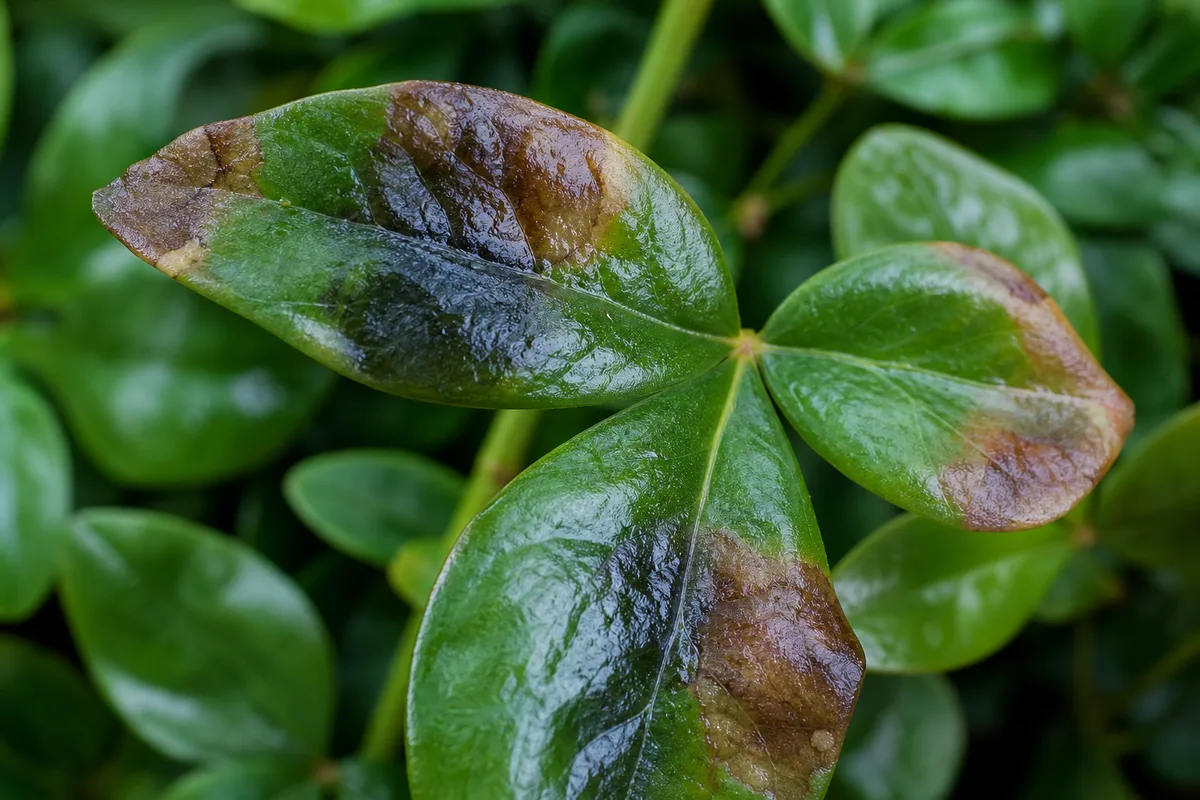
Cold Damage symptoms on Jasmine - compare with healthy tissue on the same plant.
After outdoor frost or sub-freezing porch nights:
- Water-soaked, darkened, or blackened foliage within 24–48 hours of a freeze
- Wilted shoots that do not recover after normal watering
- Damage on all exposed sides of outer twining stems-the vine’s habit puts the longest runners at the perimeter first
- Bud drop on swelling shoots
- Firm lower wood with dead blackened tips only (moderate case) versus soft mushy stems throughout (severe)
After indoor draft or winter-rest chill:
- Brown or black leaf margins on the window-facing side only
- Newest leaf pairs on cold-facing shoots affected first
- Soil may still be moist; no uniform whole-plant wilt from drought
- Stems stay firm; tissue is scorched, not mushy
What cold damage does not look like: uniform purple flush on new growth without blackening (purple leaves from chill anthocyanins), one-sided bleached tan patches after a sun move (sunburn), or papery transparent patches from salt or pest stress (transparent leaves).
How to confirm the cause
Work through these checks in order:
- Event timing - Tie symptoms to a frost night, porch freeze, open window, or cold delivery within 24–72 hours.
- Placement audit - Map exposure: all sides after outdoor frost versus one window side after draft. Note whether the pot sat on frozen ground outdoors.
- Stem firmness - Squeeze stems along the vine. Firm green or tan wood suggests recoverable dieback; soft black stems are dead.
- Cambium scratch test - Scratch a small bark patch on lower stems. Green cambium means the vine can resprout; brown or black dry cambium means that section is gone.
- Soil moisture - Insert a finger into the top 3 cm. Moist soil with localized cold-facing damage fits frost or draft. Bone-dry light pot weight points to drought, not cold alone.
- Bud status - Check whether swelling buds dropped after the chill-strong evidence of cold during the bloom window even when leaves look minor.
- Purple vs. black - Firm purple new tips after cool nights are pigment stress, not frost kill. Water-soaked black limp tissue after freezing is cold damage.
If soil stays wet for weeks, stems soften at the base, and leaves yellow from the bottom up, cross-check root problems before treating cold alone.
Confirmation decision table
| Pattern | Timing | Tissue | Likely cause | Next page |
|---|---|---|---|---|
| Black water-soaked leaves, all exposed sides | After frost | Mushy or firm dead tips | Outdoor frost / frozen pot | Stay here - shelter first |
| Margin burn, one window side | Cool indoor nights | Firm stems | Cold draft during rest | Light guide |
| Purple new flush, firm | Cool not freezing | No blackening | Chill anthocyanins | Purple leaves |
| Crisp margins, light dry pot | Dry spell | Firm wood | Drought | Watering guide |
| Bleached sun-facing patches | After sun move | Dry papery | Sun scorch | Sunburn |
| Brown flowers post-bloom | After flowering | Petals only | Age or humidity | Flowers turning brown |
First fix for jasmine
Move container plants to a sheltered position above freezing-ideally above 4 °C (39 °F)-away from cold glass and exterior doors.
For outdoor ground plants after moderate tip dieback, mulch the root zone and tie loose stems to reduce wind whip; do not hard-prune while wood may still be alive. Hold water slightly-cold wet roots stress further, but do not let the vine go completely dry. Do not fertilize until new growth appears in late winter or spring.
Wait one to two weeks in stable shelter before any pruning decision.
Step-by-step recovery
After relocation to stable warmth:
- Maintain disciplined watering - Allow the top 3 cm to approach dryness before watering during recovery. Cold slows evaporation; check soil before assuming drought. Follow seasonal rhythm in the watering guide.
- Hold fertilizer and Jasmine repotting guide until new shoots look clean for at least two weeks. Stressed jasmine needs boring stability.
- Wait for stable mild weather before cutting dead stems back to firm wood. RHS frost guidance recommends pruning damaged growth only when no more frost is expected, cutting to an undamaged sideshoot or bud.
- Trim fully black or mushy tissue with clean secateurs once the plant is stable. Dead leaves and stems will not regreen.
- Leave partially damaged firm leaves if some green tissue remains-they still photosynthesize while the vine rebuilds.
- Inspect roots only if stems stay soft while mix stays wet after warming-cold plus overwatering may have started rot. Slide the plant out gently; trim brown mushy roots before repotting only if clearly rotting.
- Harden off spring outdoor moves over 7–10 days when returning a recovered container to the garden-gradual exposure prevents repeat scorch on tender new flush.
If the plant was only briefly chilled and lower cambium tested green, shelter alone is often enough.
Recovery timeline
First 3–7 days: Wilted cold-injured leaves may look unchanged; focus on stable temperature, not aggressive intervention. Draft-burned margins do not spread inward once the pot leaves the cold zone.
2–4 weeks in stable warmth: Watch for new bud swell or leaf break on firm stems. Container vines may lag ground plants.
4–8 weeks after mild weather returns: Basal or lower-stem shoots often appear on vines with green cambium. RHS notes that many woody plants rejuvenate from dormant buds at or below soil level-recovery may not be obvious until early summer.
Through the growing season: Later flushes on new wood can still flower if enough healthy stem remains. Buds lost during the spring chill event will not reopen on the same nodes-expect fewer early flowers, possible normal summer bloom on new growth.
Blackened tissue stays dead permanently. Judge success by new shoots and firm wood, not by damaged leaves turning green again.
If eight weeks pass in stable warmth with green cambium but no shoots, revisit placement and root health. No re-growth by midsummer on a favourite vine may mean replacement-see when to worry below.
Lookalike symptoms to rule out
Purple-leaf chill stress - Newest leaf pairs flush purple or reddish-purple after cool nights; stems stay firm; no water-soaked blackening. Reversible on the next flush when nights warm. Full diagnostic path: purple leaves on jasmine.
Drought - Light pot, bone-dry soil throughout, crisp margins without a frost event. Whole-vine limpness improves after a deep soak. Cold damage often follows identifiable chill with moist soil.
Sun scorch - One-sided bleached or tan patches on the sunniest face after a sudden outdoor move, not uniform all-side frost injury. See sunburn scorched leaves.
Bud drop without leaf blackening - Buds abort from chill during swell; leaves may look fine. Overlaps cold damage but emphasizes bloom loss: bud drop.
Post-bloom brown flowers - Petals brown from age or humidity after flowering, not from freeze. Flowers turning brown.
What not to do
Do not repot a shocked vine immediately-recovery does not require fresh mix unless roots are rotting.
Do not prune all stems to the ground while lower wood is still firm and cambium tests green-you may remove live tissue that would resprout.
Do not place a cold-damaged plant directly under intense heat or right against a hot radiator-it worsens stress.
Do not fertilize during active cold injury-salts on chilled roots burn margins further.
Do not confuse purple anthocyanin flush with frost blackening-different urgency, different fixes.
How to prevent cold damage next time
- Grow outdoor vines in a warm, sunny, sheltered site-a south- or west-facing wall reflects heat and cuts wind
- Bring containers under cover before hard frost; wrap pots in bubble wrap or move to an unheated porch above freezing
- Mulch the root zone in autumn on in-ground plants-insulates roots per RHS winter protection guidance
- During indoor winter rest, keep above 7 °C and away from single-pane glass; see light placement
- Harden off spring outdoor moves over 7–10 days-acclimate tender new growth gradually
- Avoid late-season nitrogen that pushes soft frost-vulnerable shoots
- Match watering to season-wet cold roots in a dormant pot are especially risky (watering guide)
When to worry - mushy stems and severe dieback
Cold damage alone is moderate severity on established jasmine with firm lower wood and green cambium-you rarely need emergency action beyond shelter and patience.
Escalate when:
- Multiple stems turn soft and black within a week while soil stays wet-inspect for rot, not just chill
- Cambium is brown or dry on most lower stems after a severe freeze-basal resprout may still occur, but expect a long rebuild or replacement
- Container soil was frozen solid and stems collapsed from the base-root death may exceed top dieback
- No new growth by midsummer despite green cambium tests in spring-revisit culture or consider replacement
- Repeated frost on a marginally sheltered outdoor site without protection-upgrade winter strategy or move to container overwintering
If only outer shoots on an established ground vine show tip dieback and new growth after shelter is clean, the plant is stable. Trim cosmetic damage when weather is reliably mild.
Related jasmine problems
- Jasmine overview - species ID, cool rest, and baseline culture
- Light guide - winter window placement and outdoor siting
- Watering guide - seasonal rhythm and dry-down checks
- Purple leaves - chill anthocyanins vs. frost blackening
- Bud drop - bloom loss from chill during swell
- Flowers turning brown - post-bloom browning, not freeze
- Transparent leaves - papery tissue from other stresses
Conclusion
Cold damage on common jasmine announces itself through water-soaked blackening, wilted shoots, or draft-scorched margins-often on outer twining stems and container pots first, with bud swell at highest risk for bloom loss. Shelter above freezing, confirm firm wood and green cambium, and wait for stable warmth before pruning. Recovery shows in new shoots from lower stems, not in dead tissue regreening. Match frost-black tissue to this guide; match firm purple new growth to chill stress elsewhere-then stabilize temperature before any other intervention.
When to use this page vs other Jasmine guides
- Jasmine watering guide - Use for routine moisture checks before assuming cold damage is the main issue.
- Jasmine problems hub - Browse all 53 common issues on this species.
- Brown Leaves on Jasmine - Different entry point when symptoms overlap with cold damage.