Sunburn Scorched Leaves on Jasmine: Causes, Checks & Fixes
Quick answer
Sunburn on jasmine bleaches or browns leaves on the sun-facing side after a sudden jump to harsh afternoon sun. First step: move the vine to morning sun or bright indirect light today, then reintroduce stronger sun over 7–10 days.
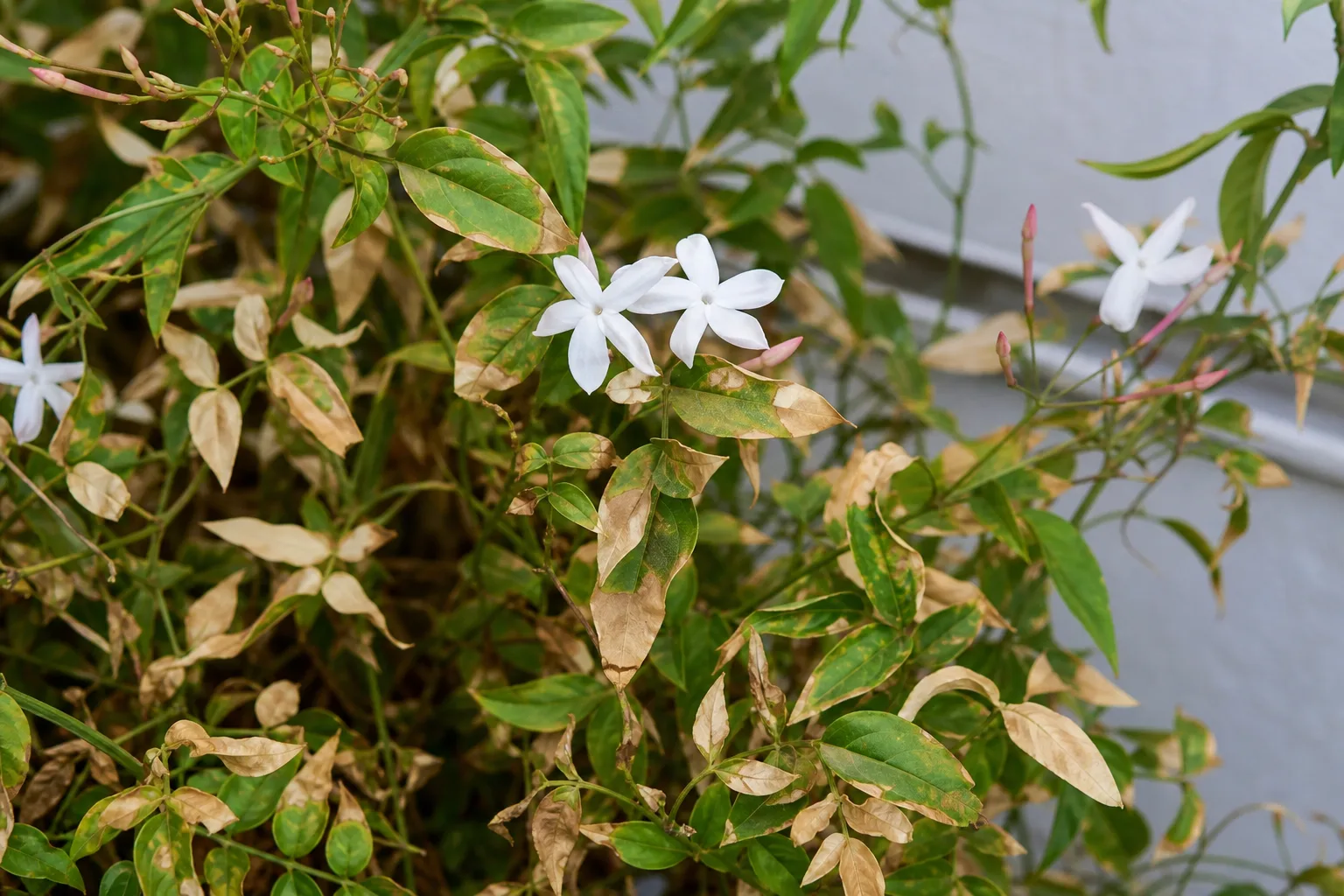
Sunburn Scorched Leaves on Jasmine: Causes, Checks & Fixes
This guide covers sunburn / scorched leaves on Jasmine. See also the general Sunburn / Scorched Leaves guide, watering, and light pages for this plant.
Sunburn Scorched Leaves on Jasmine: Causes, Checks & Fixes
Quick answer
Jasminum officinale needs bright light and several hours of direct sun to flower well-but vines grown indoors, in a nursery shade house, or on a north windowsill lack the UV hardening that outdoor leaves build slowly. Move one suddenly onto a south-facing patio or west window in summer and the sun-facing leaflets can bleach white or tan within a single hot afternoon.
First step: reduce light intensity today. Shift the pot to morning sun, dappled shade, or Jasmine light guide behind a sheer curtain. Do not leave scorched foliage in the same harsh exposure hoping it will toughen up overnight. Once new growth looks healthy, reintroduce stronger sun gradually over 7–10 days.
What sunburn looks like on Jasmine
Sunburn on jasmine is a one-sided light injury, not a spreading infection. The pattern matters more than a single blemished leaflet.
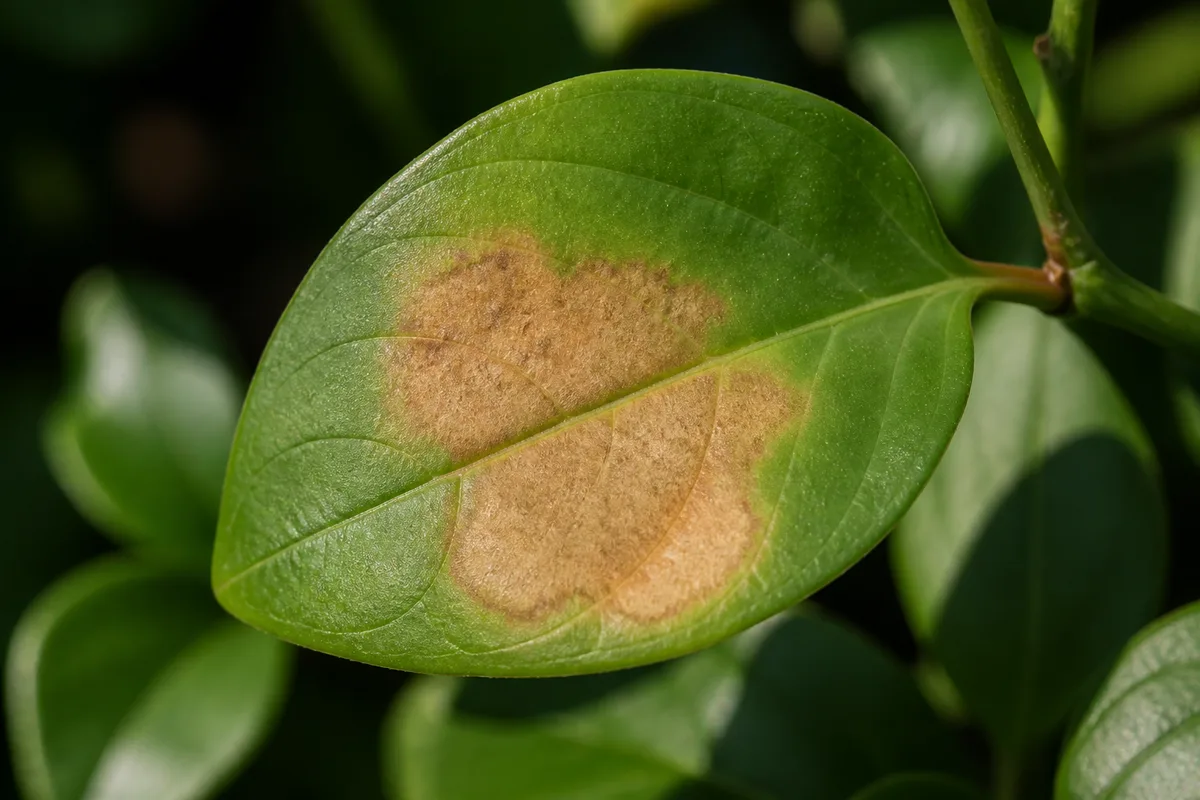
Sunburn / Scorched Leaves symptoms on Jasmine - compare with healthy tissue on the same plant.
Typical scorch signs:
- Bleached white or silvery patches on leaflets that face the window or afternoon sun, later turning tan or crisp brown
- Shaded side of the vine still green while the exposed face shows damage-classic orientation clue
- Dry, papery texture when you press scorched tissue; it does not feel mushy like rot
- Bud drop on exposed shoot tips when intensity spikes during budding season
- No stippling, webbing, or sticky residue on undersides-those point to spider mites or sap feeders, not sun
Jasmine carries pinnate leaves with five to nine leaflets on each compound leaf. Scorch often hits the outer leaflets first because they catch the most direct rays. On a container vine trained on a trellis indoors, the side pressed against the glass may burn while inner foliage stays fine.
Severity stages:
- Mild: Pale patches on a few sun-facing leaflets; stems firm; new tips still growing
- Moderate: Large bleached zones turning brown; some leaf drop; buds on exposed shoots abort
- Severe: Entire exposed shoots crisp; stem tips blacken; vine stops pushing new growth until light is corrected
Scorched patches are permanent on that tissue. They will not re-green. Recovery shows up only in new leaves formed after light is fixed.
Why Jasmine gets sunburn
Jasmine is not a low-light plant-but it is also not instantly sun-proof. RHS guidance places summer jasmines in a warm, sheltered, sunny spot, yet also notes that tender indoor specimens moved outdoors need appropriate conditions. The gap between “needs sun to bloom” and “can handle today’s full west exposure” is where most scorch happens.
Sudden light jumps are the main trigger. A vine that spent winter in a cool room with moderate window light has thin, unacclimated foliage. Setting it on a sunny deck the first warm weekend-or sliding it against an unshaded south window in May-delivers direct indoor sunlight above 1,000 foot-candles for hours. University of Maryland Extension notes that excessive direct light turns leaves pale, then brown-exactly the progression jasmine owners describe.
Afternoon west and south exposure concentrates heat on container pots and leaf surfaces. Jasmine in a dark plastic pot on a concrete patio heats at the root zone faster than in-ground vines with cooler soil mass. Reflective glass, white walls, and metal railing amplify the effect.
Water stress speeds scorch. Jasmine wants generous moisture during the growing season with good drainage. A pot that went dry before a sudden sun move cannot transpire fast enough to cool leaf tissue. Scorched tips on an otherwise well-watered vine still happen after light shock, but drought-stressed plants burn faster and drop more leaves.
Seasonal timing matters. Missouri Botanical Garden recommends placing jasmine outdoors from May to September in partial shade-not because jasmine hates sun, but because acclimated partial shade outdoors beats instant full midday exposure from dim indoors. Late spring and early summer moves cause the most scorch because day length and UV intensity jump together.
Misidentified “jasmine” adds confusion. Star jasmine (Trachelospermum jasminoides) and night jessamine (Cestrum) are often sold under the same common name but differ in hardiness and sun tolerance. This guide targets true Jasminum such as common jasmine (J. officinale), which your plant detail page describes as wanting full sun to partial shade with four to six hours of direct sun once established.
How to confirm the cause
Work through these checks before treating pests or Jasmine repotting guide:
- Sun orientation - Stand where the pot sits and note which direction the damaged leaf face points. Scorched patches should align with the brightest window or afternoon sun path. Random whole-plant yellowing suggests watering or root issues instead.
- Timeline - Did damage appear within 24–48 hours of a move outdoors, a window swap, or removing a sheer curtain? Sunburn follows exposure events. Cold damage follows frost; pest damage builds over days with visible insects.
- Texture test - Pinch scorched tissue gently. Sunburn feels dry and papery. Rot feels soft. Oily or stippled patches with webbing suggest mites.
- Underside inspection - Flip leaflets on damaged shoots. No aphids, scale, or mite webbing supports a light diagnosis. Sticky residue or moving dots point away from sunburn.
- Soil moisture - Stick a finger 3 cm into the mix. Bone-dry soil plus new full sun increases scorch severity but does not cause one-sided bleaching by itself-pair drought with a recent light jump for the full picture.
- Temperature history - Scorched after a 32°C sunny day fits sunburn. Crisp brown leaves after a near-freeze night fits cold damage even if the plant sits in a sunny window now.
If shaded leaves on the same vine stay green and the damage map matches the sun, you have enough to act on light-not spray schedule or fertilizer.
First fix for Jasmine
Move the plant out of harsh direct sun today.
Relocate to morning sun only, bright indirect light a metre back from a south window, or dappled shade under a tree or pergola outdoors. Indoors, a sheer curtain between vine and glass cuts intensity enough for recovery without plunging jasmine into dim conditions that stop flowering later.
Do not prune heavily, repot, or fertilize on day one. Those steps stress a vine already losing functional leaf area. Water if the top 3 cm of mix is dry-hydrated tissue handles the transition better-but skip a deep soak if soil is already wet.
Your goal for the next week is stable, reduced light where existing green leaves stop worsening and new tips stay firm.
Step-by-step recovery
After the emergency move, rebuild light tolerance in order:
- Hold reduced light 3–5 days - Watch for new leaves opening without immediate bleaching. If scorch spreads on old exposure, move slightly shadier.
- Correct Jasmine watering guide - Resume allowing the top inch to dry between drinks while the plant is in brighter recovery light. Soggy soil plus heat stress invites root problems on top of leaf burn.
- Begin hardening off - Add about one hour of stronger sun every day or two over 7–10 days. Outdoors, start with eastern exposure, then lengthen western exposure last. Indoors, pull the sheer curtain aside progressively.
- Target four to six hours direct sun - That range matches jasmine’s bloom needs in most homes. Full all-day exposure from dim indoors is the mistake-not sun itself.
- Trim only fully dead leaflets - Snip brown, crispy tissue that crumbles when touched. Leave partially green leaflets; they still photosynthesize while replacements form.
- Hold fertilizer until new growth looks normal - Salt on stressed roots plus burned foliage slows recovery. Resume balanced feed only after two weeks of healthy new leaves.
If the vine is root-bound and dries out within hours in recovery light, plan repotting after light stabilizes-not during active scorch spread.
Recovery timeline
Days 1–3: Scorched patches stop expanding once intensity drops. Some leaf drop on heavily burned shoots is normal.
Week 1–2: New leaflets emerge at tips. They should open green without immediate bleaching if acclimation pace is correct. If new leaves bleach instantly, slow the hardening schedule.
Weeks 3–4: Enough healthy foliage returns to support budding on well-acclimated vines. Flower buds may abort during the scorch event itself; expect bloom recovery on the next flush after light is stable.
Long term: Old scorched leaflets remain blemished until they age off naturally or you trim them for appearance. Judge success by new green growth and firm stems, not by old patches re-coloring.
Lookalike symptoms
Cold damage - Jasmine is hardy in zones 7–10 outdoors but indoor vines near drafty glass can brown after cold nights. Cold injury often hits outer leaves broadly, not strictly the sun-facing face, and follows temperature drops rather than a light move.
Underwatering crisp edges - Dry soil and wilted stems with brown margins can mimic scorch. Underwatering usually affects older lower leaves more evenly and improves after a thorough drink. Sunburn stays one-sided and follows a light jump.
Spider mites - Dry indoor air during winter rest invites mites on jasmine. Look for fine webbing, stippled yellow dots, and leaf curl-not large bleached patches. Mites worsen in shade corners; sunburn follows bright exposure.
Fertilizer burn - Salt crust on soil surface with brown leaflet tips from margins inward suggests overfeeding. Sunburn creates irregular bleached zones on the exposed face, not uniform tip burn on every leaf.
Transplant shock - Wilting after repotting can coincide with a sunny windowsill move. If roots were disturbed and soil is wet, check drainage before blaming sun alone.
Mistakes to avoid
- Leaving scorched vines in full afternoon sun hoping they adapt in one step-each hot day kills more tissue
- Fertilizing burned foliage to “push recovery”-stressed roots cannot use feed safely
- Heavy pruning right after scorch-removes photosynthetic tissue the vine needs to rebuild
- Moving from scorch straight to deep shade-extreme swings stress jasmine and delay flowering; aim for bright indirect, not a dark corner
- Assuming all jasmines share the same sun limit without checking whether you have true Jasminum versus a lookalike species
- Watering on a calendar while ignoring pot weight-chronic wet soil during heat recovery invites root rot; chronic dry soil during hardening off invites repeat scorch
How to prevent sunburn next time
Harden off every time light increases. Treat a move from indoors to patio, or from east window to unshaded south glass, like a two-week project-not a single afternoon chore.
Match outdoor placement to season. Follow partial shade for container jasmine outdoors May through September, then increase exposure as the vine shows tolerance. In hot inland climates, give afternoon shade even on acclimated plants.
Use reflective surfaces carefully. White walls and south bay windows boost bloom but also burn unacclimated vines. A sheer curtain you can adjust seasonally beats fixed blazing glass.
Keep soil moisture steady during transitions. Water when the top 3 cm dries-jasmine’s normal rhythm-not only when leaves wilt. A well-hydrated vine tolerates gradual hardening better.
Rotate the pot weekly during recovery and acclimation so one side does not always bear the hottest rays.
Plan winter-to-spring moves. Jasmine rests October through March with cooler temperatures and lower light. Spring growth is tender. Start outdoor hardening in morning shade before summer peak UV.
When to worry
Most sunburn on jasmine is recoverable if you reduce light quickly. Escalate urgency when:
- Entire exposed shoots crisp in one afternoon and stems feel dry halfway back
- New growth blackens within days of a light move rather than opening green
- All buds drop on sun-facing branches during flowering season after a sudden exposure change
- Leaf loss exceeds one third of the vine within a week while the plant stays in harsh sun
- Stems soften at the base with sour soil smell-that is rot from heat plus overwatering, not sun alone; inspect roots immediately
If the vine has firm stems, green tissue on shaded shoots, and new tips forming after your first light reduction, continue gradual acclimation. Jasmine is built for sun once hardened-your job is to bridge the gap without repeating the shock.
When to use this page vs other Jasmine guides
- Jasmine watering guide - Use for routine moisture checks before assuming sunburn / scorched leaves is the main issue.
- Jasmine problems hub - Browse all 53 common issues on this species.
- Brown Leaves on Jasmine - Different entry point when symptoms overlap with sunburn / scorched leaves.
- Brown Tips on Jasmine - Different entry point when symptoms overlap with sunburn / scorched leaves.
- Curling Leaves on Jasmine - Different entry point when symptoms overlap with sunburn / scorched leaves.