Brown Leaves on Jasmine: Causes, Checks & Fixes
Quick answer
Brown jasmine leaves usually trace to underwatering during summer bloom, cold damage in winter, sun scorch after a move, or root stress from wet soil. Check pot weight and recent temperature swings before pruning heavily.
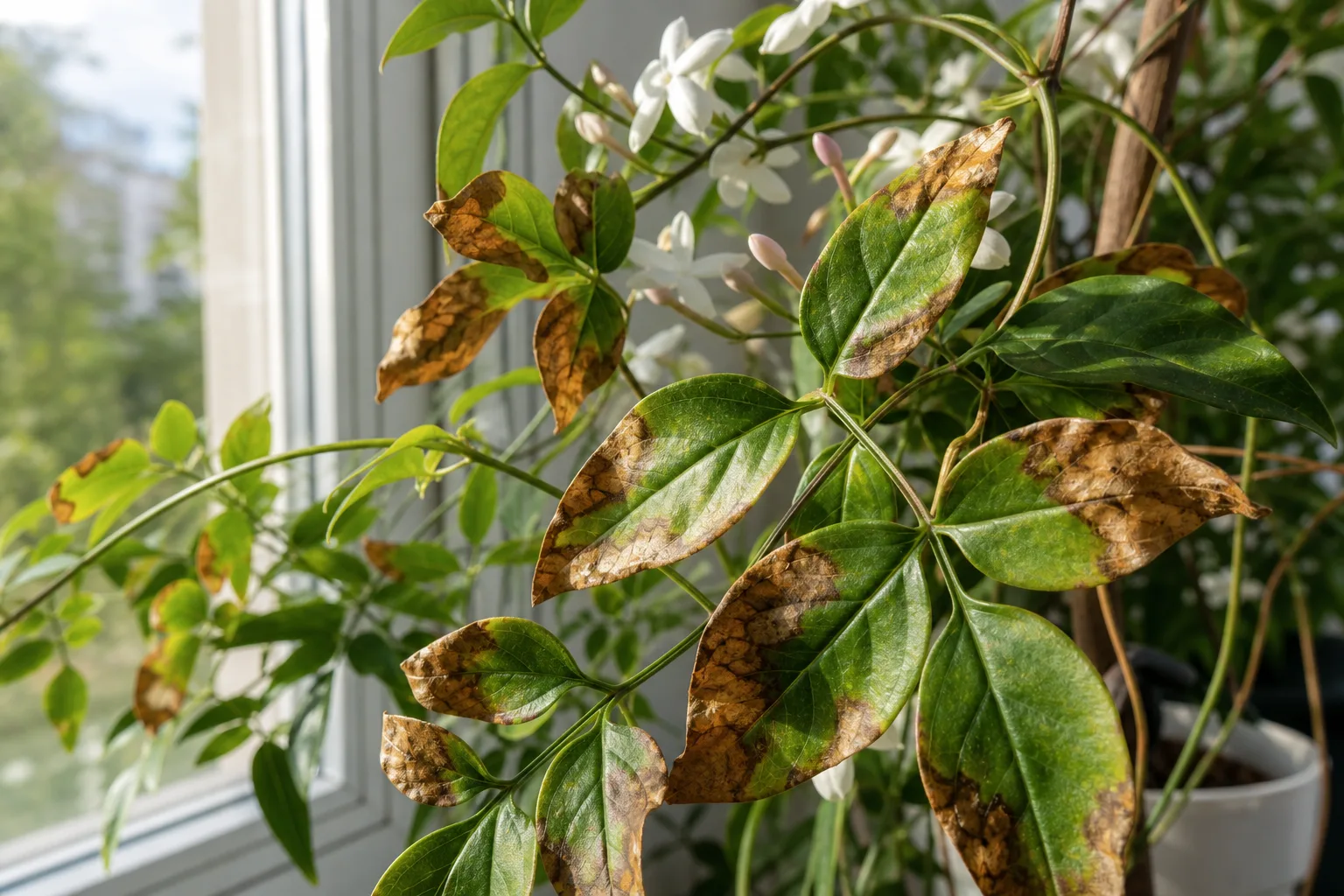
Brown Leaves on Jasmine: Causes, Checks & Fixes
This guide covers brown leaves on Jasmine. See also the general Brown Leaves guide, watering, and light pages for this plant.
Brown Leaves on Jasmine: Causes, Checks & Fixes
Quick answer
Brown leaves on common jasmine (Jasminum officinale) mean whole leaflets or large patches have died-not just dry tips. That distinction matters: crisp leaflet points alone belong on the brown tips guide; this page covers drought margins spreading inward, frost-softened foliage, sun-side tan patches, and base-up browning when roots sit wet.
Most cases trace to a care mismatch during a demanding growth phase-too dry while buds swell in summer, a cold snap on an outdoor container, sudden full sun after shade, or roots suffocating in soggy winter mix. First step: probe soil at 3 cm depth, lift the pot, and match the brown pattern to moisture and light before cutting leaves off. If the mix smells sour and browning climbs fast on wet soil, see root rot on jasmine the same week.
Why jasmine gets brown leaves
Common jasmine is a vigorous twining vine in the olive family that wants moist, well-drained soil and regular watering while actively growing. The paradox that catches growers: the same plant that hates waterlogged roots still browns quickly when the root ball dries during flowering prep.
Summer bloom drought
When temperatures rise and white buds form, transpiration spikes on a vine with many opposite pinnate leaves. Upper leaves on an exposed trellis lose water first-parts furthest from the roots are usually affected first during drought. A light surface sprinkle or a weekly calendar often fails while the lower half of the pot stays dry. Missed drinks during July bloom can crisp margins on older leaflets within 48 hours while new tips still look green.
Winter wet soil
The opposite failure hits after the cool rest. Houseplants need only very light watering in winter, but many owners keep summer frequency on a vine that has slowed growth indoors. Peat-heavy mix that stays damp for weeks suffocates fine roots; lower leaves yellow, then brown from the base up while the pot stays heavy. That pattern overlaps overwatering on jasmine and early root rot-weight and smell separate rescue paths.
Frost and cold wind
Common jasmine is hardy in the ground in favourable sites, but container roots are more vulnerable than in-ground plants to frost and cold wind. J. officinale is deciduous to semi-evergreen-expect some natural leaf drop in autumn on outdoor vines. Sudden hard frost on actively growing container jasmine softens whole leaflets to dark brown overnight while stems may stay firm.
Sun scorch after a move
Jasmine grown in shade and pushed into harsh afternoon sun without acclimation shows burnt areas on the sun-facing side. Large tan patches on one face of the vine after a south-window move or outdoor relocation fit scorch better than disease. For tip-only crisping after a light change, compare with sunburn and scorched leaves.
Pest lookalikes (less common)
Indoor jasmine may attract red spider mites in hot dry air-stippled yellow-brown leaflets with fine webbing, not uniform whole-leaf necrosis. Scale and aphids on tender shoots cause localized stress but rarely brown an entire vine unless infestation is heavy and prolonged.
What brown leaves look like on jasmine
Drought margins (summer bloom): Dry brown tips and edges on older leaflets while newer growth still looks green; pot feels light; mix dry at 3 cm depth. Upper exposed leaves on the trellis often brown before lower shaded ones.
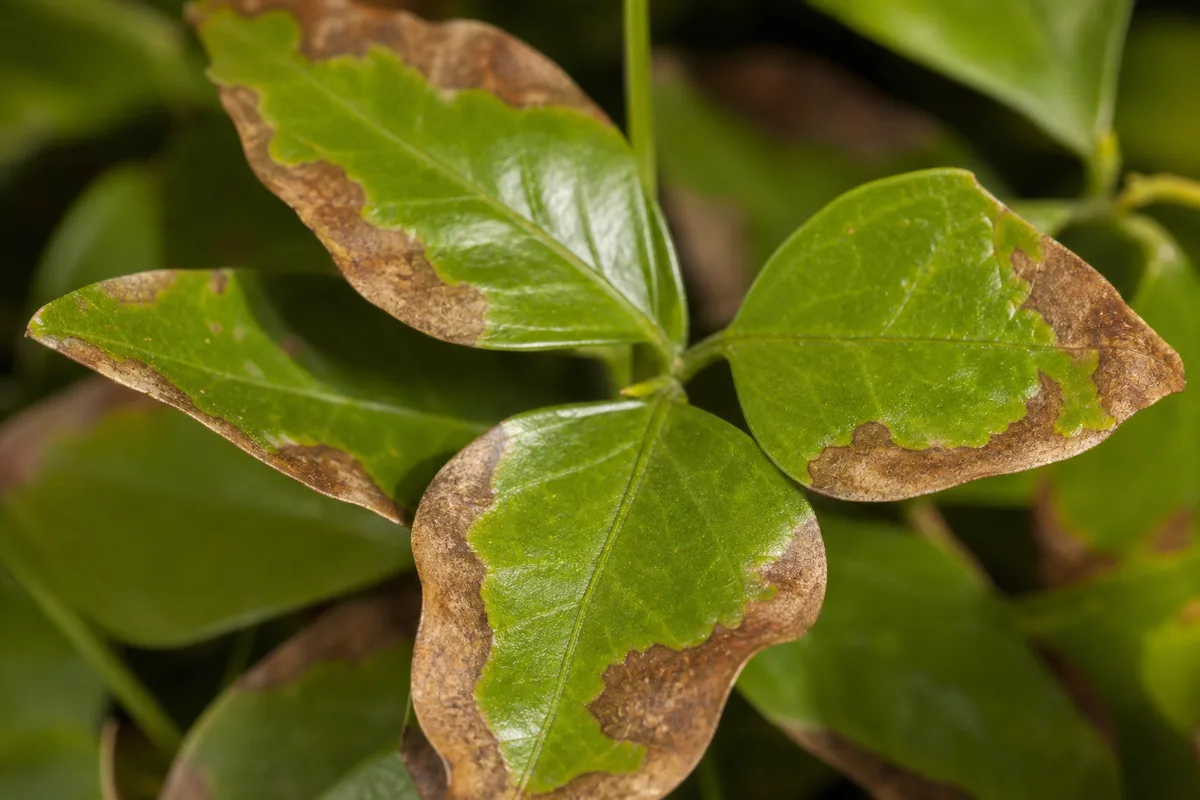
Brown Leaves symptoms on Jasmine - compare with healthy tissue on the same plant.
Sun scorch: Large tan or bleached patches on the side facing the strongest sun after a recent move; stems firm; soil moisture normal.
Frost damage: Soft, darkened whole leaflets after a cold night; may appear overnight on outdoor containers; stems usually stay woody and firm if roots did not freeze.
Wet-root stress: Yellow-then-brown lower leaves with constantly wet, heavy mix; sour smell when lifted; may pair with wilt on wet soil-see wilting on jasmine.
Normal aging: A few brown lower leaflets on an otherwise bud-heavy vine in autumn may be deciduous drop, not a care crisis-confirm firm new shoots before pruning heavily.
How to confirm the cause
Work through these checks in order:
- 3 cm moisture probe - Dry throughout with a light pot points to drought. Damp or wet at depth with a heavy pot points to excess moisture or root stress.
- Pot weight and drainage - Lift the container. Light and dry confirms underwatering. Heavy, slow-draining holes, or standing saucer water confirms wet-soil risk.
- Damage pattern - One-sided tan patches after a sun move suggest scorch. Uniform soft browning after frost suggests cold. Base-up yellow-brown on wet mix suggests roots.
- Recent context - Summer bloom period, post-chill indoor heating, repot, or outdoor relocation narrows cause faster than leaf colour alone.
- Stem firmness - Pinch lower stems. Firm wood with dry crispy leaves fits drought or scorch. Soft dark tissue at the soil line on wet mix escalates to rot inspection.
- Pest scan - Check leaflet undersides for webbing or stippling before assuming environmental stress only.
| Signal | Pot weight | Soil at 3 cm | Pattern | Likely cause |
|---|---|---|---|---|
| Summer bloom | Light | Dry | Crisp margins, upper leaves first | Drought |
| After frost night | Normal | Variable | Soft dark whole leaflets | Cold damage |
| After sun move | Normal | Moist | Tan patches on sun side | Scorch |
| Winter indoors | Heavy | Wet | Yellow-brown lower leaves, sour smell | Wet roots / rot |
| Autumn drop | Normal | Even | Old lower leaves only, firm new buds | Natural deciduous shed |
First fix for jasmine
Make one correction based on pot weight and soil moisture-do not stack repot, fertilizer, and heavy pruning the same week.
If dry and light: soak the pot until excess drains, empty the saucer, then resume the dry-down rhythm from the watering guide. Expect perkier stems within 24 hours if roots are healthy.
If wet and heavy: withhold water until the top 3 cm dries and confirm drainage holes are open. Move to brighter airflow so the root zone can dry-do not repot on day one unless stems are mushy.
If scorched: move to bright indirect light for seven to ten days, then reintroduce morning sun gradually per the jasmine light guide.
If frost-damaged: shelter the container, wait for stable temperatures, then trim only fully dead leaflets-keep partially green tissue to feed recovery.
Trim only fully dead leaves. Partially green leaflets still photosynthesize while new shoots form.
Step-by-step recovery by cause
After the first fix, add steps in order-not all on the same day:
- Drought recovery - One surface soak may not rewet a shrunken peat root ball. If water runs straight through, bottom-water twenty to thirty minutes, then drain fully. Check again in two days rather than watering daily. During active bloom, container plants need regular watering through the growing season.
- Wet-soil recovery - Hold water until the top 3 cm dries. If browning spreads after ten days of dry-down, slide the plant partly out and inspect roots-mushy brown tissue means follow the root rot rescue workflow. Firm white roots mean patience and sharper drainage.
- Scorch recovery - Leave damaged leaflets on the plant unless fully dead; acclimate back to full sun to partial shade over seven to ten days. Do not fertilize until new growth looks firm.
- Frost recovery - Wait until nights stay above frost before hard pruning. New buds often emerge from firm stems weeks after leaf drop-do not declare the vine dead prematurely.
- Mite follow-up - If stippling appears with dry winter air, rinse leaflet undersides and see spider mites on jasmine before misting blooms.
Do not fertilize stressed jasmine until new shoots stay firm for two weeks. True Jasminum species are non-toxic to pets-safe to trim dead foliage near cats and dogs, unlike toxic lookalikes such as Carolina jessamine noted on the jasmine overview.
Recovery timeline
Brown leaflet tissue does not re-green. Judge success by new growth, not old colour:
- 24–48 hours - Drought-corrected vines often show firmer stems and less droop after one deep soak.
- 1–2 weeks - New shoot tips and swelling buds mean roots recovered from a single dry spell.
- 3–6 weeks - Wet-soil recovery may require a full dry-down cycle; persistent spread on soggy mix needs root inspection.
- One season - Frost- or scorch-damaged vines may look uneven until new twining growth covers bare sections.
If a drought soak and corrected rhythm do not stop margin browning within ten days, or if more than half the root mass was mushy on inspection, propagation from healthy upper cuttings may be more practical than nursing a failing parent vine.
Lookalike symptoms to rule out
Brown tips only - Crisp points on otherwise green leaflets point to dry air, salt, or uneven moisture-not whole-leaf necrosis. See brown tips on jasmine.
Crispy whole leaflets on dry soil - Severe desiccation can dry entire leaflets; confirm whether the whole compound leaf dropped or only margins browned. See crispy leaves on jasmine.
Wilting on wet soil - Limp stems despite damp mix mean roots cannot absorb-treat as rot, not thirst. See wilting and underwatering only after pot weight confirms dryness.
Yellow before brown on wet mix - Chlorosis on lower leaves often precedes necrosis from overwatering; overlap with yellow leaves.
Fine webbing and stippling - Spider mites in dry indoor air; environmental humidity correction alone may not clear an established colony.
What not to do
Do not blanket-water on a schedule without checking soil at 3 cm depth-summer bloom and winter rest need opposite rhythms.
Do not repot and fertilize the same week brown leaves appear. Change one variable at a time.
Do not assume every brown leaf means disease-pattern, pot weight, and recent weather tell you more.
Do not hard-prune a frost-damaged vine to bare wood before you confirm live buds along firm stems.
Do not leave container jasmine on a cold saucer or exposed patio through hard frost without shelter-roots in pots freeze faster than in-ground plants.
Prevention
Match 4–6 hours of direct sun with moderate watering during active growth-details in the jasmine light and watering guides. Acclimate outdoor moves over seven to ten days. Bring tender container jasmine under cover before frost nights approach freezing. Use terracotta or a mix with perlite so the root zone dries predictably between drinks.
During summer bloom, check daily when buds swell-transpiration demand rises just when owners assume last week’s rhythm still works. During winter rest indoors, stretch intervals and let the top of the mix dry further before the next drink.
Species note
This guide centres on J. officinale. Pink jasmine (J. polyanthum) is tender and often blooms indoors in late winter-brown leaves after a chill window usually mean bring indoors before night temperatures fall below 13–15 °C. Arabian jasmine (J. sambac) grows shrubbier but shows similar drought margins and wet-root base browning; container roots on both tender species need frost-free shelter earlier than hardy common jasmine in the ground.
When to worry
Treat as urgent if brown spreads up the vine quickly with soggy soil and a sour smell-that pattern fits advancing root rot, not simple dryness. Unpot and inspect roots the same week.
Sudden widespread browning after a hard frost on a young container plant may kill shoots if the root ball froze solid-move to shelter and wait for live buds before discarding.
If drought correction does not stop margin browning within ten days, or stems soften at the soil line on wet mix, escalate to root rescue rather than repeated soaking.
Non-urgent: a few sun-tanned leaflets on one side after acclimation, or lower deciduous drop in autumn on an outdoor J. officinale still pushing firm buds.
Conclusion
Brown jasmine leaves usually come down to water timing, cold, or light-not mysterious disease. Probe 3 cm deep, read pot weight, match the pattern to drought, frost, scorch, or wet roots, then apply one correction before stacking treatments. Judge recovery by fragrant new shoots and swelling buds on firm twining stems-not by hoping old brown tissue will green again.
Related tool
Use the Plant Problem Diagnosis Tool to narrow causes for brown leaves on this plant before changing multiple variables at once.