Crispy Leaves on Jasmine: Causes, Checks & Fixes
Quick answer
Crispy jasmine leaves almost always mean the vine lost water faster than roots could replace it-drought during summer bloom is the top cause, but wet sour mix and one-sided sun also crisp foliage. First step: lift the pot and probe soil at 3 cm depth before you water or trim.
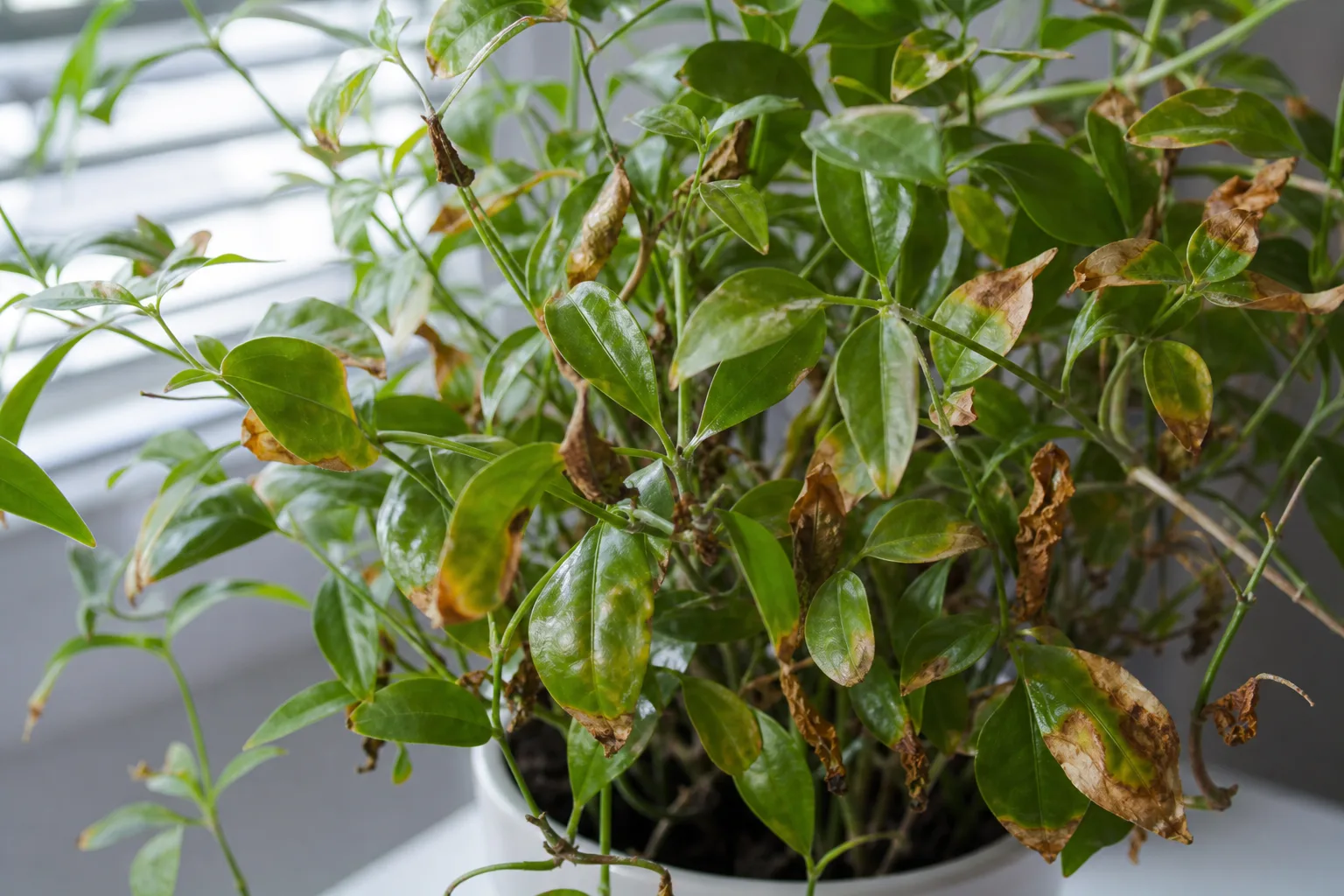
Crispy Leaves on Jasmine: Causes, Checks & Fixes
This guide covers crispy leaves on Jasmine. See also the general Crispy Leaves guide, watering, and light pages for this plant.
Crispy Leaves on Jasmine: Causes, Checks & Fixes
Quick answer
Crispy leaves on common jasmine (Jasminum officinale) mean leaf tissue desiccated faster than roots could resupply water. On a twining summer-flowering climber in a container, that usually traces to a dry root ball during bloom season-but chronic overwatering, one-sided sun and wind, salt buildup, or dry winter air can produce the same brittle edges.
First step: lift the pot and probe the top 3 cm of mix before you water, mist, or trim. A light pot with dusty dry soil needs a deep soak. A heavy pot with sour-smelling wet mix needs withholding water and a root check-not another drink because leaves look crispy. If damage maps to one sun-facing side after a recent move, reduce light intensity today while you correct moisture.
Crispy tissue does not rehydrate. Recovery shows up in new pliable leaves once the underlying stress stops. For lookalikes that share brown vocabulary, see brown tips (margin-only burn) and sunburn scorched leaves (one-sided bleached scorch after a light jump).
Why jasmine gets crispy leaves
Jasmine is not drought-proof in a pot. NC State Extension notes the species tolerates average soil and occasional dry spells, but container vines have little soil volume to buffer heat and missed drinks. During active growth and flowering, transpiration outpaces a neglected root ball within hours on a sunny trellis or south window.
Summer bloom demand, winter humidity, and container size
Plants in containers need regular watering throughout the growing season because they cannot reach groundwater. Jasmine pushes soft shoots and holds fragrant buds when warmth and light are high-that is exactly when a small or terracotta pot can go from moist to bone dry in a single hot afternoon. Missed cycles during bud swell crisp new tips first; prolonged drought can abort flowers before they open.
The seasonal flip matters indoors. Missouri Botanical Garden recommends generous moisture during the growing season with good drainage, then a cool rest from October through March with reduced watering. When a chilled vine returns to a warm living room, heated air often runs far below the high humidity jasmine needs to flower well indoors. Thin pinnate leaflets-five to nine leaflets per compound leaf-lose water through stomata faster than roots replace it in arid air. That produces margin-first crisping even when you think watering is on schedule.
Root-bound pots amplify the cycle. A congested root ball dries the mix in hours, then gets a heavy soak-edges crisp on new growth repeatedly. Glazed ceramic and plastic hold moisture longer than terracotta; match your probe rhythm to the pot, not a calendar.
Root stress from chronic overwatering
Less often, crispy leaves appear while soil stays wet. Damaged roots cannot take up water even when mix feels damp-leaves desiccate at the edges while the root zone suffocates. Houseplants and glasshouse jasmines need only very light watering in winter; continuing summer frequency through cool rest keeps oxygen low. Sour smell, fungus gnats, and crisp lower leaves on heavy wet mix point here-not thirst. Escalate to the root rot guide if stems soften at the base.
Sun, wind, and salt stress
Outdoor vines on the windward side of a pergola or a pot pushed against unshaded west glass can crisp exposed leaflets when soil is slightly dry-compound stress, not drought alone. Sudden jumps to harsh afternoon sun bleach or tan the exposed face while shaded leaflets stay green.
Heavy feeding in spring and summer can leave soluble salts that brown leaf tips and margins-a chemical drought that crisps edges even with regular watering. White crust on soil surface or pot rims after feeding supports salt burn over simple underwatering.
Spider mites on dry indoor air during winter rest cause stippling and fine webbing-not large brittle zones- but drought-weakened vines attract pests faster. No sticky honeydew residue helps rule out sap feeders as the primary crisp cause.
What crispy leaves look like on jasmine
Crispy jasmine foliage feels dry and brittle when you pinch it-tissue crumbles rather than bending. This is desiccation injury, not a spreading soft rot.
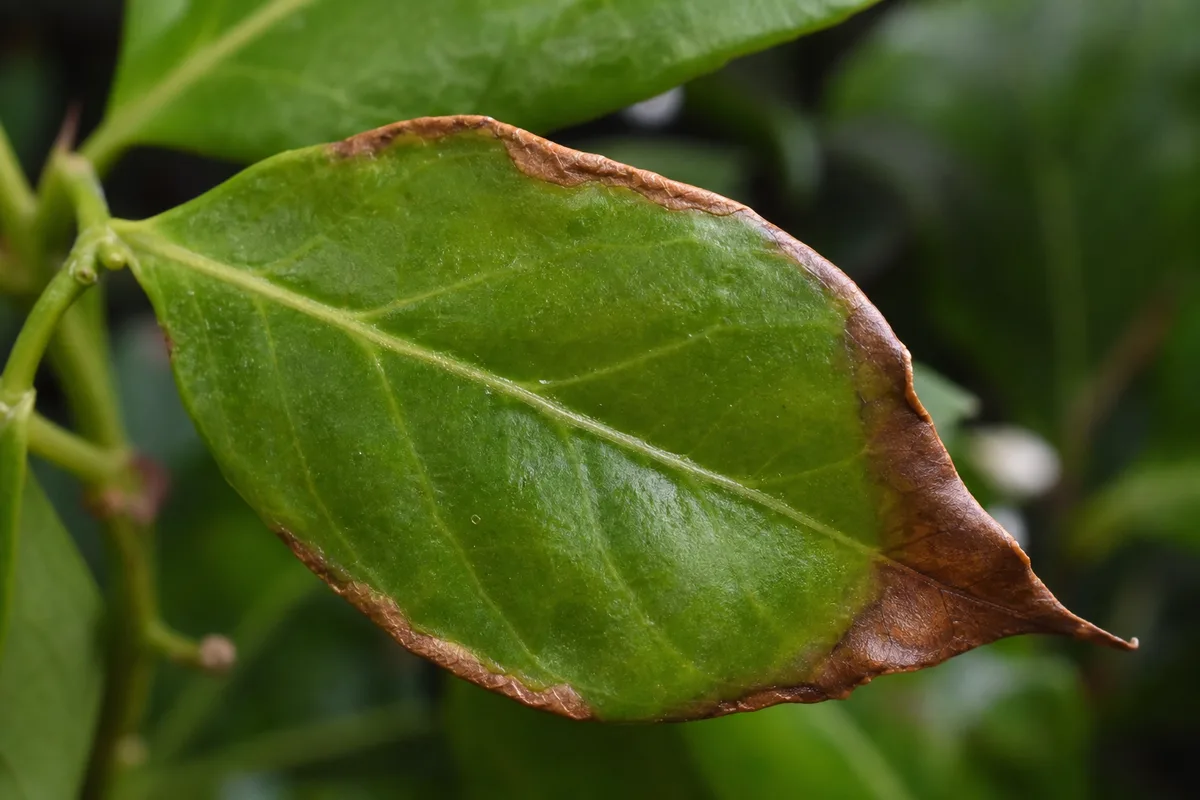
Crispy Leaves symptoms on Jasmine - compare with healthy tissue on the same plant.
Typical drought crisp:
- Tan-to-brown edges and tips that snap when touched
- Downward curl on leaflets before full crisping
- Older lower leaves often show damage first in mild drought; new tips crisp first when the vine is severely dry during active growth
- Light pot; probe at 3 cm depth comes out dry; stems may wilt slightly
Sun and wind desiccation:
- Damage concentrated on the side facing afternoon sun or prevailing wind
- Shaded leaflets on the same stem may stay green
- Follows a recent outdoor move, south-window shift, or heat wave-not gradual whole-plant yellowing
Root-stress crisp:
- Crispy lower leaves while mix stays wet for days
- Sour or musty smell from drainage holes
- Wilting despite damp soil; no perk-up after watering
Patterns that are not simple crispy-leaf drought:
- Fine webbing with yellow stippling (spider mites-see pest section on the overview)
- Soft dark stem tissue at soil line (rot, not crisp desiccation)
- Sticky residue on undersides (honeydew pests)
Crispy leaves vs. brown tips vs. sun scorch
These three pages overlap because jasmine owners use different words for the same stress. Use pattern, not vocabulary, to route yourself.
| Pattern | Texture | Soil / pot | Best next page |
|---|---|---|---|
| Tips and narrow margins only | Crisp at points; leaflet center still green | Often dry or salty | Brown tips |
| Large brittle zones or whole leaflets | Crumbles; may curl first | Light dry pot OR wet sour mix | This guide |
| One-sided bleached or tan patches | Dry, papery; shaded side green | Often dry + recent sun move | Sunburn scorched leaves |
| Whole-plant wilt swing | Limps then perks OR stays limp on wet soil | Dry vs. wet extremes | Water stress |
Crispy leaves are the broad desiccation symptom-drought, failed roots, sun-plus-dry, salt, or humidity loss can all land here. Brown tips are usually narrower margin burn. Sun scorch is orientation-specific light injury.
How to confirm the cause
Work through checks in order. You want one primary driver before you stack fixes.
Pot weight, soil moisture, orientation, and smell
- Lift the pot - Noticeably light with dry mix at 3 cm depth confirms drought. Heavy with waterlogged feel points away from thirst.
- Probe depth - Surface dust can hide moist core. Insert your finger to roughly 3 cm; bone dry there with a light pot is enough to soak if stems are still firm.
- Sun orientation - Stand where the pot sits. Crispy patches on the brightest face after a recent move support sun or wind desiccation layered on dry soil.
- Smell test - Sour odor from drainage holes with wet mix and crisp lower leaves suggests root stress, not underwatering.
- Timeline - Damage within 24–48 hours of a south-window or patio move fits sun/wind. Gradual margin creep over a dry week fits drought. Tip burn worsening after heavy feed with white crust fits salts.
- Pest scan - Tap a leaflet over white paper. Moving specks plus webbing mean mites, not drought alone.
Confirmation decision table
| What you find | Likely cause | First action |
|---|---|---|
| Light pot; dry at 3 cm; firm stems | Drought | Deep soak until excess drains; empty saucer |
| Heavy wet pot; sour smell; crisp lower leaves | Root stress / early rot | Pause watering; check drainage and roots - root rot |
| One-sided crisp; recent sun or wind exposure | Sun/wind desiccation | Move to morning sun or bright indirect; soak if dry |
| Even moisture; arid heated room; winter return indoors | Low humidity | Raise local humidity - low humidity |
| White soil crust; crisp after feeding | Salt burn | Flush or repot; hold fertilizer - brown tips |
| Stippling + webbing; no honeydew | Spider mites | Isolate; rinse undersides; treat pests |
If a light dry pot perks within hours after a thorough drink, drought was the driver. If soil is wet and the vine stays limp, do not keep soaking-pivot to root diagnosis.
First fix for jasmine (by likely cause)
One action first-match the table above, not every fix at once.
Drought (most common): Water deeply until excess runs from drainage holes, then empty the saucer within 30 minutes. Do not sprinkle the surface only-dry root balls in peat-heavy mix can become hydrophobic and shed water down the pot sides. If water races through instantly on a very dry pot, soak, let it drain, and repeat once. Resume allowing the top 3 cm to dry before the next drink per the watering guide.
Wet sour mix with crisp lower leaves: Stop watering. Confirm drainage holes are open and no saucer water remains. Tip the plant out gently-firm white roots with slight surface dryness may recover with a dry-down week. Mushy brown roots need trim-and-repot protocol in the root rot guide-not another misting session.
One-sided sun or wind crisp: Move to morning sun, dappled shade, or Jasmine light guide behind a sheer curtain today. Water if the top 3 cm is dry-hydrated tissue handles light reduction better-but skip deep soaking already-wet mix.
Low humidity after winter rest: Group plants, use a humidity tray, or run a humidifier near the vine-not mist as a substitute for root watering. Stabilize air moisture while keeping the normal dry-down rhythm.
Salt crust after feeding: Flush with clear water equal to several pot volumes, letting it run freely from the bottom, or replace the top third of mix. Hold fertilizer until new growth emerges without crisping.
Trim only fully dead leaflets that crumble. Keep partly green tissue for photosynthesis.
Recovery timeline
Hours 1–6 (mild drought): Stems and leaflets often perk partially after a deep soak if roots are healthy. Crisped patches stay crisp-judge improvement by firmness and new tips, not old tissue rehydrating.
Days 3–7: New leaflets should open pliable without immediate edge burn if watering rhythm matches growth. Buds held through the stress may still open; buds dropped during severe drought may not return until the next flush.
Weeks 2–4 (root stress): Recovery after correcting chronic wetness is slower. Expect gradual return of turgor on green tissue while damaged roots regrow. Yellowing may continue briefly as the vine sheds leaves it can no longer support.
Weeks 3–6 (sun or humidity correction): New growth should stay green once light and air moisture stabilize. Old crispy leaflets remain until they age off or you trim them.
Success means new pliable leaves and firm stems-not old crispy margins turning green again.
What not to do
- Mist crispy leaves as a substitute for root watering - Surface moisture does not rehydrate desiccated tissue and can invite foliar disease on dense twining growth.
- Repot and fertilize the same week - Stressed roots cannot handle feed or disturbance; stabilize water and light first.
- Assume underwatering when soil is wet and sour - More water worsens root failure; confirm pot weight and smell.
- Leave a drought-crisped vine in full afternoon sun while soil is dry - Compound stress kills more tissue each hot day.
- Trim every crispy leaflet immediately - Removing all green tissue slows recovery; cut only fully dead material.
- Water on a calendar - Probe and lift the pot; summer bloom demand and winter rest need different intervals.
How to prevent crispy leaves next time
Build a habit tied to the container, not the clock. During active growth, check the top 3 cm every two to three days in summer; stretch toward every 10 to 14 days in cool winter rest per the watering guide. Increase frequency when buds form and during heat spells.
Use well-drained mix with perlite or coarse sand in a pot with drainage holes. Terracotta helps you read dry-down timing; glazed pots need longer intervals between drinks.
Match outdoor placement to acclimation-harden off before permanent moves to stronger sun per the sunburn guide. Keep soil evenly moist during light transitions so leaflets can handle gradual exposure.
After the cool rest period, raise humidity before crispy margins appear on thin winter foliage-see low humidity on jasmine. Flush salts periodically if you feed regularly during spring and summer.
Repot before the root ball becomes mostly roots with almost no water-holding soil-typically every two years for vigorous container vines.
When to worry
Most crispy jasmine leaves recover once water, light, and humidity match the season. Escalate when:
- The entire vine wilts with a light dry pot during bud swell - Prolonged drought can cost the season’s bloom on container plants.
- Crispy lower leaves on constantly wet, sour mix with limp stems - Advanced root failure; inspect roots within days, not weeks.
- New tips blacken or stop opening after a sun move while the plant stays in harsh exposure.
- Crisping spreads up the vine within a week despite corrected watering-rule out mites (webbing) and root rot (soft stems).
- Hydrophobic dry mix sheds water down pot sides while roots stay bone dry-repeat soaks or repot into fresh mix.
Mild margin crisp on a few older leaves after one missed drink, with perk-up after a single deep soak, is lower urgency-confirm the dry-down rhythm before escalating.
Related jasmine problems
- Jasmine overview - species ID, cool rest, and baseline culture
- Watering guide - seasonal rhythm and 3 cm dry-down checks
- Water stress - full drought-versus-wet diagnostic matrix
- Underwatering - drought-only depth when the pot is light and firm
- Brown tips - margin-only burn, salt, and mite differentials
- Sunburn scorched leaves - one-sided light injury after sudden exposure
- Low humidity - winter indoor air and heated-room crisping
- Root rot - wet sour mix, soft stems, and root-trim recovery
When to use this page vs other Jasmine guides
- Jasmine watering guide - Use for routine moisture checks before assuming crispy leaves is the main issue.
- Jasmine problems hub - Browse all 53 common issues on this species.
- Brown Tips on Jasmine - Different entry point when symptoms overlap with crispy leaves.
- Brown Leaves on Jasmine - Different entry point when symptoms overlap with crispy leaves.
- Curling Leaves on Jasmine - Different entry point when symptoms overlap with crispy leaves.