Water Stress on Jasmine: Causes, Checks & Fixes
Quick answer
Water stress on jasmine cuts both ways-dry soil wilts vines and drops buds; wet soil yellows leaves and suffocates roots. First step: lift the pot and probe the top 3 cm of mix before you pour another drink.
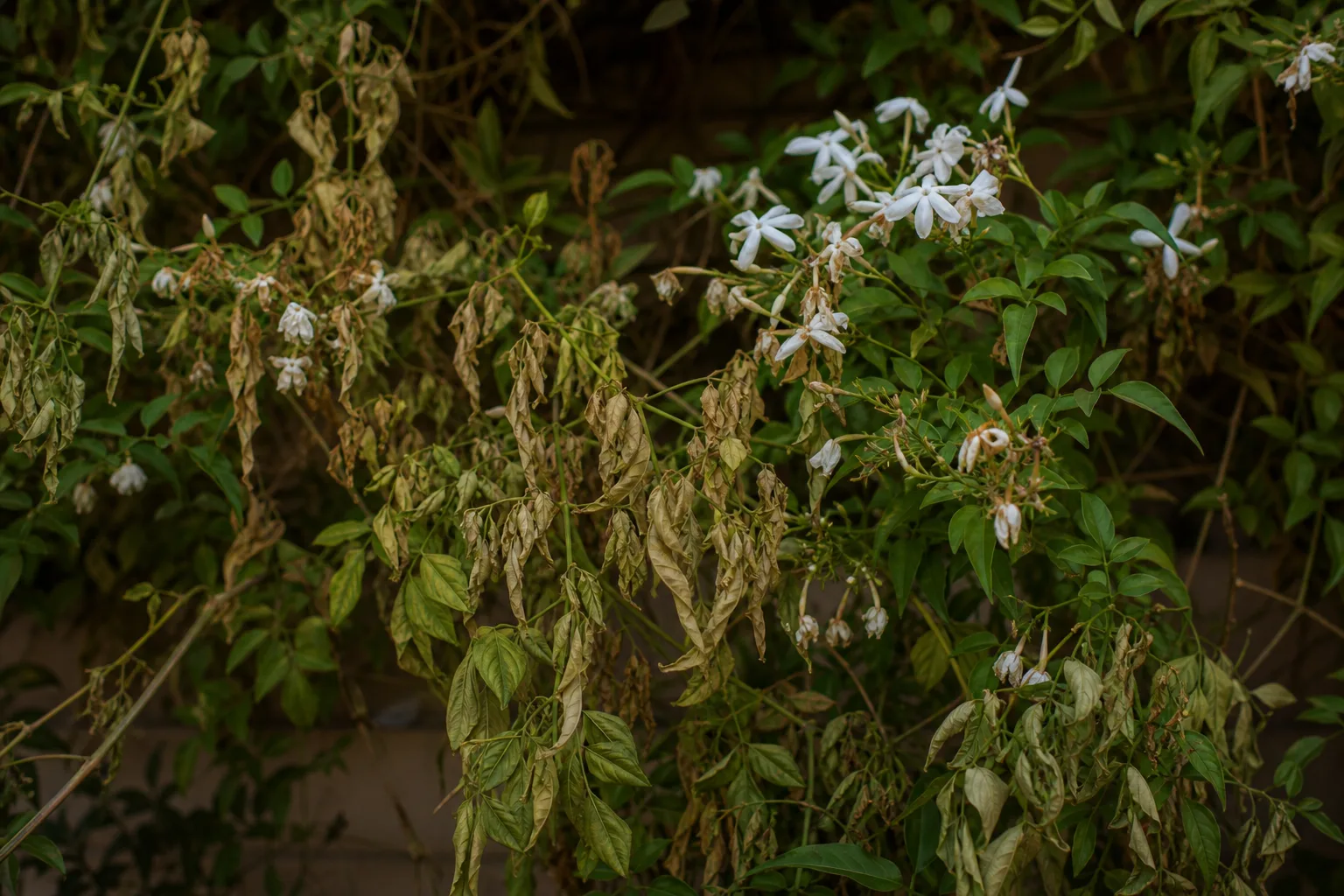
Water Stress on Jasmine: Causes, Checks & Fixes
This guide covers water stress on Jasmine. See also the general Water Stress guide, watering, and light pages for this plant.
Water Stress on Jasmine: Causes, Checks & Fixes
Quick answer
Water stress on jasmine is not one problem-it is two opposite failures that look similar from across the room. Common jasmine (Jasminum officinale) wants moist but well-drained soil and regular watering in containers during the growing season. Let the root ball go too dry and twining stems wilt, leaf edges crisp, and flower buds abort. Keep mix soggy-especially through winter rest-and lower leaves yellow, roots lose function, and the vine wilts despite wet soil.
First step: lift the pot and probe the top 3 cm of mix before you water. A light, dry pot needs a deep soak. A heavy, wet pot needs withholding water and a drainage check-not another pour because leaves look sad.
Why jasmine gets water stress
Jasmine is a vigorous climber that pushes soft new shoots and fragrant blooms when light and warmth are high. That growth phase increases transpiration. Plants in containers have little access to water beyond what you supply, so a missed drink during summer bloom can stress the vine within a day on a sunny windowsill or balcony. Terracotta and small pots dry faster than large glazed containers-the same calendar schedule fails both.
The opposite trap is treating jasmine like a moisture-loving fern year-round. Houseplants and glasshouse jasmines need regular watering while in growth but only very light watering in winter. Cool rest slows uptake. Continuing summer frequency through autumn and winter keeps the root zone oxygen-poor. Saucers left full, decorative cache pots without drainage, and dense old mix that holds water like a sponge all push jasmine toward the wet side of water stress.
Seasonal rhythm matters for buds as well as leaves. Jasmine sets and holds flower buds when moisture stays steady through the bloom window-not swinging from bone dry to flooded. A single dry spell during budding can drop flowers before they open; chronic wetness rots the fine roots that feed those same buds.
Light level changes the math. A vine in Jasmine light guide to partial shade (roughly four to six hours of direct sun) uses water faster than the same plant in a dim corner. Growers who move jasmine outdoors for summer then bring it in for winter often shock the plant with both light and watering changes at once-symptoms get blamed on one factor when both shifted.
What water stress looks like on jasmine
Drought-side water stress:
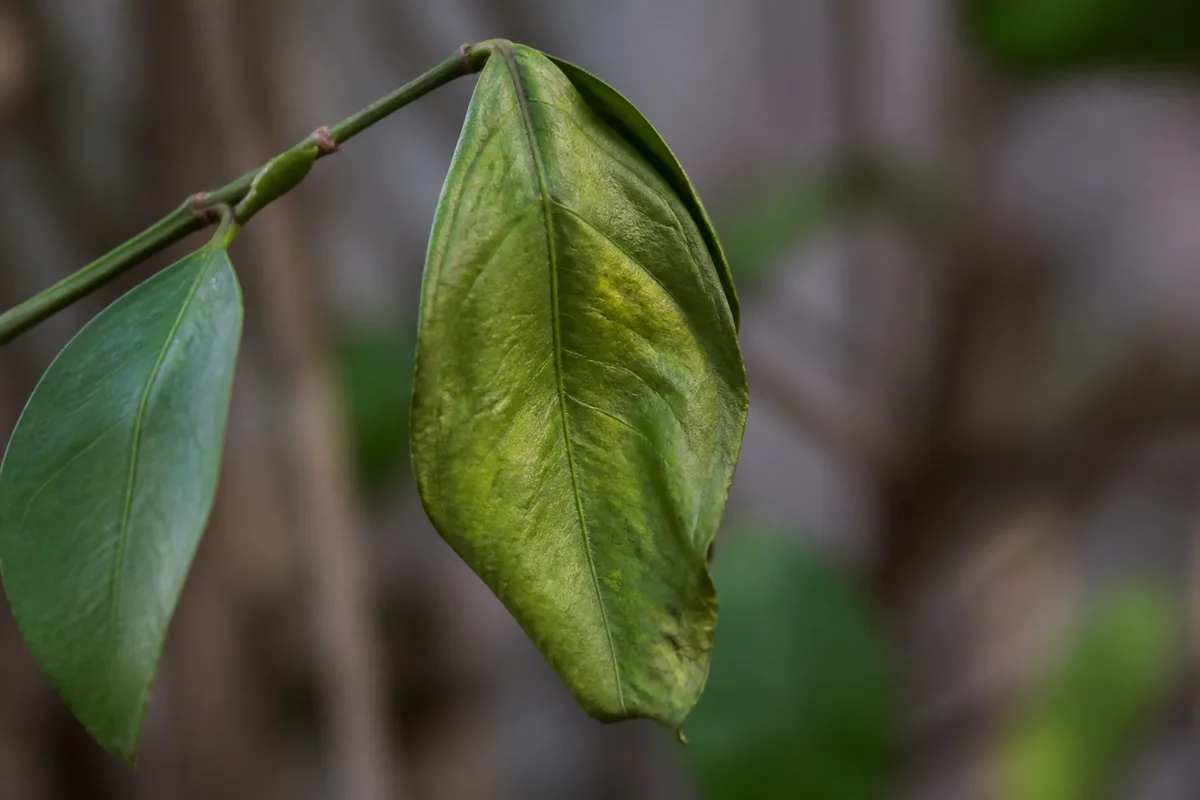
Water Stress symptoms on Jasmine - compare with healthy tissue on the same plant.
- Stems and leaves wilt, often recovering within an hour or two after a thorough drink if roots are healthy
- Leaf edges turn crisp or bronze; older leaves may drop
- Pot feels noticeably light; probe at 3 cm depth comes out dry
- Buds shrink and drop before opening during bloom season
- New growth slows or stalls on twining tips
Excess-moisture water stress:
- Lower leaves yellow while upper growth still looks green-for a while
- Soil stays wet several days after watering; sour or musty smell from the pot
- Fungus gnats hover when you disturb the surface
- Vine wilts in the afternoon even though mix feels damp-damaged roots cannot absorb water
- Bud drop with constantly wet soil, especially during winter rest
- Soft, dark stem bases if rot has advanced
Both patterns can show drooping leaves. The soil probe and pot weight tell you which direction you are in. When a plant is too dry it wilts; when too wet it may drop leaves or turn yellow-jasmine follows that pattern on its thin, twining stems.
How to confirm the cause
Work through these checks in order before changing anything else:
- Pot weight test - Lift the container right after a known good watering to learn the heavy baseline. A dramatically lighter pot with wilted foliage strongly suggests drought. A heavy pot that has not dried in five or more days suggests excess moisture.
- Finger or skewer probe at 3 cm - Press into mix near the pot edge, not against the stem. Dry and crumbly at depth means drought. Cool, clinging particles mean wait. If only the surface is pale but depth stays wet, you have been under-watering the center or over-watering the top-common in root-bound jasmine.
- Drainage audit - Confirm holes are open, saucers empty within 30 minutes, and no outer decorative pot is holding runoff. Never let houseplants sit in standing water.
- Season and growth stage - Active summer growth and flowering demand more than light winter watering. Stress that appeared after you reduced water in October may be correct adjustment-or too far if stems go brittle.
- Wilting paradox check - Wilting with wet soil means inspect roots, not pour more water. Slide the plant out gently. Firm white or tan roots support drought diagnosis if mix is dry. Brown, mushy roots with sour smell confirm wet-side stress and possible rot.
- Recent changes - Jasmine repotting guide into a much larger pot, moving from outdoors to indoors, or switching from terracotta to plastic all change drying speed. Symptoms after those events often trace to water rhythm, not disease.
If mix is evenly moist, roots are firm, and the plant still declines, look at lookalike causes below before assuming water alone is the story.
First fix for jasmine
If the pot is light and mix is dry at 3 cm: water thoroughly until excess drains from the bottom, then empty the saucer.
That single deep soak is the correct first response to drought-side water stress on jasmine. Use room-temperature water at the soil surface-not a mist on leaves. Let the pot drain fully; jasmine roots need air as much as moisture. Water so it drains freely from the bottom of the container, then wait until the top inch approaches dry before the next session.
Do not fertilize a wilted, dry jasmine on the same day. Do not repot a merely thirsty vine that perks up after one good drink.
If the pot is heavy and mix stays wet: stop watering until the top 5 cm dries, improve drainage, and empty any standing saucer water.
That is the first fix for wet-side water stress. Move the pot to brighter air flow if it sits in a dim, stagnant corner-evaporation helps, but withholding water is the critical step. Do not pour because leaves droop; confirm whether roots can still function.
If stems soften at the base or roots are brown and mushy when you unpot, proceed to recovery steps below rather than waiting on dry-down alone.
Step-by-step recovery
After the first fix, follow the path that matches your diagnosis:
Recovering drought-stressed jasmine:
- Soak once as above, then resume checking every one to two days during active growth.
- During flowering, check daily-buds need steadier moisture than resting winter wood.
- If the root ball was fully dry and shrunk from the pot sides, water twice in one hour with drainage between passes so the center rewets instead of channeling down the gap.
- Trim only fully crisp leaves that do not recover after 48 hours; leave green tissue to photosynthesize.
- Hold fertilizer until new tips show firm growth for at least a week.
Recovering overwatered jasmine:
- Withhold water until the top 5 cm dries-often one to two weeks indoors in cool weather.
- Empty saucers after any incidental rain or accidental splash.
- If fungus gnats are present, let the surface stay dry longer; gnats thrive in over-watered potting media.
- Unpot if wilting persists with wet soil. Trim soft brown roots back to firm tissue with clean scissors.
- Repot into fresh, well-drained mix in the same size or only slightly larger pot-fertile, well-drained soil with perlite or coarse sand, not heavy garden soil.
- Wait for new growth before resuming diluted feed.
Change one variable at a time and watch for five to seven days before stacking repot, prune, and feed on the same weekend.
Recovery timeline
Drought-stressed jasmine with healthy roots often shows visible perk-up within one to three hours of a thorough soak. Crisp leaf edges do not green again-judge recovery by new tips and stable buds, not old damaged margins. Expect one to two weeks of consistent checks before growth rhythm feels normal again.
Wet-side stress takes longer. A mild case may stabilize once soil dries and new leaves emerge in two to four weeks. Root rot after prolonged soggy conditions can take a full season to outgrow; severely stripped root systems may never regain former bloom volume in the same year.
Bud drop from a single dry spell during flowering is usually done-those buds will not reopen. Prevent the next flush from aborting by keeping moisture steady through the bloom window.
Lookalike symptoms to rule out
Spider mites cause stippling and fine webbing on leaf undersides, often in dry winter air-not uniform wilt from dry soil alone. Confirm with a white-paper tap test before soaking a mite-stressed plant even wetter.
Root-bound jasmine dries out overnight despite recent watering because little soil remains in the pot. Probe center depth; if roots fill the container and water runs straight through, repot is the fix-not more daily sips.
Cold damage bronzes or browns leaves after exposure below jasmine’s comfort zone. Soil moisture can be perfect while tissue collapses from frost or cold draughts near a window.
Low light produces pale, leggy growth that droops without either extreme of soil moisture. A vine in too little sun may stay wet too long because it is not using water-mimicking overwatering when the real issue is placement.
Nutrient deficiency or chlorosis yellows leaves with otherwise appropriate moisture. Confirm soil pH and drainage first; jasmine prefers slightly acid to neutral mix around pH 6.0–7.5.
Mistakes to avoid
Do not water jasmine on a fixed weekly calendar through all seasons. Water when the plant needs it, not when the schedule says so.
Do not assume every wilt means dry soil. Pouring on a drowning vine accelerates root rot.
Do not repot into a much larger container to “fix” watering-extra soil holds moisture longer and roots can suffocate in waterlogged soil.
Do not mist leaves instead of fixing soil moisture. Surface dampness does not rehydrate a dry root ball and can encourage foliar disease when airflow is poor.
Do not increase fertilizer on a stressed vine hoping to push growth. Feed only after water balance and root health stabilize.
Do not leave runoff in saucers “so the plant can drink later.” Roots need dry-down cycles between soaks.
How to prevent water stress next time
Build a check habit tied to the pot, not the clock. During active growth, probe the top inch (roughly 3 cm) and lift the pot every two to three days in summer; stretch toward weekly or every 10–14 days in cool winter rest. Increase frequency during flowering when buds are forming.
Match container to habit. Terracotta and unglazed clay suit jasmine’s need for good drainage; plastic stays wet longer-adjust interval accordingly.
Use a well-draining mix with compost and perlite or coarse sand. Repot every two years or when roots circle, before the root ball becomes mostly roots and almost no water-retaining soil.
Place jasmine where it gets enough light to use water predictably-full sun to partial shade outdoors or your brightest suitable indoor spot. Weak light plus frequent watering is a common path to chronic wet stress.
When moving plants between indoors and outdoors, change watering gradually with the shift in evaporation, not all at once on day one.
When to worry
Treat as urgent when stems soften at the soil line, the vine collapses despite wet mix, or yellowing spreads up the plant within a week. Those signs suggest advanced root rot or stem infection-not a simple missed watering.
Also act quickly if a blooming jasmine drops most buds during a heat wave while the pot is dry-prolonged drought during bloom can cost the entire season’s display on container plants.
Mild afternoon wilt on a hot day that resolves by evening with evenly moist soil is usually not urgent-confirm with a probe before reacting.
A vine that fails to produce new tips after four weeks of corrected watering and firm roots may need hard pruning after flowering or professional diagnosis-not endless soak-dry cycles.
Conclusion
Water stress on jasmine rewards diagnosis before action. Lift the pot, probe the mix, and decide whether you are fighting drought or drowning before you pour. Match rhythm to season-more through summer bloom, lighter in winter rest-and keep drainage honest. Old crispy leaves and dropped buds may not come back, but firm roots and steady checks let new growth and the next flower flush recover on a vine worth keeping.
When to use this page vs other Jasmine guides
- Jasmine watering guide - Use for routine moisture checks before assuming water stress is the main issue.
- Jasmine problems hub - Browse all 53 common issues on this species.