Bud Drop on Jasmine: Causes, Checks & Fixes
Quick answer
Jasmine drops flower buds when watering swings, humidity crashes, or temperatures shift suddenly-especially after the cool rest period when buds are forming. Stabilize moisture, warmth, and humidity before buds open.
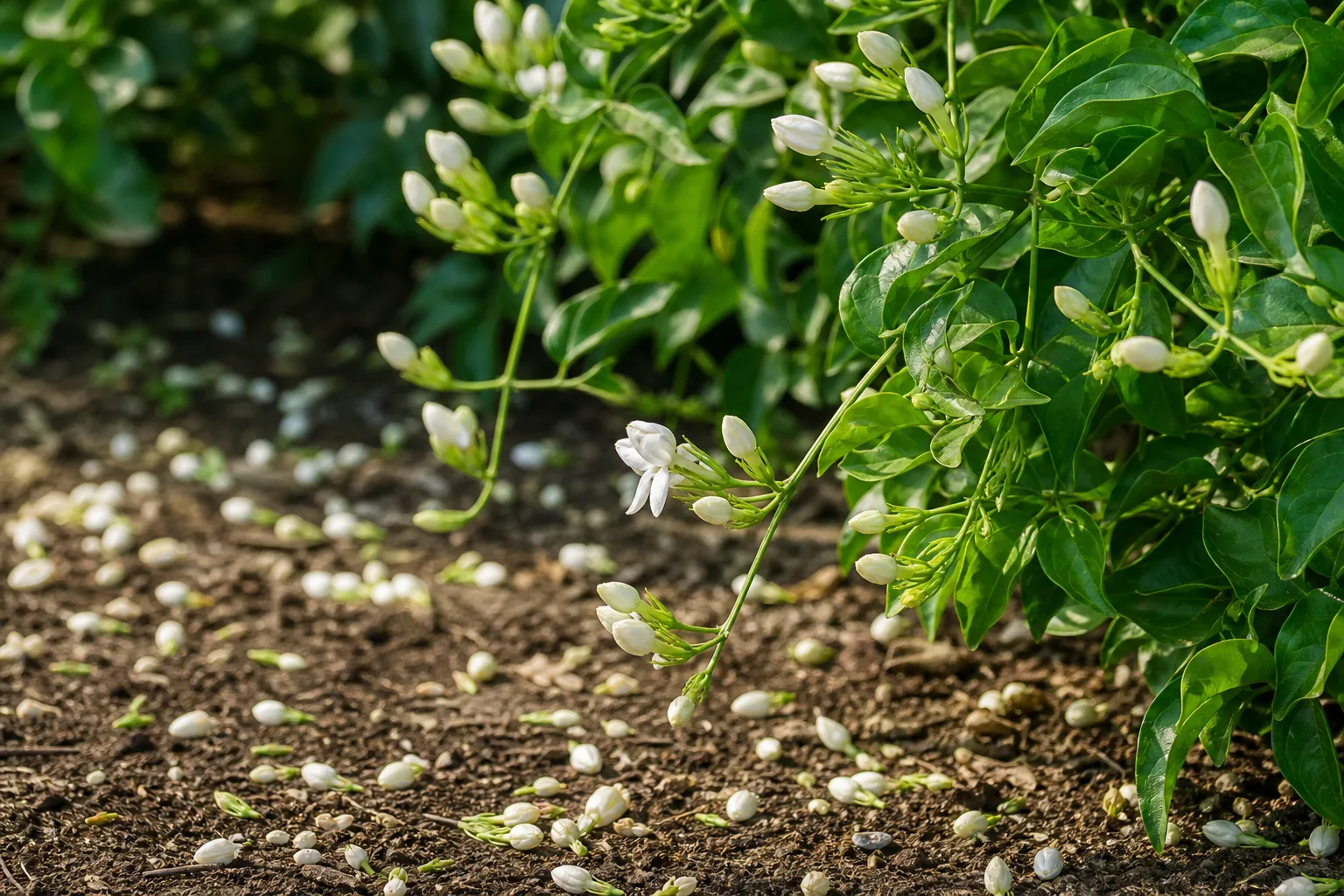
Bud Drop on Jasmine: Causes, Checks & Fixes
This guide covers bud drop on Jasmine. See also the general Bud Drop guide, watering, and light pages for this plant.
Bud Drop on Jasmine: Causes, Checks & Fixes
Quick answer
Bud drop on common jasmine (Jasminum officinale) is a stress response, not a disease. Flower buds abort when the vine experiences uneven watering, dry air, or sudden temperature changes-most often when a chilled plant returns indoors to a warm, dry room while buds are swelling on branch tips.
First step: hold conditions steady for one week-do not relocate, repot, prune, or change feeding. Water when the top inch of mix dries, move the pot off heating vents and cold drafts, and raise ambient humidity near 50% at trellis height with a pebble tray or humidifier. Buds that are still firm and green may open; yellowing buds will fall regardless.
This page covers buds that formed then fell before opening. If no buds ever appeared by early summer, see no flowers on jasmine. If buds open but look dull or brown on the vine, see faded flowers. If the pot is light and soil is dusty dry, also read underwatering; if air is very dry after heating season starts, see low humidity.
Why jasmine drops buds
Common jasmine is a vigorous twining vine that flowers on old growth from spring through fall. After the cool rest that initiates flowering, buds at branch tips are metabolically expensive-any care swing can trigger abortion before petals open.
Post-chill indoor transition
Indoor growers often overwinter container jasmine on a frost-free porch or in a cool bright room at roughly 7–13°C (45–55°F) for eight to ten weeks. That chill sets bud wood for summer bloom. When the vine moves straight into a heated living room at 20–22°C with humidity below 40%, transpiration surges on tender bud clusters while roots cannot replace water fast enough. Buds abort before lower foliage shows stress-a pattern typical of twining climbers with many buds concentrated at tips.
Acclimate over one to two weeks: porch → bright cool room (12–15°C) → final summer placement. A sudden single-day move is the most common indoor trigger for mass bud loss in late February or March.
Watering swings during bud swell
Letting the root zone go bone dry-or flooding it after drought-both trigger bud loss on flowering jasmine. Container jasmines need regular watering throughout the growing season with good drainage. During bud swell, the vine wants evenly moist mix, not alternating desert and swamp.
- Dry pot + dropped buds: Mix dusty at finger depth, pot feels light, stems may still feel firm. Classic drought abort during swell-see underwatering for the full dry-down protocol.
- Wet pot + dropped buds: Mix soggy for days, sour smell, yellow lower leaves. Root stress aborts buds indirectly-cross-check overwatering before you water again hoping to save blooms.
Match rhythm to the jasmine watering guide: top inch dry, pot weight as a secondary check, saucers emptied within thirty minutes.
Low humidity and drafts
Warm indoor air after winter heat kicks on often holds relative humidity below 30%. Bud tissue dries in place while stems stay green-overlap with low humidity on jasmine, especially when bud loss started the week you moved indoors. Drafts from doors, HVAC returns, and radiators compound the problem by stripping moisture from exposed bud clusters.
Target 50% or higher near the trellis during bud swell. A pebble tray or small room humidifier helps; misting open or swelling buds promotes rot and does not reliably raise room humidity.
Overwatering and root stress
Overwatering during bud swell can stress roots and drop buds indirectly-especially in glazed pots with poor drainage or old peaty mix that stays wet at the core while the surface looks dry. Firm stems with soggy mix and yellowing lower leaves point here, not to simple dry air.
Repot and relocation shock
Jasmine repotting guide, hard pruning, or moving the pot during visible bud swell disturbs the root-to-shoot balance. The plant responds well to pruning after blooms fade-not mid-swell. If you repotted this month and every bud fell within days, transplant timing is the likely cause; see transplant shock for recovery steps.
Species note: J. polyanthum vs J. officinale
Jasminum polyanthum (pink jasmine) can flush indoors in late winter when chilled; J. officinale blooms white in summer on leafy vines. Wrong-species expectations cause confusion when a pink-bud vine drops in February versus a white-bud vine dropping in June. Verify the label at the jasmine overview before applying this guide.
What bud drop looks like on Jasminum officinale
Small green or white buds turn yellow, brown, or dry and fall-often scattered beneath the trellis while compound foliage looks otherwise healthy. You may see this right after moving the plant from a cool porch to a warm room, or after inconsistent watering during spring bud break.
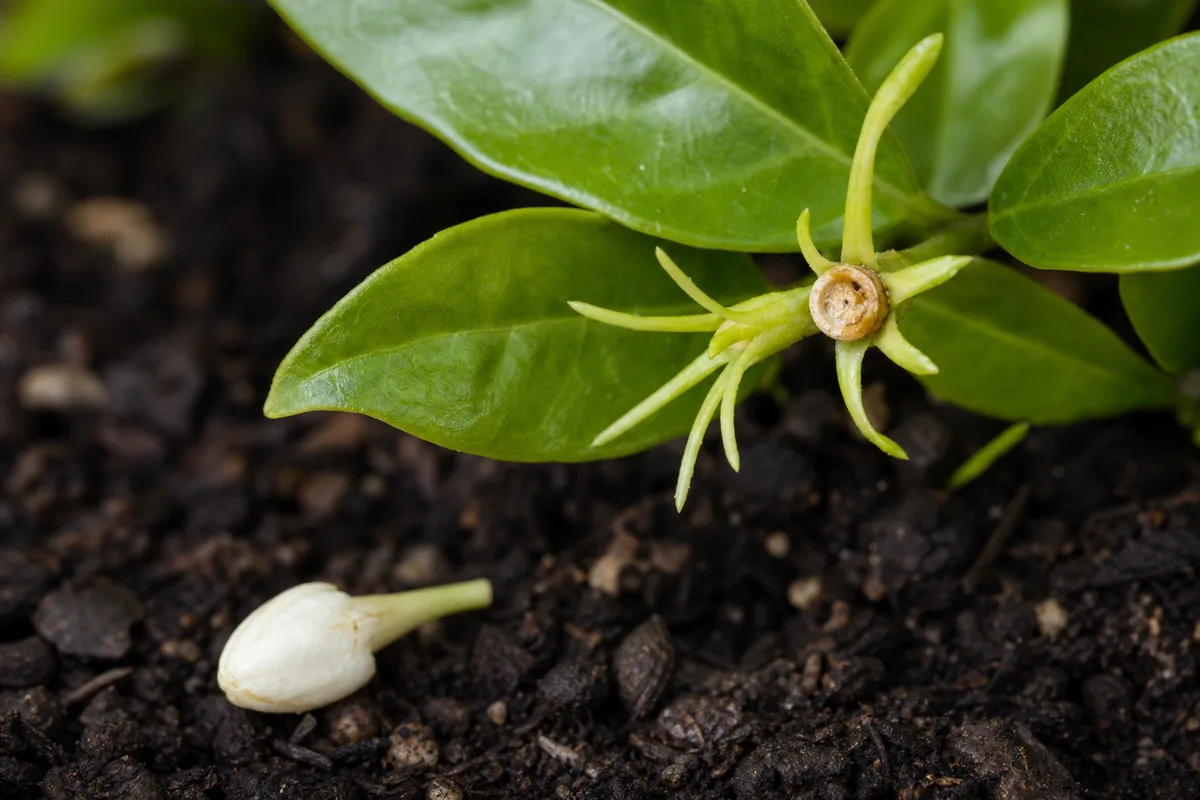
Bud Drop symptoms on Jasmine - compare with healthy tissue on the same plant.
Typical bud-drop pattern:
- Whole buds fall intact-not chewed, not stippled petals
- Loss concentrates at branch tips and outer twining stems first
- Green leaves remain firm; lower foliage may stay glossy while tips lose clusters
- Timing clusters around a move, missed watering weekend, or heat spike near a radiator
Not the same problem:
- No buds at all by early summer - missing chill or wrong pruning season
- Open flowers fading pink then brown - normal senescence or heat stress on open blooms
- Stippled leaves with fine webbing - spider mites in dry indoor air; buds may drop as a secondary effect
Unlike spider mite damage, dropped buds are whole-not stippled leaves with partial petal scarring. If webbing appears, treat pests per the spider mites guide after stabilizing water and humidity.
Bud drop vs no flowers vs low humidity vs underwatering vs faded flowers
| What you see | Most likely cause | Where to go next |
|---|---|---|
| Buds formed then fell before opening; green foliage intact | Water swings, drafts, dry air, or sudden move after chill | Stay on this page-run the six-step confirmation below |
| No buds at all by early summer | Warm winter without 7–13°C rest or heavy spring pruning | No flowers guide |
| Bud loss + crisp leaflet edges right after heating season | Relative humidity below 40% at canopy height | Low humidity guide |
| Light pot, dusty dry mix, wilted tips with dropped buds | Drought during swell-not enough deep water | Underwatering guide |
| Buds open white then dull within days on the vine | Normal fade, heat, or ethylene on open blooms | Faded flowers guide |
How to confirm the cause
Work through these six steps in order. Review the last two weeks of care before changing anything else.
- Relocation log - Did you move the pot from porch, garage, or cool room to a heated space within the last seven days? A yes strongly supports post-chill transition shock-especially if loss started within 48 hours of the move.
- Soil moisture pattern - Insert a finger to the first knuckle. Dusty dry with a light pot points to drought abort. Soggy wet with yellow lower leaves points to root stress. Evenly moist with firm stems and falling buds points to air humidity or drafts.
- Pot-weight check - Lift the container. Compare to how it felt after your last thorough watering. A dramatic weight drop without recent drinks confirms underwatering; heavy and cold points to overwatering.
- Temperature map - Feel air at bud height overnight. Cold window glass, radiator blast, or a door that opens to frigid air explains tip-cluster loss on outer stems.
- Humidity and draft scan - Heating vents blowing across the canopy? Humidity meter below 40% at trellis height? Pair with low humidity fixes if dry air fits the timeline.
- Pest and repot pass - Check leaf undersides for stippling and webbing. Recall any repot, root tease, or hard prune during visible swell. Recent root disturbance explains sudden total cluster loss without pests.
Two-week care review checklist
| Event | Bud-drop risk if yes |
|---|---|
| Moved pot during bud swell | High - hold placement for remainder of flush |
| Missed watering 3+ days while buds visible | High - drought abort on tips |
| Watered daily into soggy mix | Medium-high - root stress abort |
| Repotted or upsized container | High - expect current cluster loss |
| Heat spike above 27°C near pot | Medium - transpiration abort |
| Returned from 7–13°C chill to warm dry room in one day | Very high - acclimate gradually next time |
| Ripe fruit bowl beside trellis | Medium - ethylene can accelerate bud abort |
If buds drop with stippled leaves and webbing, suspect spider mites in dry indoor air instead of culture alone.
First fix for jasmine
Hold conditions steady for one week: same spot, same watering rhythm, no repot, no prune, no fertilizer change.
Water when the top inch of mix dries-use pot weight as a backup if you are unsure. Move the pot off heating vents and cold drafts. Raise ambient humidity near 50% with a pebble tray or small humidifier at trellis height, not by watering more often.
Do not relocate the vine while buds are still swelling. Resume a high-potassium feed at label strength only after watering is consistent for two weeks and new growth looks firm-not on the same day you notice fallen buds.
Recovery timeline and what improvement looks like
Buds already yellowing will fall. You cannot save individual aborting buds; recovery means the vine sets new swell on stems that stayed green.
| Timeframe | What to expect |
|---|---|
| Days 1–7 | Stop the trigger-steady water, humidity, and placement. Fallen bud count should slow; remaining green buds may still open. |
| Weeks 2–4 | New vegetative tips may appear along stems. No new bud swell yet is normal if the main cluster was lost. |
| Weeks 4–8 | On a healthy vine in active summer growth, watch for smaller secondary bud clusters on current-season wood. Fragrance may be lighter than the primary flush. |
| Next cool season | Plan gradual porch-to-room acclimation before the following spring swell. Chronic loss every year means culture-not cultivar-needs correction before the next chill cycle. |
Signs you are on track: firm twining stems, new shoots with glossy leaflets, and the next bud cluster holding green for a full week without yellowing. Signs the problem is worsening: soft stems at the soil line, sour wet mix, or continued daily bud loss after conditions stabilized-shift focus to root rot or pest treatment.
The current main flush may be lost, but the vine can set new buds if conditions stabilize and the growing season continues-especially on outdoor or greenhouse vines with months of warm light ahead.
What not to do
Do not prune off every remaining bud trying to “reset” the plant-you remove the blooms that might still open.
Do not increase nitrogen feeding hoping to push new buds; excess nitrogen drives soft leafy growth and can worsen abort on stressed vines.
Avoid moving between cool outdoor nights and hot indoor days during budding. Do not repot during visible swell unless roots are clearly failing.
Do not mist swelling buds to raise humidity-wet bloom tissue browns quickly. Use a tray or humidifier per the low humidity guide.
Jasmine is non-toxic to cats and dogs when the plant is true Jasminum species-but verify your vine is not a toxic lookalike such as Carolina jessamine (Gelsemium sempervirens) or cape jasmine (Gardenia jasminoides), which carry different toxicity profiles. Keep fallen buds away from curious pets; contact your veterinarian or the ASPCA Animal Poison Control Center if ingestion is suspected.
How to prevent bud drop next time
Acclimate gradually when bringing a chilled vine indoors: cool porch → bright intermediate room for one to two weeks → final warm placement before bud swell peaks.
Maintain even moisture through bud stage-newly planted jasmines need regular watering until rooted, and summer containers should not go fully dry between drinks. Plan stable placement before buds form; mark your calendar for late-winter return indoors so you are not rushing the move on the first warm weekend.
Pair watering rhythm with the jasmine watering guide and keep humidity near 50% during the post-chill transition. Scout for spider mites weekly when indoor air is dry-pests compound stress on buds already weakened by a rough move.
Related jasmine problems
- Jasmine overview - species ID, winter rest, and baseline culture
- Jasmine watering - seasonal rhythm, finger test, and pot-weight protocol
- Jasmine light - sun-hour targets when secondary flushes form
- Low humidity - hygrometer checks and humidifier guidance after chill return
- Underwatering - dry-pot drought abort during swell
- No flowers - zero bud swell when chill or pruning failed
- Faded flowers - open blooms losing color, not closed bud abort
- Small flowers - buds open but clusters stay sparse or weak
- Transplant shock - bud loss after repot during swell
- Spider mites - stippling and webbing with secondary bud drop
When to use this page vs other Jasmine guides
- Jasmine watering guide - Use for routine moisture checks before assuming bud drop is the main issue.
- Jasmine problems hub - Browse all 53 common issues on this species.