Faded Flowers on Jasmine: Causes, Checks & Fixes
Quick answer
Individual common jasmine flowers are short-lived-white blooms blush pink then dull within a few days. That is normal. Same-day collapse, flat scent, or dull petals while buds still fail to open point to heat, dry soil, or ethylene during bloom.
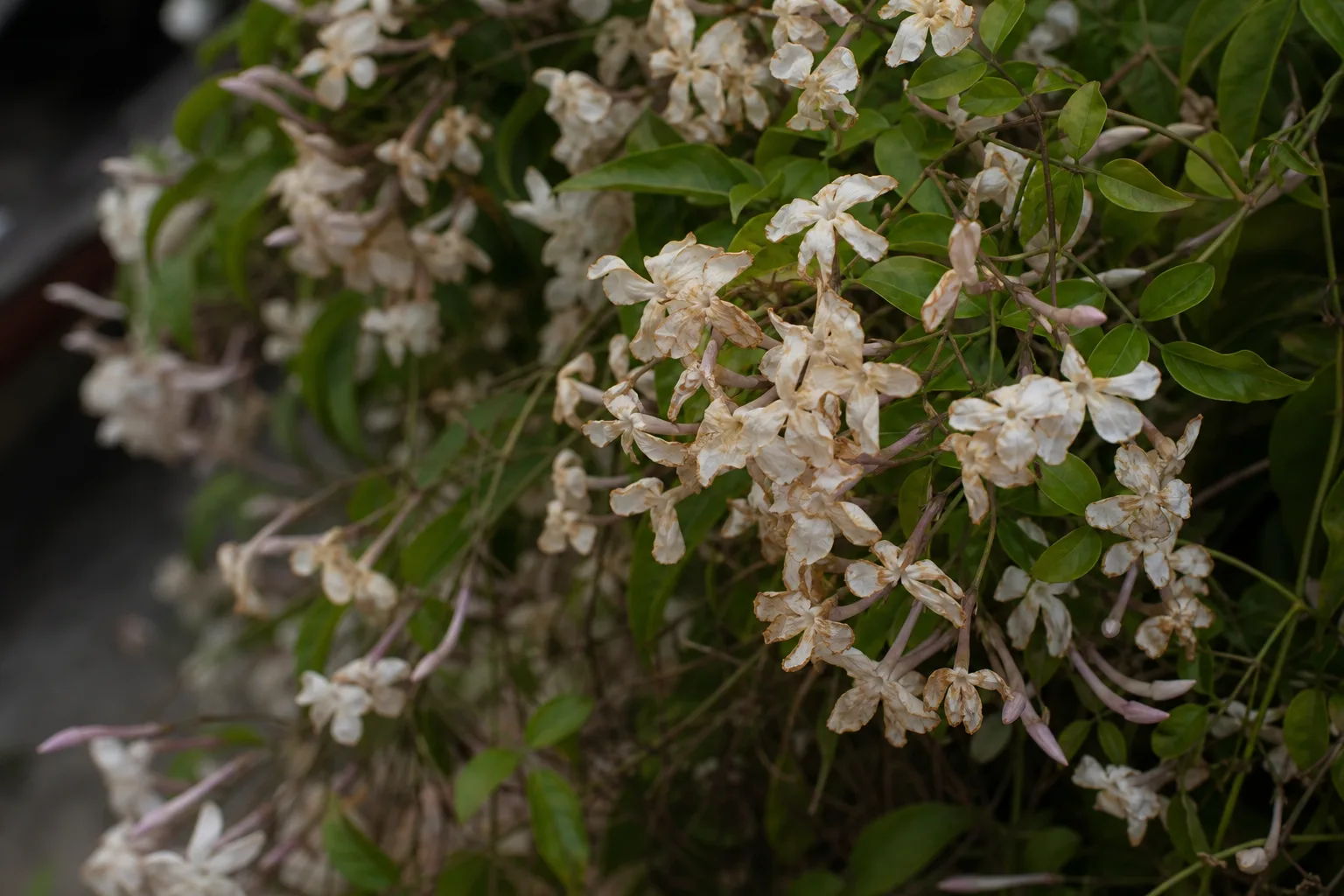
Faded Flowers on Jasmine: Causes, Checks & Fixes
This guide covers faded flowers on Jasmine. See also the general Faded Flowers guide, watering, and light pages for this plant.
Faded Flowers on Jasmine: Causes, Checks & Fixes
Quick answer
Faded flowers on common jasmine (Jasminum officinale) are usually normal aging, not a disease. Each small fragrant white flower opens strongly scented, then loses brightness, often blushing pale pink before petals soften and turn dull tan-brown. That cycle runs its course in a few days on a healthy vine while new buds keep opening behind it.
First step: decide whether you are watching natural senescence or premature dulling. If only day-old open blooms look washed out while fresh white flowers appear daily, deadhead the spent ones and keep watering steady. If flowers collapse the same day they open, scent vanishes overnight, or closed buds fail while petals already look tired, check soil moisture, heat near the pot, and ethylene sources before trying anything else. If buds are turning dark or fuzzy instead of simply losing color, jump to flowers turning brown for a different diagnosis path.
What faded flowers look like on jasmine
On J. officinale, individual blooms are short-lived by design. Missouri Botanical Garden describes flowers as white to pale pink, fragrant from early summer through autumn. In practice you see:
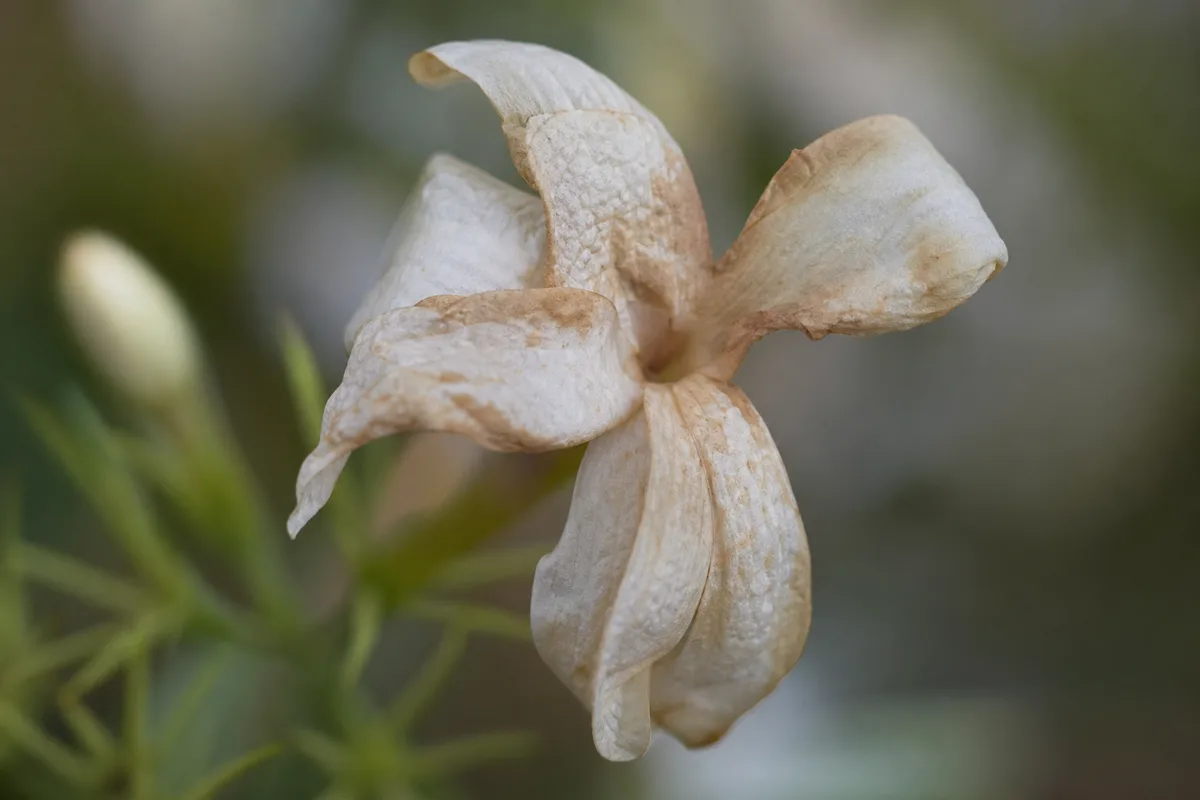
Faded Flowers symptoms on Jasmine - compare with healthy tissue on the same plant.
- Fresh stage: crisp white petals, strongest evening fragrance, firm stem at the flower base
- Mid-fade: petals lose pure white and take on a blush or translucent look; scent weakens but is still noticeable
- Spent stage: petals curl, feel papery, and turn pink-tan to brown; the cluster looks dull compared with newly opened blooms nearby
A heavy bloomer can carry hundreds of flowers at different ages at once-one stem shows bright white, pink-tinged, and brown petals together. That patchwork is expected on a vigorous summer jasmine.
Problem fading looks different:
- Open flowers go flat and gray-brown within hours of opening, often with limp stems
- Fragrance disappears abruptly instead of tapering over days
- Petals look dull and dehydrated while soil is dry and the pot feels light
- Many buds stay closed and brown at the tips while older flowers already look spent-overlap with bud drop from water swings
Faded flowers here means loss of color and perfume on blooms that did open. Closed buds that never expand belong in a bud-drop diagnosis; fuzzy mold on dead petals fits brown-flower disease patterns instead.
Why jasmine flowers fade
Natural senescence
Once a jasmine flower has opened and been pollinated-or simply reached the end of its programmed lifespan-petals lose pigment and turgor. Kew notes common jasmine bears white or very pale pink, strongly scented flowers on twining stems; the pale pink tone often appears as blooms age, not only at bud stage. You cannot keep an individual floret white indefinitely; the plant’s strategy is to produce waves of new flowers through the season rather than maintain each one for weeks.
Heat and rapid water loss
Jasmine prefers a warm site but struggles when air temperature spikes during open bloom-common near south-facing glass, radiators, or a patio that overheats in afternoon sun. High transpiration pulls water from petals faster than roots replace it, so flowers dull and collapse early even if the vine itself still looks green. Container plants dry out faster than ground plantings; RHS guidance stresses that container jasmines need regular watering throughout the growing season, especially while flowering.
Dry soil during bloom
Missouri Botanical Garden recommends generous moisture during the growing season with good drainage. Letting the root zone go bone dry while dozens of flowers are open forces the vine to abort ornamental tissue. Petals lose sheen first; stems may not wilt yet because leaves take priority for remaining water.
Ethylene and indoor air quality
Ethylene gas accelerates flower senescence in many species: petals dull, abscise, and fragrance drops off. Cornell greenhouse guidance describes rapid flower aging and flower loss under ethylene exposure, and NC State floriculture notes list furnaces, vehicle exhaust, and ripening produce as common sources. Indoor jasmine beside a fruit bowl, unvented kitchen, or heating return may lose bloom color faster than the same plant in open air.
Overlap with other stress-not petal disease
Unlike roses or camellias, jasmine rarely gets a specific “petal blight” that only fades color. Thrips, botrytis, and drought usually show as brown buds, scarred petals, or mold-topics covered more directly under brown flowers and bud drop. Simple dulling on otherwise intact petals almost always traces to age, heat, dryness, or ethylene.
Normal fade vs premature dulling
| Sign | Normal senescence | Premature fading |
|---|---|---|
| Timing | 2–4 days after full open | Same day or overnight |
| New buds | Continue opening nearby | Many buds stall or brown closed |
| Scent | Fades gradually | Often disappears abruptly |
| Vine condition | Green, firm stems | May show wilt tips or dry soil |
| Soil | Evenly moist if you water on schedule | Often dry top inch or heat-stressed pot |
| Action | Deadhead spent clusters | Fix moisture, heat, or ethylene first |
If the table’s left column matches your plant, do not treat for disease-remove old flowers and maintain routine care.
How to confirm the cause
Work through these checks in order:
- Bloom age - Mark one open flower in the morning. Normal fade shows pink blush or dulling by day two or three, not by evening.
- Soil moisture - Insert a finger 3 cm into the mix. Dusty dry while flowers are open supports drought-linked early fade. Soggy wet mix with yellow lower leaves points to root stress instead-different fix.
- Heat map - Feel air near the pot at midday. Hot drafts from glass, HVAC, or appliances explain same-day collapse.
- Ethylene scan - Ripe apples, bananas, or tomatoes within a few feet? Recent painting, smoke, or a sealed room with a running heater? Move the plant temporarily and watch the next flush.
- Bud pipeline - Are new white buds still opening daily? Normal. Has the entire tip cluster stalled brown? Cross-check watering consistency and drafts-closer to bud drop.
- Pest pass - Shake a partially open flower over white paper. Thrips specks or silvery scars mean pest damage, not simple fade.
When open blooms dull on schedule but the vine keeps producing fresh flowers for weeks, no further diagnosis is required.
First fix for jasmine
Deadhead spent flower clusters and soak the pot if the top inch of mix is dry.
Snip or pinch faded blooms back to the first healthy side shoot. This is standard post-flowering care on summer jasmines-it prevents the plant from pouring energy into seed and keeps the display tidy. If the pot is light and dry, water thoroughly until excess drains, then empty the saucer. Do not mist petals at night; wet flowers in humid rooms invite gray mold.
That single step handles normal fade and mild drought together. Wait three to five days and judge the next wave of buds-not yesterday’s petals.
If heat or ethylene caused the dulling
After deadheading and watering:
- Move the container 30–60 cm away from hot glass or radiator blasts-still bright, but without leaf-scorching afternoon heat on the bloom zone
- Relocate away from fruit bowls and kitchen ethylene sources through the rest of the flush
- Keep nights cooler if possible; tender indoor jasmines flower best with bright days and cooler rest periods between flushes, per Missouri Botanical Garden indoor culture notes
Secondary steps only if the next flush fails
- Resume even watering whenever the top inch dries-never alternate flood and drought during bloom
- Feed container plants with high-potassium liquid fertilizer at label dilution during active growth, not while the vine is stressed and flowerless
- Prune flowered stems after the main flush in late summer if growth becomes tangled-renewal pruning is for structure, not emergency petal rescue
What not to do
Do not spray fungicide on petals that are simply aging-chemicals will not restore color to spent tissue. Do not increase nitrogen feed hoping for “brighter” flowers; excess nitrogen pushes leaves at the expense of bloom quality. Do not relocate the vine daily during an active flush; bud drop often follows moves even when fade was the original complaint. Do not confuse faded open flowers with brown closed buds-repotting, heavy pruning, or pesticide baths on a naturally aging vine adds stress without helping the next buds.
Recovery timeline and what improvement looks like
Individual flowers do not rebrighten once dull. Recovery means new buds opening white and fragrant:
- 3–7 days: Next buds swell and open if moisture and temperature are stable
- 2–3 weeks: A container vine in summer light may produce a noticeable second wave on new growth
- Rest of season: Outdoor or conservatory plants often bloom intermittently until autumn on current-year wood
Improvement signs: fresh white petals, evening scent returning, and spent clusters only at stem tips-not every bud failing at once. Worsening signs: entire tips browning closed, persistent dry soil despite watering, or mold on massed dead flowers-shift diagnosis toward brown flowers or bud drop.
Lookalike symptoms
- Bud drop: buds fall before opening; stems may still look healthy. Fix stability of water and temperature during bud swell. See bud drop on jasmine.
- Flowers turning brown: emphasizes brown buds, botrytis fuzz, thrips scarring. Faded flowers here is primarily color loss and dullness on open blooms. See flowers turning brown.
- No flowers: vine is vegetative-often missing winter chill or summer sun. Fade complaints assume flowers did appear first.
- Spider mites: stippled yellow leaves with webbing; flowers may be scarce rather than dull. Rinse and raise humidity if mites are present. See spider mites on jasmine.
Faded vs brown vs bud drop (quick router)
| If you see this first | Most likely issue | Best next page |
|---|---|---|
| Open blooms lose white color over 2-4 days, then dry | Normal fade (this page) | Stay here and follow deadhead + moisture checks |
| Buds or petals turn brown quickly, may show fuzzy mold | Brown-flower or botrytis pattern | Flowers turning brown |
| Buds abort before opening, little open-bloom dulling | Bud development stress | Bud drop |
How to prevent premature fading next time
Plan for short-lived florets and steady culture through the flush:
- Water containers regularly in the growing season-jasmine in pots has limited soil volume and dries faster than ground plantings
- Site the vine in full sun to partial shade with protection from blistering afternoon heat on bloom-heavy stems
- Deadhead every few days during peak bloom so the plant redirects energy forward
- Keep ripening fruit and unvented heat sources away from indoor bloom rooms
- After the season’s main show, follow seasonal pruning guidance so next year’s wood flowers lower on the plant where scent is easier to enjoy
Spent petals that fall on the floor are non-toxic to cats and dogs on true Jasminum species, but still worth sweeping up so pets do not treat them as snacks. If a pet eats a large amount or develops vomiting, call your veterinarian or ASPCA Animal Poison Control at 888-426-4435.
Related jasmine guides
- Jasmine overview for species ID and bloom cycle context
- Jasmine watering for stable moisture during flowering
- Flowers turning brown when blooms darken, spot, or mold
- Bud drop when buds fail before opening
- No flowers when the vine stays leafy but bloomless