Transparent Leaves on Jasmine: Causes, Checks & Fixes
Quick answer
Transparent, water-soaked patches on jasmine leaves most often signal edema from overwatering when nights are cool and transpiration is slow-or cold damage after frost or contact with cold glass. First step: hold the next watering until the top inch of mix is dry, then improve warmth and airflow.
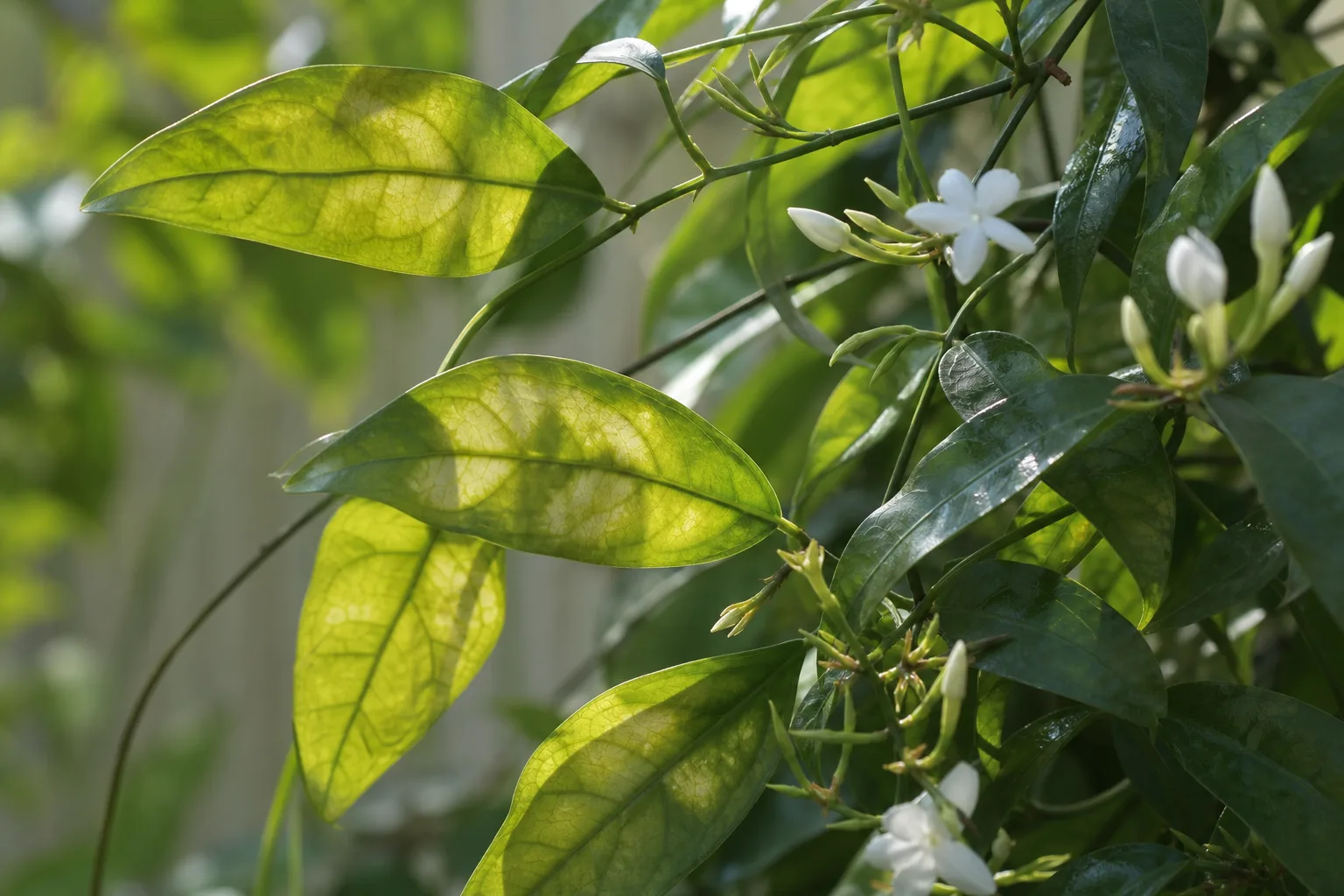
Transparent Leaves on Jasmine: Causes, Checks & Fixes
This guide covers transparent leaves on Jasmine. See also the general Transparent Leaves guide, watering, and light pages for this plant.
Transparent Leaves on Jasmine: Causes, Checks & Fixes
Quick answer
Glassy, water-soaked, or see-through patches on Jasminum officinale leaves are almost never normal variegation. On a fragrant climbing jasmine kept indoors or in a cool conservatory, the two most common explanations are edema-cells swell and burst when roots absorb water faster than leaves can release it in cool, humid air-and cold injury after frost, a cold snap, or direct contact with a chilly window pane.
First step: hold the next watering until the top inch of potting mix feels dry. Jasmine in a semi-dormant winter rest uses water slowly; wet soil plus cool nights is the classic edema trigger. If leaves were pressed against cold glass the night before patches appeared, move the pot inward from the pane after you confirm the mix is not waterlogged.
What transparent leaves look like on Jasmine
Transparent leaf problems on jasmine have a distinct look that separates them from yellowing from drought, spider mite stippling, or powdery mildew.
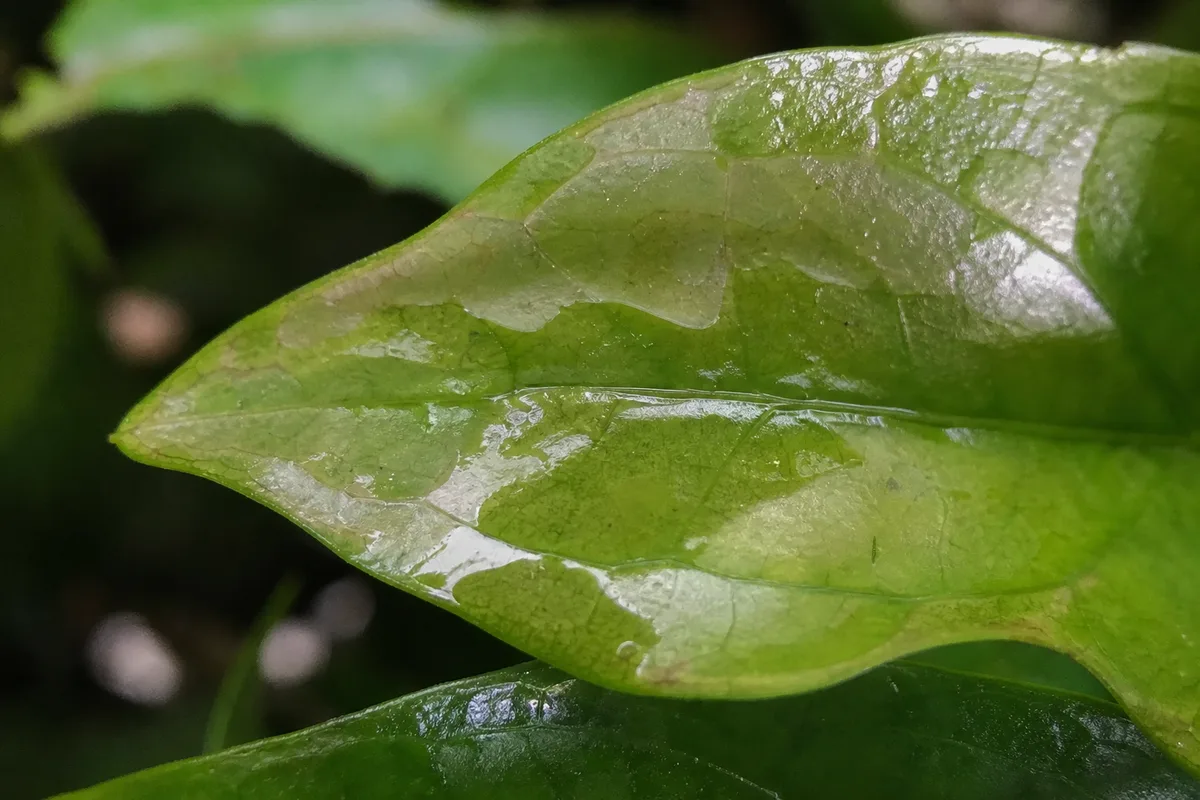
Transparent Leaves symptoms on Jasmine - compare with healthy tissue on the same plant.
Edema (most common indoors):
- Small clear or tan blister-like patches on lower leaf surfaces, often on lower leaf undersides first
- Upper leaf surface may show slight indentations above the swollen cells below
- Patches feel watery or corky rather than dry and crispy
- Often follows a heavy watering during cool, cloudy, or humid weather
- Lower, older leaves on a dense vine are hit before new tips
- No insects, sticky residue, or powdery coating
Cold damage:
- Sudden water-soaked, dark-green, or translucent areas after a frost or cold night
- Leaves that touched cold glass show damage on the contact side
- Tissue may turn brown or black within days as cells collapse
- Tender new spring growth on outdoor jasmine is especially vulnerable after a late frost
Overwatering approaching rot (escalation sign):
- Large mushy transparent sections spreading on multiple leaves
- Soil that stays wet for days and smells sour
- Soft stems at the base combined with leaf transparency-not isolated lower-leaf blisters alone
Unlike pest damage, transparent patches from edema or cold do not come with webbing, honeydew, or moving insects. Unlike sun scorch, they are water-soaked rather than dry bleached patches on sun-exposed upper surfaces.
Why Jasmine gets transparent leaves
Jasmine is a vigorous summer-flowering climber that many growers move indoors or into cool rooms for winter bud formation. That seasonal shift creates exactly the conditions that cause transparent foliage.
Edema from slow transpiration
Edema occurs when roots take up water faster than leaves transpire it. Warm, moist soil combined with cool air, high humidity, low light, and poor airflow forces water pressure into leaf cells until some burst-leaving clear or corky blisters. Missouri Botanical Garden notes oedema is prevalent in late winter during extended cloudy weather and develops when soil is warm and air is cool and moist.
Jasmine fits this pattern easily. During its cool winter rest, you should reduce watering to light drinks only when the mix begins to dry-but many owners keep a summer schedule. A pot that stays wet while night temperatures drop near a window means roots keep absorbing while leaf pores barely open. Dense trailing foliage on a trellis or shelf also traps humid air against lower leaves.
Container jasmine in terracotta or plastic on a saucer is especially prone when the saucer holds runoff and the room lacks ventilation.
Cold injury on semi-hardy jasmine
Common jasmine is hardy in sheltered UK gardens, but it dislikes cold or frost-prone sites and container plants lose root-zone insulation fast. RHS frost guidance describes early cold injury as water-soaked, dark-green foliage that turns black in time-a close match for sudden transparent patches after a freeze.
Indoors, the same mechanism hits leaves pressed against single-pane glass on winter nights. Bud-bearing jasmine trained on a windowsill for light during the cool period needed for flowering is a frequent victim: the plant needs chill for buds but not freezing contact on foliage.
Why this is not a nutrient problem
Transparent, blistered tissue does not match iron chlorosis (yellow leaves with green veins) or general nitrogen deficiency (uniform pale yellowing). Fertilizing stressed transparent leaves does not refill burst cells and can worsen salt stress on roots already struggling in wet mix.
How to confirm the cause
Work through these checks in order before changing multiple variables at once:
- Timing and weather - Did patches appear within a few days of heavy watering during cool, cloudy weather? That timing fits edema. Did they appear the morning after a frost or a below-freezing night near a window? That fits cold injury.
- Leaf location - Lower, older leaves with undersurface blisters in a humid room point to edema. Leaves with damage only on the side touching glass point to cold contact.
- Soil moisture and pot weight - Stick a finger into the top inch. Wet, heavy pot plus blisters strongly suggests edema or rot risk. Dry mix with transparent patches after a freeze suggests cold alone.
- Smell and stem firmness - Sour soil odor and soft lower stems escalate concern beyond simple edema toward root problems. Firm stems with isolated lower-leaf blisters usually mean physiological edema.
- Pest scan - Flip leaves and check with a hand lens. No aphids, mites, or whiteflies? Physiological causes are more likely.
- Spread pattern - Edema and cold damage do not spread from plant to plant like a fungus. New blisters after repeated overwatering in cool weather confirm a cultural cycle.
If watering has been conservative, the mix is dry, and damage appeared after one cold night, prioritize warmth and shelter over further drying.
First fix for Jasmine
Hold all watering until the top inch of potting mix is dry to the touch.
That single pause breaks the edema cycle when roots have been taking up more water than cool leaves can release. Lift the pot-if it still feels heavy and the surface looks dark and damp, do not water even if the calendar says it is time. Jasmine during winter rest needs only very light watering while in growth slowdown; a dry top inch is your green light to resume moderate drinks.
Do not mist foliage, fertilize, or repot on day one. Those steps add moisture or stress before you know whether the mix is waterlogged or cold alone caused the symptom.
Step-by-step recovery
After the soil-dry pause, work through these steps based on what you confirmed:
For edema:
- Resume watering only when the top inch dries-often once a week or less in cool months, more often during active summer growth and flowering.
- Move the pot a few inches away from cold glass while keeping it in bright light; avoid dark corners that slow transpiration further.
- Improve airflow with a small fan on low or by spacing plants so lower jasmine leaves are not stacked against a wall.
- Remove leaves that turn mushy or mostly brown; leave partially corky patches if firm tissue remains-they will not green up but do not always need immediate removal.
- Empty saucers after watering so roots are not re-soaked from below.
For cold injury:
- Move the plant away from the window pane or provide a curtain barrier at night until outdoor and indoor lows stabilize above frost risk.
- Do not prune heavily immediately-wait until new growth shows which stems are alive, especially on outdoor vines after spring frosts.
- Keep soil lightly moist but not saturated; cold roots absorb slowly, and cold, wet soil compounds stress.
- Trim only blackened, collapsed leaves once you see healthy new buds swelling.
If sour soil and mushy stems accompany transparency:
- Stop watering and unpot only if stems soften at the base-inspect roots for brown mush versus firm white tissue.
- Trim decay back to firm tissue, repot into fresh well-drained mix, and withhold water until the plant stabilizes. That path is rot recovery, not simple edema.
Recovery timeline
Transparent patches themselves do not heal back to solid green. Expect two to four weeks after corrected watering and airflow before new jasmine leaves emerge opaque and normal. Edema blisters often tan over and may leave permanent corky spots on older leaves until they drop naturally.
Cold-damaged leaves may hang limp for a week, then brown and fall. Outdoor jasmine can take until late spring to show which wood is alive-do not assume the plant is dead until new shoots break from lower stems.
Improvement signs:
- New leaves open fully green without blisters
- Pot weight drops predictably between waterings
- No new transparent patches after you adjusted schedule
- Firm stems and neutral-smelling soil
Worsening signs:
- Transparency spreading to new growth while soil stays wet
- Blackening stems climbing from soil line
- Whole vine wilting despite wet mix-possible root failure
- Repeated blisters every time you water in cool weather without adjusting volume
Lookalike symptoms
| What you see | Likely cause | Key difference |
|---|---|---|
| Clear blisters on lower leaf undersides after wet cool spell | Edema | Follows watering + cool humid air; no pests |
| Sudden water-soaked patches after frost or cold window night | Cold injury | Tied to temperature event, not watering alone |
| Yellow leaves with green veins on alkaline soil | Iron chlorosis | Uniform yellowing pattern, not water blisters |
| Fine stippling and webbing on undersides | Spider mites | Mites thrive in dry air-the opposite of edema humidity |
| White powdery coating on leaves | Powdery mildew | Fungal dust wipes off; not water-soaked |
| Uniform stickiness with insects | Aphids or scale | Honeydew and pests present |
Mistakes to avoid
- Watering on a summer calendar through winter rest - Jasmine drinks far less when growth slows; wet cool soil drives edema.
- Evening soakings in cloudy weather - Roots absorb overnight while leaves barely transpire in cool dark conditions.
- Heavy misting in a cool room - Wet leaf surfaces reduce transpiration and add surface moisture edema-prone plants do not need.
- Fertilizing transparent leaves - Burst cells are not a nutrient deficiency; salts stress roots in already wet mix.
- Pruning cold-damaged vines immediately - Wait for new growth so you do not remove live wood that would have recovered.
- Assuming transparency is contagious - Edema and cold injury are abiotic; isolation from other plants is unnecessary unless you also find pests.
How to prevent transparent leaves next time
Match watering to season and pot drying speed, not leaf appearance alone. During active summer growth and flowering, container jasmine needs regular watering through the growing season; in winter, shift to light drinks only when the top layer dries. Morning watering at soil level lets excess moisture evaporate through the day.
Placement matters for a plant that needs both bright light and a cool period for buds. Give jasmine good daylight but pull pots back from single-pane glass on frosty nights, or use an insulating barrier. Maintain moderate room humidity without stagnant air-40–60% with gentle movement beats saturated still corners.
Use well-draining mix in a pot with drainage holes; avoid oversized containers that stay wet for days. During prolonged cloudy cool spells, skip optional extra water even if leaves look slightly dull-check the mix first.
When to worry
Most isolated lower-leaf edema blisters resolve once you dry the mix and improve airflow. Escalate inspection when:
- More than a third of foliage turns mushy or transparent within a week
- Soil smells sour and stems soften at the base
- Black stems spread upward from the soil line
- The plant wilts heavily while mix remains wet-roots may be failing
- Cold damage blackens main stems back to the crown with no live buds by late spring
Simple edema on a few older leaves after one overwatering is a correction problem, not a discard-the-plant emergency. Root rot combined with widespread transparency is.
Conclusion
Transparent jasmine leaves look alarming but usually tell a clear story: the plant took up water faster than cool, humid conditions let it release-or tissue froze against cold glass. Confirm whether timing fits edema or cold, hold water until the top inch dries, then restore balanced watering with better airflow and frost-aware placement. Judge recovery by firm new leaves, not by old blisters turning green again-and adjust your winter Jasmine watering guide so jasmine gets the cool rest it needs for next season’s flowers without sitting in wet soil while nights are cold.
When to use this page vs other Jasmine guides
- Jasmine watering guide - Use for routine moisture checks before assuming transparent leaves is the main issue.
- Jasmine problems hub - Browse all 53 common issues on this species.