Purple Leaves on Lemongrass: Causes, Checks & Fixes
Quick answer
Purple leaves on Lemongrass usually mean cold stress, phosphorus deficiency, or natural anthocyanin in stressed blades-not a separate disease. First step: check whether purple appeared after cool nights and whether only outer blades are affected before you feed or repot.
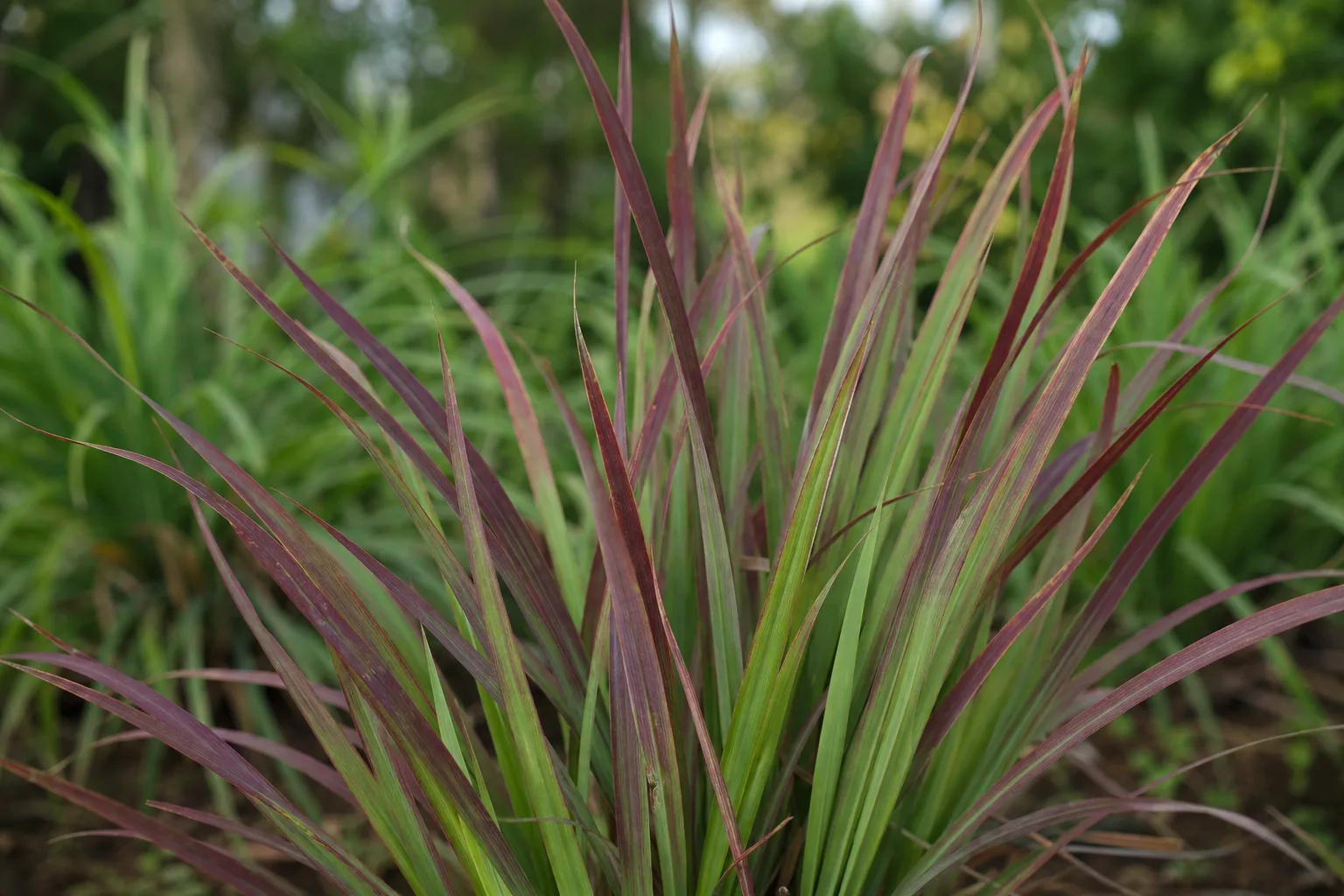
Purple Leaves on Lemongrass: Causes, Checks & Fixes
This guide covers purple leaves on Lemongrass. See also the general Purple Leaves guide, watering, and light pages for this plant.
Purple Leaves on Lemongrass: Causes, Checks & Fixes
Quick answer
Purple lemongrass blades almost always trace to environmental stress, not a mystery leaf disease. On West Indian lemongrass (Cymbopogon citratus), the two common triggers are cool nights that trigger anthocyanin pigments and phosphorus shortage when a fast-growing clump exhausts its pot during warm months.
First step: check whether purple appeared after recent cool nights and whether only outer blades are affected. If nights dropped and purple sits on older leaf edges while the center still pushes green shoots, move the pot to a warmer spot before you feed or repot. If the clump stays purple in warm sun with thin, slow tillers, plan a feed and soil review-not a fungicide spray.
Why Lemongrass blades turn purple
Lemongrass is a tropical clumping grass that grows rapidly in heat and full sun. It is frost-tender and slows sharply when roots get cold, even if air temperature recovers by midday. That biology explains why purple shows up here more often than on hardy lawn grasses.
Cold stress and anthocyanin. When temperatures dip, many plants produce anthocyanins-red-purple pigments that help protect leaf tissue from cold and light stress. On lemongrass, this often appears as red-purple margins or streaks on outer blades after a chilly night, especially on pots left against cold glass or on patios that radiate heat away after sunset. The color is a stress signal, not an infection.
Phosphorus deficiency during active growth. Lemongrass is a heavy feeder in summer. When phosphorus is limited, older and outer foliage may develop purplish coloration while new tillers stay thin and slow. Because phosphorus is mobile in the plant, symptoms often start on lower or outer leaves as the clump redirects what remains to new shoots. Cool roots can mimic deficiency even when fertilizer is present, because uptake slows in cold, wet soil.
Variety and harvest confusion. Most culinary pots hold West Indian lemongrass, which should look bright green when healthy. East Indian types and some related Cymbopogon species show more natural red at the base. Stress purple on unhealthy blades differs from normal cultivar color at the crown-stressed plants also look limp, thin, or stalled, not merely tinted at the base of firm stalks.
What purple is not. Uniform purple without spots, fuzz, or halos is rarely fungal. Lemongrass leaf blight shows as reddish-brown spots on tips and margins with a dried, scorched look-not a smooth purple wash across blades. Root rot may yellow or collapse stalks but does not typically purple entire leaves unless cold and wet stress overlap.
What purple leaves look like on Lemongrass
Cold anthocyanin pattern:
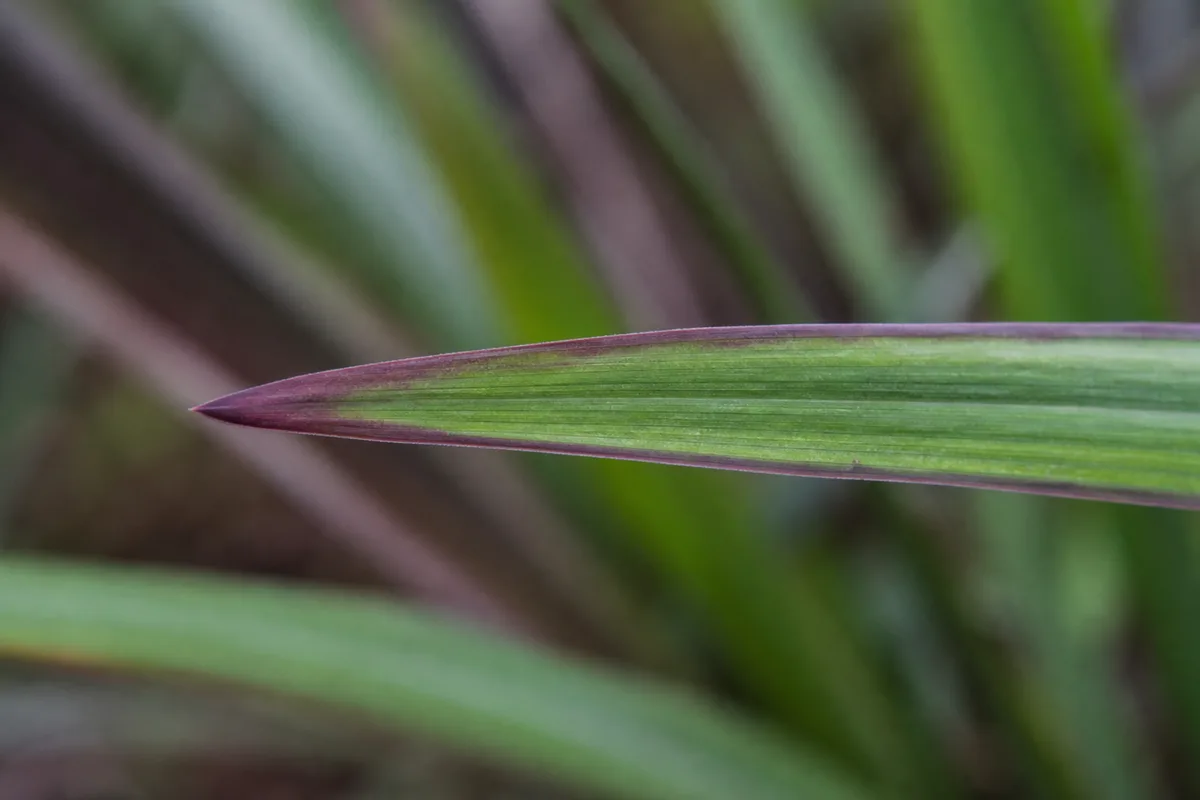
Purple Leaves symptoms on Lemongrass - compare with healthy tissue on the same plant.
- Red-purple edges or streaks on outer, older blades
- Color strongest after cool nights; may fade by afternoon in warm weather
- Center of clump still producing green shoots
- Firm stalk bases; soil moisture normal for the season
- No insects, sticky residue, or spotty lesions
Phosphorus or depleted-soil pattern:
- Dull purplish cast on multiple tillers, sometimes whole clump
- Thin, weak new shoots despite warm weather and full sun
- Slower regrowth after harvest compared with prior flushes
- Often follows a full season in the same pot without summer feeding
- May combine with overall dark green-blue tone before purple spreads
Patterns that suggest other problems:
- Reddish-brown spots on tips with dry margins → possible leaf blight, not nutrient purple
- Soft, mushy stalk bases on wet mix → root rot; inspect roots before treating leaves
- Blackened, limp blades after hard frost → cold kill, not reversible anthocyanin
- Yellowing with purple on chronically wet soil → possible rot or combined stress; unpot if bases soften
Already-purple blade tissue will not turn fully green again. Recovery shows in new tillers emerging green from the crown after conditions improve.
How to confirm the cause
Work through these checks in order:
- Weather and placement - Did night temperatures drop below about 10°C (50°F)? Is the pot on a cold windowsill, concrete that holds chill, or an exposed balcony? Cold-linked purple often appears overnight on outer blades.
- Distribution on the clump - Edge purple on older leaves only strongly suggests chill. Purple on every new shoot in midsummer sun points to nutrition or root uptake problems.
- Growth rate - Push aside outer blades and look at inner shoots. Fast, firm new tillers favor cold tint on outers only. Thin, slow shoots in heat favor deficiency or root-bound exhaustion.
- Fertilizer history - Has the clump received regular balanced feed during active warm months? Lemongrass in the same container for two or more seasons without summer feeding is a common hunger scenario.
- Soil moisture and base firmness - Feel the top 3–4 cm of mix. Lemongrass wants consistent moisture in growth season but not a swamp. Soft stalk bases on wet soil override purple-leaf guessing-inspect roots.
- Spot vs wash - Smooth purple/red color without discrete lesions differs from blight spots. Flip blades for pests; purple leaves from stress rarely come with webbing or honeydew.
If purple appeared after one cool night and new center growth looks green by the next warm day, you likely have cold anthocyanin-not a nutrient crisis. If purple persists through warm weeks with thin tillers, treat it as hunger or depleted mix until a soil test says otherwise.
First fix for Lemongrass
Move the pot to the warmest bright location available and note whether new center shoots green up over the next three to five days.
This single step separates cold-linked purple from nutrient purple without stacking changes. Place indoor pots away from cold glass at night, off drafty floors, and where daytime sun still reaches the crown. Outdoor pots go to a sheltered wall or indoors if frost threatens.
Do not fertilize, repot, or prune the whole clump on day one. Lemongrass responds poorly to multiple shocks at once. If new shoots green up after warmth stabilizes, harvest or trim the purple outer blades and resume normal summer care. If purple remains on all new growth after a warm week, move to balanced feeding during active growth-not before you have ruled out chill.
Step-by-step recovery
Follow the path that matches your diagnosis.
If cold stress caused the purple
- Protect from repeat chill - Move pots indoors or under cover when nights drop near frost. Lemongrass is frost-tender; repeated cold cycles keep triggering anthocyanin.
- Hold winter feed - Do not push fertilizer on a slow indoor clump in cool months. Wait until active growth resumes in spring warmth.
- Harvest purple outers - Cut stressed outer blades at the base once the clump is stable. Use them in tea or cooking if tissue is firm, not frost-blackened.
- Resume summer rhythm - When temperatures stay warm and new shoots lengthen quickly, return to regular water and balanced feed through the active season.
If phosphorus or depleted soil caused the purple
- Feed during active growth only - Apply a half-strength balanced soluble fertilizer from June through September on your normal summer schedule while the clump is in full sun and actively producing tillers. Skip feed on stressed, newly repotted, or dormant plants.
- Refresh exhausted mix - If the clump has filled the pot for two or more seasons and dries out within hours of watering, divide and repot into rich, well-drained mix in spring-not mid-winter on a windowsill.
- Check soil pH indirectly - Lemongrass prefers slightly acidic to neutral, organically rich loam. Very low or high pH can lock up phosphorus even when fertilizer is present; Lemongrass repotting guide with compost-amended mix often helps container plants without a lab test.
- Watch new tillers, not old blades - Judge success when inner shoots emerge green and thicken over one to two flushes. Old purple leaves can be harvested away.
If lookalikes showed up on inspection
- Leaf blight spots - Remove badly spotted blades; improve airflow; avoid wetting foliage at night. Fungicide is a last resort after positive ID, not a default for smooth purple color.
- Soft bases on wet soil - Stop watering, unpot, trim mushy roots, and repot into fresh well-drained mix before any leaf-focused treatment.
Recovery timeline
Cold anthocyanin: New green shoots often visible within three to seven days once nights stay warm and the pot is protected. Outer purple blades may remain tinted until harvested; they rarely revert fully green.
Phosphorus or hunger: Greener new tillers typically appear within one to two weeks after consistent summer feeding and adequate warmth. Severely depleted or root-bound clumps may need a full repot cycle in spring before vigorous green regrowth returns.
Signs recovery is working: Firm stalk bases, faster shoot elongation after harvest, green inner tillers, and normal lemon scent when blades are bruised.
Signs the problem is worsening: Purple spreading to every new shoot despite warm conditions and feeding, increasing softness at the base, sour-smelling wet soil, or blackened frost-killed tissue climbing the crown.
Lookalike symptoms
| What you see | Likely cause | How it differs from stress purple |
|---|---|---|
| Smooth purple-red blade edges after cool nights | Cold anthocyanin | No spots; often outer leaves only; greens up in warmth |
| Dull purple on thin tillers in warm sun | Phosphorus lack or depleted pot | Whole-clump wash; slow growth; improves with summer feed |
| Reddish-brown spots on tips/margins | Leaf blight | Discrete lesions with dry margins, not even purple wash |
| Black, limp blades after freeze | Frost damage | Tissue collapses; not reversible by feeding |
| Soft stalk bases, yellowing on wet mix | Root rot | Base firmness and soil smell matter more than leaf color |
Mistakes to avoid
- Spraying fungicide on smooth purple blades without spots or confirmed disease wastes effort and can stress foliage.
- Heavy fertilizing a cold, slow indoor clump in winter when roots are not actively taking up nutrients.
- Repotting on day one before you know whether the issue is chill, hunger, or rot-except when bases are soft on wet soil.
- Assuming all purple grass is the same - East Indian types naturally show more red at the base; West Indian culinary clumps should green up when culture is right.
- Ignoring pot placement - A plant that purples every night on a cold sill needs movement, not another product.
- Waiting for old purple blades to re-green - Harvest them and watch new shoots instead.
How to prevent purple leaves next time
- Timing frost protection - Move containers indoors or harvest and store divisions before first frost in cold climates.
- Summer feed in full sun - Feed actively growing clumps during warm months when they are in bright light and using water quickly-not on a dormant winter windowsill.
- Warm overnight placement - Keep indoor pots off cold glass and draft paths during shoulder seasons.
- Regular harvest - Cutting outer blades keeps the clump vigorous and makes new stress easier to spot early.
- Repot on schedule - Divide or upsize every one to two years before the mix is completely exhausted and roots circle the pot.
- Stable moisture in growth season - Avoid letting active clumps bone-dry repeatedly; drought stress plus hunger can compound purple symptoms on outer blades.
Related lemongrass problems
- Root rot - soft bases on wet soil; purple plus mush means inspect roots first
- Cold damage - blackened frost kill vs. reversible anthocyanin edges
- Not enough light - pale thin growth without purple wash
- Yellow leaves - overlapping stress signals on wet mix
Lemongrass care guides
- Light - full sun for green regrowth
- Fertilizer - summer phosphorus and nitrogen rhythm
- Overview - frost protection and seasonal culture
Conclusion
Purple lemongrass blades look alarming but usually tell a straightforward story: the clump got cold, hungry, or both. Check nights and blade pattern first, warm the pot before you feed, and judge recovery by green new tillers-not old tinted leaves. When purple comes with soft wet bases or spreading spots, shift from nutrient thinking to root or disease inspection.
When to use this page vs other Lemongrass guides
- Lemongrass watering guide - Use for routine moisture checks before assuming purple leaves is the main issue.
- Lemongrass problems hub - Browse all 52 common issues on this species.