Purple Leaves on Lavender: Causes, Checks & Fixes
Quick answer
Purple lavender foliage is usually a cold-stress anthocyanin response on otherwise firm plants, not always a disease. First, check crown firmness and soil wetness; purple with a soft base in wet mix points to urgent rot risk, while firm winter-purple growth is often temporary.
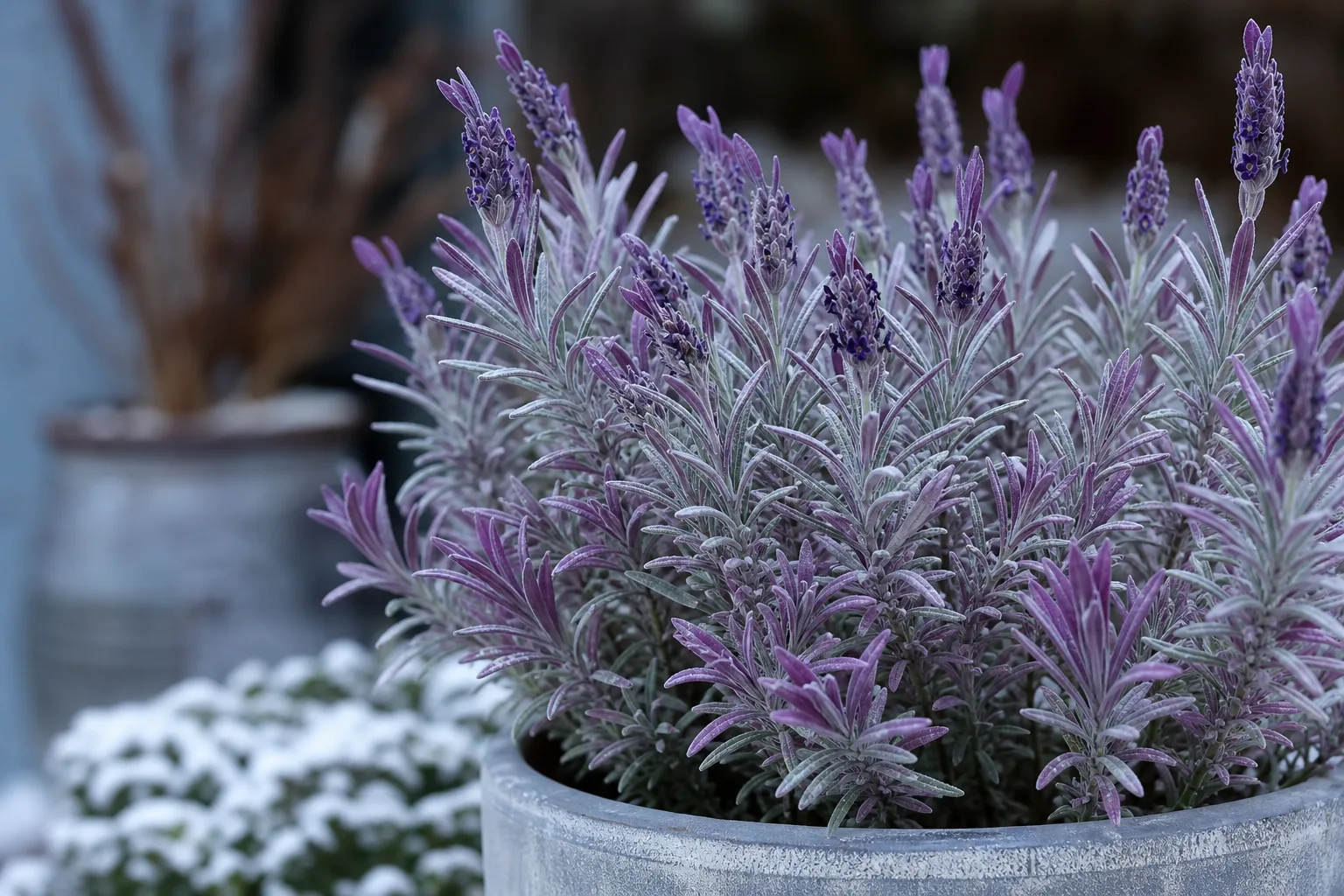
Purple Leaves on Lavender: Causes, Checks & Fixes
This guide covers purple leaves on Lavender. See also the general Purple Leaves guide, watering, and light pages for this plant.
Purple Leaves on Lavender: Causes, Checks & Fixes
Quick answer
Purple foliage on lavender is usually a diagnostic clue, not a stand-alone diagnosis. Many plants show temporary purple-red color from cold-season anthocyanin stress while remaining structurally healthy. Your first decision point is simple: check the crown and root zone before trying treatments. If the crown is firm and the mix is draining, this is often a watch-and-adjust case. If the crown is soft in wet media, treat it as urgent rot risk.
Normal silver vs stress purple on lavender
Healthy lavender already has silver-gray to gray-green foliage, so many growers mistake normal color for decline RHS Growing Guide. Purple stress tones usually appear as a red-purple overlay, often strongest on exposed outer leaves after cold nights and bright days. A plant that is silver-gray, firm at the base, and actively growing is commonly fine. A plant that is purple-gray, wilting, and soft at the base is not.
Use this page for purple-color triage. If your main symptom is blackened frost tips, read /plants/lavender/cold-damage/. If the base is soft or roots are decaying, jump to /plants/lavender/root-rot/ or /plants/lavender/crown-rot/.
What stress purple looks like on lavender
- Cold-stress purple (most common): purple-red outer foliage after cold nights, with firm stems and no sour-smelling wet mix.
- Nutrient-linked purple (less common): dull purple-bronze on older leaves, weaker growth, and long-neglected container media.
- Rot overlap (urgent): purple-gray wilt plus soft crown or stem base, often in persistently wet substrate.
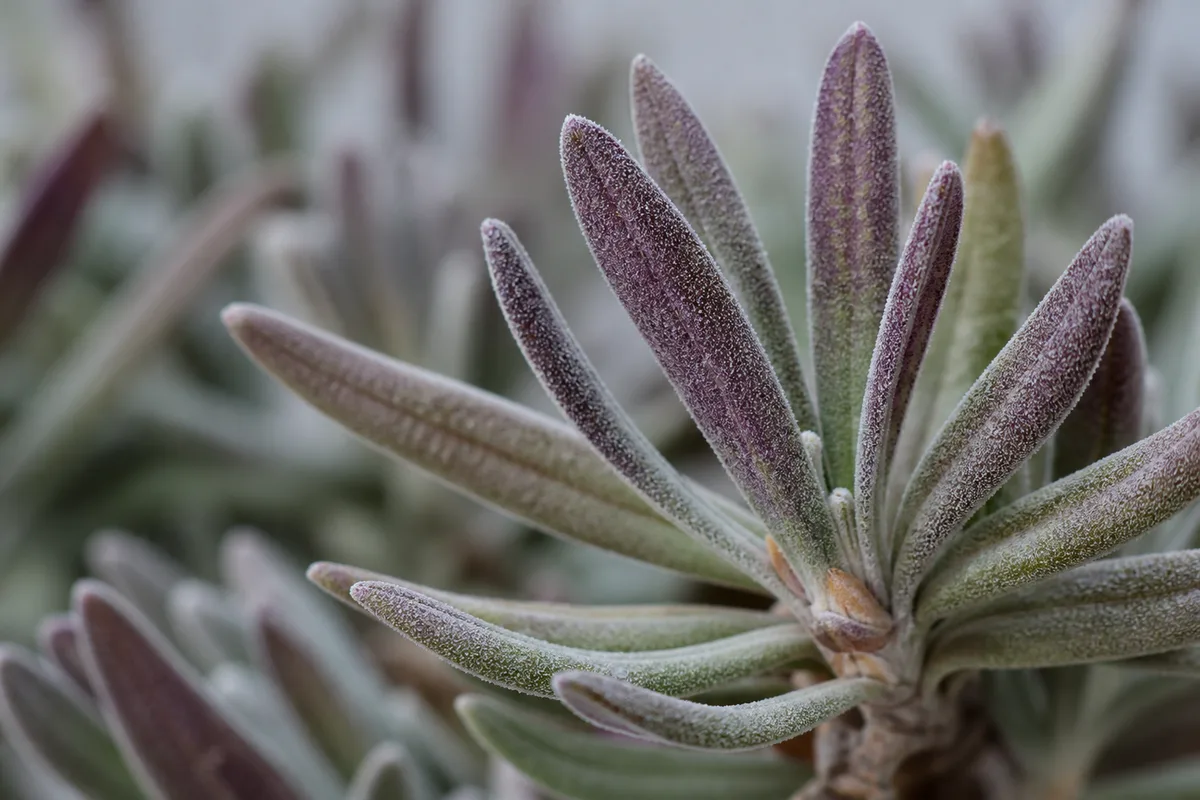
Purple Leaves symptoms on Lavender - compare with healthy tissue on the same plant.
Why lavender can turn purple
Purple foliage is commonly tied to anthocyanin pigments that increase under stress, especially low temperature with high light WSU Extension. This can function as a protective response rather than immediate damage. That is why some lavender looks more purple in cold bright spells, then shifts back toward silver-green as conditions improve.
Phosphorus-related purpling is possible, but often secondary to root-zone conditions that limit uptake in cold or wet media Purdue Extension. On lavender, moisture and drainage are usually stronger predictors of decline than fertilizer intensity RHS Growing Guide.
Lavender type also matters. English lavender and lavandin are generally hardier than less hardy groups such as some French lavender types, but no group tolerates prolonged wet-cold roots well RHS Plant Guide. In practice, lavender loss is commonly a drainage problem before it is a cold-number problem.
How to confirm the cause at home
- Press at the crown and lower stem first. Firm tissue usually means lower immediate risk. Softness is an escalation trigger.
- Check moisture where roots actually sit. A dry surface can hide a wet lower zone. Lavender does best when excess water drains quickly Iowa State Extension.
- Review weather timing. Purple after cold nights plus bright sun often matches temporary stress pigmentation.
- Map the color pattern. Seasonal outer-leaf flush differs from whole-plant decline with reduced vigor in warm weather.
- Inspect roots if unsure. Dark, rotting roots with off-color wilt support rot diagnosis Pacific Northwest Pest Management Handbooks.
- Use sibling pages for lookalikes. Compare with
/plants/lavender/faded-leaves/and/plants/lavender/potassium-deficiency/when the pattern is unclear.
First fix for Lavender
If the crown is still firm, first fix the root environment: reduce watering frequency and restore sharp drainage right away. Move the pot to Lavender light guide, stop routine winter watering, and do not keep the crown in persistently wet mix. This addresses the highest-probability failure path (wet-cold root stress) before adding nutrients, sprays, or repot stress.
Step-by-step recovery
- Firm crown + winter purple only: maintain bright light, keep the root zone on the dry side, and monitor new growth.
- Firm crown + persistent warm-season purple: refresh compacted media into a gritty, faster-draining mix, then reassess growth response.
- Suspected nutrient limitation: confirm root conditions and consider testing before applying phosphorus-heavy inputs; purple color alone is not a complete nutrient diagnosis WSU Extension.
- Soft crown or dark rotting roots: unpot promptly, remove dead tissue, and move to rot workflow from
/plants/lavender/root-rot/. - Advanced collapse: salvage healthy tips for cuttings instead of forcing recovery from a collapsing crown.
Recovery timeline
Cold-stress purple commonly fades over 1-3 weeks as temperatures rise and growth resumes. Nutrient-linked correction is slower and should be judged on new leaves, not old purple tissue. If rot is driving symptoms, decline can move quickly, especially in saturated media where Phytophthora-type pressure increases Pacific Northwest Pest Management Handbooks.
Causes to rule out
- Normal silver-gray foliage: this is common and healthy for many lavender types.
- Cold damage with blackened tissue: better matched to
/plants/lavender/cold-damage/. - Root or crown rot: off-color wilt with soft base and wet substrate Pacific Northwest Pest Management Handbooks.
- General fading without purple flush: compare with
/plants/lavender/faded-leaves/.
What not to do
Do not water more just because color changed. Do not assume every purple leaf means phosphorus deficiency. Do not apply heavy fertilizer into cold, stressed, or waterlogged roots. Do not prune hard during acute stress. Do not confuse normal silver foliage with disease when stems are firm and growth is active.
How to prevent purple stress next time
Grow lavender where roots dry quickly: full sun, free-draining media, and no standing winter moisture RHS Growing Guide. In colder climates, use raised beds, mounds, or gritty containers to keep roots above persistent wet zones Iowa State Extension. Avoid high organic mulches over the crown and avoid overwatering patterns that keep substrate saturated Pacific Northwest Pest Management Handbooks.
Lavender care cross-check
If purple appears and the plant stays firm, treat it as watch-and-correct. If purple appears with softness, base wilt, or sour wet substrate, treat it as rot-risk emergency and escalate immediately. For general baseline settings, cross-check with /plants/lavender/lavender-overview/.
When to worry
Escalate right away if you see a soft crown, blackening at the base, foul root smell, stem collapse, or rapid top dieback. Those signs fit failing root-zone conditions, not harmless color stress. If unsure after inspection, treat drainage and root health as the immediate priority while you diagnose.
Conclusion
Purple lavender foliage is often manageable when structure is sound and drainage is right. The most useful split stays the same: firm + seasonal purple flush is usually low urgency, while soft + wet + wilted purple-gray tissue is high urgency rot risk. Keep lavender bright, lean, and sharply drained, and move to the linked cold-damage or rot guides when symptoms cross that boundary.
When to use this page vs other Lavender guides
- Lavender watering guide - Use for routine moisture checks before assuming purple leaves is the main issue.
- Lavender problems hub - Browse all 51 common issues on this species.