Faded Leaves on Lavender: Causes, Checks & Fixes
Quick answer
Faded leaves on lavender lose the silvery bloom and look flat dull grey-green-not washed-out yellow-green. The usual causes are too little direct sun, chronically wet roots, or soft nitrogen-rich growth in partial shade. Move to six or more hours of direct sun, water only when soil is dry 7 cm deep, and judge recovery on new silver tips, not old foliage.
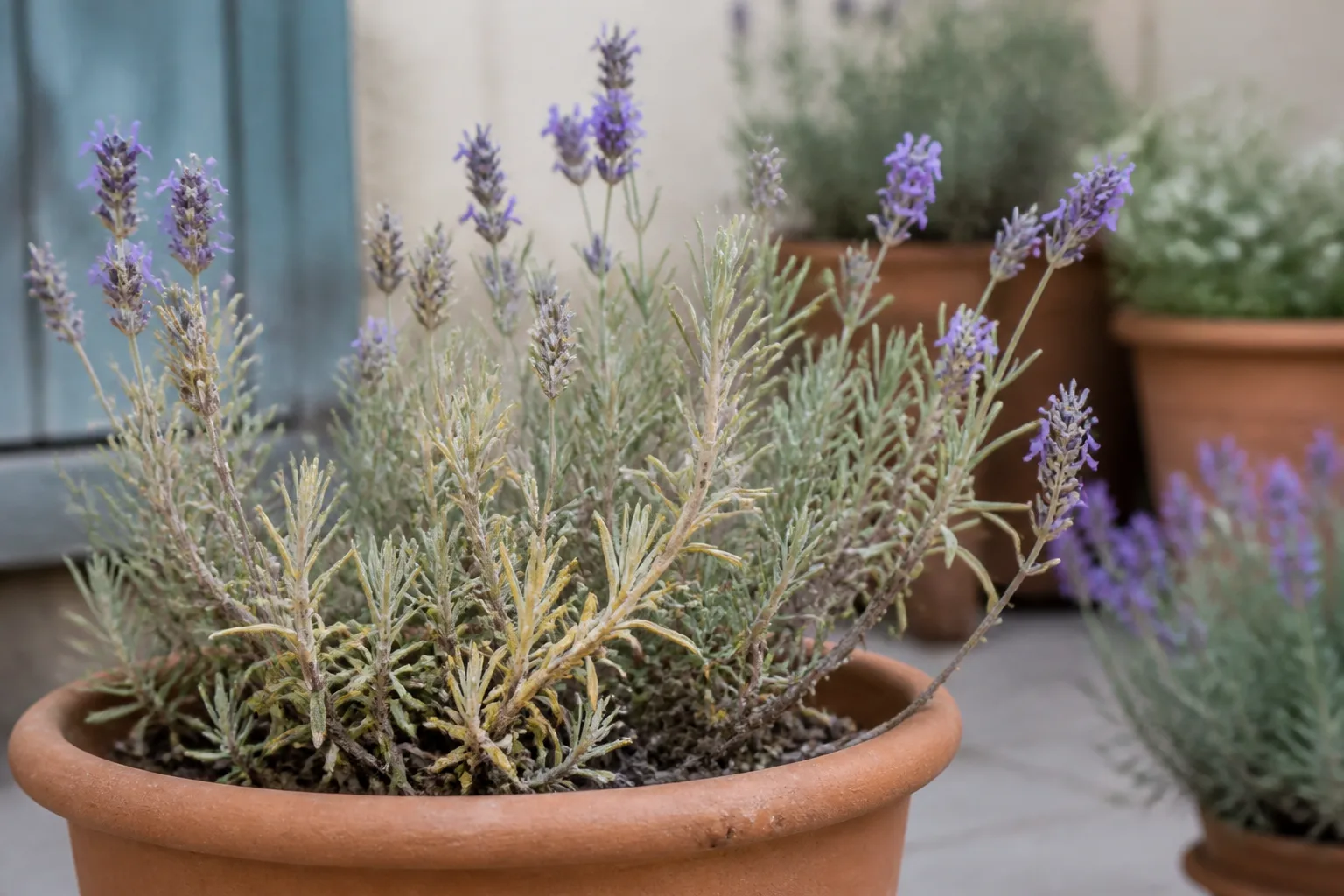
Faded Leaves on Lavender: Causes, Checks & Fixes
This guide covers faded leaves on Lavender. See also the general Faded Leaves guide, watering, and light pages for this plant.
Faded Leaves on Lavender: Causes, Checks & Fixes
Quick answer
English lavender (Lavandula angustifolia) looks faded when narrow grey-green leaves lose the silvery bloom-the waxy, light-reflecting coating that makes healthy mounds appear blue-grey in full sun. Faded foliage reads flat dull grey-green or olive, not the washed-out yellow-green of pale leaves or the chartreuse lower-leaf yellowing on yellow leaves.
First step: confirm direct sun hours and soil moisture at 7 cm depth. Faded mounds in shade or wet mix need maximum sun and dry-down watering before fertilizer or heavy pruning. Existing dull leaves rarely re-silver; judge recovery on new tips, not the whole mound overnight.
This page is the primary guide for silvery-sheen loss. If your plant looks washed-out yellow-green instead of dull grey-green, start with pale leaves. If lower leaves are bright chartreuse on wet soil, see yellow leaves.
What faded leaves look on English Lavender
Healthy lavender carries strongly aromatic silvery or grey-green foliage with a matte-to-satin sheen from dense leaf hairs and epicuticular wax. Faded plants lose that reflective quality: the mound looks uniformly dull olive or flat grey-green, as if someone dusted the plant with chalk. Texture may feel soft and limp on overwatered specimens; leggy shaded stems show pale etiolated tips stretching toward brighter light.
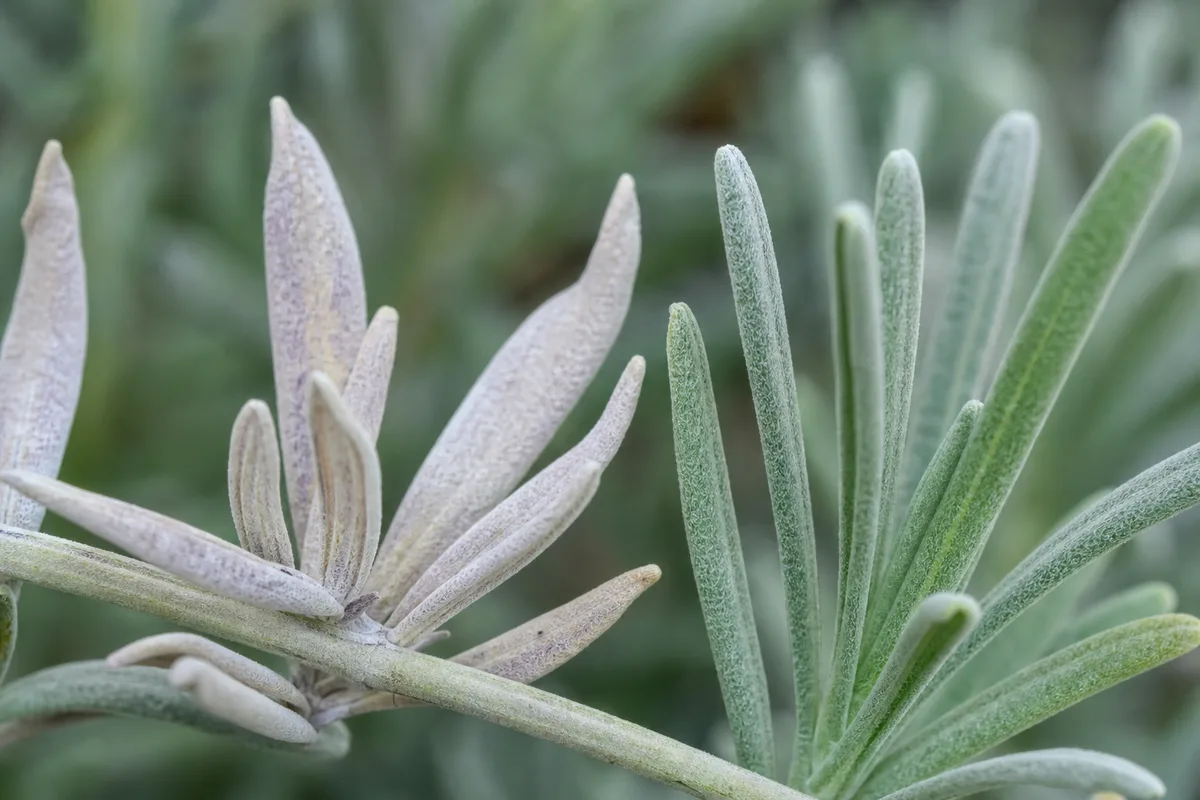
Faded Leaves symptoms on Lavender - compare with healthy tissue on the same plant.
Silvery bloom loss vs. normal inner browning
Culture fade dulls the entire visible mound or all new growth at the tips-not just the base. Normal aging browns inner lower leaves on woody stems while outer new shoots stay silver. If only the shaded interior of a dense mound is brown and the sun-facing shell still gleams, that is aging and pruning territory, not systemic fade.
Indoor overwintering in a dim room produces a characteristic pattern: whole-plant flat grey-green with firm roots and no sour smell-fade from light deficit until the plant is hardened back to outdoor sun.
Why Lavender leaves fade
Lavender evolved on open Mediterranean slopes where intense sun built protective trichomes and wax layers on narrow leaves. In partial shade, the plant produces softer greener growth with less reflective coating-what gardeners read as “faded” rather than healthy green. Lavender hates shade and will not survive long in shady, damp conditions; dull foliage is often the first visible signal before stretch and weak bloom follow.
Insufficient direct sun (wax coat dulling)
Silver tone is sun-dependent physiology, not permanent paint. English lavender needs full sun with dry to medium, well-drained soil. Balconies blocked after mid-morning, north-facing sills, and pots tucked under eaves commonly deliver fewer than six direct hours-the floor where fade accelerates. Utah State University Extension lists full sun as a baseline requirement for English lavender culture. For hour-audit methodology and acclimation when increasing exposure, see the lavender light guide and not enough light.
Chronic wet roots (vigor loss before rot)
Dampness more than cold is responsible for killing lavender. Chronic wet roots reduce vigor and dull foliage before obvious crown rot. Heavy pots, peat-rich mix, and saucers holding runoff keep roots anaerobic while the mound loses silver sheen and feels less aromatic-lavender does not perform well in wet or water-logged soils. Advanced cases overlap with overwatering and root rot-check crown firmness before treating fade as a light-only problem.
Excess nitrogen in partial shade
Lavender thrives in somewhat low fertility. Heavy nitrogen in partial shade pushes soft lush growth that lacks the waxy silver coat-often described as pale or faded depending on how yellow-green the new tissue looks. If recent feed coincides with dull soft tips in shade, hold fertilizer and fix light first.
Indoor overwinter dim-light fade
Lavender overwintered indoors commonly fades uniformly in dim rooms with cool temperatures and reduced transpiration. The fix is not more water-it is gradual return to outdoor full sun over seven to fourteen days once frost risk passes, matching the hardening protocol on the light guide.
How to confirm the cause
Faded vs. pale vs. yellow decision table
| What you see | Likely primary cause | First action | Better page if mismatch |
|---|---|---|---|
| Flat dull grey-green; silvery sheen gone; firm or limp | Shade ± wet roots | Max sun + dry-down at 7 cm | Pale leaves if washed-out yellow-green |
| Washed-out yellow-green; soft lush tips | Shade + nitrogen | Sun first; hold feed | This page if sheen loss dominates |
| Chartreuse yellow lower leaves on wet heavy pot | Root stress / rot pathway | Unpot check; dry gritty repot | Yellow leaves |
| Inner lower brown only; outer tips still silver | Normal aging on woody base | Light shaping prune post-bloom | Lavender pruning |
| Uniform dull after dim indoor winter | Light deficit | Harden to outdoor sun 7–14 days | Not enough light |
Faded and pale often share the same underlying stress-shade, wet culture, or nitrogen-but search intent differs: faded means loss of silver bloom; pale means washed-out yellow-green tone. Use this table to confirm you landed on the right slug.
Numbered confirmation checklist
- Direct sun hours - Fewer than six hours on the mound? Use the light guide hour audit.
- Moisture at 7 cm - Wet for many days after one watering? See watering dry-down rhythm.
- Fertilizer history - High-nitrogen feed in the last six weeks?
- New tip color - Newest shoots silver, still dull, or yellowing?
- Root firmness - Mushy roots or sour smell when unpotted? Escalate to overwatering before assuming simple fade.
- Pattern - Whole mound dull vs. inner lower leaves only?
- Recent move - Brought indoors for winter or into deeper shade?
First fix for Lavender (by likely cause)
Pick one primary branch before stacking interventions:
Shade-first fade (whole mound dull, dry or moderately moist mix, firm crown): Relocate to the sunniest feasible spot and acclimate over seven to fourteen days if jumping from deep shade-details on the light guide. Hold fertilizer until new silver tips appear.
Wet-root fade (dull foliage + heavy pot + wet 7 cm): Stop watering until probe is dry at 7 cm; empty saucers; repot into fresh one-part-compost to three-parts-grit in holed terracotta if mix stays sour or compacted-mix targets on the soil guide. Sun correction follows drainage; do not soak a already-wet fade.
Nitrogen-soft fade (lush pale-dull tips in partial shade after feeding): Withhold fertilizer for one full season; increase direct sun; prune soft leggy wands lightly after bloom only once culture is fixed.
Irreversibility callout: Old dull leaves rarely rebuild full silver bloom even after perfect culture-the wax and trichome layer on mature foliage does not fully regenerate. Recovery is visible on new shoots at stem nodes. Plan renewal pruning only after new silver tips confirm the environment is corrected; old-wood limits live on the pruning guide.
Step-by-step recovery
Shade-first branch
- Audit direct sun hours; move pot to six to eight or more hours of direct light.
- Rotate weekly for even exposure on balconies.
- Harden from indoor or deep shade over seven to fourteen days-increase exposure gradually per the light guide.
- Water only when dry at 7 cm; do not compensate fade with extra drinks.
- Watch newest stem tips for returning silver sheen within two to four weeks.
- After bloom, lightly shape leggy dull wands by one-third if new silver shoots are firm.
Wet-root branch
- Probe moisture; stop scheduled watering until dry at 7 cm.
- Empty saucers within thirty minutes of any necessary soak.
- Unpot if mix stays wet for days; trim only mushy roots; repot gritty mix in holed terracotta sized to root mass.
- Place in full sun; wait one week before the next drink if rot was minor.
- Evaluate new tip color at three to five weeks.
- If crown softens or smell turns sour, switch to root rot workflow immediately.
Nitrogen-soft branch
- Stop all fertilizer immediately.
- Increase direct sun; do not feed to “green up” dull foliage.
- Allow two to four weeks for new firm silver tips.
- Optional single lean spring feed only if plant is stunted in perfect sun after fade resolves-lavender prefers low fertility.
Worked example
A container L. angustifolia ‘Munstead’ overwintered on a north windowsill emerged uniformly dull grey-green in March with firm roots and dry gritty mix. The grower moved it to a south balcony, increased exposure by two hours per day over ten days, resumed dry-down watering only when the probe read dry at 7 cm, and skipped spring feed. New silver tips appeared at stem nodes within three weeks while inner dull leaves on old wood stayed flat grey-green until a light post-bloom shaping prune removed the worst wands.
Recovery timeline
New silver growth often appears within two to four weeks after sun and dryness improve on firm plants. Old dull foliage persists until pruned or shed-do not declare failure because the entire mound did not re-silver overnight. Chronic rot-related fade may not recover at the crown even when upper stems look salvageable; weekly crown firmness checks matter.
Spring hard prune into old bare wood is a last resort after culture fix and new silver shoot confirmation-RHS notes lavender will not regenerate well from hard cuts into old bare wood. Follow species limits on the pruning guide.
Causes to rule out
- Normal inner browning - Lower woody stem leaves only; outer shell still silver.
- Winter dormancy dulling - Slight grey cast in cool slow growth with firm roots and appropriate dry-down.
- Spider mites - Fine stippling and webbing on leaf undersides, not uniform silvery-bloom loss across the mound. See spider mites.
- Nutrient deficiency patterns - Interveinal yellow on old leaves only; uncommon in alkaline grit mixes.
- Pale or yellow siblings - Washed-out yellow-green tone → pale leaves; chartreuse lower yellow on wet soil → yellow leaves.
What not to do
Do not fertilize heavily to “green up” dull lavender-that worsens soft pale growth lacking silver wax. Do not move from deep shade to blistering midday sun in one step-harden over seven to fourteen days. Do not increase watering when leaves dull in an already-wet pot. Do not hard-prune into old bare wood before confirming new silver shoots and corrected culture. Do not assume fade means the cultivar failed-dull foliage usually signals wrong microclimate, not genetics.
How to prevent faded leaves next time
Permanent full sun (six to eight or more direct hours), gritty alkaline mix, terracotta with drain holes, and dry-down watering maintain silver compact mounds-baseline culture on the lavender overview. Lean fertilizer at most once in spring if at all. Annual light shaping after bloom renews silver foliage on dense old mounds without waiting for inner wood to re-silver.
For monsoon and rainy-season culture, extend dry-down intervals when evaporation slows-wet shaded mix is the fade plus rot combination lavender tolerates least. English lavender in containers needs sharper drainage than many lavandin hedging types; both require sun, but container English types show fade fastest when light and moisture diverge from Mediterranean norms.
When to worry
Escalate immediately when dull foliage pairs with wilting, crown softness, or sour wet soil-rot overlap, not simple fade. Treat as urgent prevention if a firm plant sits in fewer than four direct hours through the main growing season; fade will progress to stretch and weak bloom. Contact your local extension office if no new silver tips appear after four weeks of corrected full sun and dry-down on a firm crown.
Related lavender guides
- Lavender overview - Species hub for sun, soil, and watering baseline
- Lavender light - Hour audit, acclimation, and indoor overwinter limits
- Pale leaves - Washed-out yellow-green tone, not dull grey-green sheen loss
- Yellow leaves - Chartreuse lower leaves and root-stress yellowing
- Not enough light - Leggy stretch when hours fall below six
- Overwatering - Wet-root dulling before obvious rot
- Lavender pruning - Renewal shaping and old-wood limits
- Lavender watering - Dry-down probe rhythm at 7 cm
FAQs
Are faded leaves the same as pale leaves on lavender?
Not quite. Faded foliage loses the waxy silvery sheen and looks flat dull grey-green or olive across the mound. Pale leaves read washed-out yellow-green and often feel softer from nitrogen or deep shade. Both share shade and wet-root causes, but faded is the primary page for silvery-bloom loss; see pale leaves for washed-out yellow-green tone.
Why won’t my old lavender leaves turn silver again?
Mature leaves rarely rebuild their full wax and trichome coating once dulled-recovery shows on new shoots at stem tips after sun and drainage improve. Old dull foliage persists until pruned or shed. Spring shaping after new silver tips appear can renew the mound; follow old-wood limits on the pruning guide.
What should I check first for faded leaves on lavender?
Count direct sun hours on the pot, probe moisture at 7 cm depth, and compare newest tips to older foliage. Whole-mound dull grey-green with wet mix points to shade plus overwatering. Uniform fade after indoor overwintering usually means insufficient light until hardened back outdoors.
When are faded leaves urgent on lavender?
Urgent when dull foliage pairs with wilting, crown softness, or sour wet soil-rot overlap. Slow uniform fade on a firm plant in a shaded wet pot is lower immediate urgency but still needs correction before rainy season. Dull-only fade with firm crown is recoverable with culture change.
How do I prevent faded leaves on lavender?
Permanent full sun placement, gritty alkaline mix, dry-down watering, lean or no fertilizer, and annual light shaping after bloom keep silver compact mounds. Harden indoor overwintered plants back to outdoor sun over seven to fourteen days rather than leaving them in dim rooms through spring.
Conclusion
Faded lavender means silvery bloom lost to shade, wet roots, or soft nitrogen growth-not mysterious cultivar failure. Use the faded-vs-pale-vs-yellow table to confirm this is the right page, fix sun and drainage by primary cause, and judge recovery on new silver tips while accepting that old dull leaves rarely re-silver without pruning. Link outward to light, pale leaves, and pruning for depth this triage page does not duplicate.