Root Rot on Lavender: Causes, Checks & Fixes
Quick answer
Lavender root rot starts when gritty mix stays wet too long-especially in humid climates. Stop watering, unpot, trim mushy roots, repot in very gritty alkaline mix, and water only when soil is dry 7 cm deep.
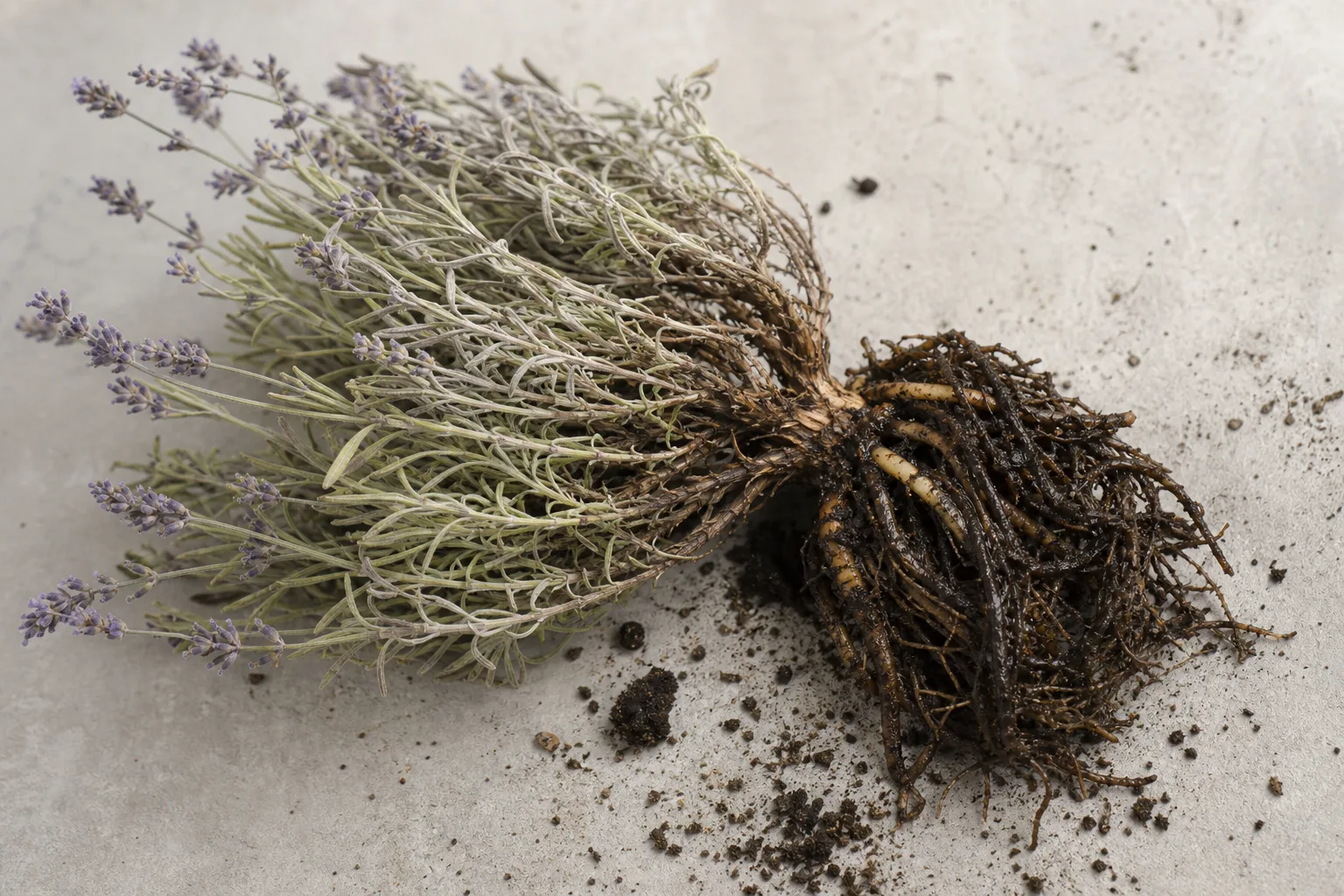
Root Rot on Lavender: Causes, Checks & Fixes
This guide covers root rot on Lavender. See also the general Root Rot guide, watering, and light pages for this plant.
Root Rot on Lavender: Causes, Checks & Fixes
Quick answer
Root rot on English lavender (Lavandula angustifolia) is a rescue guide for confirmed root decay-not early overwatering triage. If stems are still firm and you suspect too much water but have not inspected roots, start with the lavender watering guide and overwatering on lavender first. Use this page once mushy roots, sour-smelling mix, or grey wilt on a heavy wet pot point to decay below soil.
Lavender evolved for dry Mediterranean summers with extremely well-drained soil. When container mix stays wet-especially in humid coastal or monsoon climates-roots lose oxygen and decay. The cruel paradox: damaged roots cannot move water upward, so grey wilting stems appear despite wet soil.
First step: stop watering immediately, unpot gently, and inspect whether roots are firm and pale or brown and mushy before you trim or repot.
What root rot looks like on Lavender
Symptoms build from the root zone upward. Watch for these patterns together rather than in isolation.
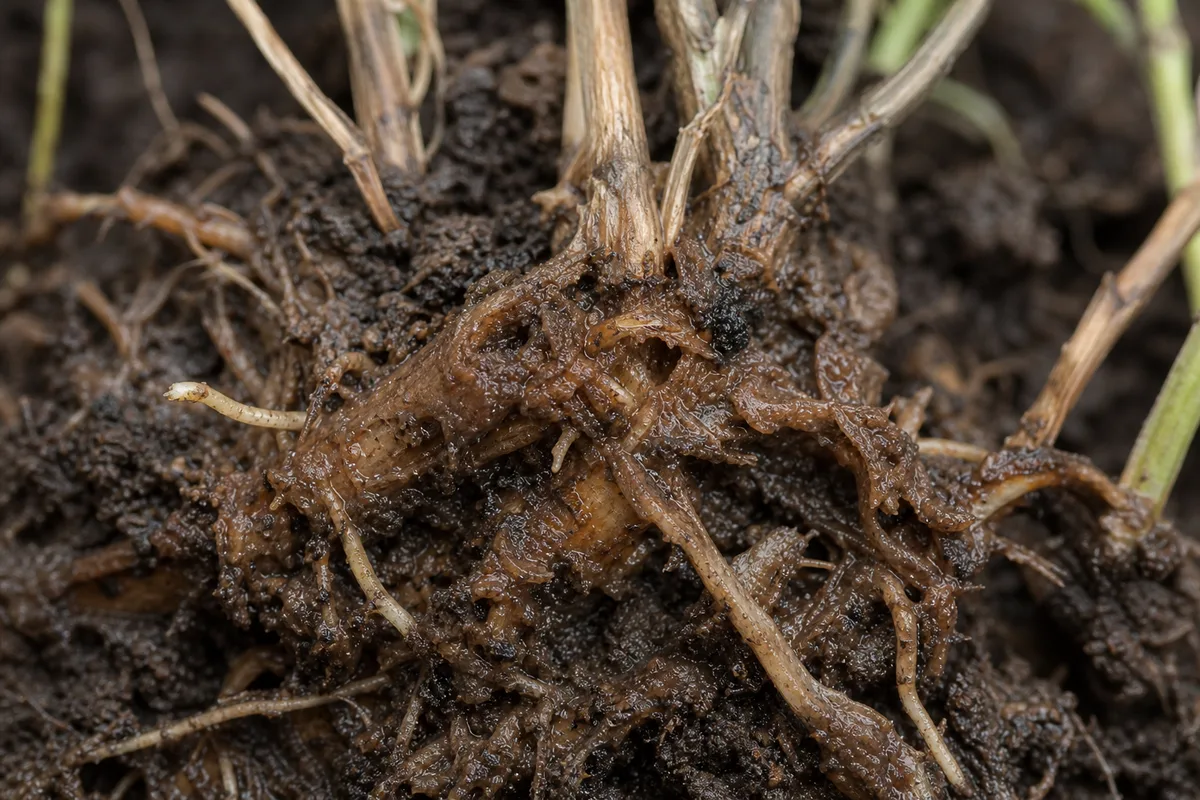
Root Rot symptoms on Lavender - compare with healthy tissue on the same plant.
Grey wilt on wet soil
Grey or brown wilting stems, dull silvery foliage, and sudden collapse can appear even though the pot feels heavy and mix near the surface is moist. That mismatch is the key clue: damaged roots cannot move water to leaves. If a deep soak does not restore firm stems within hours, suspect rot-not drought. See wilting on lavender for the full wet-soil wilt branch.
Sour smell and soft crown tissue
Advanced cases show soft tissue at the woody stem base, a sour or swampy smell from the drain hole, and lower stems turning brown from soil upward. Phytophthora root rots on lavender can move up into stems in ways Pythium root rots typically do not-once the crown softens, escalate to the crown rot guide the same day.
Below-ground decay
Healthy lavender roots are firm and pale. Rotting roots are slimy, brown, or black and pull away easily when rinsed. Roots develop a discolored vascular system, turn black and rot while aboveground parts wilt and die back.
Why Lavender gets root rot
Lavender is built for drought, not saturation. Several setup choices push container plants into rot faster than in-ground specimens in full sun.
Mediterranean dryland biology vs. chronic wet mix
English lavender needs full sun and extremely well-drained soil. Dampness more than cold is responsible for killing lavender plants-wet, poorly drained soil and high humidity with poor airflow between plants lead to decline. Container culture concentrates that risk because the root zone is small and cannot drain sideways.
Cultivar caveat: English lavender (L. angustifolia) is difficult to grow in high summer humidity without sharp drainage. French lavender (Lavandula dentata) and Spanish types are less hardy than English types in containers-wet soil kills them faster than drought in monsoon climates.
Pathogens that finish what waterlogging starts
Cultural rot-roots sitting in stale water-is the primary home failure mode. Once tissue is oxygen-starved, soilborne pathogens often colonize decay. The OSU Plant Clinic has found Fusarium, Phytophthora, Pythium, and Rhizoctonia associated with rotting lavender roots. Multiple Phytophthora species attack English lavender (L. angustifolia) in cold wet soils where the species does not thrive. Overwatering encourages these diseases; home rescue is cultural-trim, dry, gritty mix-not a fungicide substitute for an already mushy root ball.
Monsoon, humid climates, and winter indoor traps
Monsoon or rainy-season watering is especially dangerous. Lavender should barely be watered when outdoor rain keeps mix damp at 7 cm for days. Terracotta pot weight beats calendar watering in humid climates: a heavy pot you have not hand-watered in days almost always means waterlogged mix.
Winter indoor overwatering catches balcony growers who move plants inside. Dim cool rooms slow evaporation; the summer rhythm that dried a sunny terracotta pot in seven days may keep roots wet for two to three weeks indoors. RHS guidance notes roots in damp compost make container lavender more susceptible to root rots over winter.
Crown mulch trap, oversized pots, and in-ground failure
Organic mulch piled against the stem base traps moisture at the crown-exactly where lavender is vulnerable. Consider using rock instead of organic mulch to combat humidity around the base. Oversized pots hold wet soil around a small root ball for days.
In-ground lavender fails when clay or low spots stay wet through winter. Illinois Extension recommends raised beds when drainage is poor so soils can be modified and water drains away from roots- the same principle applies when choosing grit-heavy container mix.
How to confirm the cause
Work through this inspection order before you trim roots or repot:
- Soil moisture history - Has mix been wet at 7 cm depth for days without drying? Was the plant watered during monsoon or after several rainy days?
- Pot weight and smell - A heavy pot days after rain plus a sour odor suggests anaerobic decay in the root zone.
- Wilting vs. moisture - Wilting with wet soil strongly suggests root dysfunction. A light dry pot points to underwatering instead.
- Drainage check - Does water run through in 2–3 seconds? Are holes blocked? Does a cachepot trap water above the drain line?
- Unpot and rinse roots - Slide the plant out gently. Rinse away wet mix so you can compare firm pale roots with mushy or discolored tissue.
- Crown base - Pinch woody stems at the soil line. Soft, dark tissue on wet mix confirms advanced trouble-see crown rot.
If more than one-third of roots are mushy, or black tissue is climbing above the soil line, treat the case as advanced.
Lookalike symptoms to rule out
| What you see | Pot / mix | Roots (if checked) | Likely cause | Urgency | Next step |
|---|---|---|---|---|---|
| Grey wilt, heavy wet pot, sour smell | Saturated days after watering | Brown, mushy | Root rot | Urgent-same day | Stop water; unpot; trim and repot |
| Inward-curl leaves, light dry pot | Dry throughout | Firm, pale | Underwatering | Monitor | Water deeply once; recheck in 24 h |
| Yellow lower leaves, firm stems, wet pot | Wet but no sour smell yet | Still firm, pale | Early overwatering | Act this week | Dry root zone; see overwatering guide |
| Midday wilt, moist soil, firm stems | Moist | Firm | Heat collapse | Wait | Verify evening recovery |
| Temporary wilt after repot | Moist | Firm | Transplant shock | Monitor | Hold water; recheck in 3–5 days |
| Soft grey stem base, wet mulch | Wet at crown | Variable | Crown rot | Urgent-same day | See crown rot |
First fix for Lavender
Stop watering, unpot gently, trim rotted roots, and repot in fresh very gritty mix - then resume watering only when soil is completely dry 7 cm deep.
Move the plant to a clean work surface. Tilt the pot and slide the root ball out with minimal pulling on woody stems. Knock away wet mix so you can see root color and texture clearly. Do not water during this inspection.
If roots are mostly firm and pale with only a few soft tips, trim the damaged sections, let cut surfaces air-dry briefly, and repot into fresh gritty mix without soaking the plant again first.
If more than one-third of roots are mushy or stem bases are soft, proceed immediately to the recovery steps below. Do not return the plant to the same wet mix hoping it dries out on its own-decay spreads in waterlogged, oxygen-poor soil.
Make one correction at a time. Do not fertilize, move to a new room, and repot into a much larger pot on the same day-that stack hides what actually helped.
Step-by-step recovery
After inspection confirms rot, proceed based on severity:
Mild: dry-down and drainage first
When roots are still mostly firm, stems are solid at the base, and smell is neutral:
- Stop all watering until the top 7 cm is completely dry.
- Empty any saucer water and move the pot to the brightest spot available-full sun if possible.
- Confirm open drainage holes and gritty mix per the lavender soil guide.
- Resume watering only on the finger test once dry-down stabilizes pot weight.
If stems soften or smell turns sour during dry-down, escalate to moderate rescue immediately.
Moderate to severe: unpot, trim, air-dry, repot
When mushy roots, sour smell, or soft stem bases are present:
- Trim decay with sterile scissors - Cut away brown, soft roots back to firm, pale tissue. Remove blackened stem-base tissue the same way. Disinfect blades between cuts.
- Rinse gently - Lukewarm water removes contaminated mix clinging to remaining roots.
- Air-dry 12–24 hours - Lay the trimmed root ball in bright indirect light so cut surfaces dry before repotting.
- Repot into fresh gritty mix - Use one part potting compost to three parts coarse grit or perlite in terracotta with open drainage. Well-drained soils are required, particularly in winter. Choose a pot only slightly larger than the trimmed root ball. Do not reuse soggy substrate-pathogens can persist in wet peat.
- Water lightly once after repotting, then let the top 7 cm dry fully before watering again.
- Hold fertilizer until new growth appears-lavender thrives in lean soil.
- Start backup cuttings - Take firm semi-ripe cuttings from healthy upper stems the same day you unpot. Root them separately per the lavender propagation guide so you do not lose the plant if the parent collapses.
Severity decision guide
Mild - Few soft root tips, firm woody stems, no sour smell. Trim tips, improve drainage, dry-down rhythm. Expect stabilization within one to two weeks.
Moderate - Roughly one-third to half of roots mushy, stem bases still firm. Aggressive trim, air-dry, smaller pot, backup cuttings started the same day. New silver shoots may take two to four weeks in active season.
Severe - Soft stem bases, more than two-thirds of roots mushy, blackening climbing woody stems. Focus on propagation from firm upper shoots; parent recovery is unlikely once old wood rots through.
Recovery timeline
Mild root damage with firm woody stems may show new silver shoots within two to four weeks in full sun after gritty repot. Moderate cases often need three to six weeks before firm new growth at stem tips. Severe crown involvement can collapse the plant within days despite repotting. Lavender suffers when it receives too much water-recurrence is common if drainage and dry-down are not fixed.
Damaged grey stems rarely return to perfect silver-green. Judge recovery by:
- Firm new growth at stem tips
- Pot weight dropping predictably between waterings
- Neutral soil smell when lifted
- No spread of wilting or blackening up stems
- Firm roots on reinspection after four to six weeks
Signs the problem is worsening: stem bases blacken and climb upward, wilting spreads on soil that never dries, mushy roots increase on recheck, or sour smell returns within days of repotting.
What not to do
Do not water wilting plants automatically when the soil is already wet-check roots first. Do not repot into regular potting soil or oversized plastic pots without drainage. Do not leave the plant in standing saucer water. Avoid organic mulch touching the stem base. Do not fertilize stressed roots immediately after repotting. Do not rely on fungicide alone without removing mushy tissue and fixing drainage. Wear gloves when handling cut tissue; lavender is toxic to cats and dogs.
How to prevent root rot next time
Prevention rhythm belongs on the lavender watering guide and overwatering guide-this page is for rescue. After recovery, align these species-specific habits:
- 7 cm dry-down rule - Water only when soil is completely dry 7 cm deep, confirmed by pot weight and finger checks
- Gritty alkaline mix - One part compost to three parts coarse grit or perlite; details in the soil guide
- Terracotta with open drainage - Multiple holes; empty saucers after every watering
- Full sun and airflow - Space pots so stems dry after rain
- Inorganic top mulch - Gravel, not wet wood chips piled against the crown
- Monsoon dry-down - Zero supplemental water when rain keeps mix damp
- Replace mix after rot - Do not reuse contaminated substrate
Start with average, dry to medium, well-drained, alkaline soil in full sun in terracotta with multiple drain holes.
Lavender care cross-check
Root rot prevention aligns with full sun, instant drainage, and infrequent watering. A lavender in weak light with a generous watering habit will stay wet and rot even in “gritty” mix. Move pots to the sunniest feasible spot before increasing water frequency. Cross-check culture on the lavender overview.
When to worry
Escalate immediately if:
- The crown is soft, grey, or hollow at the soil line
- Stems blacken from soil upward within 48 hours of wilting
- More than one-third of roots are mushy on inspection
- The plant wilts on soil that stays soggy for a week despite stopping water
- Soil smells sour even though you have stopped watering
If only lower leaves dull but stems are firm, roots smell neutral, and dry-down fixes pot weight within days, the situation is serious but not yet emergency-level-hold to drainage fixes before escalating to root surgery.
When to propagate instead of rescuing the parent
Shift focus to cuttings when:
- Most of the root system is gone and lower stems are mushy
- Blackening has climbed into woody stems with no firm green tissue below
- Sour smell returns within days of trim and repot despite dry mix
- New shoot tips fail to emerge after six to eight weeks in warm bright conditions
Take semi-ripe cuttings from firm upper growth before wood rots through. Do not wait until every tissue collapses.
Related lavender guides
- Lavender overview - Mediterranean herb culture hub
- Lavender watering - Dry-down rhythm and winter indoor care
- Overwatering on lavender - Before roots have decayed
- Crown rot on lavender - Soft stem base escalation
- Wilting on lavender - Wet-soil wilt triage
- Underwatering on lavender - Light pot lookalike
- Lavender soil - Gritty alkaline mix specification
- Lavender propagation - Semi-ripe cuttings when the parent fails
FAQs
Is root rot the same as overwatering on lavender?
No. Overwatering is chronic wet culture before roots decay-grey wilt on heavy pots, crown stress, but roots may still be firm when you inspect. Root rot means confirmed mushy brown or black roots and often sour-smelling mix. Start with the overwatering guide if you have not unpot yet; use this page once decay is likely or confirmed.
How can I confirm root rot on my lavender?
Unpot and inspect roots. Rotting roots are brown, black, or mushy instead of firm and pale. Pair that with sour-smelling mix, grey wilting stems, or crown softness at the base while soil is still moist. If roots are firm and the pot is dusty dry, compare with underwatering instead.
How long until lavender shows new growth after root trim?
Mild cases with a firm crown and most roots intact may push new silver shoots within two to four weeks in full sun after gritty repot. Severe crown involvement or loss of more than half the root mass often stalls recovery for six weeks or fails entirely-take semi-ripe cuttings from firm upper stems the same day you unpot.
Should I water lavender during monsoon if stems wilt?
No supplemental water when rain keeps mix damp at 7 cm depth. Wilting on a heavy wet pot means damaged roots cannot move water-not thirst. Move containers under cover if possible, stop hand-watering, and inspect roots before you pour again.
Can I save lavender with a soft crown?
A firm crown with mushy roots still allows trim-and-repot rescue on this page. Once the woody stem base feels soft, grey, or hollow, crown rot has joined root decay-recovery odds drop sharply. Take cuttings from firm upper growth immediately and see the crown rot guide for same-day escalation.
Conclusion
Root rot severity splits into three practical tiers on container lavender. Mild root browning with a firm crown-trim decay, repot gritty, strict 7 cm dry-down, and you may see new silver shoots in two to four weeks. Moderate mushy roots with a still-firm crown-aggressive trim, air-dry, smaller pot, and same-day cuttings as backup; do not wait for collapse. Soft crown with total root loss-salvage cuttings only; the parent is unlikely to recover. Prevention lives on the watering and overwatering guides before roots ever turn black.