Potassium Deficiency on Lavender: Causes, Checks & Fixes
Quick answer
Potassium deficiency on lavender shows brown scorched edges on older lower needles and weak stems in very old depleted gritty mix-uncommon when culture is correct. Rule out underwatering and rot first, refresh mix at repot, and apply one dilute low-nitrogen feed only if the pattern persists on firm roots in full sun.
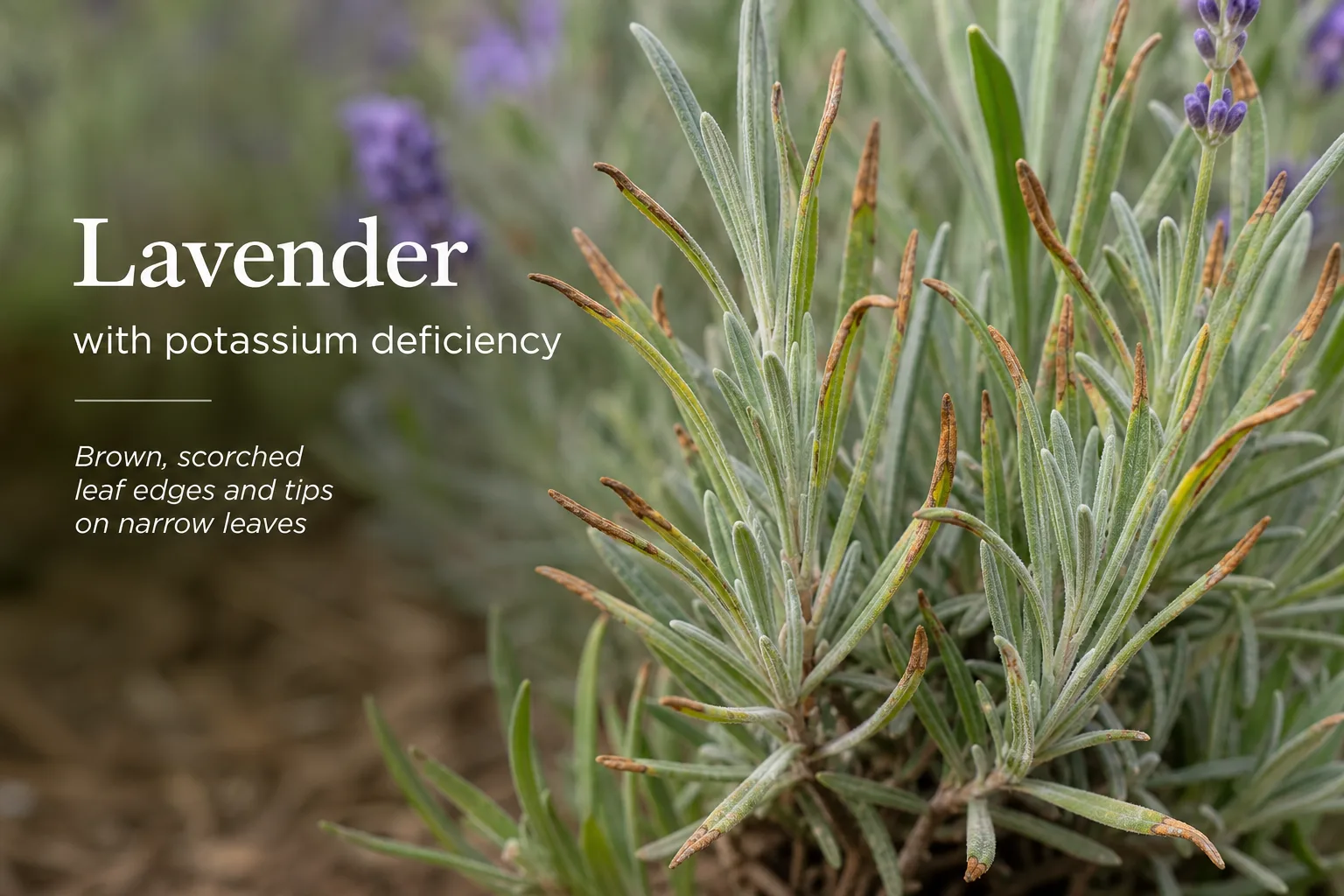
Potassium Deficiency on Lavender: Causes, Checks & Fixes
This guide covers potassium deficiency on Lavender. See also the general Potassium Deficiency guide, watering, and light pages for this plant.
Potassium Deficiency on Lavender: Causes, Checks & Fixes
Quick answer
Potassium deficiency on English lavender (Lavandula angustifolia) is uncommon in normal culture. When it does appear, it shows as brown scorched margins on older lower needles and sometimes weak stems in long-depleted lean grit-not on a well-fed plant in fresh mix. Lavender prefers somewhat low fertility in well-drained alkaline soil, so most brown edges on container plants trace to underwatering, salt buildup, or crown rot instead.
First step: rule out drought and root rot before feeding. For general tip and margin burn triage across multiple causes, see brown tips on lavender-this page focuses specifically on potassium depletion in very old depleted pots.
Potassium deficiency vs. brown tips vs. drought on lavender
These problems share brown needle edges, but the pattern and pot tell different stories. Use this page when marginal burn hits older leaves first on a firm plant in ancient pure grit with no recent drought spell-not when tips crisped after a missed watering or heavy feed.
| What you see | Leaf pattern | Pot / roots | Most likely cause | Read next |
|---|---|---|---|---|
| Crispy brown tips after heat dry spell | Tips or margins; may curl inward | Light, dry 7 cm down; firm roots | Underwatering | Underwatering |
| Brown margins after feed or hard water | Even edge burn; white crust possible | Firm; recent fertilizer | Salt injury | Brown tips |
| Yellow between veins on older leaves | Interveinal chlorosis, veins greener | Firm; may follow high-K feed | Magnesium shortage | Magnesium deficiency |
| Brown margins on oldest needles only | Older lower foliage first; new tips cleaner | Firm; mix 3+ years old, zero feed | Potassium depletion (this page) | Continue below |
| Soft brown base, wilting on wet soil | Whole stem decline from crown | Wet, sour smell; mushy roots | Crown or root rot | Root rot |
What potassium deficiency looks like on Lavender
Potassium is a mobile nutrient, so deficiency symptoms usually appear on older foliage first as the plant moves potassium to younger growth when supplies run short. On lavender’s needle leaves, that often means brown edge burn with marginal scorch on older leaves on the lowest, oldest needles, while new silver tips stay relatively normal for a while. Stems can feel weak or floppy on severely depleted mix where nitrogen pushed soft growth without enough potassium to support cell strength.
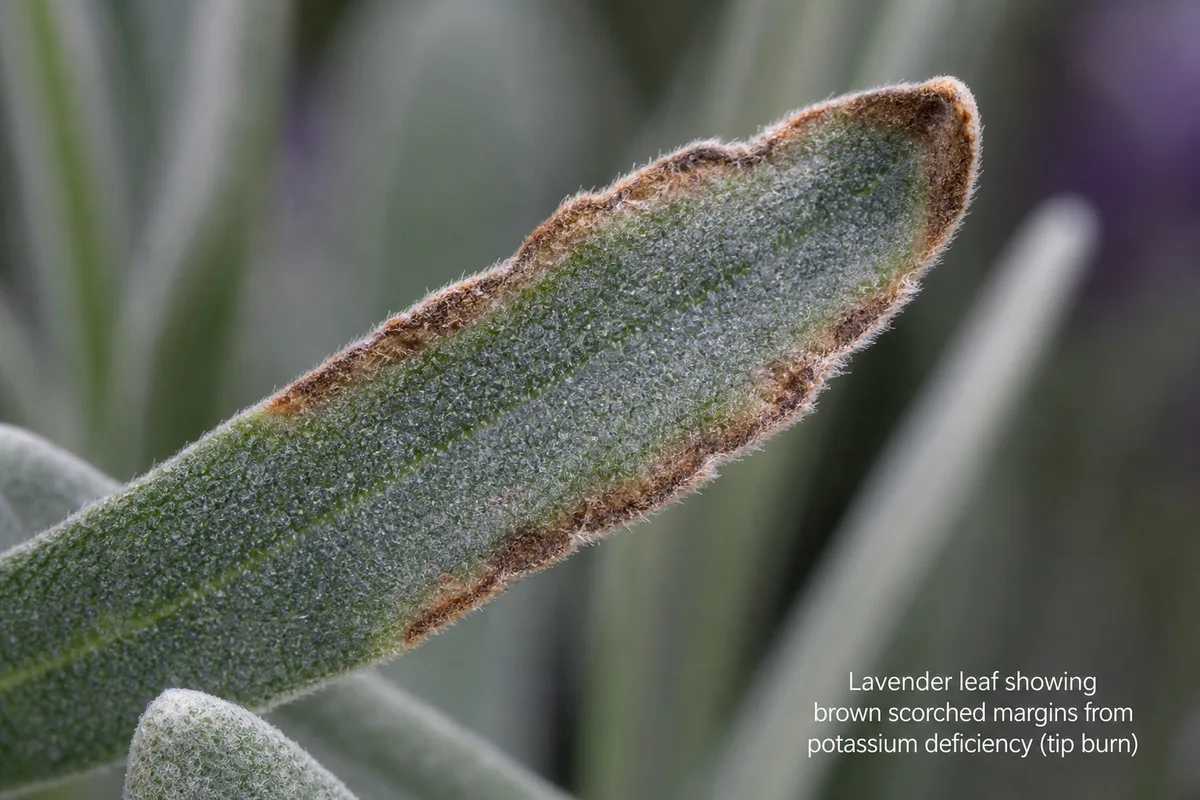
Potassium Deficiency symptoms on Lavender - compare with healthy tissue on the same plant.
This differs from uniform drought curl, where many leaves dull and fold inward on a light dry pot. It also differs from mushy rot at the base, where brown tissue is soft and wet rather than dry and papery on firm wood.
Why Lavender shows potassium deficiency
Lavender evolved on lean Mediterranean slopes and does well in low-fertility soils-which is why true potassium shortage is rare when sun, drainage, and watering are correct. It becomes plausible only in specific scenarios:
Years without repot refresh in pure grit. Container mix leaches potassium with every watering. A lavender sitting in the same gritty blend for three or four seasons with zero feeding can exhaust mobile potassium even though the plant still looks structurally fine.
Excess nitrogen without potassium balance. High-nitrogen feeds push soft vegetative growth. Without adequate potassium for cell-wall strength and stress tolerance, stems weaken and marginal burn can follow-especially if you have been feeding heavily while mix ages.
Why K lack is rare on lavender. Most edge browning on balcony lavender is underwatering in heat or frost tip burn after a cold snap-not nutrient hunger. Potassium improves drought tolerance and stress resistance in plants generally, but lavender’s low-feeder biology means you correct culture and mix long before you need targeted potassium megadoses.
Chronic wet rot causes brown stems from the base-not the classic marginal older-leaf pattern on a firm plant in dry soil.
How to confirm the cause
Work through these checks in order before adding fertilizer:
- Leaf age - Are oldest lower needles affected first while newer tips look cleaner?
- Pot weight - Is the pot light and soil dry 7 cm deep (drought), or heavy and wet (rot)?
- Crown firmness - Is woody tissue at the base firm, or soft and grey?
- Mix age - Has the same gritty blend sat in the pot for multiple years without refresh?
- Drought history - Did a heat dry spell precede the burn, or did margins brown during steady moisture?
- New growth quality - Are emerging tips silver-green and normal, or pale and weak throughout?
Lookalike comparison table
| Symptom | Potassium deficiency | Drought | Salt buildup | Magnesium deficiency | Root rot |
|---|---|---|---|---|---|
| Which leaves first | Older lower needles | Outer/upper after heat | Many leaves after feed | Older, interveinal yellow | Lower yellow, then wilt |
| Margin vs. vein | Brown scorched margins; veins may stay green longer | Crispy tips, inward curl | Even edge burn, yellow band | Yellow between veins | Not marginal-only pattern |
| Pot feel | Normal weight; old mix | Light; dry 7 cm | Firm; white crust possible | Firm | Heavy; wet 7 cm |
| Crown | Firm | Firm | Firm | Firm | Soft, sour smell |
| Timing | Gradual in old depleted mix | After missed drinks | After fertilizer/hard water | After high-K feeds | Wet weather spell |
If drought or rot fits better, follow those guides first. Fertilizer on a drought-stressed or rotting lavender worsens damage.
First fix for Lavender
First fix: confirm firm roots and appropriate dry-down, then refresh depleted mix-not a potassium megadose.
Unpot only if diagnosis is unclear. If roots are mushy or soil smells sour, treat as root rot and skip feeding entirely. If the pot was bone-dry and light, rehydrate on rhythm per the underwatering guide and wait two weeks before judging whether margins were nutrient-related.
When roots are firm, mix is ancient, and the symptom pattern matches potassium depletion:
- Repot into fresh one-part-compost to three-parts-grit (or a dedicated Mediterranean herb blend) so the root zone regains modest organic matter and balanced minerals.
- Optional single feed only if the pattern persists after repot: a low-nitrogen formula such as 5-10-10 or 5-10-5 at half label strength once in early spring on moist soil-not 10-10-10 at full strength. See the lavender fertilizer guide for NPK ratios, moist-soil rule, and mid-summer cutoff.
- Return to dry to medium well-drained watering rhythm.
Do not apply concentrated potassium without ruling out drought-most common cause of brown lavender edges in pots is missed watering in full sun, not K lack.
Step-by-step recovery
- Unpot if diagnosis is unclear - inspect root color and smell before any feed decision.
- Rot or drought path first if indicated - drainage correction or rehydration beats fertilizer every time on lavender.
- Fresh gritty repot with modest compost when mix is exhausted and roots are healthy.
- Optional single half-strength low-N feed in spring if marginal burn persists on firm roots in full sun; wait four weeks before reassessing.
- Evaluate new needle edges - not old burn reversal. Trim fully dead margins only if cosmetic; they will not green up again.
- Hold all further feeding until next spring unless a soil test confirms ongoing depletion.
Recovery timeline
New clean edges on fresh growth typically appear within four to six weeks if potassium depletion was the real issue and culture is now correct. Drought recovery is faster - often within days after one deep soak on a firm plant-which tells you the first diagnosis was wrong if margins perk up immediately.
Already burnt margins on old needles do not heal fully. Judge success by silver-green new tips and stopped spread to younger foliage, not by expecting damaged tissue to revert.
Causes to rule out
- Underwatering - Light pot, inward curl, firm roots, dry 7 cm deep.
- Heat or frost burn - Outer tip timing tied to weather event, not gradual old-leaf pattern in ancient mix.
- Root rot - Wet sour media, soft crown, wilting despite moisture.
- Salt buildup - White crust on pot rim with edge burn after heavy feed; flush before adding more nutrients. Covered in brown tips.
- Magnesium deficiency - Interveinal yellowing on older leaves, not crisp marginal scorch alone.
What not to do
Do not heavy-feed wet rotting plants-soluble salts on damaged roots cause fertilizer toxicity symptoms including marginal necrosis that mimics deficiency. Do not apply potassium megadoses or wood ash on lean lavender culture; excess soluble potassium can burn margins and compete with other nutrients. Do not fertilize before rehydrating a drought-stressed plant. Do not confuse post-frost tip burn (weather-timed, often one-sided) with chronic K starvation (older-leaf pattern in depleted mix).
How to prevent potassium deficiency next time
Refresh container mix every two to three years with gritty, alkaline blend and modest compost so mobile nutrients do not exhaust. Maintain balanced lean culture-lavender likes soil quite low in nutrients and rarely needs routine feeding when sun and drainage are right. Avoid extreme potassium-heavy feeds without nitrogen and phosphorus balance. Keep full sun and well-drained alkaline mix as baseline so drought stress does not mimic edge burn.
Lavender care cross-check
Brown needle edges on container lavender usually mean water stress before potassium on this species. Confirm moisture history and pot weight before opening a fertilizer bottle. If the plant is compact, gray-green, and blooming in fresh gritty mix, assume nutrition is adequate and look elsewhere.
When to worry
Edge burn plus soft crown is urgent rot-not a K issue. Wilting on wet soil, rapid whole-stem browning, or sour root smell means escalate to root and crown care immediately. Isolated dry marginal burn on firm wood in an old pot is low urgency and fixes with repot and conservative culture adjustment.
Related lavender guides
- Lavender fertilizer - NPK ratios (5-10-10, 5-10-5), half-strength spring protocol, salt-burn warnings
- Brown tips - Multi-cause tip and margin burn triage, salt flush, 7 cm dry-down checks
- Underwatering - Drought curl, rehydration rhythm, heat dry-down
- Magnesium deficiency - Interveinal yellowing on older leaves
- Root rot - Wet sour soil, soft crown, drainage correction
- Lavender overview - Culture baseline, repot timing, sun requirements
Conclusion
Potassium deficiency on lavender is marginal browning on older needles in extremely depleted firm plants-uncommon and low urgency compared to rot. Rule out drought and rot, refresh gritty mix, then consider one half-strength low-nitrogen spring feed if the pattern persists. Judge new growth edges, not old burn reversal. Most brown edges on lavender need water and culture fixes first; product choice and dosing detail live in the lavender fertilizer guide.