Bacterial Wilt on Lavender: Causes, Checks & Fixes
Quick answer
Branch wilt on English lavender with yellowing leaves that do not perk up after watering often traces to wet crowns and vascular blockage-not thirst. True bacterial wilt includes Xylella fastidiosa (a documented lavender host) and, rarely, soilborne Ralstonia; wet-container collapse is usually Phytophthora crown rot. First step: cut out affected branches well below symptoms, sterilize tools, dry the crown-and escalate to crown-rot rescue if the base is mushy.
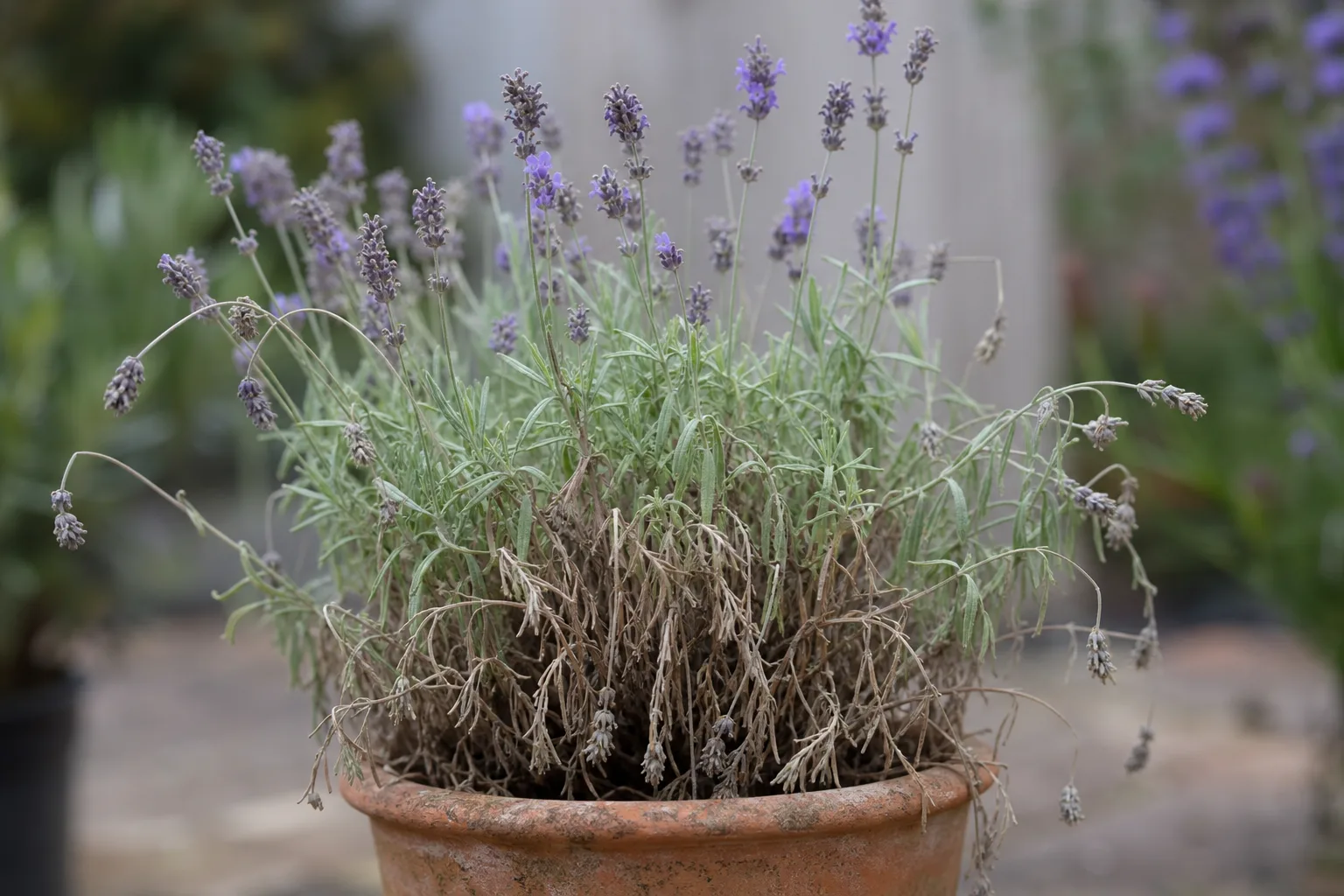
Bacterial Wilt on Lavender: Causes, Checks & Fixes
This guide covers bacterial wilt on Lavender. See also the general Bacterial Wilt guide, watering, and light pages for this plant.
Bacterial Wilt on Lavender: Causes, Checks & Fixes
Quick answer
Branch wilt on English lavender (Lavandula angustifolia) shows as sudden wilting on one or more branches with dull yellow-green leaves that do not perk up after watering-unlike simple drought stress. Wet crowns, pruning wounds, and poor airflow in humid weather invite pathogens into woody stems.
Scope note: Many wet-crown collapses on container lavender are Phytophthora crown rot, not classic bacterial wilt. This page covers vascular wilt patterns, documented bacterial agents on lavender, and overlap signs-use the crown-rot and root-rot guides when the stem base is mushy or smells sour.
First step: cut out affected branches well below visible symptoms, disinfect pruners between each cut, and improve crown dryness and airflow-not more water on a collapsing branch.
Bacterial wilt vs. crown rot on Lavender
These problems share branch wilt on moist soil, but the pathogen and rescue path differ.
| Pattern | Likely agent | Key check |
|---|---|---|
| One branch wilts first; crown still firm; brown streaks in cut stem | Vascular wilt-often Phytophthora on wet lavender; true bacteria less common in home pots | Crown probe firm; compare crown rot smell and base softness |
| Soft grey crown, sour smell, wilt from base upward | Phytophthora crown/root rot | Mushy base; see crown-rot protocol |
| Whole-plant scorch, dieback on imported stock, vector regions | Xylella fastidiosa (documented lavender host) | Sourcing history; extension lab referral |
| Afternoon wilt on herbaceous neighbors, milky stem streaming | Ralstonia southern bacterial wilt | Lavender is not a primary host; bench sanitation |
Do not assume brown vascular streaks alone mean bacterial wilt. On lavender, Phytophthora can discolor the vascular cambium in roots and crowns-the same wet-culture trigger that kills lavender in poorly drained mix per Illinois Extension.
What branch and vascular wilt look like on Lavender
One-sided branch collapse on moist soil
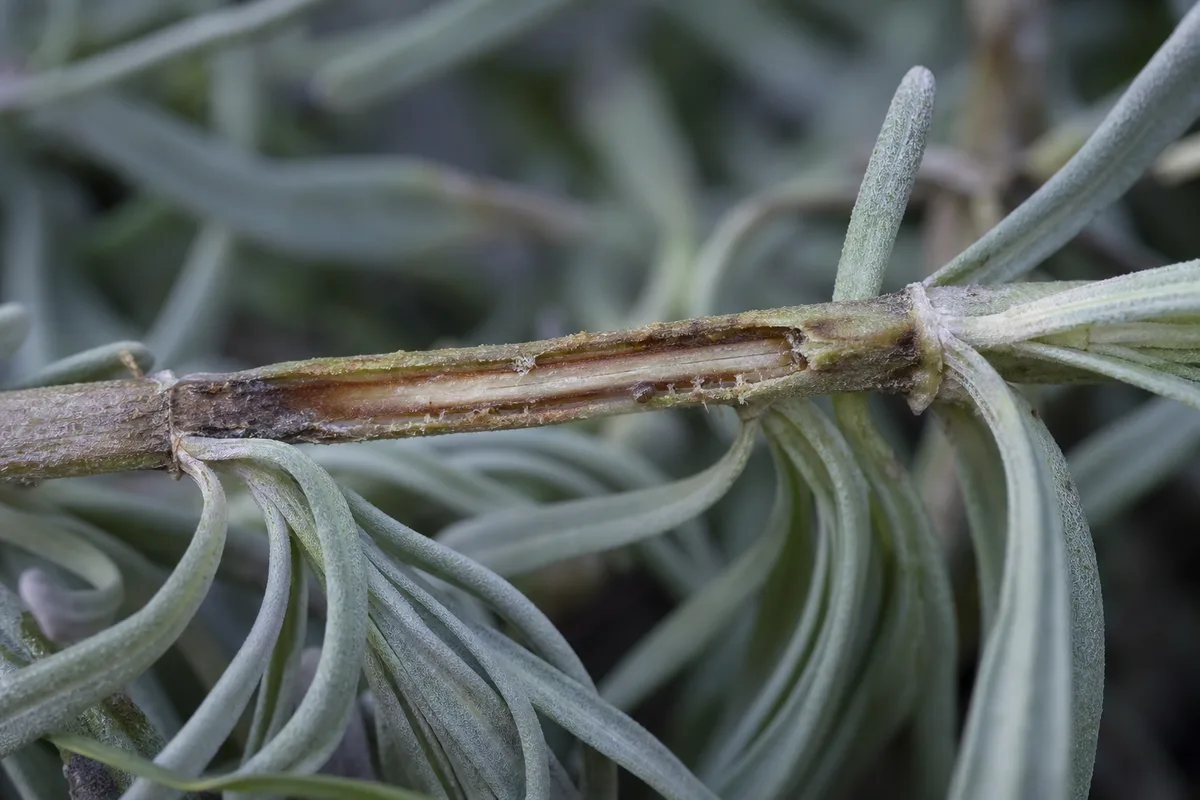
Bacterial Wilt symptoms on Lavender - compare with healthy tissue on the same plant.
One side of a lavender bush may wilt while adjacent stems look normal at first. Leaves turn dull yellow-green then brown, staying attached briefly before drying. The pot may feel moderately heavy-roots still function until vascular blockage spreads. Unlike underwatering on Lavender, wilting starts on a branch tip or sector, not the whole plant at once.
Unlike simple wilting from thirst, watering does not revive affected leaves within a day. Unlike heat collapse, wilted tissue stays limp overnight.
Stem cross-section streaking
Cut a wilting stem above the yellow zone. Dark brown streaking in the inner vascular tissue supports vascular disease-but cannot separate bacterial from Phytophthora infection by eye alone on woody lavender. Advanced cases show whole-branch collapse and grey stems at the base when crown rot joins the picture.
Why Lavender gets vascular wilt
Xylella fastidiosa and sourcing awareness
The bacterium Xylella fastidiosa colonizes xylem vessels and blocks water flow. Lavandula species are documented hosts and appear on UK and EU high-risk host lists because natural infection has been recorded on lavender in Europe. The pathogen spreads through sap-feeding insects and infected planting stock-not through casual overhead watering alone.
For home growers, Xylella is primarily a sourcing and regional awareness issue: buy from reputable nurseries, avoid plants from confirmed outbreak areas, and report suspect dieback on recent imports to your national plant-health authority. The lavender overview covers this at purchase time. Container branch wilt after years in the same pot in a humid climate is far more often Phytophthora than Xylella.
Wet-crown wounds, pruning, and monsoon humidity
English lavender wants dry to medium, well-drained soil in full sun. When crowns stay wet from overhead watering, rain splash, or mulch piled against woody stems, pathogens enter through pruning cuts, insect wounds, or frost cracks.
Dense container plantings in monsoon humidity trap moisture at the stem base-exactly where lavender is vulnerable. Dampness more than cold is responsible for killing lavender in poorly drained conditions; vascular wilt and crown rot both follow that wet-crown pattern.
Contaminated tools spread infection branch to branch during summer pruning of spent flower wands.
Phytophthora overlap on wet crowns
Commercial and nursery research documents Phytophthora root and crown rot on lavender across multiple Lavandula species. Symptoms include wilting, dieback, and discolored vascular tissue in roots and crowns-often in cold, wet, or overwatered soil. Unlike Pythium root rot, Phytophthora commonly moves up into stem tissue on lavender.
Home containers with wet crowns, saucer water, and organic mulch against wood match the ecology described in Ontario Ministry guidance on Phytophthora in lavender fields-saturated conditions can destroy plants within one to two weeks once symptoms appear.
Ralstonia and southern bacterial wilt
Soilborne Ralstonia solanacearum causes southern bacterial wilt on a very wide herbaceous host range. Lavender is not commonly listed among primary ornamental hosts (geranium, impatiens, vinca, and others dominate extension lists). Treat Ralstonia as a bench contamination risk if you also grow susceptible crops nearby-not the default diagnosis on a lone lavender pot.
How to confirm the cause
Work through these checks before Lavender repotting guide or watering again:
- Wilting pattern - One branch or sector first vs. whole-plant wilt from the base.
- Crown firmness - Firm wood at the soil line vs. soft grey mush (points to crown rot).
- Stem cross-section - Brown vascular streaks in a wilting stem support vascular disease; does not prove bacteria over Phytophthora.
- Soil moisture - Wet mix with branch wilt suggests crown or vascular issue, not drought.
- Root check - Firm pale roots with branch-only wilt points to stem vascular disease; mushy black roots suggest rot overlap per PNW lavender root-rot guidance.
- Smell - Sour crown rot smell with black mushy base indicates fungal crown rot rather than pure bacterial wilt.
- Recent wounds - Pruning, hail, or mechanical damage before symptoms appeared.
- Import history - Recent lavender from Xylella-affected regions raises bacterial suspicion beyond wet-culture Phytophthora.
Streaming test limits on woody stems
On soft herbaceous plants, placing a freshly cut stem base in clear water and watching for milky-white bacterial streaming within minutes is a strong Ralstonia field sign. Woody lavender stems are poor candidates-lignified tissue and low bacterial titer make streaming unreliable. Use the test on a nearby herbaceous indicator plant on the same bench if you suspect Ralstonia contamination; do not rule out Phytophthora because streaming is negative on lavender wood.
When to send a lab sample
Contact your local extension plant diagnostic clinic when:
- More than one-third of the plant collapses on moist soil with vascular streaking but an still-firm crown
- You need official identification before discarding valuable or commercial stock
- Suspect Xylella on recently imported plants with scorch-like dieback
- Phytophthora baiting or culture is required to confirm oomycete infection-direct root tests on lavender are unreliable without lab protocols
Bag symptomatic stems (not mushy sludge), keep samples cool, and follow clinic shipping instructions. Home streaming and stem slices are triage tools, not proof.
First fix for Lavender
Remove infected branches cut 6–10 cm below visible symptoms, disinfect pruners between each cut, and improve airflow and crown dryness-do not fertilize or heavily water afterward.
If the crown is soft or smells sour, switch to the crown-rot first-fix path-pruning alone will not dry a rotting base.
Bag and discard cut material; do not compost infected stems. If only one branch is affected on an established plant with a firm crown, the remainder may survive in fresh air and full sun. Repot into new gritty mix only if roots are firm but old substrate stayed wet-avoid disturbing healthy roots unnecessarily.
Step-by-step recovery
- Isolate the pot from neighboring herbs and shared saucers.
- Prune out all wilted stems to healthy wood; sterilize blades with alcohol between cuts.
- Remove wet mulch touching the crown; top-dress with gravel instead.
- Move to the sunniest spot with space between pots for airflow.
- Water at soil level only when dry 7 cm deep per the lavender watering guide-skip overhead sprays.
- Monitor remaining stems weekly; remove any new yellowing branch immediately.
- Take 10 cm softwood cuttings from firm healthy tips if collapse is spreading.
- Escalate to lab testing or crown-rot discard if the base softens within 48 hours.
Recovery timeline
Single-branch removal on a vigorous plant with a firm crown may show new silver shoots in three to four weeks. Multi-branch collapse within a week on wet soil usually means Phytophthora or advanced vascular infection-prioritize disease-free cuttings over saving the parent.
Flower production pauses during recovery-success means stable pest-free new growth at stem tips, not rehydration of collapsed leaves.
Causes to rule out
- Underwatering - Light pot, inward-curling leaves, firm roots, whole-plant pattern. See wilting.
- Root rot - Mushy roots, sour smell, wilting from base upward in wet soil. See root rot.
- Overwatering stress - Heavy wet mix, yellow lower leaves, no vascular streaks yet. See overwatering.
- Heat collapse - Temporary midday wilt in extreme heat; recovery overnight after deep drink on dry soil.
- Normal post-bloom dieback - Lower woody stems brown after flowering; upper growth stays firm.
What not to do
Do not water wilting branches hoping they revive. Do not prune without sterilizing tools between cuts. Do not leave organic mulch against the lavender crown. Avoid heavy nitrogen feeds on stressed plants. Do not assume stem streaking equals bacterial wilt without checking crown firmness and smell. Wear gloves; lavender is toxic to cats and dogs.
How to prevent vascular wilt next time
Grow in terracotta with instant drainage using one part compost to three parts grit. Well-drained soils are required, particularly in winter. Prune spent wands with clean sharp shears in dry weather. Space pots for air movement; skip overhead irrigation during humid monsoon weeks. Buy lavender from reputable sources in regions without Xylella outbreaks.
French lavender (L. dentata) and Spanish types tolerate more humidity than English lavender but still need dry crowns-do not copy English-lavender watering on tender species.
When to worry - multi-branch collapse
Escalate immediately if wilting jumps to new stems within 48 hours, the crown feels soft, or more than one-third of the plant collapses while soil stays wet. Advanced vascular infection on container lavender is often fatal; prioritize disease-free cuttings over saving the parent. Contact your extension diagnostic clinic when symptoms match Xylella risk on imported stock.
Related lavender problems
- Lavender overview - Sun, soil, drainage, and Xylella sourcing awareness
- Crown rot on lavender - Mushy base and Phytophthora rescue
- Root rot on lavender - Mushy roots in wet mix
- Wilting on lavender - Drought vs. vascular collapse triage
- Overwatering on lavender - Wet-mix culture mistakes
- Lavender watering - Dry-down rhythm for firm crowns
Conclusion
Branch wilt on English lavender that does not respond to watering usually means vascular blockage or crown decay on wet culture-not thirst. Phytophthora crown and root rot is the dominant wet-soil wilt agent on home containers; Xylella fastidiosa is the documented bacterial threat at purchase in affected regions; Ralstonia is a rare bench contaminant, not the default lavender diagnosis. Confirm with wilting pattern, crown firmness, stem streaking, and smell; use streaming tests only as a herbaceous-host screen; send ambiguous vascular cases to an extension lab. Sterile branch removal and crown dryness can save firm-crowned plants-when the base goes soft, follow the crown-rot guide and restart from clean cuttings.
When to use this page vs other Lavender guides
- Lavender watering guide - Use for routine moisture checks before assuming bacterial wilt is the main issue.
- Lavender problems hub - Browse all 51 common issues on this species.