Black Spots on Lavender: Causes, Checks & Fixes
Quick answer
Black spots on English lavender (*Lavandula angustifolia*) are usually fungal leaf spot on wet needles, frost tip burn after cold nights, or wipe-off sooty mold from aphid honeydew-not random blight. First step: stop wetting foliage, run the wipe test, and prune heavily spotted stems while keeping the crown dry.
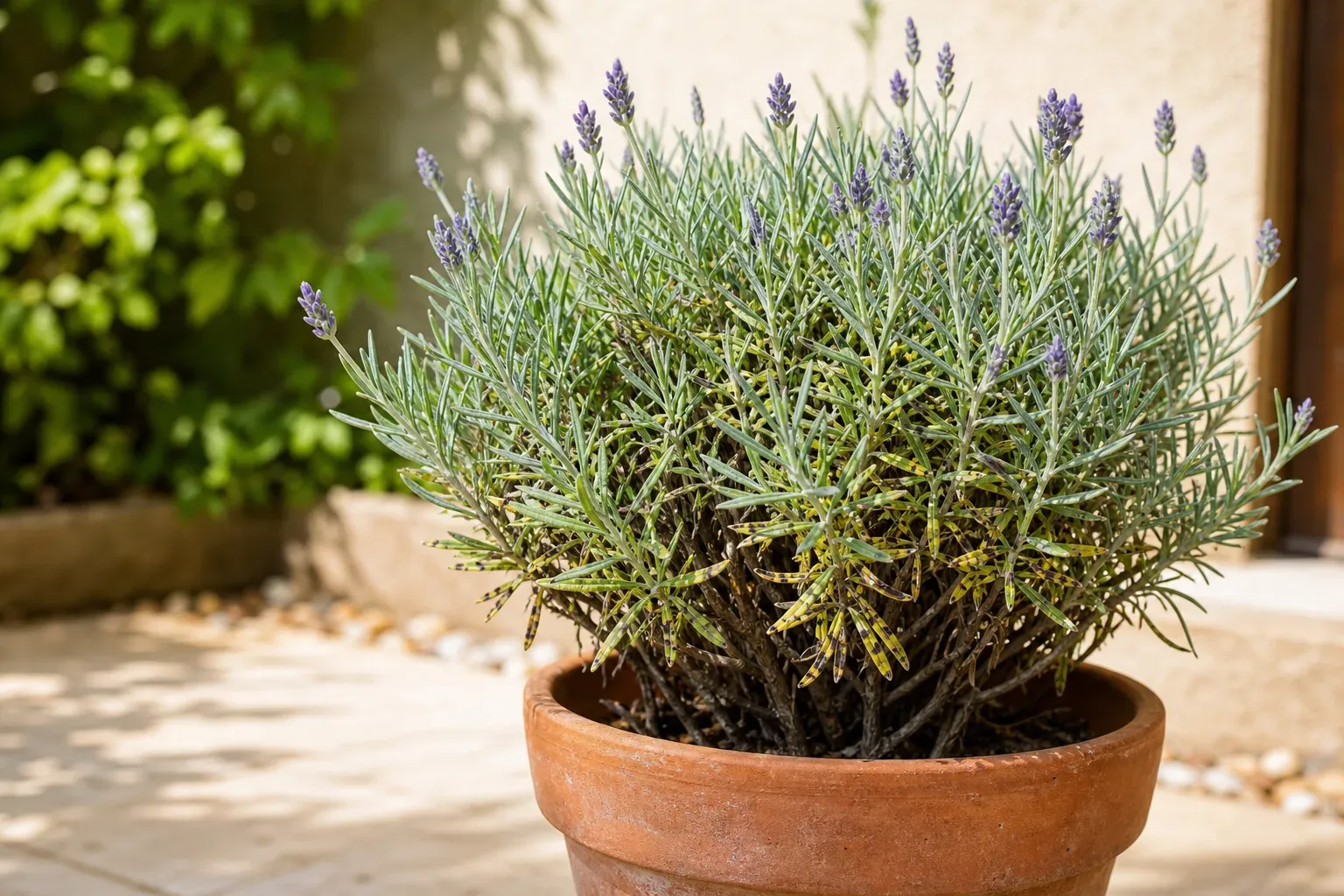
Black Spots on Lavender: Causes, Checks & Fixes
This guide covers black spots on Lavender. See also the general Black Spots guide, watering, and light pages for this plant.
Black Spots on Lavender: Causes, Checks & Fixes
Quick answer
Black spots on English lavender (Lavandula angustifolia) usually mean fungal leaf spot on wet needles, frost tip burn after cold nights, or sooty mold from aphid honeydew-not a mysterious blight. Lavender’s silvery foliage should stay dry; spots spread when rain, sprinklers, or dense growth trap moisture overnight.
First step: stop overhead watering, run the wipe test on a dark smudge, and prune out heavily spotted stems-then resume soil-level watering only when dry 7 cm deep per the lavender watering guide.
Scope on this page: dark lesions on individual needles and small stems-fungal spot, frost tips, and sooty mold. If stems blacken from soil upward with a soft crown, open crown rot. If only outer tips crisped black after frost with no yellow halos, open cold damage. Rapid branch wilt without isolated spots routes to blight.
Black spots vs. frost burn vs. crown rot on lavender
These slugs overlap because wet culture and cold both darken lavender tissue-but pattern and location tell you which page to trust.
| Symptom | Yellow halo? | Wipe test | Weather trigger | Stem base | Start here |
|---|---|---|---|---|---|
| Fungal leaf spot | Often yes | Does not wipe off | Humid rain or sprinkler weeks | Firm crown | This page |
| Frost tip burn | No | N/A-tissue is dead, not smudge | Recorded frost or cold snap | Firm crown | Cold damage |
| Sooty mold | No | Wipes off with finger | Follows aphid honeydew | Firm crown | Aphids first |
| Crown rot overlap | No | N/A | Wet soil at base | Soft, blackening from soil up | Crown rot |
| Branch blight | No | N/A | Rapid wilt after wet spell | May firm early, then fail | Blight |
This page is the needle-lesion entry point-round or irregular dark marks on foliage that may spread slowly in humidity. Frost-only and crown-decay workflows live on sibling guides once you confirm the pattern.
What black spots look like on lavender
Fungal leaf spot vs. frost tip burn
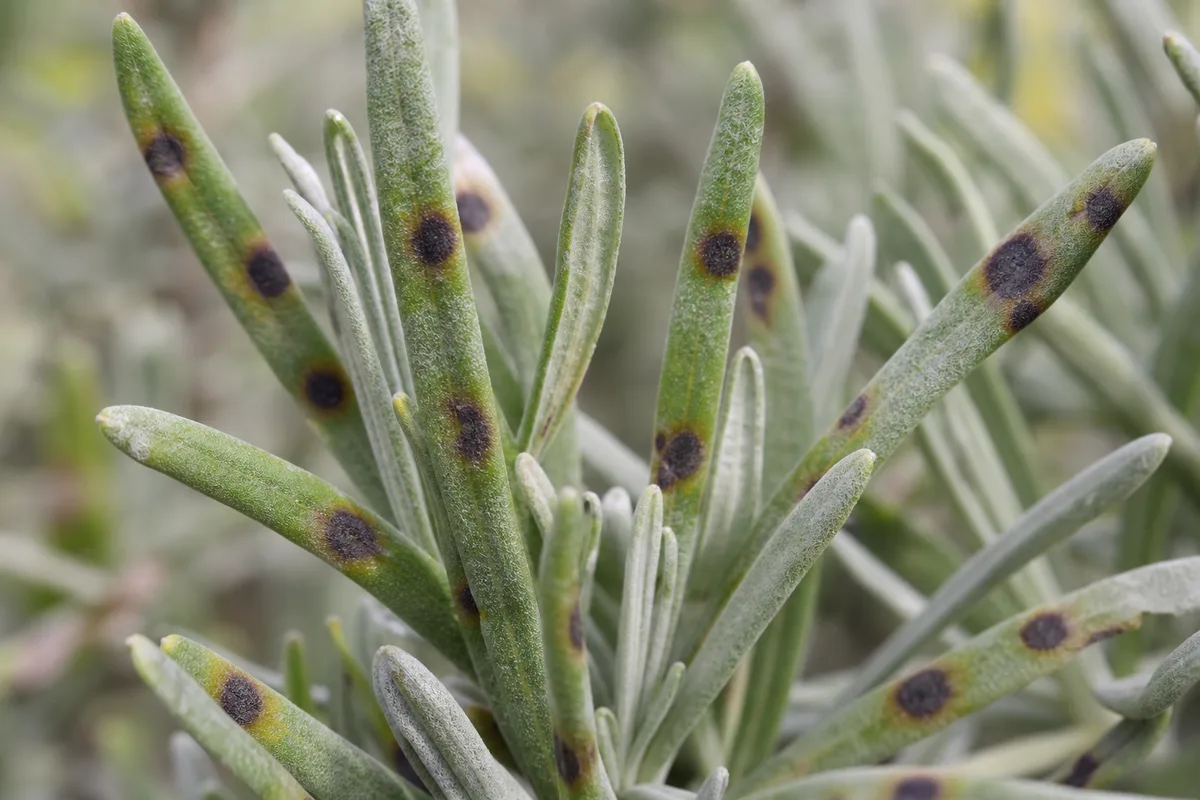
Black Spots symptoms on Lavender - compare with healthy tissue on the same plant.
Fungal leaf spot shows as dark circular or irregular lesions on individual needles, often ringed with yellow halos. Spots may merge on lower inner branches where air is stagnant-the dense mound traps humidity where stems cross. Common culprits include Septoria lavandulae, which spreads on wind-blown spores when leaves stay wet long enough for infection.
After frost, needle tips turn crisp black without yellow halos-often on outer exposed growth only, because wind chill hits perimeter wands before the sheltered inner mound. That frost pattern is cosmetic on firm wood; see cold damage for full hardiness and winter-soil guidance.
Photo callout - fungal halo vs. frost tip: Picture a balcony English lavender after monsoon week: inner needles show round dark spots with faint yellow rings on lower branches, while outer wand tips are uniformly crisp black from a single frost night with no halos. Fungal spots stay embedded in tissue; frost tips break cleanly when bent.
Sooty mold vs. crown rot overlap
Sooty mold from aphid honeydew looks like a black smudge that wipes off with a damp cloth-different from embedded leaf tissue damage. Sticky residue under spots points to aphids or scale first; treat pests before fungicide.
Crown rot advancing from a wet base causes blackening stems from soil upward with a soft grey crown-not isolated needle spots alone. Purple-brown pustules on undersides without black embedded spots may be rust disease instead.
Photo callout - wipe test: Rub a dark mark on a lavender needle with your thumb. Sooty mold leaves a clean silver needle underneath; fungal spot and frost burn stay discolored. If the smudge returns after aphid treatment, you are done with sooty mold-if spots persist on dry foliage, return to fungal-spot culture fixes here.
Why lavender gets black spots
Wet foliage and monsoon container culture
English lavender evolved on dry, rocky hillsides with full sun and fast drainage. It needs dry to medium, well-drained soil in full sun. Overhead watering, monsoon rain on dense mounds, and poor spacing keep needles wet overnight-ideal for fungal spot.
Organic mulch piled against stems traps moisture at the crown. Consider using rock instead of organic mulch to reduce humidity around the base. Shaded container lavender in humid climates develops inner dead zones where spots concentrate because the outer shell dries while the center stays damp.
Evening sprinkler timing on balcony rails is a common trigger: needles that stay wet from dusk to mid-morning give fungal spores the wet period they need. Terracotta pots dry crowns faster than plastic in humid climates; repeated spot cycles on plastic cachepots often trace to slower sidewall evaporation and full saucers.
Frost on English lavender and cultivar variation
Winter cold below hardiness limits can blacken exposed tips on English lavender without infection. RHS notes that English types (L. angustifolia and lavandin hybrids) are the hardiest lavenders, while French and Spanish lavenders (L. stoechas, L. dentata) are less frost-hardy and more often grown as seasonal container plants in cold climates.
French and Spanish types may show tip blackening at milder frosts than English cultivars like ‘Hidcote’ or ‘Munstead’. They also tolerate slightly more humidity in some settings but still develop fungal spot when inner mounds stay wet-do not assume tender types are immune to leaf spot in monsoon containers.
Why inner branches concentrate spots
Lavender’s mounded habit crosses stems in the center, creating a microclimate where dew lingers longest. Outer wands catch frost and sun first; inner needles see less airflow and more splash from soil-exactly where Septoria lavandulae often appears on weakened tissue in late summer and fall, and earlier when humid weeks extend leaf wetness.
How to confirm the cause
- Spot pattern - Round lesions with yellow halos suggest fungus; crisp tip burn after frost suggests cold.
- Wipe test - Sooty mold rubs off; true leaf spot and frost burn do not.
- Weather history - Prolonged rain or sprinkler use before spots appeared?
- Location on plant - Inner shaded branches vs. outer cold-exposed tips.
- Stem base - Black mushy crown indicates crown rot, not leaf spot alone.
- Pests - Sticky honeydew under spots points to aphids first.
First fix for lavender
Stop overhead watering, open up airflow by thinning dense inner stems, and remove heavily spotted branches-then resume soil-level watering only when dry 7 cm deep per the lavender watering guide.
Move pots to maximum sun and space them so foliage dries after rain. Switch to inorganic top mulch away from the crown. For persistent fungal spot on valuable plants, copper fungicide per label may help-apply in dry weather only as directed, avoiding bloom if you harvest flowers, and observe label withholding periods before culinary use.
Step-by-step recovery
- Prune out stems with more than half spotted needles; sterilize shears between cuts. Wear gloves when handling cut tissue; lavender is toxic to cats and dogs if ingested.
- Relocate to full sun with 30 cm minimum between pots.
- Water at soil line in morning; never use evening sprinklers on foliage.
- Replace wet wood mulch with gravel top-dressing away from woody stems.
- Treat aphids if honeydew is present before fungicide.
- Hold fertilizer until new silver shoots appear-lavender prefers lean soil per the lavender overview.
- Monitor new growth weekly through humid season.
Monsoon recovery example: A dense balcony L. angustifolia developed inner yellow-halo spots after two weeks of evening rail sprinklers. Stopping overhead water, pulling wet bark mulch from the crown, thinning four crossing inner wands, and top-dressing with gravel produced clean silver tips on pruned nodes in roughly three weeks once the pot dried fully between drinks.
Recovery timeline
| Severity | What to expect |
|---|---|
| Mild scattered fungal spots, firm crown | Clean new tips within two to four weeks after airflow and dryness improve |
| Heavy inner spotting, firm crown | One light shaping prune cycle; old needles stay black permanently |
| Frost tip burn only | Outer tips remain black; new spring growth masks damage on firm wood |
| Crown blackening from soil up | Leaf-level fixes fail-escalate to crown rot |
Spotted needles never green up; judge recovery by new clean silver shoots, not by reversing old lesion color.
Causes to rule out
- Normal aging - Lower inner needles brown and drop on woody lavender without spreading spots or yellow halos.
- Sooty mold - Wipes off; treat aphids or scale.
- Root rot - Wilting with wet soil and black base stems; mushy roots → root rot.
- Sun scorch - Bleached or tan patches on suddenly moved plants, not round black spots.
- Rust disease - Orange or brown pustules on needle undersides → rust disease.
- Branch blight - Rapid wand wilt without isolated round spots → blight.
What not to do
Do not increase watering when spots appear. Do not leave dense matted growth unpruned in monsoon. Do not pile compost mulch against the stem. Avoid oil-based sprays on heat-stressed lavender in midday sun-stressed Mediterranean subshrubs scorch easily. Do not confuse frost tip burn with crown rot when stems blacken from soil upward.
How to prevent black spots next time
Align with average dry well-drained alkaline soil in full sun. Annual light shaping after bloom keeps inner branches airy per lavender pruning timing. In monsoon, skip supplemental water when rain keeps mix damp. Dampness kills lavender faster than most leaf fungi if crowns stay wet.
Use gravel mulch in a ring away from stems-not wet wood chips against wood. Space containers so humid air does not stall between pots. RHS container guidance recommends keeping winter pots fairly dry in rain shadow to reduce rot and foliar disease pressure.
Lavender care cross-check
Black spots often flag a culture mismatch-too much humidity and shade for a dry-climate herb. Fixing sun, drainage, and dry-down rhythm on the watering guide prevents recurrence better than repeated fungicide alone. Review baseline culture on the lavender overview if spots return every humid season.
When to worry
Escalate if stems blacken from soil line upward, the crown is soft, or wilting appears with wet mix-crown rot may be involved. Scattered fungal spots on an otherwise firm sunny plant are lower urgency.
If spots wipe off, treat aphids before assuming fungus. If only outer tips blackened after frost with firm inner wood, use cold damage protocols instead of extra watering.
Related lavender problems
- Cold damage - Frost-blackened outer tips without fungal halos
- Crown rot - Soft grey tissue at soil line; blackening from base up
- Blight - Rapid branch wilt after wet weather
- Aphids - Honeydew and wipe-off sooty mold
- Rust disease - Pustules on needle undersides
- Lavender watering - Dry-down rhythm and 7 cm probe depth
- Lavender overview - Sun, soil, and baseline culture
Conclusion
Treat lavender black spots as a pattern ladder, not one treatment for every dark mark. Yellow-halo lesions on inner needles in humid weeks → dry culture and selective pruning on this page. Crisp frost tips only → cold damage. Smudge that wipes off → aphids first. Blackening from soil upward with soft crown → crown rot same day. Success means new clean silver shoots on a firm crown-not reversing old spotted needles.
When to use this page vs other Lavender guides
- Lavender watering guide - Use for routine moisture checks before assuming black spots is the main issue.
- Lavender problems hub - Browse all 51 common issues on this species.
- Leaf Drop on Lavender - Different entry point when symptoms overlap with black spots.