Rust Disease on Lavender: Causes, Checks & Fixes
Quick answer
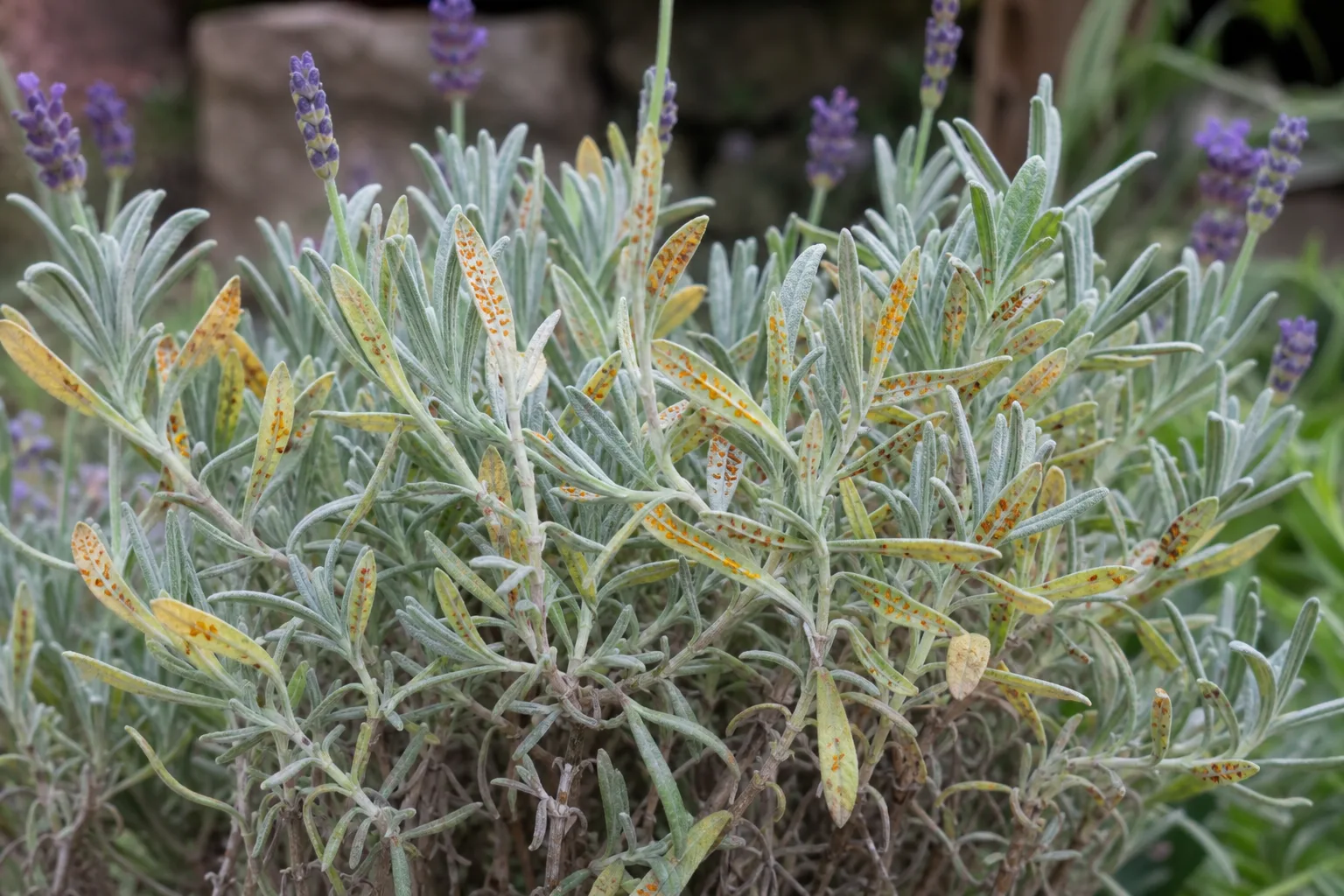
On English lavender, rust-like disease shows pale spots above and orange to brown powdery pustules on leaf undersides in humid, wet-foliage conditions. First fix: prune out visibly infected shoots, bag debris, and switch to soil-level watering so foliage dries fast.
Rust Disease on Lavender: Causes, Checks & Fixes
This guide covers rust disease on Lavender. See also the general Rust Disease guide, watering, and light pages for this plant.
Rust Disease on Lavender: Causes, Checks & Fixes
Quick answer
Rust-like foliar disease on English lavender usually appears as pale spots on top of leaves and orange to brown powdery pustules underneath in humid conditions, matching classic rust symptom patterns described by the Royal Horticultural Society. First fix: remove infected shoots, bag and discard debris, and keep all irrigation off foliage.
Lavender performs best in full sun and sharply drained soil, so prolonged leaf wetness and poor airflow are the usual setup for this problem. If your symptoms are mostly dark circular lesions rather than orange powdery pustules, review black-spots.md. If the crown is soft or collapsing, prioritize crown-rot.md.
Rust vs black spots vs crown rot on lavender
- Rust-like foliar infection: raised orange-brown pustules, usually strongest on lower leaf surfaces, with matching pale/yellow spotting above.
- Black spot/leaf spot pattern: dark spots with less obvious powdery pustules.
- Crown/root rot on Lavender pattern: basal stem softening, dark roots, collapse, or sour smell rather than mainly leaf pustules.
Separating these patterns early prevents the common mistake of treating every lavender foliage issue as the same disease process.
What rust-like symptoms look like on English lavender
Rust fungi commonly produce powdery pustules in orange, yellow, brown, or black shades, often on the undersides first, with upper-surface spotting and eventual leaf yellowing or drop in heavier infections, as summarized by RHS. On lavender, damage often appears first in dense inner growth where humidity lingers and drying is slow.
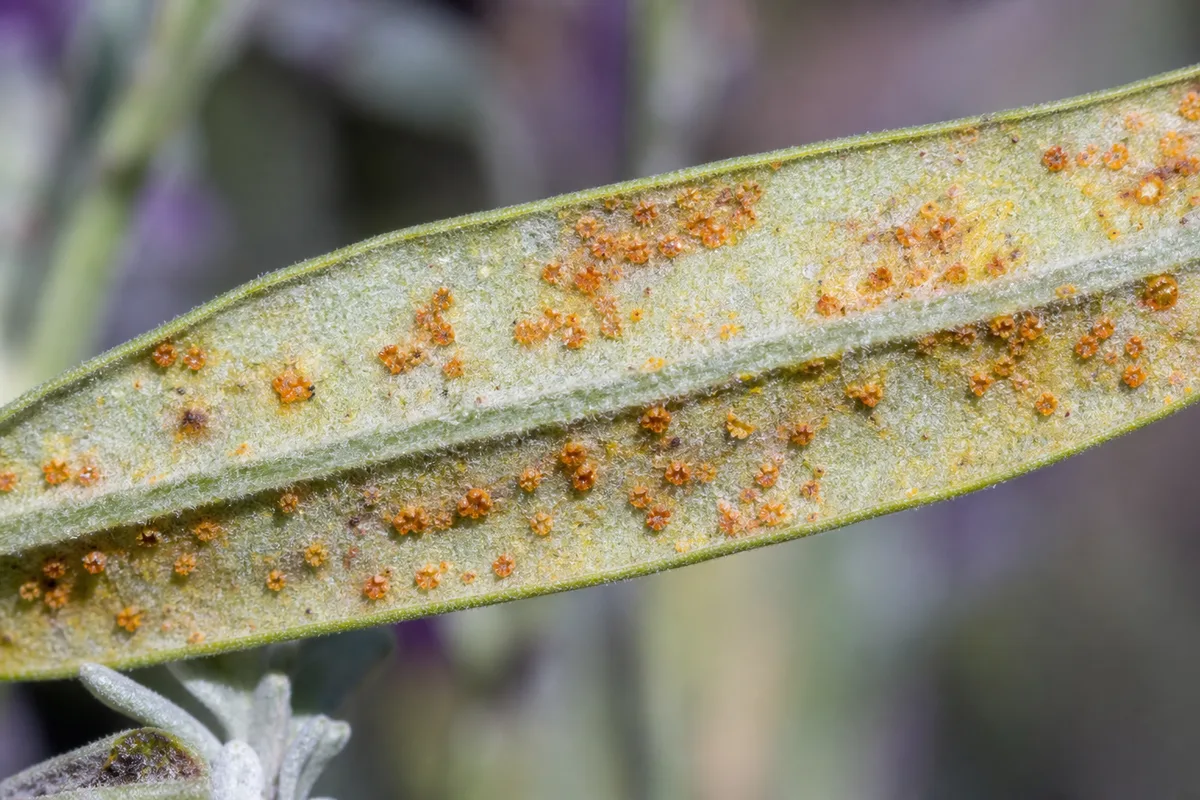
Rust Disease symptoms on Lavender - compare with healthy tissue on the same plant.
In practical terms, look for three signs together: underside pustules, upper-surface discoloration, and recent humid or wet-foliage conditions.
Why this happens on lavender
English lavender is adapted to drier, airy conditions and is less forgiving of persistent humidity and moisture on leaves. Missouri Botanical Garden notes that English lavender struggles in high summer humidity and needs excellent drainage and airflow support, including using rock mulch rather than organic mulch in humid climates.
That same humid, wet-foliage environment also favors rust spread because spores germinate on wet leaf surfaces and move readily by splash or wind, which is consistent with extension rust management guidance from UMN Extension.
How to confirm diagnosis at home
- Check lower/inner foliage first. Rust tends to build where humidity persists longest.
- Flip leaves and inspect undersides. Look for powdery pustules rather than flat discoloration only.
- Run a light rub test. Rust pustules can release orange-brown dust.
- Review irrigation history. Frequent overhead watering or evening wet foliage raises likelihood.
- Assess crown and roots. Firm crown supports foliar-only diagnosis; soft crown suggests escalation toward rot.
- Watch spread pattern. New pustules on fresh growth during humid weeks support active disease pressure.
First fix to do now
First, prune out the infected shoots back to healthy tissue with sanitized pruners, then bag and discard debris. Do not compost infected clippings near planting areas.
This first action removes active spore sources and reduces immediate spread pressure while you correct moisture and airflow conditions.
Step-by-step recovery plan
- Prune infected shoots and remove fallen debris.
- Thin crowded centers to improve airflow and light penetration.
- Switch to soil-level watering only; keep foliage dry.
- Space containers/plants so leaves are not touching.
- Recheck weekly during humid weather for new pustules.
- If disease pressure remains high on valuable plants, consider labeled fungicide protection only for healthy tissue.
UMN Extension emphasizes that fungicides are generally preventive, not curative, and are often unnecessary in home settings unless recurring severe disease justifies treatment of high-value plants; once leaves are heavily spotted, sprays will not reverse existing lesions (UMN Extension).
Recovery timeline and success signs
Expect old damaged foliage to remain marked. Evaluate progress by:
- no new pustules on fresh growth for 2-4 weeks
- gradual return of clean, healthy shoots
- slowed or stopped leaf drop
If humidity remains high, recovery may be slower and require repeated sanitation pruning.
Important lookalikes to rule out
- Septoria leaf spot on lavender/lavandin: peer-reviewed reporting confirms Septoria lavandulae as a lavender leaf-spot pathogen in lavandin plantings (PubMed). This can look like spotted foliar blight rather than classic powdery rust pustules.
- Shab (stem dieback disease): historical plant pathology literature attributes shab to Phoma/Phomopsis lavandulae, with shoot yellowing, wilt, and stem dieback patterns that differ from primarily underside rust pustules (BMS paper).
- Root/crown rot: if basal tissue is soft and roots are dark or collapsing, treat as a rot emergency rather than simple foliar rust.
Mistakes that make it worse
- Overhead watering in the evening
- Leaving dense interior growth unthinned
- Composting infected debris beside lavender beds
- Spraying fungicide late and expecting damaged leaves to heal
How to prevent recurrence
Keep lavender in full sun, maintain excellent drainage, prune for an open canopy, and avoid long leaf-wetness periods. In humid regions, site and spacing decisions matter as much as treatment products. This aligns with both species-care guidance from Missouri Botanical Garden and rust-management principles from UMN Extension.
When to escalate fast
Escalate if any of these appear:
- rapid whole-plant decline
- soft crown tissue
- root collapse or foul odor
- continued spread despite strict dry-foliage care
At that point, re-check diagnosis against crown-rot.md and root-rot.md, and remove severely compromised plants to protect nearby lavender.
Conclusion
On lavender, rust-like disease is mainly a moisture-and-airflow management problem with sanitation as the first lever. Focus on accurate diagnosis, early pruning, dry foliage, and realistic recovery tracking by new clean growth, not by expecting old lesions to disappear.
When to use this page vs other Lavender guides
- Lavender watering guide - Use for routine moisture checks before assuming rust disease is the main issue.
- Lavender problems hub - Browse all 51 common issues on this species.