Cold Damage on Lavender: Causes, Checks & Fixes
Quick answer
Cold damage on lavender shows as black or brown needle tips, silvery foliage turning dull, and outer stem dieback after frost-English lavender is hardy but wet cold soil kills roots faster than dry frost. Trim dead tips after danger passes, keep pots dry in winter, and move containers to sheltered drainage if needed.
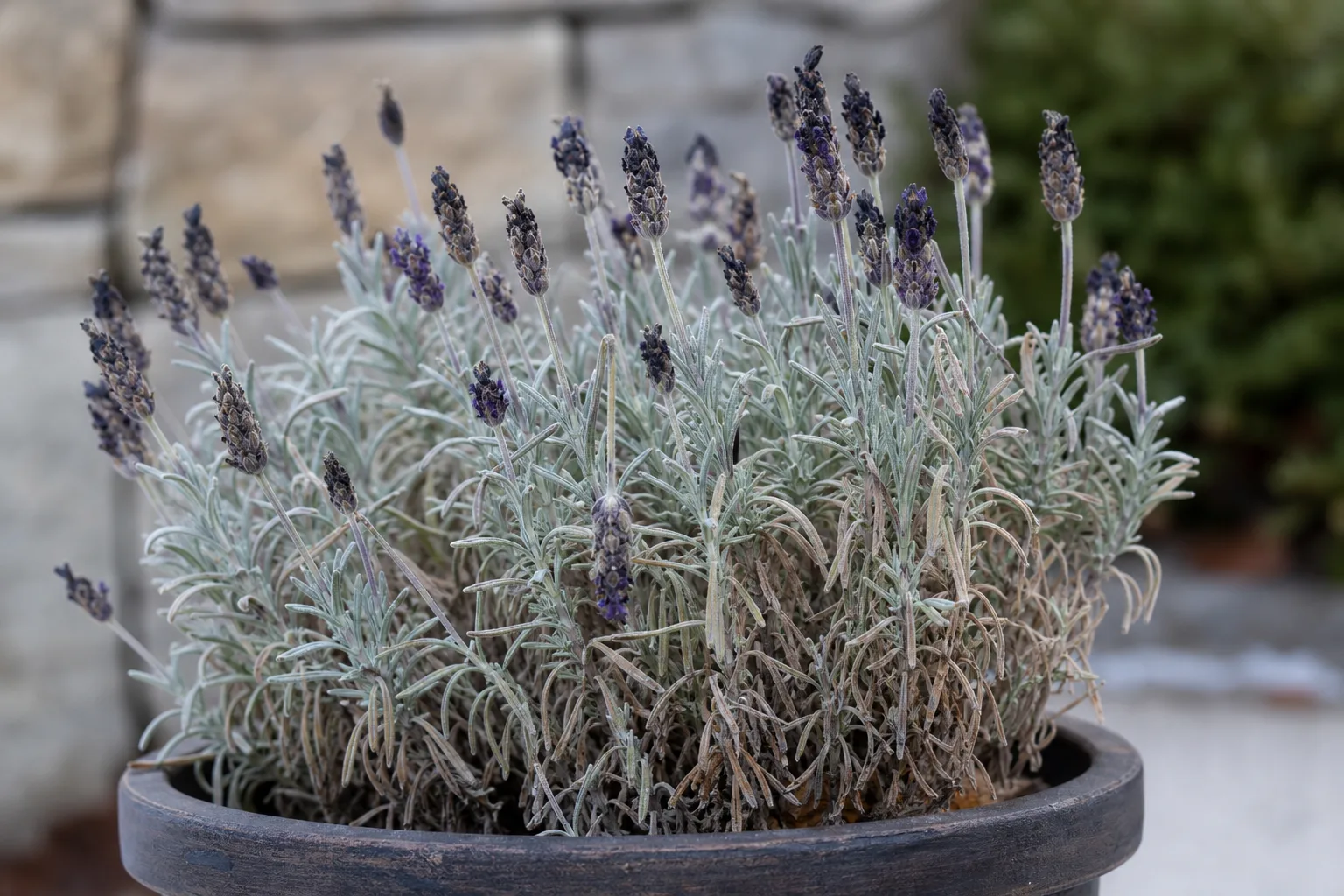
Cold Damage on Lavender: Causes, Checks & Fixes
This guide covers cold damage on Lavender. See also the general Cold Damage guide, watering, and light pages for this plant.
Cold Damage on Lavender: Causes, Checks & Fixes
Quick answer
Cold damage on Lavender appears as blackened needle tips, dull grey foliage, and outer stem dieback after frost nights. English lavender (Lavandula angustifolia) is moderately hardy, but cold combined with wet soil kills container roots faster than dry frost on top growth. First step: assess crown and root firmness, keep winter soil on the dry side, and delay hard pruning until live wood is obvious in spring.
What cold damage looks like on Lavender
After hard frost, outer needle tips turn crisp black or brown while the plant may still look structurally upright. Extended cold produces silvery leaves dulling to grey-green and brittle outer wands. Container plants on exposed balconies show one-sided damage from wind chill.
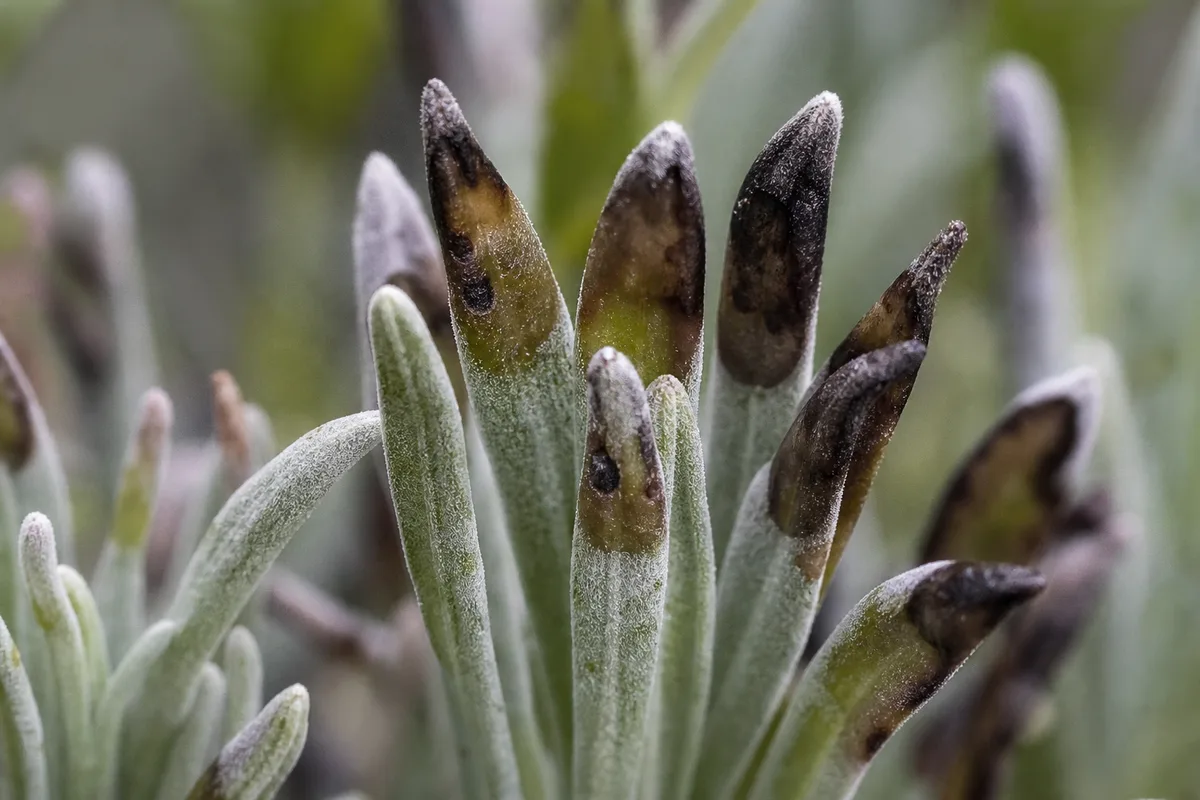
Cold Damage symptoms on Lavender - compare with healthy tissue on the same plant.
Wet-winter root death may not show until a warm spell triggers sudden collapse-stems wilt while mix was cold-saturated for weeks. That pattern overlaps root rot on Lavender, not just foliar frost burn.
Why Lavender gets cold damage
Lavender is native to Mediterranean climates and needs dry to medium, well-drained soil. Hardiness varies by species and cultivar; English types tolerate more frost than tender French lavender (L. dentata).
Well-drained soils are required, particularly in winter-cold anaerobic soil destroys roots even when air temperature would be survivable. Outdoor saucers holding icy water are especially dangerous for pots.
Indoor cold windowsills cause cold glass damage on foliage touching panes. Sudden move from warm greenhouse to frost without hardening causes shock burn on soft growth.
How to confirm the cause
- Timing - Symptoms follow recorded frost or cold rain event.
- Pattern - Outer/exposed tips first vs. whole-plant wilt from base.
- Scratch test - Green under bark on lower stems indicates recovery potential.
- Root check - Firm pale roots support foliar frost; mushy roots mean wet-cold rot.
- Soil moisture - Saturated mix through freeze points to root issue.
- Species ID - Tender French lavender blackens at milder frosts than English types.
First fix for Lavender
Stop winter overwatering, ensure drainage, and wait until spring to hard-prune-only remove obviously dead crispy tips now if they harbor mold in humid climates.
Move containers to a bright frost-free porch if repeated hard freeze is forecast-not a dark garage. Empty saucers. Do not fertilize until active spring growth resumes.
Step-by-step recovery
- Scratch lower stems in late winter; mark live vs. dead wood.
- In early spring, prune dead wands back to green cambium.
- Repot into fresh gritty mix if winter soil stayed wet and roots smell sour but some firm tissue remains.
- Resume watering only when soil dries 7 cm deep-slower in cool weather.
- Move to Lavender light guide as temperatures rise.
- Hold heavy harvest cuts until new silver shoots lengthen.
Recovery timeline
Tip burn may be masked by new spring growth within four to six weeks. Plants frozen to the crown in wet soil may fail entirely by mid-spring despite prior upright appearance. Judge by new shoots at stem bases, not old needle color.
Causes to rule out
- Drought stress - Inward-curling leaves on dry soil in summer, not post-frost crisp tips.
- Root rot - Sour wet mix, mushy roots, collapse in warm weather after cold wet spell.
- Normal woody aging - Lower stems naturally browning on old plants without frost timing.
- Salt or fertilizer burn - Tip browning after feed, not weather correlated.
What not to do
Do not water frequently in cold dormant months. Do not hard-prune to the ground immediately after frost-you may remove live lower wood. Do not bring plants into warm rooms long-term-that breaks dormancy and invites leggy weak growth.
How to prevent cold damage next time
Use terracotta with open holes and gritty mix. Dampness more than cold kills lavender when drainage fails-keep winter pots drier. Group containers against a south wall for radiant warmth; use frost cloth briefly during Arctic snaps only.
Lavender care cross-check
Cold hardiness means little if winter soil stays wet. Container lavender in rainy climates needs drainage discipline more than extra fleece wraps on foliage.
When to worry
Escalate if the crown softens, all stems blacken from base up, or roots are mushy when unpotting after winter. Cosmetic outer tip burn on firm inner wood is manageable with spring pruning.
Conclusion
Cold damage on lavender ranges from cosmetic needle burn to fatal root death in wet winter soil. Keep pots dry and draining through cold, assess live wood before spring pruning, and match species hardiness to your climate-dry frost survival beats repeated wet-cold cycles in containers.
When to use this page vs other Lavender guides
- Lavender watering guide - Use for routine moisture checks before assuming cold damage is the main issue.
- Lavender problems hub - Browse all 51 common issues on this species.
- Brown Leaves on Lavender - Different entry point when symptoms overlap with cold damage.
- Leaf Drop on Lavender - Different entry point when symptoms overlap with cold damage.
- Drooping Leaves on Lavender - Different entry point when symptoms overlap with cold damage.