Drooping Leaves on Lavender: Causes, Checks & Fixes
Quick answer
Drooping lavender leaves usually mean drought inward-curl on a light pot, root failure limp hang on wet heavy soil, or midday heat pause on firm stems. Check soil dryness 7 cm deep and pot weight before you water-curl on dry mix needs a deep soak; limp grey foliage on saturated mix needs dry-down and root inspection.
Drooping Leaves on Lavender: Causes, Checks & Fixes
This guide covers drooping leaves on Lavender. See also the general Drooping Leaves guide, watering, and light pages for this plant.
Drooping Leaves on Lavender: Causes, Checks & Fixes
Quick answer
Drooping leaves on English lavender (Lavandula angustifolia) are a posture signal-narrow needles curling inward, hanging softer, or dulling from silver-grey-far more often than a disease outbreak. The mistake growers make is treating every soft hang as thirst when limp silvery foliage on a heavy wet pot means roots cannot drink.
First step: probe soil 7 cm deep and lift the pot. Light dry mix with inward-curling dull needles needs a deep soak. Heavy wet mix with limp hang without curl needs dry-down and root inspection-not more water.
This page is the primary droop hub for container English lavender-foliage curl and soft hang on firm stems. For whole-plant or grey-stem uptake failure, start at wilting. For chronic wet-soil decline, see overwatering. For confirmed mushy roots, see root rot.
Droop vs wilt vs normal heat softness
Owners often land on the wrong slug because both involve limp-looking foliage. Drooping leaves describe how narrow needles hang or curl while woody stems usually stay firm. Wilting means failed water uptake-grey stems slump, fragrance weakens, and the whole plant loses turgor on wet or bone-dry mix.
| What you see | Pot signal | Stem base | Curl pattern | Likely cause | Read next |
|---|---|---|---|---|---|
| Inward-curling dull needles | Light, dry | Firm | Strong inward curl | Drought | This page → underwatering |
| Limp silvery hang, no curl | Heavy, wet | Firm or softening | Limp hang, no curl | Root stress / rot | Root rot |
| Softer hang midday only | Moist, not soggy | Firm | Mild droop, no curl | Heat pause | Heat stress |
| Mild limp after repot | Even moisture | Firm | Soft hang | Transplant shock | Transplant shock |
| Water runs off; dry core | Light, dusty surface | Firm | Curl after failed soak | Hydrophobic mix | Dry hydrophobic soil |
| Grey stems on saturated mix | Heavy, sour smell | Soft crown | Limp + stem slump | Crown or root rot | Crown rot |
Normal afternoon softness: On hot balconies, needles may hang slightly softer at peak sun, then recover by evening without changing your watering rhythm. That is not the same as overnight limp on wet soil.
Drought vs wet droop comparison
Use this table when you need a fast router before you touch the watering can.
| Check | Drought droop | Wet root-failure droop |
|---|---|---|
| Pot weight | Noticeably light | Heavy even when you have not watered recently |
| Soil at 7 cm | Completely dry | Wet, cool, clinging |
| Leaf look | Inward curl, dull olive-grey | Limp silvery hang, sometimes yellow lower needles |
| Curl direction | Needles curl inward | Hang limp without strong inward curl |
| Stem base | Firm and woody | May soften or grey at soil line in advanced cases |
| Smell at drain hole | Earthy or neutral | Sour or rotten on advanced rot |
| Evening test | Stays curled until watered | Does not recover overnight on wet mix |
| First fix | Deep soak at pot edge | Stop water; inspect roots if smell or soft crown |
What drooping leaves look like on lavender
Lavender droop rarely matches the dramatic flop of tropical houseplants. Learn these patterns on narrow lanceolate grey-green needles and square woody stems.
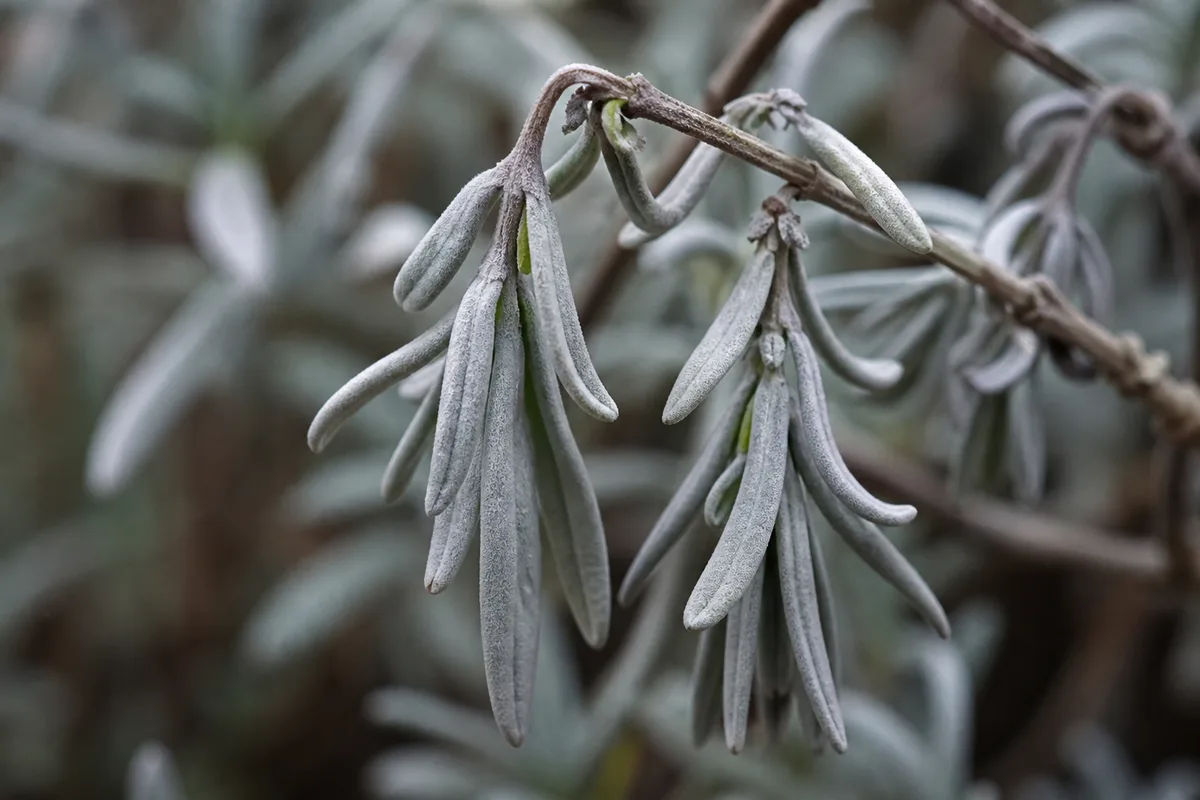
Drooping Leaves symptoms on Lavender - compare with healthy tissue on the same plant.
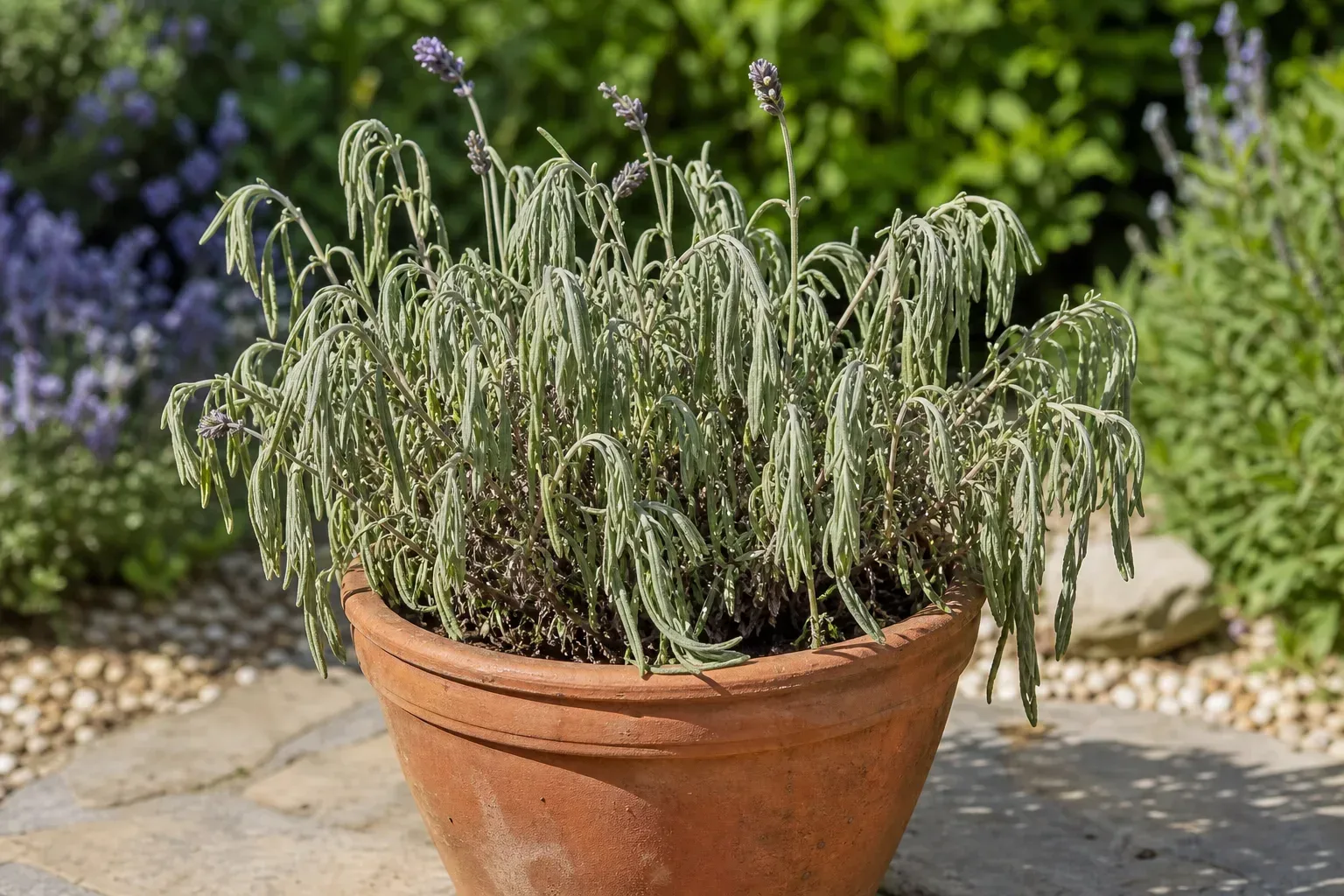
Drought droop (inward curl)
- Pot feels noticeably light; soil may pull slightly from the terracotta edge
- Needles curl inward, color dulls from silver-grey to flat olive-green
- Stems angle down but stay firm and woody-fragrance weakens before obvious collapse
- Dramatic uncurling within hours after one thorough soak if roots are still healthy
Overwatering and root-failure droop (limp hang)
- Soil stays wet at 7 cm even though you have not watered-or rain kept the pot damp
- Foliage hangs limp and silvery-grey without strong inward curl; lower needles may yellow
- Sour smell from the drain hole; soft tissue at the crown in advanced cases
- Paradoxical droop on moist soil-leaves look thirsty while mix is saturated because rotting roots cannot transport water
Heat midday droop
- Afternoon softer hang on a hot balcony, against radiating glass, or on dark patio stone
- Woody stems stay firm; needles perk by evening without extra water
- Pot was borderline dry before the heat spike-verify recovery by next morning before soaking
Transplant shock droop
- Mild soft hang for one to two weeks after Lavender repotting guide with firm crown intact
- Even moisture, no sour smell, gradual firming as new white root tips appear
- See transplant shock if droop exceeds two weeks or crown softens
Photo callout: Compare drought inward-curl on a light terracotta pot (needles rolled tight, dull color) against limp silvery hang on a heavy wet glazed pot (needles hanging straight down, mix clinging at 7 cm). Curl direction and pot weight matter more than the word “drooping” alone.
Why lavender leaves droop
Mediterranean dryland biology
English lavender evolved on dry rocky hillsides with lean alkaline soil, intense sun, and seasonal drought. In that climate, established plants tolerate dry spells-but container roots in a small terracotta pot can exhaust moisture in a few hot days. Heat drives transpiration faster than fine roots replace water, and narrow needles shift from silver-grey to dull olive before obvious flop appears.
Underwatering in full-sun containers
Lavender demands full sun and extremely well-drained soil. Gritty mix in terracotta dries predictably on a sunny balcony-roots in limited volume cannot access deep groundwater like in-ground plants. Inward curl on a light pot is the classic drought droop signature.
Overwatering, humidity, and root rot
Dampness kills lavender more reliably than cold in poorly drained culture. Saturated gritty mix fills air pockets roots need; decay spreads while the surface still looks damp. A drooping plant on moist soil is a textbook sign that uptake has failed-not that the plant needs more water. Root rot commonly attacks lavender in poorly drained soils, especially when humidity keeps foliage and crowns damp.
Heat stress outpacing uptake
Even with adequate moisture, extreme afternoon heat can outpace root water delivery. Needles soften at midday while stems stay firm-a temporary pause, not rot. English lavender is difficult to grow in high summer humidity without sharp drainage; heat plus humidity together produce more pronounced midday droop.
Winter indoor droop
Lavender moved indoors for winter faces weak light and slower evaporation. The summer watering rhythm that worked on a sunny balcony keeps roots wet for days in a dim room-triggering limp hang and grey dullness rather than dramatic wilt. Wet, poorly drained soil and high humidity lead to decline even when cold is not the primary stressor. Keep containers fairly dry in winter and place them in the brightest window available.
Hydrophobic gritty mix
Repeated bake-dry cycles in peak summer can leave peat or fines crusted and water-repellent. Water runs down pot walls while the core stays dry-surface may look briefly moist while needles curl inward. That mimics drought but needs a bottom-soak re-wet, not another splash on top. See dry hydrophobic soil when water channels without soaking the root ball.
How to confirm the cause
Work through these checks in order. The goal is to separate dry curl from wet limp hang before you act.
- Pot weight - Lift the container. Feather-light in summer almost always means drought. Heavy when you have not watered in days suggests waterlogged mix.
- Soil probe at 7 cm - Push your finger or a skewer 7–8 cm deep. Completely dry means soak (or bottom-soak if water repels). Wet, cool, and clinging means hold water and inspect roots if limp hang continues.
- Curl direction - Strong inward curl on dry mix points to drought. Limp hang without curl on wet mix points to root failure.
- Smell at drain hole - Sour or rotten odor supports rot; healthy gritty mix smells earthy.
- Evening recovery - Perking by evening on moist soil suggests heat droop, not rot. Limp hang that does not recover overnight on wet mix points to root failure.
- Crown firmness - Pinch woody stems at the soil line. Firm is good; mushy or hollow suggests crown decline-escalate to crown rot protocols.
Confirmation decision table
| Pattern | Crown | Soil at 7 cm | Severity | First action |
|---|---|---|---|---|
| Inward curl, light pot | Firm | Dry | Same day in heat | Deep soak; empty saucer |
| Limp hang, heavy pot, sour smell | Softening | Wet days | Urgent-same day | Stop water; unpot and trim mushy roots |
| Midday soft hang, moist soil | Firm | Moist | Wait and verify | Check recovery by evening; shade hottest hour |
| Post-repot mild droop | Firm | Even moisture | Low | Stable care 1–2 weeks |
| Curl after water runs off dry surface | Firm | Dry core | Same day | Bottom-soak 20–30 minutes; drain fully |
Full watering rhythm lives on the lavender watering guide.
First fix for lavender
Lift the pot, probe soil at 7 cm, and match your action to curl direction and weight-do not water by habit.
| Likely cause | First action |
|---|---|
| Light pot, dry 7 cm, inward curl | Water deeply until slight drainage from holes; empty saucer within 30 minutes |
| Heavy wet pot, limp hang without curl | Stop all water; improve airflow; unpot same day if crown softens or smell is sour |
| Heat droop on moist soil, firm stems | Shade the hottest hour temporarily; do not flood the crown |
| Post-repot with firm crown | Hold even moisture; avoid relocating and heavy pruning the same day |
| Water repels dry mix | Bottom-soak 20–30 minutes, then drain fully-do not mist foliage |
This single diagnostic step prevents the most costly mistake on container lavender: drowning a plant that already cannot drink.
Step-by-step recovery
After the first fix, follow the path that matches your diagnosis.
For confirmed drought droop:
- Resume dry to medium, well-drained soil rhythm-water only when dry 7 cm deep per the watering guide.
- For hydrophobic dry mix that repels water, bottom-water 20–30 minutes, then drain fully.
- Trim only fully grey, brittle stems that snap cleanly; leave slightly flexible tissue if it still feels alive.
- On hot balconies, check small terracotta pots every few days in summer rather than relying on a calendar.
For confirmed root failure on wet soil:
- Unpot gently and rinse roots with room-temperature water.
- Trim all brown, mushy, or foul-smelling roots with clean scissors-leave firm white or tan tissue.
- Let the root ball air-dry in bright indirect light for 12–24 hours before replanting in fresh one-part compost to three-parts grit mix.
- Hold water for several days after repot; then water lightly only when new mix is dry at the top 7 cm.
- If the crown is soft and more than half the root system is mushy, take semi-ripe cuttings from firm upper stems as backup-see lavender propagation.
Full rot protocols: root rot and crown rot.
For heat droop only:
- Provide afternoon shade or move the pot off radiating metal or glass.
- Ensure even moisture before the next hot afternoon-one deep soak beats repeated shallow sprinkles.
Do not stack repotting, fertilizer, relocation, and heavy pruning on the same day. Fix the water pathway first, then reassess after 48–72 hours.
Recovery timeline
Drought droop often shows uncurling needles and firmer stems within hours; visible new silver tips may appear within one to two weeks once rhythm stabilizes.
Heat-related afternoon softness should resolve the same evening if soil moisture was adequate-if not, treat as drought.
Root-stress droop takes weeks if recoverable at all. Expect one to three weeks before firm new shoot tips if enough healthy root tissue remains. Badly limp grey needles rarely return to full silver; judge success by stopped dieback and aromatic new growth, not old foliage reversing.
Advanced crown rot with soft base tissue is often fatal despite rescue-propagate from healthy stems if any firm growth remains.
What not to do
- Water every drooping lavender without a moisture check-limp hang on wet soil worsens rot in humid climates.
- Ignore limp foliage on heavy wet pots-wet droop outranks drought droop as a killer where monsoon rain keeps containers damp.
- Mist foliage for “humidity” on a dryland herb-lavender needs sharp drainage and air circulation, not foliar moisture.
- Repot, relocate, and prune heavily the same day during shock-fix water first.
- Flood the crown during heat droop on already-moist soil.
- Leave saucers full-stagnant water mimics the wet clay soils lavender declines in.
- Treat stiff woody stems as proof of hydration-lavender hides drought curl longer than broad-leaf herbs.
How to prevent drooping leaves next time
Match watering to how fast your pot dries, not a generic schedule. Outdoors in full sun, small terracotta containers may need deep soaks every five to ten days in summer; indoors in winter, two to four weeks-or longer-may be correct when light is weak.
Use gritty alkaline mix with perlite or coarse sand. Choose pots with open drainage holes. Terracotta helps small pots dry evenly compared with glazed ceramic. Grow in full sun with well-drained soil so the plant uses water predictably.
Skip supplemental watering during monsoon weeks when rain keeps mix damp at 7 cm. After travel or a schedule change, weigh the pot before assuming thirst. Cross-check the lavender overview and underwatering guide when drought curl repeats.
When to worry
Treat drooping as urgent if:
- Limp hang persists overnight on wet soil while stems grey at the base
- Crown tissue softens while mix remains saturated
- Sour odor rises from the drain hole after a wet week
- Inward curl does not uncurl within 24 hours after a correct deep soak on a confirmed dry pot
- More than one-third of roots are mushy on inspection
- Rapid grey stem decline climbs from the soil line despite dry-down
In those cases, root salvage may still work if firm white roots remain-but delay increases the odds you are propagating cuttings instead of saving the parent plant. Contact your local extension office for advanced rot cases in humid climates.
Related lavender problems
- Wilting - Primary hub for grey-stem uptake failure and wet-vs-dry wilt paradox
- Underwatering - Dry-pot inward curl and light terracotta recovery
- Overwatering - Chronic wet-soil decline and monsoon dry-period rules
- Root rot - Mushy roots and trim-and-repot protocol
- Crown rot - Soft base tissue and same-day escalation
- Heat stress - Midday slump that recovers overnight
- Transplant shock - Post-repot droop with firm crown
- Dry hydrophobic soil - Water runs off while core stays dry
- Lavender overview - Species, cultivars, sun, soil, and Mediterranean culture hub
FAQs
How can I confirm why lavender leaves are drooping?
Inward-curling dull needles on a light dry pot confirm drought droop. Limp silvery-grey foliage on a heavy wet pot with firm stems declining at the base suggests root stress. Midday droop that recovers by evening on adequately moist soil is often heat, not disease. Smell the drain hole on wet pots-sour odor points to rot, not thirst.
Is it normal for lavender to droop slightly in afternoon heat?
Yes, on hot sunny days with otherwise adequate moisture. Narrow grey-green needles may hang softer at midday while woody stems stay firm, then perk by evening without extra water. If droop persists overnight on wet soil, treat as root failure-not normal heat softness.
What’s the difference between drooping and wilting on lavender?
Drooping here means foliage posture change-curl or soft hang-while stems often stay firm. Wilting means uptake failure where woody stems or the whole plant lose turgor from wet roots, drought, or heat collapse. Start on this page for curl direction and afternoon softness; see the wilt hub when grey stems slump on heavy wet pots.
Will drooping lavender leaves recover?
Drought droop uncurls within hours to a day after a proper deep soak if stems are firm. Heat droop resolves overnight when culture is otherwise sound. Root-related droop recovers only after drainage fixes and possible repotting-old limp needles may drop and rarely return to full silver. Judge success by new aromatic growth, not old foliage reversing.
Should I mist lavender when leaves droop in dry heat?
No. Lavender is a dryland Mediterranean herb that needs full sun and gritty drainage-not foliar misting. Mist raises humidity around the crown, which can worsen decline in humid climates. Fix drought with a deep soak at the pot edge, not surface spritzing. For chronic dry cycles, see the underwatering and hydrophobic-soil guides.
Conclusion
Drooping lavender leaves split into inward curl on light dry pots, limp hang on heavy wet mix, and midday softness that recovers by evening. Confirm moisture at 7 cm, curl direction, pot weight, and evening recovery-then deep soak, dry down, or wait. Grey limp hang on saturated mix is rot, not thirst. When stems slump or the crown softens, escalate to the wilting and crown rot hubs instead of adding water.
When to use this page vs other Lavender guides
- Lavender watering guide - Use for routine moisture checks before assuming drooping leaves is the main issue.
- Lavender problems hub - Browse all 51 common issues on this species.
- Underwatering on Lavender - Different entry point when symptoms overlap with drooping leaves.
- Root Rot on Lavender - Different entry point when symptoms overlap with drooping leaves.
- Heat Stress on Lavender - Different entry point when symptoms overlap with drooping leaves.