Heat Stress on Lavender: Causes, Checks & Fixes
Quick answer
Heat stress on English lavender shows temporary midday wilt, crispy narrow leaf tips, or drooping flower wands in extreme heat-especially in dry soil or fresh repots. Water deeply when soil is dry 7 cm deep, provide brief afternoon shade during heat waves, and avoid pruning or repotting during hot spells.
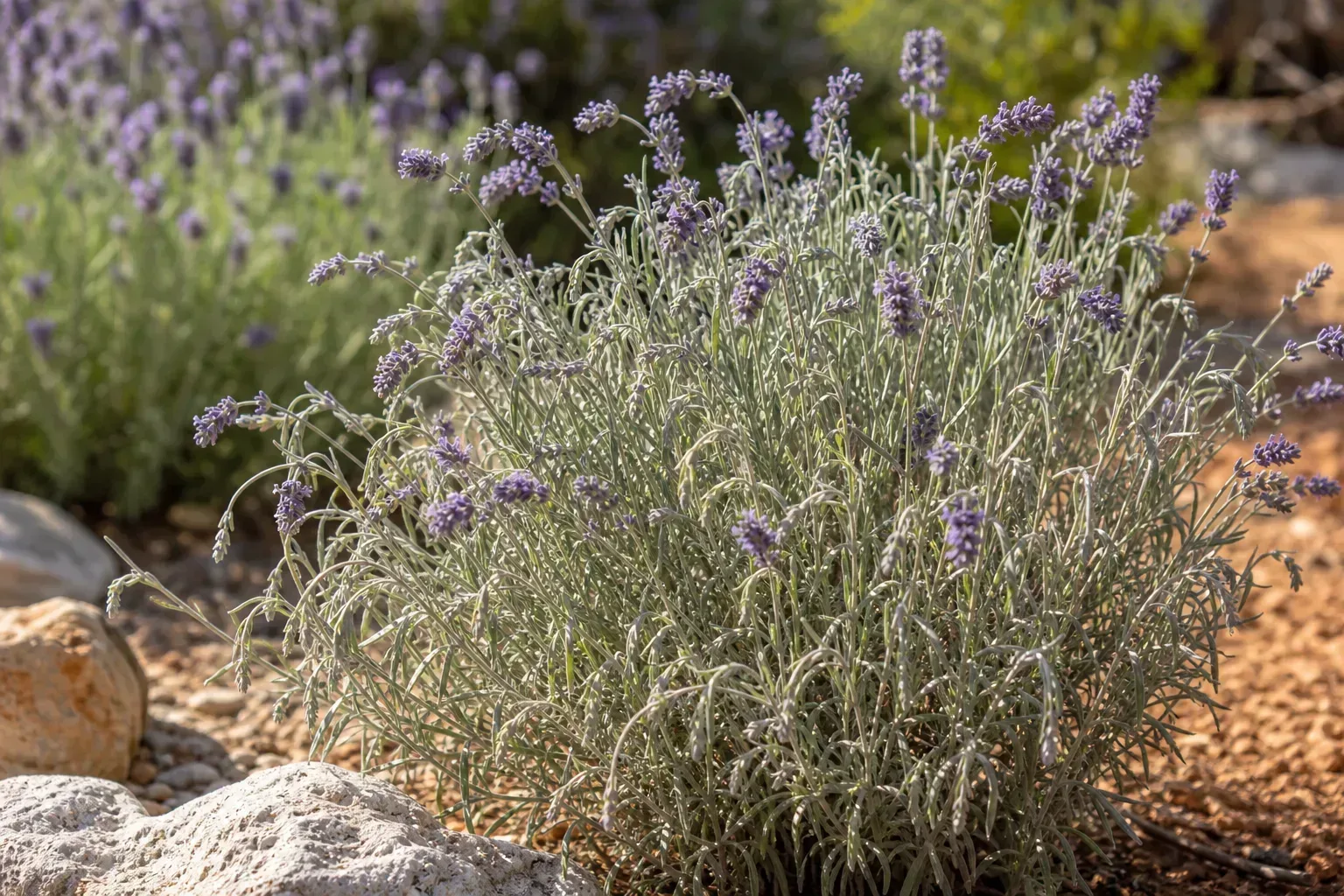
Heat Stress on Lavender: Causes, Checks & Fixes
This guide covers heat stress on Lavender. See also the general Heat Stress guide, watering, and light pages for this plant.
Heat Stress on Lavender: Causes, Checks & Fixes
Quick answer
Heat stress on English lavender (Lavandula angustifolia) causes afternoon wilt, crispy narrow leaf tips, and drooping flower wands when temperatures spike-lavender loves sun but extreme heat plus dry roots or sudden exposure without hardening still stresses plants. The signature pattern is collapse by mid-afternoon on firm woody stems that recover by morning after roots rehydrate-not persistent grey-stem wilt on a heavy wet pot.
First step: probe soil 7 cm deep at dawn. Dry mix needs a deep soak before heat builds-not a midday flood on hot soil. Moist mix with afternoon softness alone may need shade only, not more water.
Scope on this site: This page is the primary heat hub for container English lavender-afternoon collapse, sun shock, and root-zone overheating. For softer foliage hang without a strict heat clock, see drooping leaves. For grey-stem uptake failure, see wilting. For chronic wet-soil decline, see overwatering.
Heat stress vs drooping leaves vs wilting on lavender
These three problems overlap on summer terraces but need different first fixes:
| Signal | Heat stress (this page) | Drooping leaves | Wilting |
|---|---|---|---|
| Timing | Worst mid-afternoon on hot days; often recovers overnight | Can persist until watered or dried | Persists until moisture or roots are fixed |
| Pattern | Flower wands droop first; narrow leaf tips scorch tan | Inward curl (dry) or limp hang (wet) | Grey stems slump; whole plant loses turgor |
| Soil at noon | Often dry and light pot; may be moist if only heat pause | Dry (curl) or wet (limp hang) | Heavy wet OR very dry throughout |
| Overnight | Turgor returns on firm stems if culture is sound | Drought curl stays until soak; wet hang persists | Does not recover on wet sour mix |
| Stems | Firm woody base | Usually firm | Firm or soft grey stems |
| First fix | Dawn deep water if dry + brief afternoon shade | Soak (dry) or dry-down (wet) | Moisture branch per wilt hub |
If afternoon wilt appears once after a heat spike and stems firm up by evening, stay on this page. If grey stems slump on saturated mix with sour smell, escalate to crown rot immediately.
What heat stress looks like on lavender
Heat collapse on lavender has a recognizable daily rhythm on narrow lanceolate silver-grey foliage and square woody stems-not the dramatic flop of tropical houseplants.
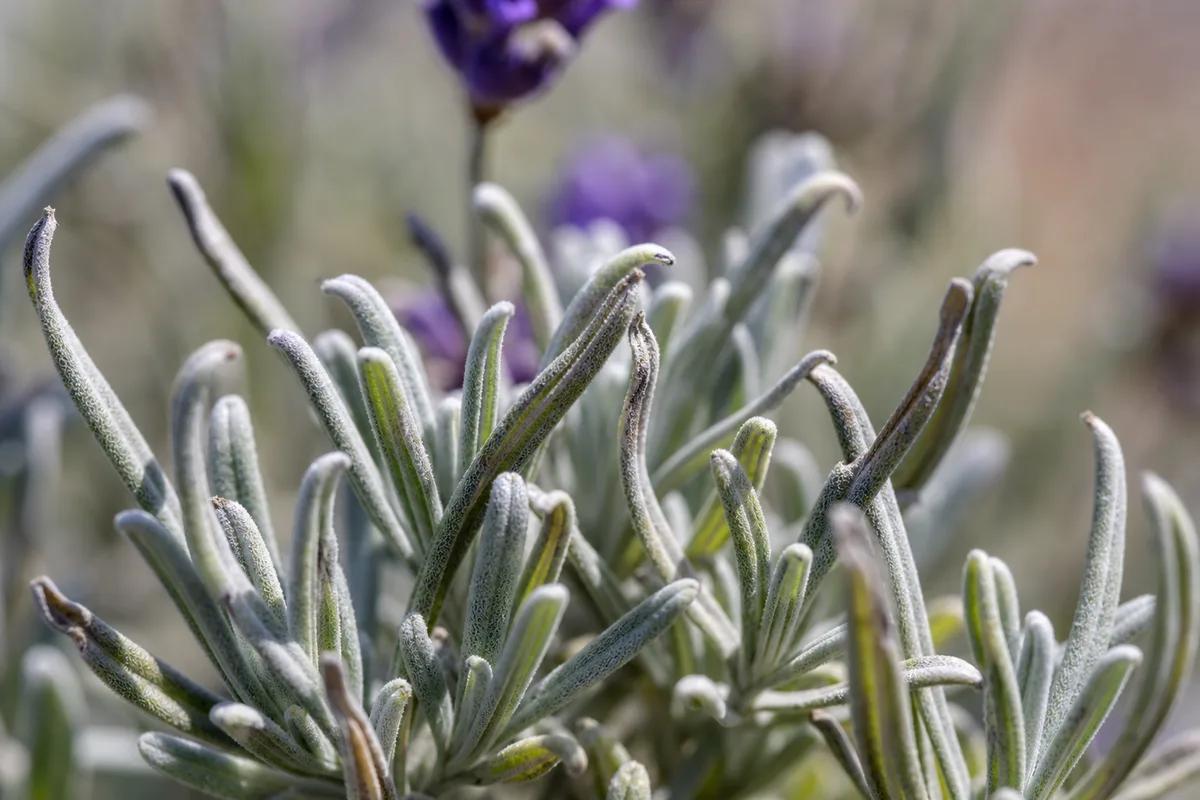
Heat Stress symptoms on Lavender - compare with healthy tissue on the same plant.
Lavender’s narrow gray-green leaves hold less water per leaf than broad houseplant foliage, so afternoon softness looks subtle-a slight wand droop or softer silver hang rather than a full collapse. That quiet signal tricks owners into watering pots that are already moist at noon, which is how heat stress slides into heat-wet crown decline on terraces.
Afternoon collapse, scorched tips, and flower-wand droop
- Midday limp wands and slightly drooping silver foliage that recover by morning after roots rehydrate
- Tan crispy narrow leaf tips on outer exposure after moving from shade to blistering roof or west-facing rail
- Flower wands collapse in extreme dry heat even when stems stay firm-the spike often droops before lower foliage scorches
- Light, dry pot weight at noon on terracotta that felt adequate at dawn
Photo callout - midday wilt: Picture English lavender in a dark plastic pot on sun-baked concrete: flower wands hang limp by 2 p.m., outer narrow leaf tips look papery tan, but woody stems stay firm and the same plant stands firmer by 8 p.m. after shade and a dawn soak.
Photo callout - heat-wet rot overlap: The same plant after a panic midday flood on hot soil: pot stays heavy, crown feels soft at the soil line, sour smell from the drain hole-this is no longer recoverable heat collapse alone.
Persistent wilt into cool morning with wet sour mix and soft crown is rot overlap-not pure heat stress. See crown rot when the base turns mushy.
Why lavender suffers heat stress
Mediterranean sun-lover paradox
English lavender evolved on dry, rocky Mediterranean hillsides where summers are hot and relatively dry. It demands full sun with dry to medium, well-drained soil and is drought-tolerant once established-yet dry roots during a heat spike cannot supply the transpiration load from aromatic narrow leaves and open flower wands. Owners misread subtle afternoon softness as thirst and water wet pots, compounding stress.
High summer humidity is not appreciated on English types. In monsoon and humid terrace climates, heat plus slow evaporation keeps crowns damp longer-dampness kills lavender faster than brief drought on gritty mix.
English lavender tolerates hot dry days when roots stay hydrated, but prolonged extreme heat-especially with dry soil or humid air-pushes visible afternoon collapse. UF/IFAS Extension recommends afternoon shade in hot subtropical climates even though lavender needs six to eight hours of direct sun daily for healthy growth.
Cultivar caveat: Standard English lavender (L. angustifolia) struggles more in humid heat than lavandin hybrids such as ‘Phenomenal’ or Spanish types bred for warmer regions. French lavender (Lavandula stoechas) is less hardy than English types in containers and declines faster when wet heat compounds.
Container roots on rooftops and hot pavement
In-ground lavender benefits from soil mass that buffers temperature swings-roots stay cooler several centimetres below the surface even when air spikes. Container roots on dark plastic pots, glazed ceramic, or metal rails face root-zone temperatures above air readings-especially on reflective white balustrades and west-facing concrete. A 25 cm terracotta pot on a roof can cross from moist at dawn to critically dry by early afternoon while an in-ground neighbour still holds moisture at the same depth.
Pot material matters: Dark plastic absorbs radiant heat fastest; unglazed terracotta breathes and evaporates from the wall; glazed ceramic traps heat longer. Lift pots off pavement onto feet or gravel so air circulates under the drain hole.
The RHS growing guide notes that lavender in containers dries quickly in hot weather and may need watering once or twice weekly in summer when compost begins to dry-small pots on blazing surfaces can cross from moist at dawn to critically dry by early afternoon on peak summer days.
Plants hardened to moderate sun scorch when moved suddenly to all-day reflective heat without a 7–10-day hardening period. Fresh repots with disturbed roots wilt faster in heat waves-hold repot and prune until weather moderates; see transplant shock if wilt follows recent repotting regardless of temperature.
Heat plus overwatering crown-rot compounding
Overwatering during heat to “help” lavender keeps soil hot and wet-inviting crown decline per dampness killing lavender in poor drainage. Lavender suffers when it receives too much water-especially hot wet soil around a stressed crown. This is the most dangerous misread on terraces: afternoon droop on already-moist mix means shade and wait, not another soak.
How to confirm the cause
Work through checks in order before repotting, pruning, or assuming disease:
- Daily rhythm - Afternoon wilt worst between noon and 5 p.m., noticeably better by morning on firm stems?
- Soil moisture at dawn - Dry at 7 cm before the heat spike? Light pot weight fits dry heat stress. Heavy wet pot points to rot overlap.
- Recent move - From shade, greenhouse, or indoor winter shelf to blistering roof without hardening?
- Pot type and surface - Dark plastic vs. terracotta on hot pavement; pot wall too hot to hold at midday?
- Crown firmness - Hard woody base vs. soft mushy tissue at soil line?
- Tip scorch pattern - Crisp tan outer narrow leaf tips after sun shock vs. uniform grey dullness on wet mix?
Confirmation decision table
| If you find… | Likely cause | Next step |
|---|---|---|
| Afternoon wilt + dry light pot + overnight recovery | Heat stress | Dawn deep soak + brief afternoon shade |
| Afternoon softness only, moist soil, firm crown | Heat pause | Shade only; no extra water |
| Inward curl + very dry soil throughout | Drought | Deep soak; underwatering |
| Limp hang on heavy wet soil | Root stress / rot | Overwatering or root rot |
| Soft crown after hot wet watering | Heat-wet crown rot | Stop water; crown rot same day |
| Wilt after repot regardless of heat | Transplant shock | Transplant shock |
Confirmed diagnosis: Afternoon collapse on firm stems with recovery by morning, dry or borderline-dry mix before the spike, no sour smell. Suspected heat-wet rot: Wilt persists on wet soil after midday flood; crown softens within 24–48 hours.
First fix for lavender
Deep water at dawn when probe shows dry 7 cm depth-then provide brief afternoon shade during extreme heat only.
Soak until water runs from drainage holes, then drain the saucer completely. Do not flood midday on hot soil surface-warm saturated mix around lavender roots invites decline faster than brief afternoon wilt on dry firm plants.
After the dawn drink if soil was dry:
- Install temporary 20–30% shade cloth from roughly 11 a.m. to 3 p.m. during heat waves, or move the pot to eastern exposure or dappled afternoon shade
- Lift the pot off radiant hot pavement onto pot feet, gravel, or a cooler surface
- Mulch the surface with light gravel per Illinois Extension rock-mulch guidance to keep the crown dry-not wet organic mulch piled against woody stems
If soil is already moist at dawn and stems are firm, shade alone may suffice-adding water to wet mix during recovery shade is the heat-wet rot trap.
Shade cloth: temporary vs. permanent
| Situation | Shade action | When to remove |
|---|---|---|
| Multi-day heat wave with afternoon wilt on firm stems | 20–30% cloth 11 a.m.–3 p.m. or move to eastern exposure | Remove after daily highs moderate for three to five days |
| Sun shock after move from shade to roof | Morning sun only for 7–10 days, then gradual full exposure | Per lavender light guide hardening schedule |
| Chronic weak stems in partial shade year-round | Do not add permanent shade-relocate to full sun with gritty mix | N/A - permanent shade weakens lavender |
| Moist soil + afternoon softness only | Shade only; hold water | Remove shade when heat breaks; soil still moist |
Step-by-step recovery
- Dawn moisture check - Probe 7 cm deep; water thoroughly only if dry; empty saucer within 15 minutes.
- Afternoon shade - Temporary cloth or repositioning during the heat wave; remove once daily highs moderate for several days.
- Harden future moves over 7–10 days from partial morning sun to full exposure per the lavender light guide.
- Switch dark plastic to terracotta if root heat is chronic; match gritty mix from the soil guide.
- Trim only fully crispy dead narrow leaf tips after the plant stabilizes for one week-scorched tissue does not re-green.
- Resume normal dry-down rhythm per the watering guide-do not keep soil constantly moist “for heat.”
Heat-wet crown rot escalation: If you watered heavily midday on hot soil and the crown now feels soft, stop all watering, expose the base to air, remove wet mulch, and follow crown rot protocols the same day. Take semi-ripe cuttings from firm upper stems if decline spreads.
Recovery timeline
Same day: Overnight perk after proper dawn watering confirms heat collapse, not rot, when stems stayed firm.
2–7 days: Daily afternoon collapse should lessen once shade, pot material, and watering rhythm align. Flower wands often firm before lower foliage fully recovers.
2–4 weeks: Scorched narrow leaf tips replaced by new silver growth; old crispy tips stay permanent.
Worsening signs: Wilt into cool morning on wet soil; soft crown within 48 hours of hot wet watering; no new tips after three weeks in corrected culture-escalate to wilting and rot guides.
Causes to rule out
- Underwatering - Multi-day dry with ongoing morning wilt and inward curl, not just afternoon softness. See underwatering.
- Root rot - Wilting with wet heavy pot, sour smell, mushy roots on wet mix regardless of air temperature.
- Transplant shock - Wilt after repot with firm crown even in mild weather. See transplant shock.
- Spider mites - Stippling in hot dry air; fine webbing on narrow leaves-not the overnight-recovery rhythm of heat collapse alone.
What not to do
Do not soak midday on blazing soil surface. Do not move from deep shade to roof sun in one day. Do not interpret afternoon droop on wet pots as automatic need to water. Do not use heavy nitrogen before heat waves-soft new growth wilts faster. Do not repot, relocate, and prune the same day during a heat spell.
How to prevent heat stress next time
Maintain well-drained soil in full sun with predictable dry-down so roots have moisture before spikes-lavender needs at least six hours of direct sun daily. Use terracotta, gravel top-dress away from stems, and brief shade cloth only during extreme events.
Pot-weight habit before heat waves: Lift the pot at dawn when culture is sound-that baseline weight tells you faster than a calendar whether a hot afternoon will outpace root supply. Group pots slightly to raise local humidity without crowding crowns. Cross-check year-round placement on the lavender overview and light guide.
When to worry - heat-wet crown rot
Act same day when wilt persists into cool morning on wet soil after a midday flood, the crown feels soft, or sour smell rises from the drain hole during a heat wave.
Lower urgency when afternoon droop on dry firm plants recovers by evening after one dawn soak and shade move-classic recoverable heat collapse.
Escalation path: Dawn water fixes dry heat collapse within 24 hours on firm plants. Heat-wet crown rot with soft base tissue needs same-day dry-down, crown exposure, and possible repot into fresh gritty mix-see crown rot before the plant collapses from the base up.
If decline spreads past the crown despite dry-down, contact your local cooperative extension office for county-specific lavender culture advice before discarding a mature plant.
FAQs
Is afternoon wilt normal on lavender in summer?
Yes, on hot sunny days when woody stems stay firm and soil was borderline dry before the spike. Narrow silver foliage may hang softer at midday, then perk by evening without extra water. If wilt persists overnight on wet sour mix with a soft crown, treat as heat-wet rot overlap-not normal heat softness.
How long until heat-stressed lavender recovers after watering?
Temporary heat collapse on a firm plant in gritty mix often perks overnight after a dawn deep soak and cooler night air. Scorched narrow leaf tips do not green again-new silver growth replaces them in two to four weeks. Heat-wet crown rot from panic overwatering may show soft base tissue within days and needs same-day dry-down.
Should I move lavender to shade permanently?
No. Lavender needs full sun with gritty drainage-permanent shade weakens stems and invites wet-soil decline. Use 20–30% shade cloth or afternoon repositioning only during extreme heat events, then return to full sun once temperatures moderate. See the light guide for hardening after a move.
Can heat stress cause crown rot on lavender?
Heat alone rarely rots a firm crown on dry gritty mix. The danger is heat plus overwatering-midday wilt on moist soil triggers extra water, keeping mix hot and saturated. That invites crown decline faster than drought in humid monsoon climates. Stop watering wet pots and inspect the base if softness appears.
How is heat stress different from drooping or wilting on lavender?
Heat stress peaks mid-afternoon on firm stems and often recovers overnight without changing your watering rhythm. Drooping leaves describe softer foliage hang or inward curl on firm stems-often drought or root stress. Wilting means uptake failure with grey stems on heavy wet or bone-dry pots. Start here for afternoon-only collapse; route wet wilt to the wilt hub.
Conclusion
Heat-stressed lavender needs dawn hydration when dry, brief afternoon shade in extremes, and cooler root zones-not permanent shade or panic overwatering on moist soil. The overnight-recovery test on firm woody stems is your best diagnostic tool: collapse by afternoon that firms up by evening on a light dry pot points here, not to wet wilting or drooping leaves from root failure. When hot wet watering softens the crown, switch immediately to crown-rot protocols-heat collapse is recoverable; heat-wet rot often is not without same-day intervention.
Related tool
Use the Plant Problem Diagnosis Tool to narrow causes for heat stress on this plant before changing multiple variables at once.