Brown Leaves on Lavender: Causes, Checks & Fixes
Quick answer
Brown leaves on lavender often signal crown rot from wet soil or humidity at the stem base. Remove wet mulch, improve airflow, let soil dry 7 cm deep, and dust the crown with sulphur only after fixing drainage.
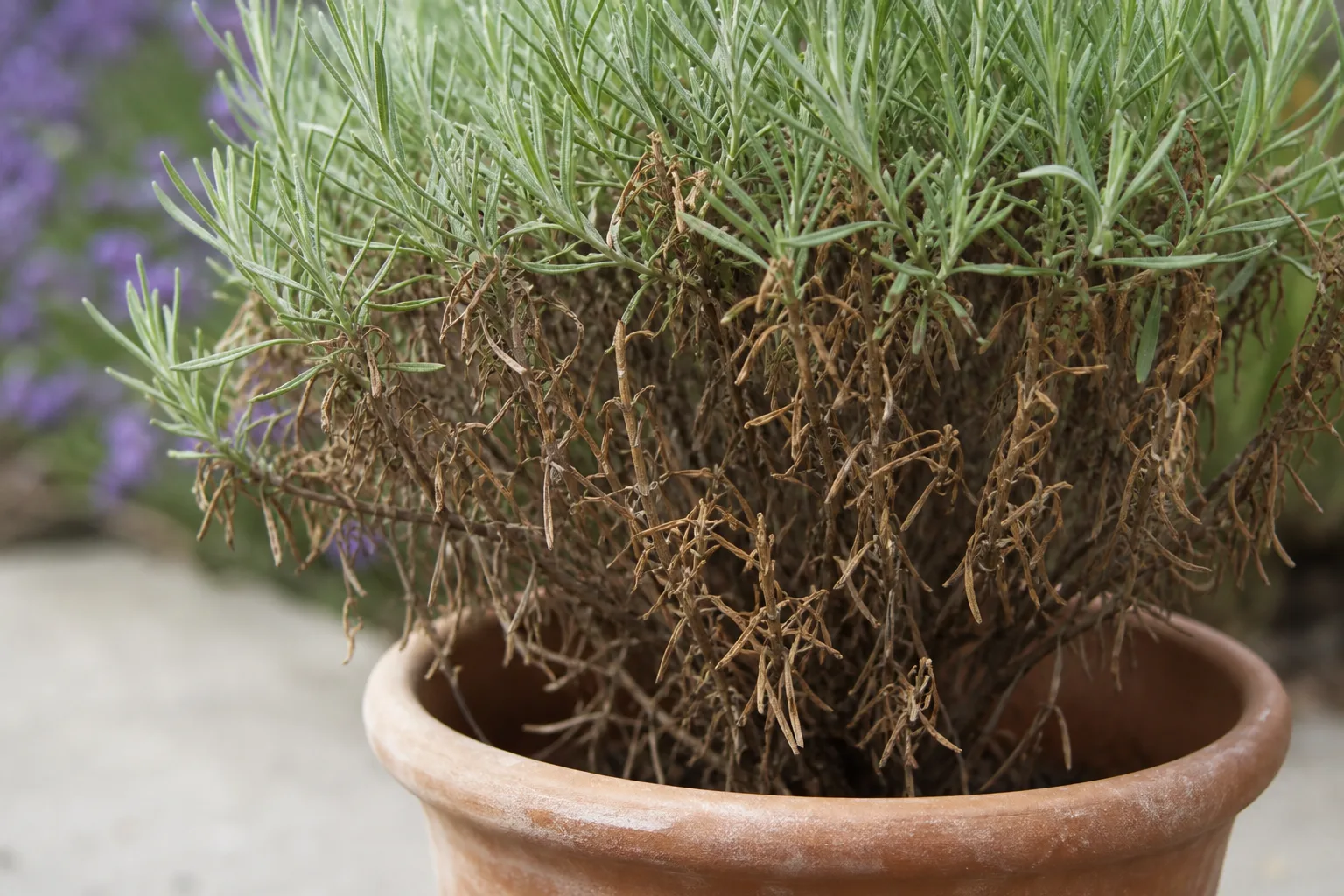
Brown Leaves on Lavender: Causes, Checks & Fixes
This guide covers brown leaves on Lavender. See also the general Brown Leaves guide, watering, and light pages for this plant.
Brown Leaves on Lavender: Causes, Checks & Fixes
Quick answer
Brown leaves on Lavender usually mean crown stress from wet soil or humidity at the stem base-not random leaf aging. English lavender needs a dry crown and well-drained soils with good air circulation. First step: remove wet mulch from the base, improve airflow, stop watering until soil is dry 7 cm deep, and inspect whether the woody stem base is firm or soft.
What brown leaves look like on Lavender
On lavender, browning often starts at the lower needle-like leaves near the woody base and may climb stems when the crown stays wet. Affected foliage turns grey-brown or dull brown and feels dry or papery. In crown rot cases, stems at soil level darken and soften while upper growth wilts despite moist mix.
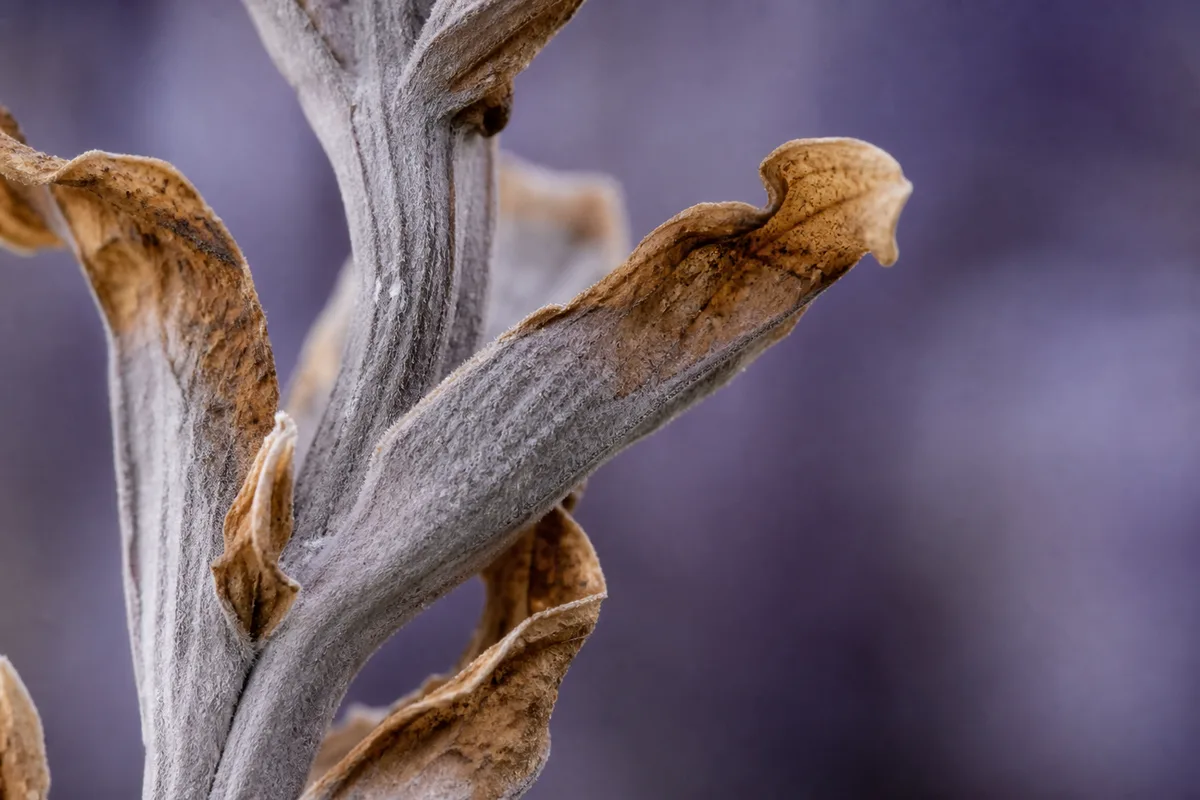
Brown Leaves symptoms on Lavender - compare with healthy tissue on the same plant.
Heat and sun scorch on lavender is less common than on shade-loving houseplants, but sudden moves from dim indoors to harsh afternoon sun can bronze exposed sides. That pattern is tan-brown on sun-facing leaves only, with firm stems and dry soil-not base softness.
Compare new growth with old: if only lower sections brown while tips stay silvery, suspect crown moisture. If entire plants grey out suddenly after rainy weeks, suspect root and crown decline together.
Why Lavender gets brown leaves
Lavender is one of the least humidity-tolerant herbs. Wet, poorly drained soil and high humidity with poor air circulation between plants lead to decline. Organic mulch-wood chips, compost blankets, or decorative moss-holds moisture against the stem base where lavender is most vulnerable.
Overhead watering in humid evenings keeps foliage and crowns damp overnight. Crowded balcony rails with poor airflow trap humidity between pots. Monsoon exposure without shelter keeps soil saturated for days.
Chronic overwatering also causes brown leaves through root damage: compromised roots fail to supply water evenly, and lower leaves brown even when mix feels moist. Root rot commonly attacks plants grown in poorly drained soils, and leaf browning follows root failure.
underwatering on Lavender shows inward-curling dull grey-green leaves with crispy brown tips on a very light pot-different from base-up browning on wet soil.
How to confirm the cause
Work through these checks before pruning heavily:
- Stem base firmness - Soft, dark tissue at the crown confirms crown rot; firm wood with dry brown leaf tips suggests drought or salt.
- Mulch and soil at base - Is organic matter piled against stems? Is surface soil wet while you have not watered?
- Drainage and weather - Recent monsoon, rainy week, or saucer standing water?
- Root check if wilted - Unpot if wilting persists on wet mix; mushy roots confirm rot-driven browning.
- Sun exposure - One-sided tan browning after a sudden move to harsh sun suggests scorch, not rot.
- Pest inspection - Spider mite stippling bronzes leaves but usually shows fine webbing on undersides first.
First fix for Lavender
Remove wet mulch from the stem base, improve airflow, and let soil dry 7 cm deep before the next watering.
Pull organic mulch away from the crown until the woody base is exposed to air. Move the pot to Lavender light guide with space between neighbors so stems dry after rain. Stop watering until a finger pushed 7–8 cm deep finds completely dry mix-skip supplemental water entirely during heavy rain periods.
If the crown is firm and only lower leaves are brown, trim dead foliage with clean shears and optionally dust the base with garden sulphur after the area dries-only as a supplement to drainage fixes, not a substitute for dry culture.
If the crown is soft, treat as root/crown rot: unpot, trim decay, repot in fresh gritty mix.
Step-by-step recovery
- Clear mulch and debris from the stem base; expose the crown.
- Stop watering; empty saucers; shelter from driving rain if possible.
- Trim fully brown dead leaves and any soft stem tissue back to firm wood.
- Relocate to the sunniest spot with open airflow between pots.
- After soil dries 7 cm deep, water lightly at the pot edge-not a flood at the crown.
- Monitor weekly; repot only if roots are mushy or smell sour.
Hold fertilizer until new silver shoots appear.
Recovery timeline
Firm crowns with minor lower-leaf browning may push new growth within two to three weeks once the base stays dry. Crown-soft plants may decline despite trimming-take 8–10 cm semi-hardwood cuttings from firm upper stems as backup.
Brown leaves will not re-green; judge success by clean new needle foliage on firm stems.
Causes to rule out
| Pattern | Likely cause | First step |
|---|---|---|
| Base-up browning, wet crown | Crown rot / humidity | Dry base; remove mulch |
| Crispy tips, light dry pot | Underwatering | Deep soak; adjust schedule |
| Sun-facing tan patches | Scorch | Acclimate; slight shade at hottest hour |
| Bronze stippling + webbing | Spider mites | Rinse; improve even moisture |
| Lower brown after root check | Root rot | Repot; trim mushy roots |
What not to do
Do not pile fresh organic mulch on a browning lavender crown. Do not keep overhead watering in humid weather. Do not fertilize a stressed plant before fixing moisture at the base. Do not strip all foliage while the crown is still uncertain-leaves support recovery if stems are firm.
How to prevent brown leaves next time
Lavender likes inorganic mulches such as rock or pea gravel to keep the crown dry. Plant in gritty mix with instant drainage and full sun. Water only when soil is dry 7 cm deep, directing water away from the stem base.
Space pots for airflow. High summer humidity is not appreciated-use gravel top-dress instead of wet wood chips in humid climates.
Lavender care cross-check
Brown leaves often appear when drainage, mulching, and watering drift out of sync. Lavender wants full sun, gritty fast-draining alkaline mix, and very infrequent watering matched to how fast the pot dries-not calendar habits from other houseplants.
When to worry
Escalate if the crown softens, multiple stems brown from the base upward within days, or wilting persists on wet soil. Advanced crown decline is difficult to reverse in humid container culture.
Conclusion
Brown leaves on lavender usually trace to a wet crown or failing roots in humid, poorly drained conditions-not generic leaf age. Confirm by checking the stem base, remove wet mulch, dry the soil deeply between drinks, and improve sun and airflow. Prevent recurrence with gravel mulch and monsoon-aware watering.
When to use this page vs other Lavender guides
- Lavender watering guide - Use for routine moisture checks before assuming brown leaves is the main issue.
- Lavender problems hub - Browse all 51 common issues on this species.
- Brown Tips on Lavender - Different entry point when symptoms overlap with brown leaves.
- Yellow Leaves on Lavender - Different entry point when symptoms overlap with brown leaves.
- Underwatering on Lavender - Different entry point when symptoms overlap with brown leaves.