Yellow Leaves on Lavender: Causes, Checks & Fixes
Quick answer
Yellow leaves on English lavender (*Lavandula angustifolia*) usually mean wet roots, poor drainage, or weak winter light-not a missing nutrient tablet. First step: probe soil moisture 7 cm deep and check crown firmness before you water or feed again.
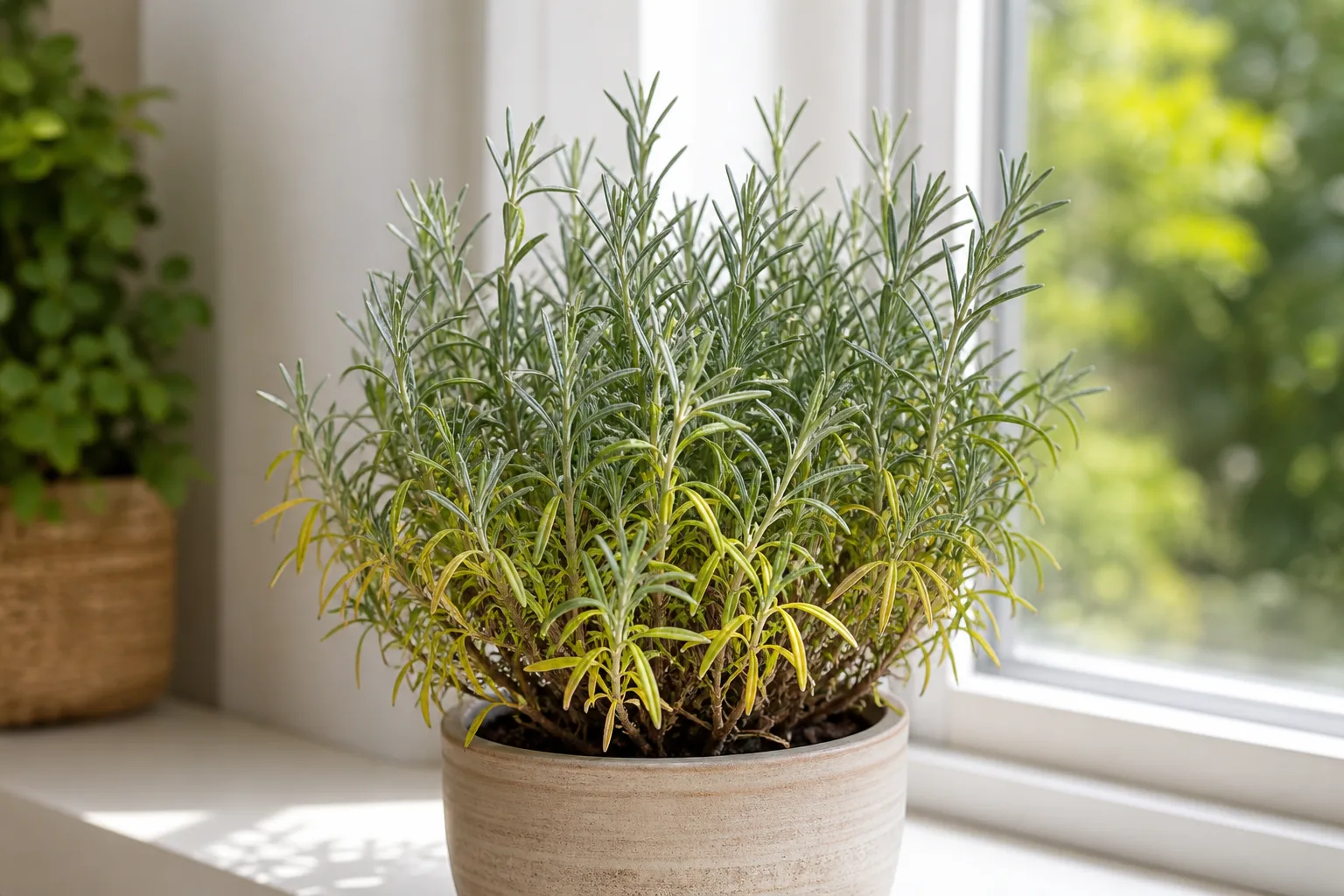
Yellow Leaves on Lavender: Causes, Checks & Fixes
This guide covers yellow leaves on Lavender. See also the general Yellow Leaves guide, watering, and light pages for this plant.
Yellow Leaves on Lavender: Causes, Checks & Fixes
Quick answer
Yellow leaves on English lavender (Lavandula angustifolia) are a stress signal, not a single diagnosis. This Mediterranean subshrub wants dry gritty soil and strong direct sun. When those basics slip-especially on a container brought indoors for winter-narrow grey-green leaves often fade on lower or outer shoots first.
The two most common triggers are opposite sides of the same mistake: mix that stays wet too long, or too little light so the plant cannot use water efficiently. Both can yellow foliage even when you think you are watering carefully.
First step: probe soil moisture 7 cm deep and check whether the crown and roots are firm before you water or feed again. That one check prevents the reflex that worsens wet-root yellowing and tells you whether drought-not excess water-is the real problem.
Yellow vs. brown vs. pale leaves on Lavender
This page covers yellow and chartreuse fading on lavender foliage. Scope notes so you do not chase the wrong slug:
| Symptom | Typical pattern | Likely cause | Where to read next |
|---|---|---|---|
| Dull yellow-green lower leaves on a heavy wet pot | Lower wood yellows first; wilt on damp mix | Wet roots, root stress | Overwatering |
| Brown starting at stem base on damp soil | Base softens; upper silver foliage dies | Crown rot | Brown leaves |
| Uniform pale yellow on stretched stems | Leggy growth; weak new tips | Insufficient light | Not enough light |
| Faded silvery-grey wash, not true yellow | Whole plant looks washed out | Sun scorch or age | Pale leaves |
| Soft pale new growth after heavy feed in shade | Lush weak shoots | Nitrogen excess | Nitrogen deficiency (feed mimic vs. real deficiency) |
Yellow leaves are usually an early water-and-root clue. Brown base-up decline on wet soil is the escalation path-do not wait for brown before you fix drainage.
What yellow leaves look like on Lavender
Lavender normally carries silvery-blue-green narrow leaves on woody stems-not true needles like rosemary, though the foliage is slim enough that owners often misread dull chartreuse on wet pots as a feed deficiency.
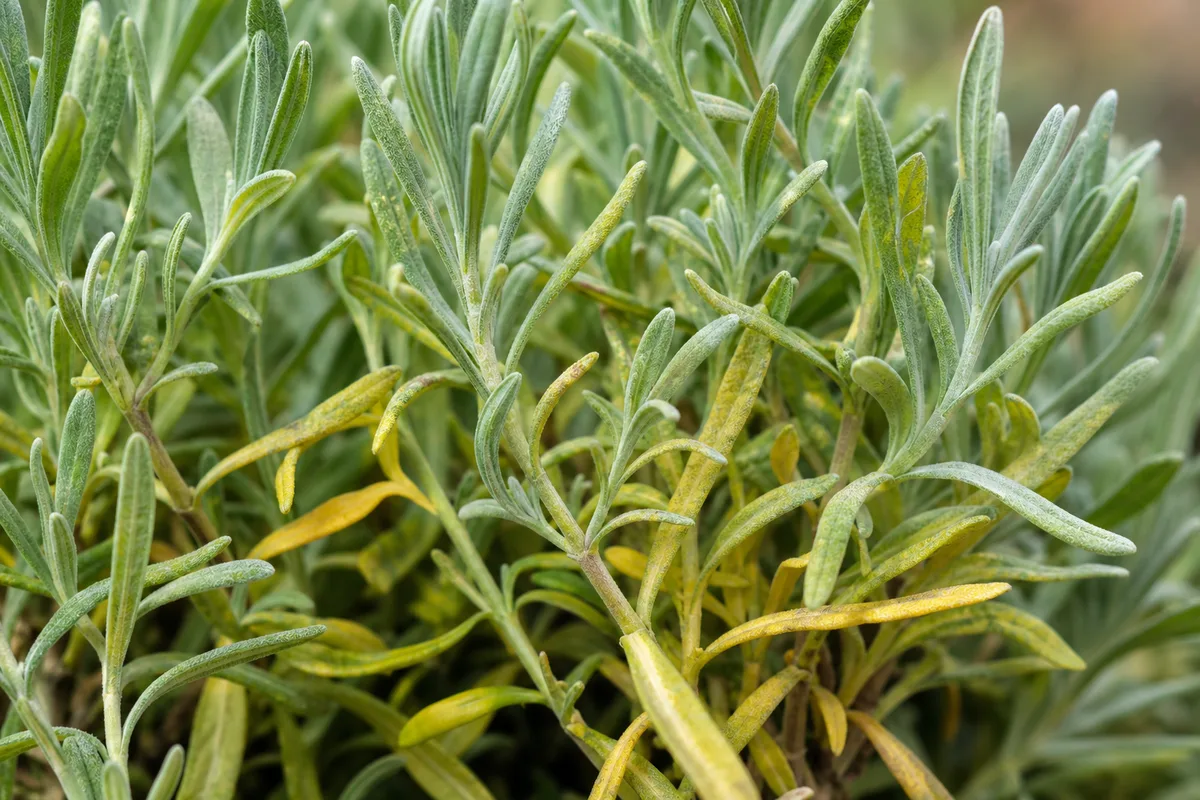
Yellow Leaves symptoms on Lavender - compare with healthy tissue on the same plant.
Wet-root yellow, drought yellow, low-light pale yellow, and winter dieback
Wet-root yellowing:
- Dull yellow-green or chartreuse on lower leaves while mix stays damp for days
- Limp or wilted foliage on a heavy pot even though you watered recently
- Grey cast instead of crisp aromatic silver-green
- Soft brown tissue at stem bases where wood meets wet mix
- Sour smell when you lift the plant
Low-light yellowing:
- Pale yellow-green new tips on stretched, leggy stems indoors
- Thin sparse growth toward a window while back sides stay darker
- More common on overwintered pots than outdoor shrubs in Lavender light guide
Drought yellowing:
- Very dry soil throughout and a lightweight pot
- Inward-curling dull leaves with dry brown tips
- Wilting that improves within hours after one thorough soak
Winter outer dieback:
- Bright yellow only on oldest outer stems in late winter with a firm crown
- Normal seasonal turnover-not the same as crown rot climbing inner wood on wet soil
Pest-related yellowing:
- Bronze stippling with fine webbing (spider mites)-not uniform yellow wash
Lavender rarely shows bold yellow mosaic patterns of virus-infected houseplants; suspect water, roots, and light first.
Why Lavender gets yellow leaves
Lavender evolved on dry, rocky hillsides of the Mediterranean with sharp drainage and long sun exposure. Its narrow leaves transpire actively in full sun, which helps the mix dry between soaks. When light drops or drainage fails, the plant’s water balance breaks down and chlorophyll fades on lower wood before tips fail-a pattern common on woody Mediterranean subshrubs.
Mediterranean dryland biology and the yellow-leaf paradox
Chronic wet soil is the leading cause. Dampness more than cold is responsible for killing lavender-roots in saturated gritty mix cannot take up nutrients properly, and lower leaves yellow as root function fails even though the soil feels damp. This wet-soil yellow paradox confuses owners who see wilt and assume thirst.
High humidity and poor airflow accelerate the pattern in containers. Heavy peat mixes without enough perlite stay wet at depth even when the surface looks dry.
Container roots in humid and monsoon climates
Overwatering during monsoon or rainy weeks keeps mix damp while the plant uses little water in cool overcast weather. Saucers holding runoff maintain anaerobic root zones. In humid climates, pot weight beats calendar watering-lift the container before every drink.
Terracotta pots dry faster than plastic and give honest weight feedback. Oversize pots hold excess damp mix around small root balls and produce chronic lower yellowing on an otherwise healthy-looking crown.
root rot on Lavender and crown decline in poorly drained gritty mix
Root rot commonly attacks plants grown in poorly drained soils, which yellows lower leaves before tips fail. Overwatering deprives roots of oxygen; stressed roots cannot deliver water and minerals, so foliage yellows on wet mix. Phytophthora and similar pathogens thrive in periodically waterlogged soil-sour smell and mushy roots confirm advanced decline.
Winter indoor overwatering trap
Lavender overwintered indoors in a dim room uses water slowly while ambient humidity stays high. The same summer watering rhythm keeps mix wet for weeks. Lower leaves yellow; owners water again because stems look limp-deepening root failure. Cut winter frequency sharply and match drinks to dry-down at 7 cm depth per the lavender watering guide.
Root-bound chronic yellow
Long-neglected container lavender can show persistent lower yellowing even when you water correctly: circling roots fill the pot, old mix collapses, and water runs down the sides without rewetting the root ball. Gently unpot-if roots are a solid mat with little fresh mix in the center, repot into gritty mix sized to the root mass, not a much larger damp reservoir.
Nitrogen excess in low light - when feed is actually the issue
Lavender thrives in somewhat low fertility and prefers poor, dry soil. Excess nitrogen in partial shade produces soft pale growth-but overfeeding is less common than overwatering as a yellowing trigger. Feed only after moisture, light, and root firmness are correct. True nitrogen deficiency on lavender in full sun with dry gritty mix is rare; see nitrogen deficiency for the wet-root mimic split.
English vs. French lavender caveats
English lavender (Lavandula angustifolia) is the hardiest common type and the focus of this guide. French lavender (Lavandula dentata) and Spanish types are less cold-hardy and more often grown as seasonal container plants in humid climates-both yellow faster when drainage slips, but French types may show more year-round soft growth that masks drought stress until sudden wilt.
How to confirm the cause
Work through these checks in order. Stop when one path clearly fits-do not stack treatments before you know the cause.
Pot weight, 7 cm moisture probe, crown firmness, smell, sun exposure
- Moisture at 7 cm - Push your finger or a dry skewer 7 cm into the mix. Clinging wet soil days after watering points to saturation. Bone-dry throughout suggests drought.
- Pot weight - Lift the container. Heavy and wet confirms slow dry-down; feather-light in full sun suggests underwatering on Lavender.
- Drainage and saucer - Water should exit holes within minutes in gritty mix. Standing saucer water re-wets roots from below.
- Crown and stem base firmness - Pinch woody stems at the soil line. Soft dark tissue on wet mix signals advanced root trouble.
- Smell and roots - Sour odor or mushy brown roots confirm rot-related yellowing. Pale firm roots are healthy.
- Sun exposure - Pale yellow on leggy stems in shade: light before fertilizer.
- Recent changes - Lavender repotting guide, heat wave, or move indoors can cause temporary yellow; stable firm crown suggests recovery possible.
Confirmation decision table
| If you find… | Likely cause | Severity | First action |
|---|---|---|---|
| Wet 7 cm + heavy pot + dull lower yellow | Wet-root stress | Monitor → urgent if spreading | Stop watering until dry 7 cm deep |
| Wet soil + soft crown + sour smell | Root/crown rot | Urgent - same day | Unpot, trim mushy roots, gritty repot; see root rot |
| Dry throughout + light pot + inward curl | Drought | Moderate | One thorough soak, then dry-down rhythm |
| Pale leggy tips in dim room | Low light | Moderate | Move to brightest sun; see not enough light |
| Outer stem yellow only, firm crown, late winter | Seasonal dieback | Low - wait | No water change; watch new spring shoots |
| Root mat filling pot, water runs off sides | Root-bound | Moderate | Repot into gritty mix close to root mass |
| Bronze stippling + webbing | Spider mites | Moderate | Rinse undersides; improve airflow |
When wet soil and soft stems align, gently unpot and rinse roots. Pale firm roots are healthy; brown mushy roots confirm rot linked to excess moisture.
First fix for Lavender
Stop watering until the top 7 cm of mix is completely dry, and empty any water in the saucer.
This single step halts the most common cause-wet-root stress-without making drought worse. Let soil dry out between water applications before the next soak. Do not fertilize stressed yellowing lavender hoping to green it up; feeding waterlogged plants pushes soft growth and can worsen rot when roots cannot function.
If the mix is bone-dry throughout and the pot is light, skip the dry-down and give one thorough soak until water runs from drainage holes, then resume dry-between-soaks checks per underwatering guidance.
If new growth is pale and leggy in a dim window, move the pot to the sunniest available spot the same day-but still confirm moisture before the next drink.
Step-by-step recovery
After the first fix, follow the path that matches your diagnosis:
For wet-root yellowing:
- Hold water until the top 7 cm is dry at every check.
- Improve drainage-confirm open holes, remove saucer water, avoid cache pots that trap moisture.
- If roots are mushy when you unpot, trim brown tissue with clean scissors, air-dry the root ball for several hours, and replant in fresh one-part compost to three-parts grit mix sized to the root mass.
- Resume watering only on full dry-down cycles.
For low-light yellowing:
- Move to full sun outdoors when temperatures allow, or to the brightest south-facing window indoors.
- Add supplemental grow lighting if six hours of direct sun is not realistic through winter.
- Reduce winter watering to match slower growth in cool dim conditions.
For drought yellowing:
- Soak thoroughly once, then wait until the top 7 cm dries before the next drink.
- Avoid repeated light sprinkles that wet only the surface.
For root-bound yellowing:
- Unpot and tease circling roots or slice the outer mat lightly.
- Repot into gritty mix in a pot only slightly larger than the root ball.
Do not repot, prune heavily, and fertilize on the same day-that makes it impossible to see which change helped.
Recovery timeline
Yellow leaves rarely return to perfect silver-green. Judge recovery by new silver shoots, not old damage.
Within one to two weeks of correct dry-down and light improvement, new shoot tips should look firmer and more aromatic if roots are still largely healthy. Moderate root damage may need three to six weeks before stable new growth appears. Severe rot with most roots mushy may not be salvageable-take semi-ripe cuttings from firm upper stems as backup before the plant collapses.
Spreading yellowing on wet soil despite a dry-down protocol is a worsening sign, not a slow recovery.
Causes to rule out
- Root rot - Wet soil, sour smell, mushy roots; escalate to root rot rescue.
- Underwatering - Dry pot, curled leaves, firm roots; see underwatering.
- Insufficient light - Leggy pale stems in shade; see not enough light.
- Winter dieback - Outer stem yellow in cold with firm crown; patience, not repot.
- Spider mites - Bronze stippling with webbing, not uniform yellow.
- Nitrogen mimic - Soft pale growth after heavy feed in shade; fix light and moisture before feeding again.
What not to do
Do not fertilize yellow lavender on wet soil. Do not water because leaves look “thirsty” when the pot is heavy. Do not repot into rich moisture-retentive mix during recovery. Do not assume iron deficiency without fixing drainage first-lavender is demanding of full sun and extremely well-drained soil. Do not strip all yellow lower leaves while the plant is still stressed; remove only fully dead tissue after new tips stabilize.
How to prevent yellow leaves next time
Grow in well-drained alkaline soil in full sun. Water on 7 cm dry-down checks, not calendars. Skip supplemental water in monsoon when mix stays naturally damp. Use gravel mulch, not wet organics at the crown. UC IPM recommends lean, fast-draining soil and avoiding excess moisture around the crown.
Match pot size to roots. Give six or more hours of direct sun daily whenever possible. Empty saucers after every soak.
When to worry - wet soil with soft crown
Treat as urgent when stem bases soften while soil stays wet, yellowing climbs into new growth over several days, or black mushy roots appear on inspection. Cool dim rooms combined with frequent watering can push a salvageable plant to fatal rot within one to two weeks-follow crown rot escalation if the base is mushy.
Mild lower yellowing on an otherwise firm, aromatic outdoor plant in full sun with dry gritty mix is lower urgency-confirm normal winter outer dieback before you repot or change mix.
Conclusion
Yellow leaves on lavender usually trace back to wet roots, weak winter light, or-less often-drought or root-binding. Probe moisture 7 cm deep, check crown firmness, and read the pattern on new versus old growth before you water or feed. Withhold water when the pot is heavy and lower leaves are dull chartreuse; unpot same day when the crown softens on wet soil with a sour smell; move to sun and cut winter drinks when pale leggy tips show insufficient light; wait through outer winter yellow only when the crown stays firm and roots are healthy on inspection. Judge recovery by firm aromatic new silver shoots-not by hoping faded lower leaves green up again.
When to use this page vs other Lavender guides
- Lavender watering guide - Use for routine moisture checks before assuming yellow leaves is the main issue.
- Lavender problems hub - Browse all 51 common issues on this species.
- Underwatering on Lavender - Different entry point when symptoms overlap with yellow leaves.
- Not Enough Light on Lavender - Different entry point when symptoms overlap with yellow leaves.
- Root Rot on Lavender - Different entry point when symptoms overlap with yellow leaves.