Brown Tips on Lavender: Causes, Checks & Fixes
Quick answer
Brown tips on lavender usually mean underwatering episodes, salt buildup in gritty mix, or sun scorch-not low humidity alone. Lavender prefers very dry air; do not mist. Check dryness 7 cm deep, flush salts if you feed heavily, and keep even moisture in full sun.
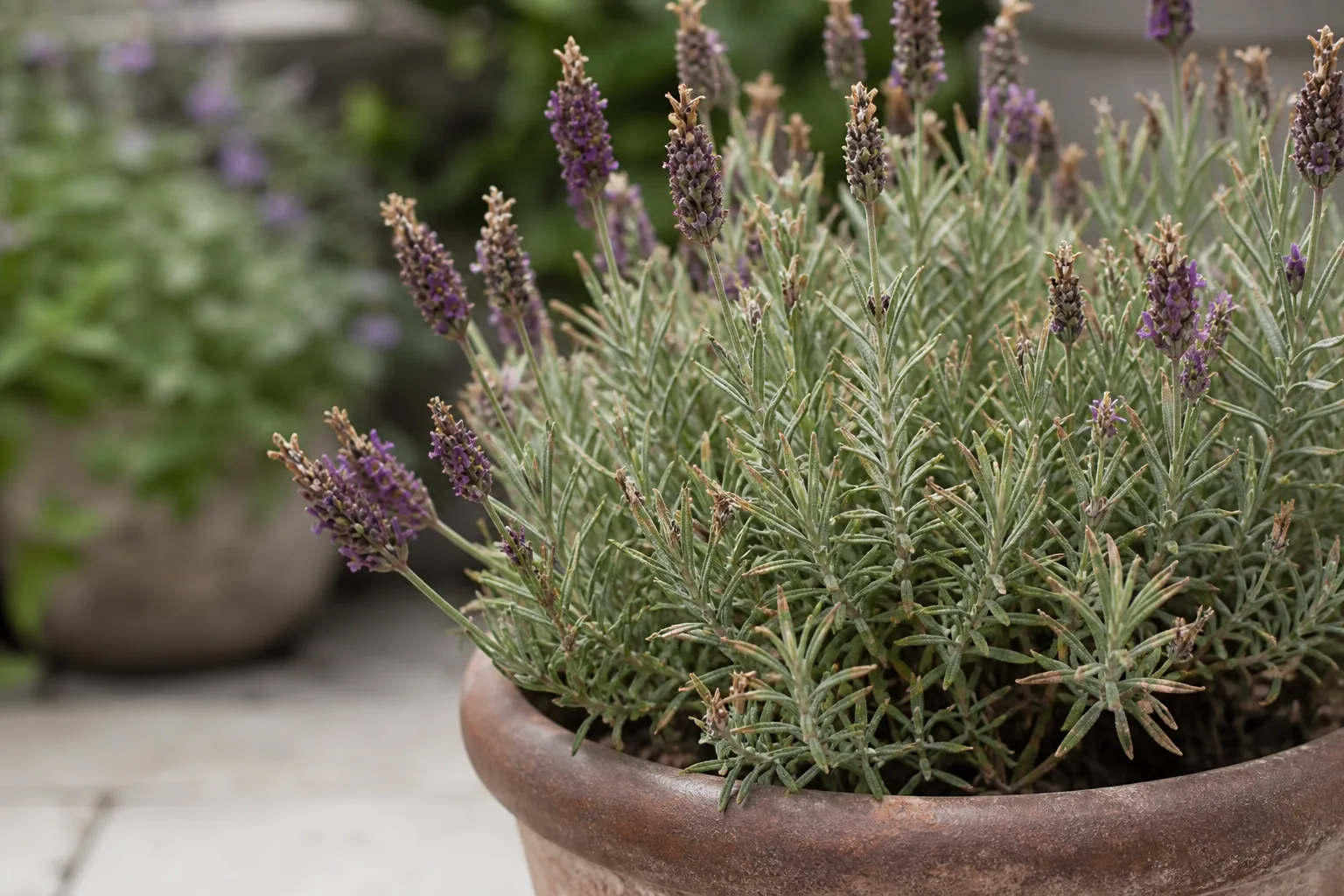
Brown Tips on Lavender: Causes, Checks & Fixes
This guide covers brown tips on Lavender. See also the general Brown Tips guide, watering, and light pages for this plant.
Brown Tips on Lavender: Causes, Checks & Fixes
Quick answer
Brown tips on English lavender (Lavandula angustifolia) are usually dry stress, salt injury, or uneven watering-not fungal leaf spot and not low humidity alone. Lavender prefers very dry air; do not mist to fix tip burn. First step: check whether soil is completely dry 7 cm deep and whether the pot went through repeated drought cycles in hot Lavender light guide.
First fix: rehydrate on a dry-down rhythm-water thoroughly when soil is dry 7 cm deep, then let it dry again before the next drink. For salt suspicion, flush the root zone twice in one week.
Scope on this site: This page is the tip-burn symptom entry point-crispy needle tips and margins on firm stems. For full drought rescue with inward curl, light pots, and severity ladders, see underwatering. For base-up browning on wet crowns, see brown leaves. Seasonal soak rhythm: lavender watering guide.
What brown tips look like on lavender
Lavender needle leaves may show crispy brown tips or margins while the rest of the leaf stays silvery-green. Tips feel dry and papery, not soft or mushy. Damage often appears on outer or upper foliage first after heat spells or missed watering.
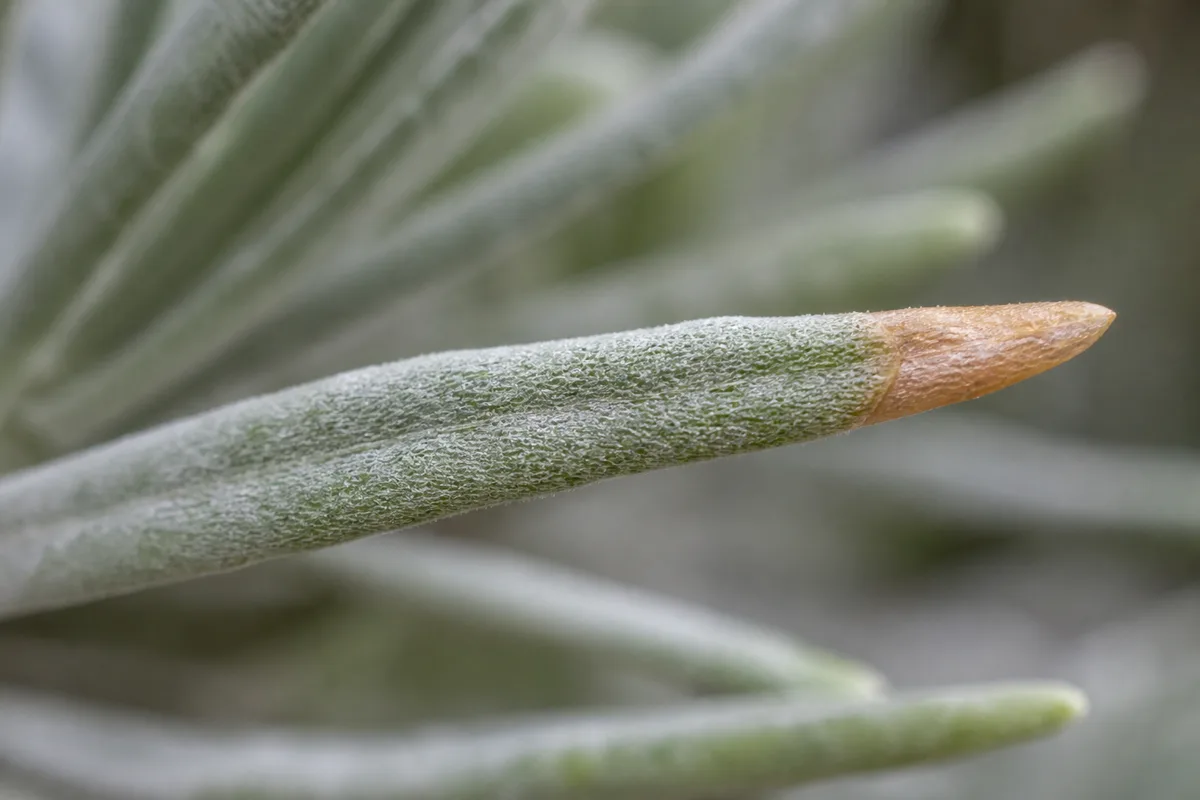
Brown Tips symptoms on Lavender - compare with healthy tissue on the same plant.
Crisp tips vs. salt margin vs. scorch vs. crown rot
| Pattern | Texture | Location | Soil / pot | Stem base |
|---|---|---|---|---|
| Drought tips | Dry, papery, tan-brown | Even on many outer needles | Dry 7 cm deep; light pot | Firm |
| Salt burn | Crisp edge; thin yellow band above brown | Often on lush new growth after feed | May be moist or dry; white crust on soil surface | Firm |
| Sun scorch | Tan-brown on sun-facing side only | One side of mound after exposure change | Often dry; recent move from shade | Firm |
| Crown rot | Soft brown at base, not just tips | Climbs from soil line upward | Wet days; heavy pot; sour smell | Soft, mushy |
| Spider mite bronzing | Fine stippling with webbing | Undersides and growing tips | Often dry during hot spell | Firm |
Salt or fertilizer burn produces similar crisp edge browning, sometimes with a thin yellow band above the brown margin. Scorch shows tan-brown on the sun-facing side of the mound after sudden exposure changes-not the even tip crispness of drought.
Soft brown tissue at the stem base with wet soil is crown rot-not tip burn. Do not confuse the two.
Why lavender gets brown tips
Drought in full-sun containers
Lavender in full sun containers dries quickly. Grow in dry to medium, well-drained soil-when watering is delayed too long in heat, needle tips desiccate first. The RHS notes brown tips or margins on woody plants often indicate drought in spring and summer, especially on young growth and container stock.
Irregular watering-wet spells followed by hard dry-down-stresses roots and shows at leaf margins. Saucer water left for days then allowed to evaporate can create uneven root-zone conditions. Small terracotta pots in full sun wick moisture through the walls, accelerating dry-down-a benefit for rot prevention, a risk during missed checks.
For inward-curling dull leaves and a feather-light pot, escalate to the full underwatering drought-rescue workflow.
Salt buildup in lean mix
Salt accumulation in small pots from hard tap water or repeated synthetic fertilizer causes edge burn. Lavender prefers lean soil; somewhat low fertility means excess salts concentrate faster in containers than in open ground. Applying fertilizer to dry soil is a common trigger-lush new growth browns at the margins while older needles stay silver.
Winter indoor heat plus root drought
Low ambient humidity alone rarely harms lavender-it prefers very dry air and high summer humidity is not appreciated-but combined with root drought in indoor winter heat, tips can crisp on plants pulled inside from outdoor sun. The room feels comfortable to you; the gritty mix on a heated sill may still go bone-dry between missed drinks.
This is why misting is the wrong fix on lavender: brief humidity does not rewet roots, and wet foliage in stagnant indoor air raises crown disease risk. Probe depth instead.
Cultivar note - French and Spanish lavender in containers
English lavender (L. angustifolia) and its hybrids are the hardiest types for cold winters, per the RHS lavender growing guide. French lavender (L. stoechas) and Spanish types are more frost-sensitive and can scorch faster when moved abruptly from dim winter storage to harsh afternoon sun on a balcony. Tip burn on those species after a sudden exposure change often signals placement shock-harden over one to two weeks rather than reaching for a humidity tray.
How to confirm the cause
Work through these checks before trimming or feeding:
- Dryness at 7 cm - Completely dry with light pot and crispy tips: underwatering likely. Escalate to underwatering if inward curl and severe light-pot drought join the tips.
- Watering history - Missed drinks during a heat wave? Check heat stress if midday slump on moist soil recovers overnight without water.
- Fertilizer and water quality - Recent feed on dry soil or repeated hard-water irrigation? White mineral crust on soil surface supports salt injury.
- Pattern - One-sided tan tips after a move: scorch. Even tip crispness on many leaves: drought or salts.
- Stem base - Soft wet crown: rot, not tips. See brown leaves and root rot.
- Humidity context - Indoor winter heat with very dry air plus irregular watering-not ambient humidity alone.
- Pest check - Bronze stippling and fine webbing on undersides: spider mites after drought stress, not thirst alone.
- Rewet test - Water runs off dry mix without soaking? See dry hydrophobic soil before assuming a simple drought soak fixed the roots.
Cause rule-out table
| Symptom cluster | Pot weight | Smell | Mite webbing | Likely cause | First action |
|---|---|---|---|---|---|
| Crispy even tips, dry 7 cm | Light | Neutral | None | Drought | Deep soak; resume dry-down |
| Yellow band + crisp margin after feed | Medium | Neutral | None | Salt burn | Double flush; pause feed |
| One-sided tan tips, recent sun move | Light–medium | Neutral | None | Scorch | Harden to full sun gradually |
| Soft base, wet soil, grey wilt | Heavy | Sour | None | Crown / root rot | Stop water; inspect crown |
| Stippling + webbing, dry heat | Light | Neutral | Present | Spider mites | Soak if dry; treat pests |
| Water runs through, core dry | Light | Neutral | None | Hydrophobic mix | Two-pass soak; see sibling page |
First fix for lavender
Rehydrate on a dry-down rhythm-water thoroughly when soil is dry 7 cm deep, then let it dry again before the next drink. Full soak technique and seasonal intervals live on the lavender watering guide.
For salt suspicion, water deeply until excess runs from drainage holes twice in one week to flush the root zone-discard all saucer water. Hold fertilizer until new growth looks clean.
Move scorched plants to full sun gradually if they were recently relocated from shade.
Do not overwater in response to tip burn when soil is already wet at 7 cm-that converts a dry-side problem into crown decline.
Step-by-step recovery
- Check moisture 7 cm deep-not surface color alone.
- If dry, water at pot edge until a small amount drains; empty saucer within 30 minutes.
- If salts suspected, flush as above; pause feeding.
- If water sheds off dry mix, use two slow passes ten minutes apart or bottom-water once-see dry hydrophobic soil if repeat.
- Trim only fully dead crispy tips if desired-optional cosmetic step. Collect debris if pets access the area; lavender is toxic to cats and dogs if ingested.
- Maintain even dry-down schedule through hot weeks per the watering guide.
Recovery timeline
Tip burn tissue does not heal-damaged tips will not turn green again. New silver needles emerge over two to four weeks once watering stabilizes. Salt flush benefits may appear on the next growth flush.
Example recovery arc: A container on a July heat spell missed two checks; soil was dust-dry at 7 cm with widespread crispy tips on firm stems. One deep soak at the pot edge, saucer emptied, dry-down resumed. Inward curl eased within hours; new silver shoots appeared at stem tips in about three weeks. Old brown tips stayed brown-that is normal.
Judge success by clean new needles, not repaired old tips.
Causes to rule out
- Crown rot - Soft base, wet soil, whole-stem decline. See brown leaves and root rot.
- Spider mite bronzing - Fine stippling and webbing. See spider mites.
- Root rot - Wilting on wet soil with yellow lower leaves.
- Heat collapse - Midday slump on moist soil that recovers overnight. See heat stress.
- Hydrophobic repelling mix - Surface wet, dusty core. See dry hydrophobic soil.
- Normal aging - Few oldest needle tips brown seasonally on firm wood.
What not to do
Do not mist heavily to “fix humidity” on lavender-that raises crown disease risk in humid homes and does not rewet dry roots. Do not fertilize crispy plants on dry soil. Do not interpret tip burn as a call for more water on already wet mix. Do not confuse cosmetic tip trim with fixing crown rot when the stem base softens.
How to prevent brown tips next time
Water when dry 7 cm deep-more often in peak summer sun, less in winter. Feed once lightly in spring. Use gritty mix that drains instantly. Keep crowns dry with inorganic gravel mulch in humid climates.
Flush containers occasionally if you irrigate with hard tap water or use synthetic fertilizers. Weigh the pot after each proper soak to calibrate “light” versus “heavy.” Cross-check culture on the lavender overview and full watering guide.
Lavender care cross-check
Brown tips usually mean the dry side of lavender’s water preference was violated-not that the plant wants tropical humidity. Pair deep drinks with full dry-down between them. Lavender is demanding of full sun and extremely well-drained soil-tip burn in shade plus irregular water is common on mis-placed pots.
Lavender requires exceptionally well-drained lean soil in containers; rich peaty mix that stays damp invites rot while still allowing tip crispness from irregular surface drying.
When to worry
Worry when tips accompany crown softness or wet wilting. Isolated crisp tips on firm drought-stressed plants are manageable.
Escalate if:
- Brown tips spread to soft grey stems on heavy wet soil-switch to overwatering rescue, not another drought soak
- Dieback climbs from the crown despite corrected watering-see brown leaves
- Bronze stippling and webbing appear after drought-pair recovery with spider mite checks
- Water keeps running off without rewetting the core-open dry hydrophobic soil
Related lavender problems
- Underwatering on lavender - Full drought rescue with inward curl and severity ladder
- Lavender watering guide - Seasonal dry-down rhythm and soak technique
- Brown leaves on lavender - Wet-crown and base-up browning
- Heat stress on lavender - Midday slump on moist soil
- Dry hydrophobic soil - Water runs off while core stays dry
- Spider mites on lavender - Post-drought bronzing with webbing
- Root rot on lavender - Soft crown on wet mix
- Lavender overview - Mediterranean dryland biology and cultivars
FAQs
Why do lavender tips brown in winter indoors even though humidity is low?
Low ambient humidity alone rarely harms lavender-it evolved for dry Mediterranean air. Winter browning usually pairs dry indoor heat with missed watering on a south-facing sill, so roots dry while the room feels humid to you. Probe soil 7 cm deep before blaming humidity; a light pot with crispy tips on dusty mix needs a deep soak, not a mister.
Can hard tap water cause brown tips on lavender?
Yes. Repeated hard-water irrigation and synthetic fertilizer on dry soil concentrate salts in small lean-soil containers. Edge burn often shows a thin yellow band above the brown margin on new growth. Flush the root zone deeply twice in one week with plain water, discard all saucer runoff, and hold fertilizer until new needles look clean.
Should I trim brown tips on lavender or wait for new growth?
Trim only fully dead crispy tips if they bother you cosmetically-optional, not required for plant health. Old tip tissue never re-greens; new silver needles replace the look over weeks once watering stabilizes. Wear gloves when handling trimmed debris if pets might access fallen leaves; lavender is toxic to cats and dogs if ingested.
When are brown tips urgent on lavender?
Urgent when brown tips accompany soft crowns, wilting on wet soil, or rapid whole-stem browning-that is rot or crown decline, not simple tip burn. Isolated tip crispness on a firm plant in dry soil is low urgency and fixes with watering adjustment. See brown leaves and root rot if the stem base softens.
Do brown tips mean my lavender is dying?
Not usually. Crispy tips on firm woody stems in a light dry pot mean past drought or salt stress-the plant can recover with corrected watering. Worry when tips join grey mushy wilting on heavy wet soil, sour smell, or climbing brown dieback from the crown. Those patterns need wet-soil rescue on brown leaves, not another drought soak.
Conclusion
Isolated crispy brown tips on firm lavender stems point to drought, salts, or scorch-not disease. Confirm dryness at 7 cm, rehydrate on rhythm, flush salts if needed, and do not mist. When inward curl, a feather-light pot, and widespread drought damage join the tips, continue rescue on the underwatering guide-that sibling page owns the full dry-down workflow this tip-burn entry point defers to.
When to use this page vs other Lavender guides
- Lavender watering guide - Use for routine moisture checks before assuming brown tips is the main issue.
- Lavender problems hub - Browse all 51 common issues on this species.
- Underwatering on Lavender - Different entry point when symptoms overlap with brown tips.
- Yellow Leaves on Lavender - Different entry point when symptoms overlap with brown tips.