Crown Rot on Lavender: Causes, Checks & Fixes
Quick answer
Crown rot on lavender starts at the woody stem base where wet soil, mulch, or poor drainage keeps tissue soggy. Stop watering, pull mulch from the crown, trim soft tissue, repot into gritty mix if roots are still firm, and take cuttings from healthy upper stems as backup.
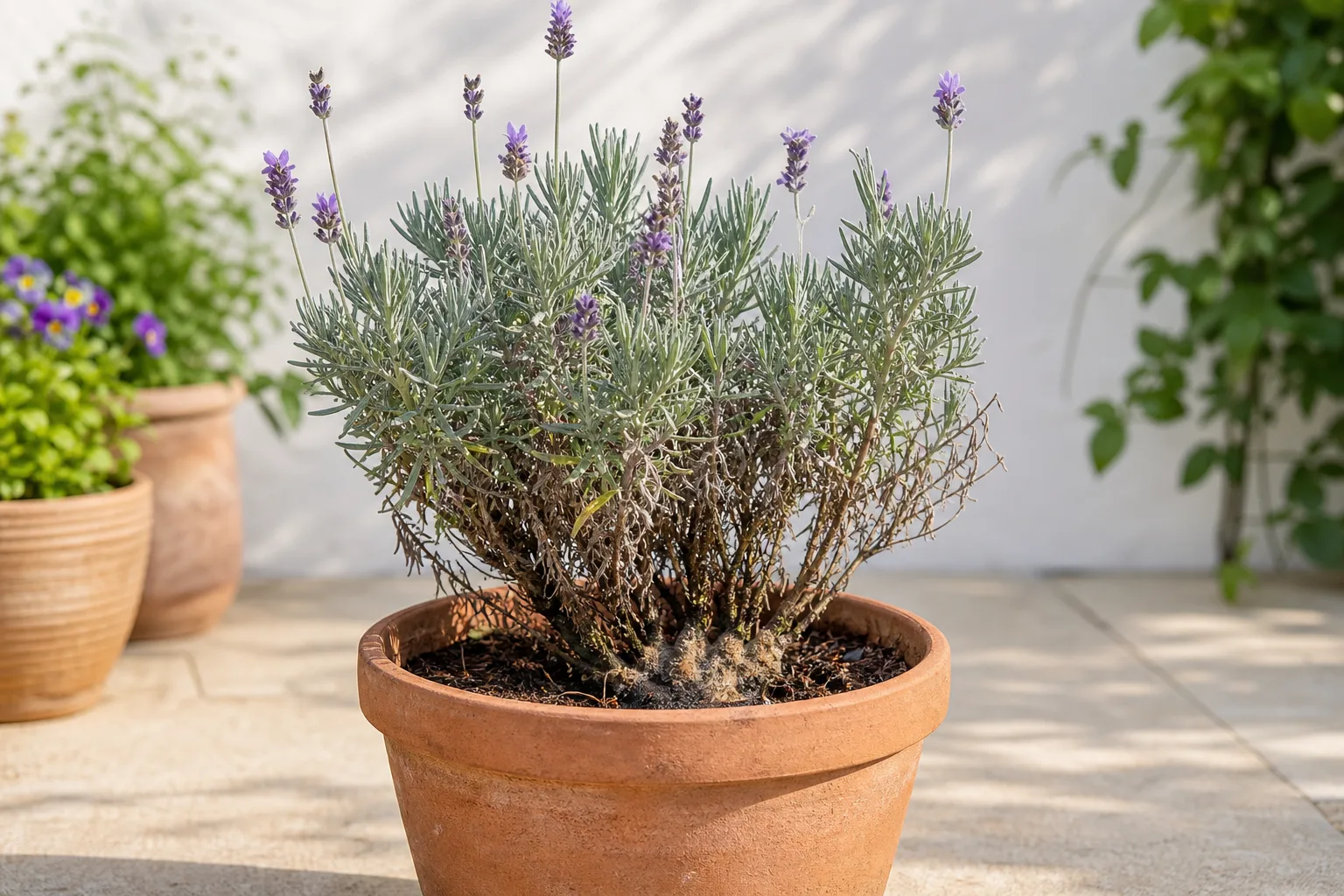
Crown Rot on Lavender: Causes, Checks & Fixes
This guide covers crown rot on Lavender. See also the general Crown Rot guide, watering, and light pages for this plant.
Crown Rot on Lavender: Causes, Checks & Fixes
Quick answer
Crown rot on English lavender (Lavandula angustifolia) attacks the woody stem base where tissue stays wet from mulch contact, saucer water, slow drainage, or monsoon-saturated mix. Upper stems may wilt while the crown feels soft and grey. First step: stop watering, expose the crown to air, remove wet mulch, and trim mushy base tissue if decay is localized-then repot shallow in gritty mix only if roots are still firm. Take cuttings from healthy upper stems the same day if collapse is spreading.
Scope on this page: stem-base crown decay-soft grey tissue at the soil line with collapse from the bottom up. If roots are mushy but the woody crown is still firm, open root rot on lavender. If branches wilt with dark internal streaks but the base is hard, see blight on lavender. Baseline watering rhythm lives on lavender watering and the lavender overview.
Crown rot vs. root rot on lavender
These two slugs overlap because wet culture triggers both-but where softness starts tells you which rescue path to follow.
| What you probe first | Likely problem | Urgency | Start here |
|---|---|---|---|
| Soft, grey, mushy tissue at soil line; collapse from base upward | Crown rot | Same-day escalation | This page |
| Mushy roots, sour smell, whole-plant wilt; woody crown still firm when pinched | Root rot | Repot after root trim | Root rot |
| Wilting on dry, light pot in midday heat; crown hard; recovery overnight | Heat wilt | Wait for evening | Wilting |
| Chronic heavy pot on schedule watering; yellow lower leaves; crown still firm | Overwatering stress | Fix dry-down before decay | Overwatering |
| Light pot, inward-curling silvery leaves, firm roots, hard crown | Underwatering | Deep drink when soil is dry | Underwatering |
Crown rot is the base softness page. Root rot is the below-ground decay page when stems have not yet turned mushy at the soil line. Many advanced cases involve both-trim crown and roots together, but route here when the stem base is the first failure point.
What crown rot looks like on lavender
Stem-base mush, grey fuzzy growth, and sour smell
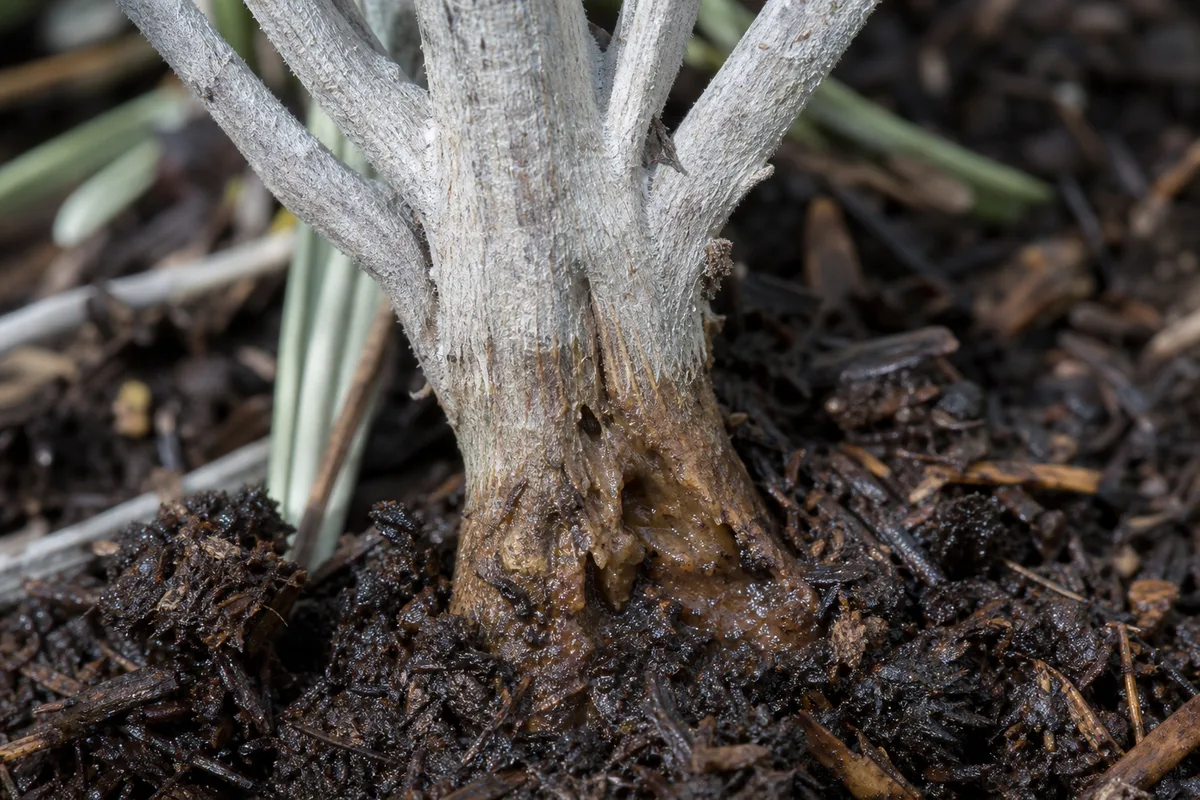
Crown Rot symptoms on Lavender - compare with healthy tissue on the same plant.
Grey or brown mushy tissue at the soil line is the hallmark. Stems wilt from the base upward while individual silvery leaves on upper wands may still look green briefly-a confusing pattern that makes owners water again and worsen decay. A sour or swampy smell from the pot confirms anaerobic rot. In humid weather, grey fuzzy growth may appear at the crown where wet organic matter touches woody tissue.
Unlike drought stress, the pot feels heavy and mix near the crown stays damp. Unlike root rot alone, crown rot is obvious when you probe the stem base with a finger-it yields like wet sponge, not firm bark.
Photo callout - firm woody base vs. mushy grey crown: Picture two container lavenders side by side on a humid balcony. On the healthy plant, pinching the stem just above soil line feels like hard woody bark with dry gravel mulch pulled back from the wood. On the rotting plant, the same zone is grey-brown, sinks under gentle pressure, and wet compost is piled against the stem. The sick pot smells sour when you lift it.
Wilting with wet crown vs. firm underwatered base
The wilting-on-wet-soil paradox is the classic crown-rot clue: damaged crown tissue cannot move water to upper foliage even though the mix is saturated. Owners see limp silvery foliage and add more water-exactly wrong. Confirm by comparing crown firmness with pot weight and moisture at 7 cm depth per the lavender watering guide.
Photo callout - grey fuzzy growth at soil line: After several rainy days, imagine wet wood-chip mulch pressed against a lavender crown on a full terracotta saucer. Fine grey fuzz appears where stem meets soggy organic matter; lower leaves dull from silver to grey-green while upper tips still hold color for another day or two. Pull mulch back and the fuzzy zone is soft-not the firm outer bark on older woody stems.
Why lavender gets crown rot
Mediterranean dryland biology and woody crown vulnerability
English lavender evolved on dry, rocky hillsides with full sun and fast drainage. It needs dry to medium, well-drained soil and dislikes wet crowns-exactly where container culture fails first. As lavender ages, stems lignify at the base into woody tissue that sits at the soil line. That junction is not herbaceous collar tissue; once water molds colonize upward from saturated mix, Phytophthora moves into stems in ways Pythium root rots typically do not.
Dampness more than cold is responsible for killing lavender in poorly drained conditions. In humid monsoon climates, a lignified crown in wet organic mulch decays faster than roots alone because the stem base stays anaerobic while upper stems still look briefly healthy.
French lavender (Lavandula dentata) and Spanish types (L. stoechas) tolerate more ambient humidity than English lavender but still require dry crowns-do not copy English-lavender watering on tender species in the same wet saucer culture.
Monsoon containers, saucers, and winter indoor traps
Monsoon culture-rain plus supplemental watering with saucers full-creates ideal crown rot conditions on balconies. A heavy terracotta pot after weeks of rain is a weight signal: saturated mix at the crown, not thirst. Cool indoor placement with weak winter light slows evaporation; a summer watering rhythm becomes excessive when the crown sits wet for days.
Organic mulch piled against woody stems traps moisture at the crown-exactly where lavender is vulnerable. Consider using rock instead of organic mulch after recovery, and keep gravel top-dress pulled back from the stem wood.
In-ground beds and Phytophthora in fields and containers
In garden beds, flat low spots in clay or beds without slope hold water around crowns after prolonged rain-same failure mode as containers. Lavender benefits from raised planting when drainage is poor; mounded rows keep woody bases above the wet zone.
Phytophthora root and crown rot on lavender is documented across English, hybrid, and sweet lavender species in cold wet soils and overwatered nursery stock. Ontario Ministry guidance on Phytophthora in lavender fields reports plants destroyed within one to two weeks under very moist conditions, with the pathogen able to persist in soil for years before symptoms appear. Home containers see the same pressure when crowns stay wet-though salvage is sometimes possible if caught before the full base goes soft.
Field Phytophthora management differs from home rescue: commercial growers remove infected plants and improve drainage because there is no reliable cure once crown tissue is colonized in saturated field soil. On a single balcony pot, shallow gritty repot and crown trim can still save firm upper stems if roots remain mostly healthy-take cuttings before betting on the parent.
How to confirm the cause
Work through these checks in order before watering or Lavender repotting guide again:
- Crown probe - Softness at stem base vs. firm wood. Pinch just above the soil line; mush means crown rot, not underwatering.
- Mulch contact - Organic matter piled against stem? Pull it back and re-check after air exposure.
- Drainage - Does water run through in seconds or sit? Are holes blocked? Does a cachepot trap water above the drain line?
- Wilting vs. moisture - Wilting with wet crown is classic crown rot; wilting with dry soil points to wilting triage.
- Root inspection - Unpot if needed. Mushy roots plus soft crown indicate advanced combined decay; firm roots with soft crown still route here first.
- Smell - Sour odor from mix supports rot over simple drought.
- Vascular streaks - Dark streaks inside cut stems with firm crown may indicate branch blight overlap-see blight on lavender when the base is still hard.
Lookalike differentials
| Symptom pattern | Crown rot? | Action |
|---|---|---|
| Soft grey base, wet heavy pot, sour smell | Yes - urgent | Crown trim + dry + shallow repot or cuttings |
| Mushy roots, firm dry crown | Root rot primary | Root rot rescue |
| Hard crown, light pot, curling leaves | Underwatering | Deep drink when dry 7 cm down |
| Outer bark on old stems firm, not mushy | Normal woody aging | Monitor only |
| Midday wilt, hard crown, dry soil, evening recovery | Heat wilt | Wait; see wilting |
First fix for lavender
Stop all watering, pull mulch back and air-dry the crown, trim soft crown tissue if decay is localized, and repot into fresh one-part-compost to three-parts-grit mix with the crown above the soil line-only if roots are still mostly firm.
Take 10 cm stem cuttings from firm upper growth before full collapse. Discard soggy substrate; sterilize pot or switch to new terracotta. If more than half the crown is soft, prioritize cuttings over saving the parent-advanced crown rot on wet culture rarely responds to fungicide alone.
Step-by-step recovery
- Unpot; rinse roots; cut mushy roots and crown tissue until firm wood only.
- Let trimmed plant air-dry 24 hours in bright indirect light if extensive cuts were made.
- Repot shallow-do not bury woody stem deeper than before.
- Water lightly once; then dry-down only when soil is dry 7 cm deep per lavender watering.
- Full sun and spacing for airflow; empty saucers always.
- Monitor daily; any new base softness means escalate to cuttings-only salvage the same day.
Recovery timeline
Localized early crown rot with firm upper stems may show new silver shoots in three to five weeks in full sun after shallow gritty repot-judge success by firm new growth at stem tips, not immediate blooms. Flower production pauses during recovery.
Full base collapse usually kills the plant within days despite intervention-Phytophthora can destroy lavender within one to two weeks under very moist conditions. When the entire crown is soft, cuttings from unaffected tips are the practical backup, not more watering.
What not to do
Do not water wilting plants when the pot is heavy and the crown is wet. Do not leave saucers filled. Do not repot deeper to “stabilize” a leaning plant. Do not apply heavy fertilizer on rotting crowns. Do not expect fungicide to rescue a soggy crown without drying culture first. Wear gloves; lavender is toxic to cats and dogs.
How to prevent crown rot next time
Well-drained soils are required, particularly in winter. Use terracotta with open drainage, gritty alkaline mix, and gravel mulch away from stems. Water at soil level only when dry 7 cm deep-use pot weight and a finger probe, not a calendar. Skip supplemental watering during heavy rain or monsoon weeks. Space pots for airflow; avoid overhead flooding at the base.
Indoors in winter, reduce watering sharply when light is weak-slow evaporation at the crown is a common silent trigger. Review overwatering on lavender for chronic wet-mix habits before decay starts.
When to worry - full base collapse
Treat any crown softness as urgent. If upper stems remain firm, act within 24 hours-trim, dry, and repot shallow. If the plant collapses entirely from the base or more than half the crown is mushy, take cuttings from firm upper stems the same day and discard the parent rather than waiting for recovery. Contact your local extension plant diagnostic clinic when you need official Phytophthora confirmation on valuable stock.
Related lavender problems
- Lavender overview - Sun, soil, drainage, and species basics
- Root rot on lavender - Mushy roots with firm crown
- Overwatering on lavender - Wet-mix culture before decay
- Wilting on lavender - Drought vs. rot triage
- Underwatering on lavender - Hard crown, light pot lookalike
- Lavender watering - Dry-down rhythm for firm crowns
- Blight on lavender - Branch wilt with firm base
FAQs
Is crown rot the same as root rot on lavender?
No. Crown rot is soft, grey, mushy tissue at the woody stem base where it meets soil-collapse starts from the bottom up. Root rot is below-ground decay; stems may stay firm while roots turn black and slimy. Both share wet culture, but crown softness is the escalation signal on this page. When roots are mushy with a firm crown, use the root-rot guide instead.
How can I confirm crown rot on lavender?
The stem base feels soft or grey while upper stems may still look green briefly. Mix near the crown stays wet; a sour smell from the drain hole is common. Cut into lower stem-dark mushy tissue confirms crown rot versus firm underwatered roots with a hard base.
Can lavender recover from crown rot?
Early cases with a firm upper stem and mostly healthy roots after removing wet mulch and repotting can recover in gritty mix with strict dry-down. Once the crown is fully soft and stems collapse from the base, recovery is unlikely-propagate from unaffected tips the same day.
Should I use fungicide on lavender crown rot?
Extension guidance treats cultural rescue first-dry the crown, trim decay, repot shallow in gritty mix. Fungicide drenches may help in commercial nursery production before symptoms appear, but they rarely cure a home container with a soggy crown already colonized. Culture fix beats fungicide on a wet crown.
How do I prevent crown rot on lavender?
Use terracotta with open drainage, gritty alkaline mix, gravel top-dress away from stems, soil-level watering only when dry 7 cm deep, and full sun with airflow. Never bury lavender deeper at repot or pile compost against woody stems.
Conclusion
Crown rot severity splits into three practical tiers on container lavender. Localized base softness with firm upper stems-trim decay, dry the crown, repot shallow in gritty mix, and you may see new silver shoots in three to five weeks. Soft crown spreading upward with mostly firm roots-same-day crown trim plus cuttings as backup; do not wait for collapse. Fully soft base with total collapse-salvage cuttings only; the parent is unlikely to recover on wet culture. Prevention is keeping the woody stem base dry, sunny, and above wet mulch year-round-see lavender watering and overwatering before the crown ever turns grey.
When to use this page vs other Lavender guides
- Lavender watering guide - Use for routine moisture checks before assuming crown rot is the main issue.
- Lavender problems hub - Browse all 51 common issues on this species.