Purple Leaves on Monstera Adansonii: Causes, Checks & Fixes
Quick answer
Purple or reddish tint on Monstera Adansonii leaves is a stress signal. A light blush on new leaf undersides in bright light can be normal; sudden purple on older leaves, stems, or vines near windows points to cold drafts or wet, cold roots blocking phosphorus uptake. First step: move the plant to a stable 65–80°F spot away from AC vents and cold glass.
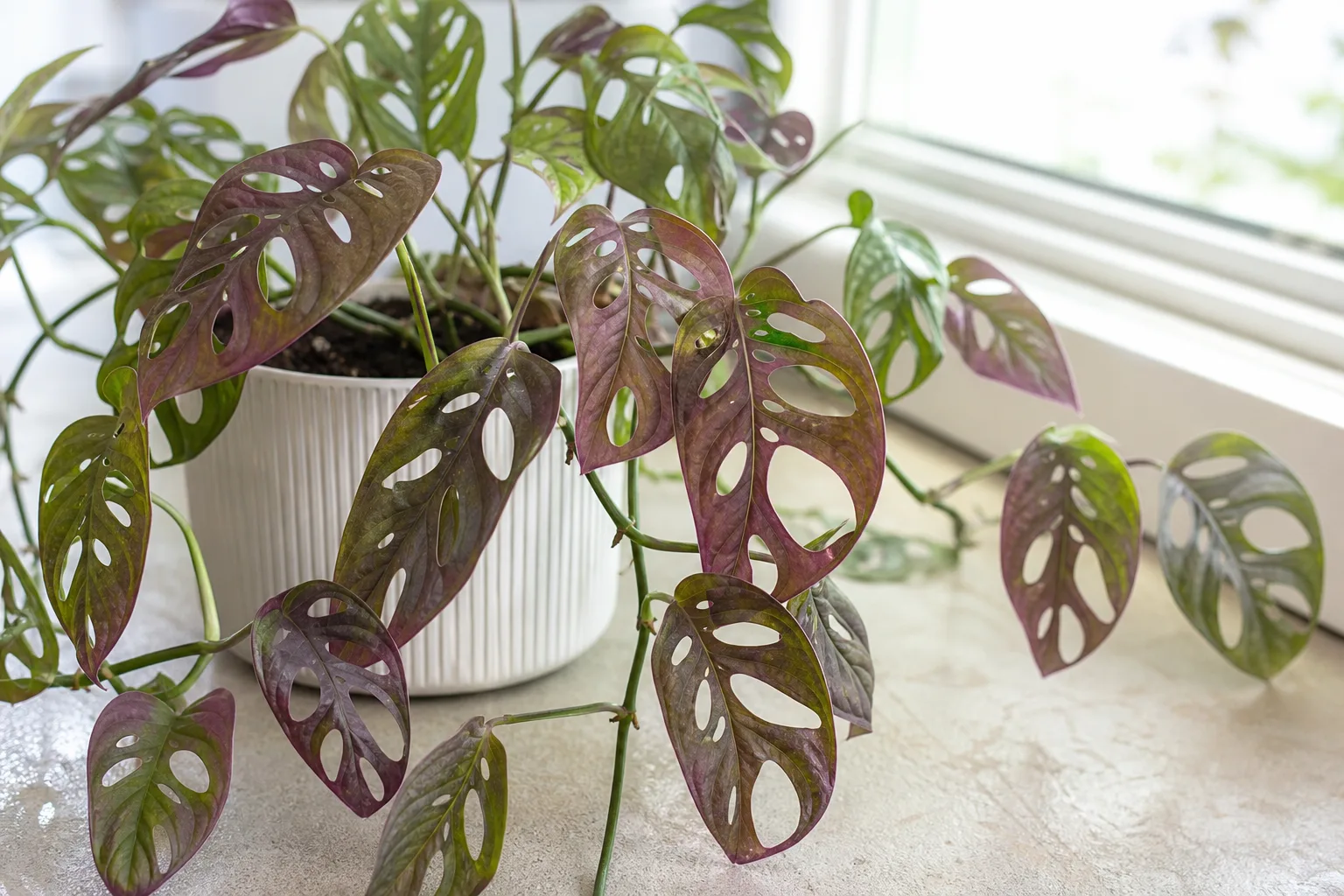
Purple Leaves on Monstera Adansonii: Causes, Checks & Fixes
This guide covers purple leaves on Monstera Adansonii. See also the general Purple Leaves guide, watering, and light pages for this plant.
Purple Leaves on Monstera Adansonii: Causes, Checks & Fixes
Quick answer
Purple or reddish leaves on Monstera Adansonii (Monstera adansonii) are usually a stress signal, not a color variant. A faint reddish-purple flush on the underside of a newly unfurling leaf in Monstera Adansonii light guide can be normal anthocyanin buildup. When older leaves, petioles, or whole vines turn dull purple after a cold night or draft, the plant is reacting to chill. A second common pattern is phosphorus uptake failure when roots sit in cold, wet mix and cannot pull nutrients even if fertilizer is present.
First step: move the pot or hanging basket to a stable, draft-free spot where temperatures stay roughly 65–80°F (18–27°C) and thin leaves no longer touch cold window glass. Do not fertilize, repot, or prune heavily until you know whether chill or root stress caused the color change.
What purple leaves look like on Monstera Adansonii
Healthy Adansonii has medium to dark green, glossy, heart-shaped leaves with oval fenestrations. Purple stress looks different from that baseline:
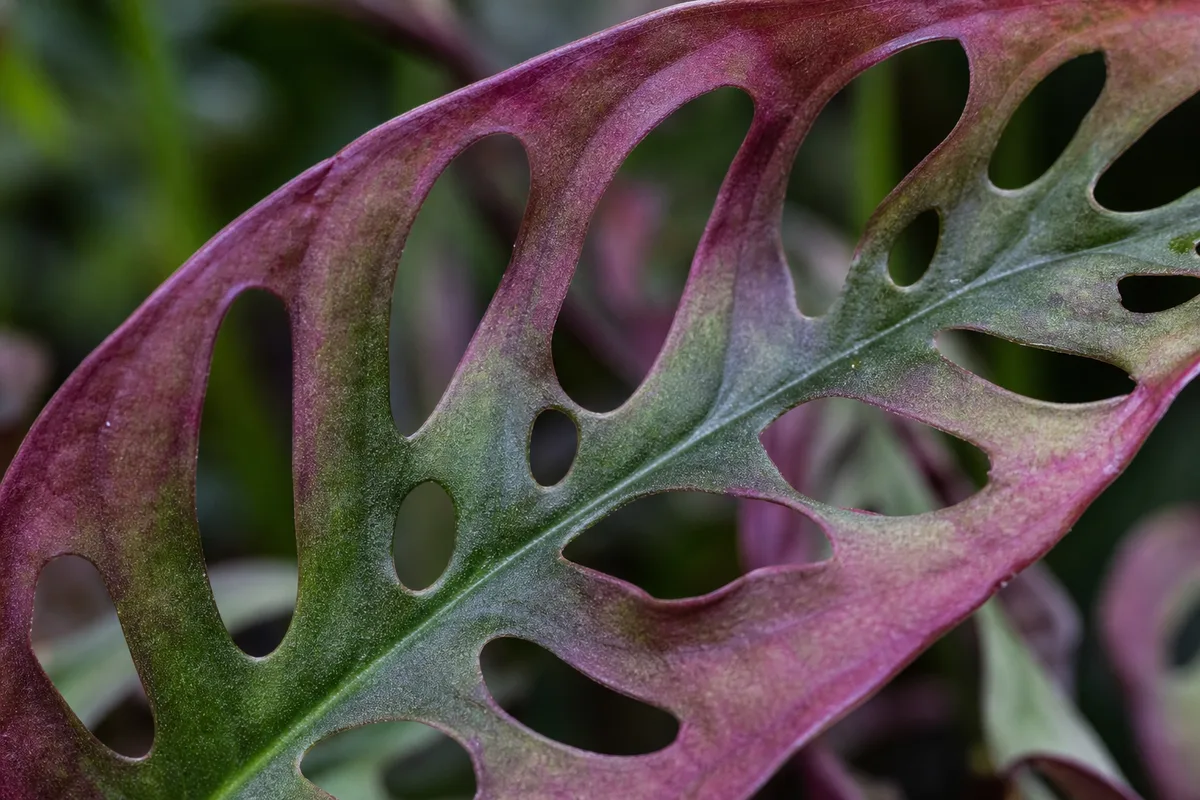
Purple Leaves symptoms on Monstera Adansonii - compare with healthy tissue on the same plant.
Normal anthocyanin blush (not a problem)
- Light reddish-purple on the abaxial (underside) surface of a leaf still unfurling
- Color fades as the leaf hardens off
- Rest of the vine stays green; no wilting or blackening
Cold-related purple
- Dull reddish-purple on leaf edges, tips, or entire thin blades-often on vines closest to a window, door, or AC register
- Leaves pressed against glass feel cool and purple before interior leaves do
- Severe chill can add wilting, blackened patches, or soft tissue within a day or two on Adansonii’s thinner foliage
Phosphorus-related purple
- Older lower leaves turn unusually dark green with purple-brown margins, veins, or undersides
- New fenestrated leaves may stay small, thin, or slow to develop holes
- Soil often stays damp at the top 3–5 cm because stressed roots use little water
Misread stress
- Direct sun scorch on pale variegated sections of cultivars like ‘Archipelago’ can redden or brown patches-usually crispy at the center, not a vine-wide purple flush
- Natural fenestrations are holes in green tissue, not purple discoloration
Why Monstera Adansonii gets purple leaves
Adansonii is a tropical climber from Central and South American rainforests. Its thinner leaves dry and chill faster than Monstera deliciosa, so color changes show up quickly when care slips.
Cold and draft stress
Tropical houseplants respond to chilling by building anthocyanins-protective pigments that can make foliage look red or purple. Vines on a cold sill, beside a summer AC outlet, or in a hanging basket against winter glass often purple on the exposed leaves first. Adansonii is sensitive to temperature drops below 50°F and should avoid cold drafts year-round.
Phosphorus uptake problems
Lower-leaf purpling along margins often tracks phosphorus deficiency-but in pots the issue is usually uptake, not empty fertilizer. Wet substrate, poor root health, low root-zone temperature, or pH drift can limit phosphorus even when the mix contains enough. Adansonii in dense, slow-drying soil that stays cold near a window fits this pattern: dark green older leaves with purple edges, damp mix, and stalled fenestration on new growth.
Root stress from overwatering
Chronic wet feet weaken roots and mimic deficiency symptoms. Because Adansonii can look briefly fine while roots suffocate, purple lower leaves plus sour-smelling soil point here. Overwatering can result in root rot on Monstera Adansonii overview when drainage fails.
Intense light on new tissue
Strong indirect light can intensify normal underside blush on new leaves. That is distinct from sudden purple on mature leaves after a temperature drop.
How to confirm the cause
Work through these checks in order:
- Timing - Did color change follow a cold night, open window, new AC placement, or winter move closer to glass?
- Which leaves - Underside blush on one unfurling leaf only suggests normal anthocyanin. Purple on multiple mature leaves or petioles suggests chill or uptake failure.
- Touch test - Feel leaves against the pane versus interior leaves. Cold-contact leaves purple first in chill cases.
- Pattern on the vine - All exposed vines evenly tinted after a room-wide cold drop suggests temperature. Purple only on oldest lower leaves with dark green blades and wet soil suggests phosphorus uptake failure.
- Soil moisture - Probe 3–5 cm deep. Soggy mix for a week or more supports root stress; match this to Adansonii’s rule of letting the top 3–5 cm dry before watering again.
- New growth - If the newest leaf shows purple while unfurling and stays small, chill or active root failure is still ongoing. Clean green new leaves with developing fenestrations after a warm move mean the worst has passed.
First fix for Monstera Adansonii
Make one correction first:
Move the plant away from cold drafts and stabilize temperature. Pull hanging baskets inward several feet from winter glass, take vines off the AC path, and keep the pot out of the blast zone of exterior doors. Aim for the 65–80°F comfort range Adansonii tolerates indoors. Let it sit there one week before Monstera Adansonii repotting guide or feeding.
If soil has been wet for days and smells sour, skip the next scheduled watering and let the top 3–5 cm dry completely-but still fix placement before unpotting.
Step-by-step recovery
After the plant is in a stable warm spot:
- Wait 48–72 hours - Mild anthocyanin blush on a new leaf often needs no action. Chill-related spread usually stops once temperature steadies.
- Adjust watering - Resume only when the top 3–5 cm is dry. In better light and warmth, the pot should lighten on a predictable 7–10 day rhythm in active growth.
- If lower leaves stay dark green with purple margins and fenestration stalls - After two weeks of corrected care, apply a balanced houseplant fertilizer at half strength during active growth. Do not feed a plant still showing mushy stems or sour soil.
- Prune only dead tissue - Trim fully blackened or mushy leaves at the base with clean scissors. Leave lightly purple leaves until new growth looks normal; they will not re-green but still photosynthesize.
- Repot only if roots are failing - Brown, mushy roots or mix that never dries warrant fresh aroid mix with perlite and bark-not a routine response to a one-night chill.
Recovery timeline
Mild cold blush on a few thin leaves often stops worsening within days of a warm move. New leaves with normal green color and developing fenestrations typically appear within two to four weeks if roots are healthy. Purple lower leaves from phosphorus uptake issues fade slowly; they may stay tinted until you remove them during normal grooming after the plant pushes clean new foliage. Severe black, water-soaked tissue on Adansonii does not recover-cut it away and judge success by firm stems and unstressed new leaves.
Lookalike symptoms
| What you see | Likely cause | How to tell it apart |
|---|---|---|
| Green leaves with oval holes only | Normal Adansonii | No purple flush; fenestrations are structural, not color |
| Light purple underside on one new leaf | Normal anthocyanin | Fades as leaf matures; no spread to older tissue |
| Yellow lower leaves, wet soil | Overwatering | Yellowing without purple margins; may overlap if roots fail |
| Brown crispy patches on variegated zones | Sun scorch | Direct sun on ‘Archipelago’ or similar; damage centered on pale tissue |
| Black mushy leaves after a freeze | Severe cold injury | Water-soaked collapse, not a light purple flush |
| Long bare stems, small pale leaves | Not enough light | Stretching without purple; see leggy growth pattern |
Mistakes to avoid
Do not blast a chilled Adansonii with grow lights to warm it-fix room temperature first. Do not fertilize heavily hoping purple leaves green up; feeding stressed, waterlogged roots worsens salt buildup. Do not stack repotting, pruning, and moss-pole changes the same day you move it from a cold window. Do not assume purple means a rare cultivar-stable purple foliage is not a standard Adansonii trait except for brief new-leaf undersides.
How to prevent purple leaves next time
Keep Adansonii in bright indirect light without pressing thin foliage against cold glass. In winter, pull hanging pots inward or add a sheer curtain so trailing vines do not rest on the pane. Water when the top 3–5 cm dries, using airy aroid mix with perlite and bark so roots stay oxygenated. Maintain 50–60% humidity if your home is dry, but prioritize stable warmth over misting alone. Avoid parking the pot beside AC vents, frequently opened doors, or unheated porches. If lower leaves purple every winter on the same sill, the placement-not the plant-is the problem.
When to worry
Escalate if purple turns to black water-soaked tissue, stems soften at nodes, or every new leaf arrives purple-tinted while soil stays sour. A faint reddish edge on one or two window-side leaves after a single cold night is common on thin-leaved Adansonii and usually reversible. Judge the plant by firm vines and clean green color on the next unfurling leaf with normal fenestration-not by whether old purple patches disappear.
Conclusion
Purple leaves on Monstera Adansonii mean the plant is stressed-usually by cold air or by roots too wet and cold to take up phosphorus-or, on a single new leaf underside, a harmless anthocyanin flush in bright light. Confirm with placement history, overnight temperature, which leaves changed, and soil moisture at 3–5 cm depth. Move to a draft-free, warm spot first; adjust water and feeding only after new growth shows normal green fenestrated leaves.
When to use this page vs other Monstera Adansonii guides
- Monstera Adansonii watering guide - Use for routine moisture checks before assuming purple leaves is the main issue.
- Monstera Adansonii problems hub - Browse all 22 common issues on this species.