Purple Leaves on Philodendron Birkin: Causes, Checks & Fixes
Quick answer
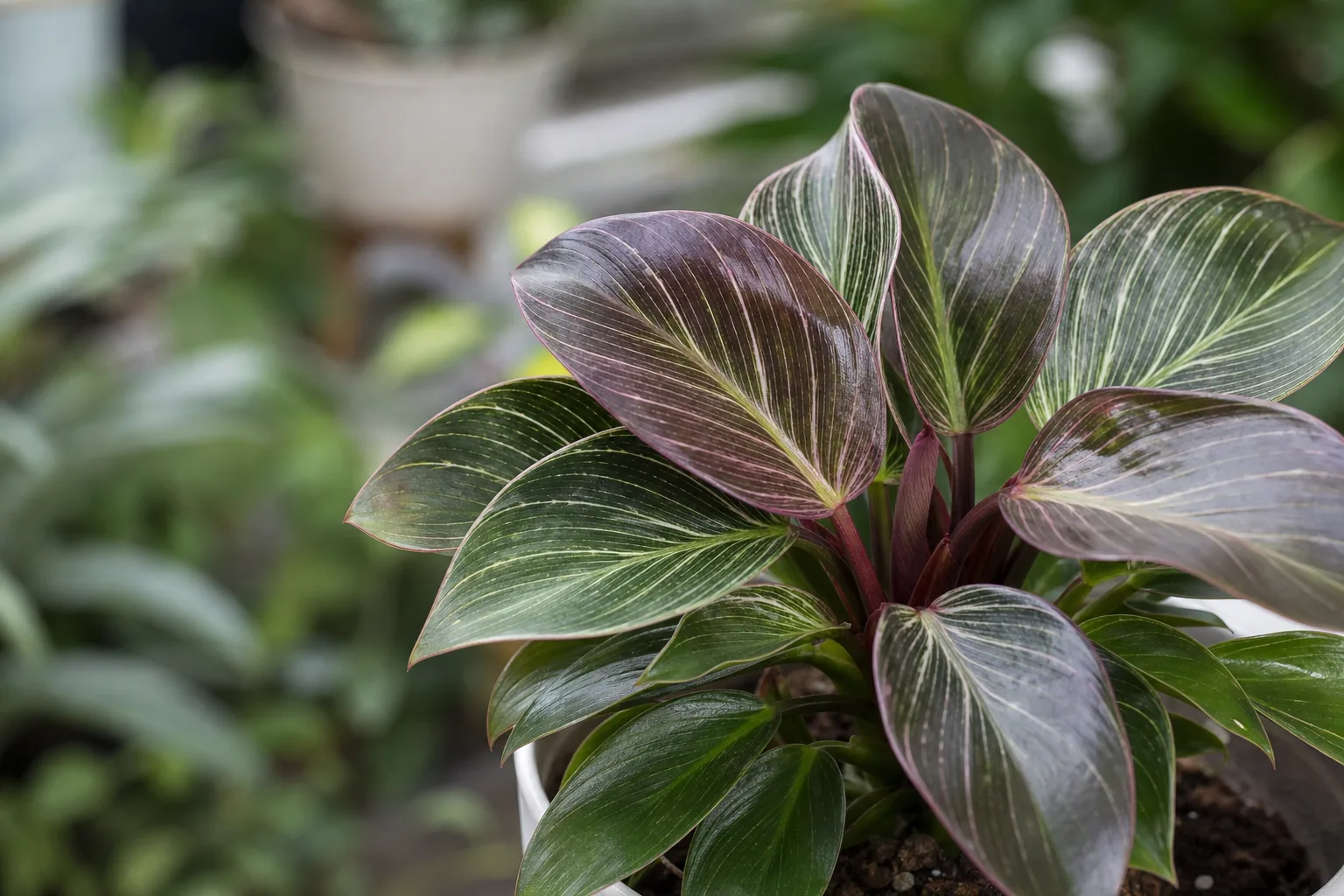
Purple or burgundy leaves on Philodendron Birkin are often genetic reversion toward its Rojo Congo parent-not a disease. One dark leaf on an otherwise striped plant is usually harmless. Widespread purpling on new growth after a cold draft or dim corner means stress: move Birkin to stable bright filtered light away from cold glass first.
Purple Leaves on Philodendron Birkin: Causes, Checks & Fixes
This guide covers purple leaves on Philodendron Birkin. See also the general Purple Leaves guide, watering, and light pages for this plant.
Purple Leaves on Philodendron Birkin: Causes, Checks & Fixes
Quick answer
Purple leaves on Philodendron Birkin usually fall into two buckets: normal genetic expression or environmental stress. Birkin is a chimeric mutation believed to come from Philodendron ‘Rojo Congo’-a cultivar with naturally reddish-burgundy foliage. Under stress, Birkin can produce leaves with a reddish tone or part-red, part-white striping as parent genetics resurface. That is different from the creamy white pinstripes Birkin is sold for.
First step: move the plant to stable bright filtered light away from cold drafts and winter window glass. Do not fertilize, repot, or prune heavily on day one. One isolated purple leaf on an otherwise striped rosette rarely needs intervention. Widespread purpling on new growth after a temperature drop or dim placement needs corrected conditions before any other treatment.
What purple leaves look like on Philodendron Birkin
Healthy Birkin shows glossy dark green leaves with creamy white or yellow pinstripes on a compact upright rosette. Purple-leaf Birkin breaks that pattern in distinct ways:
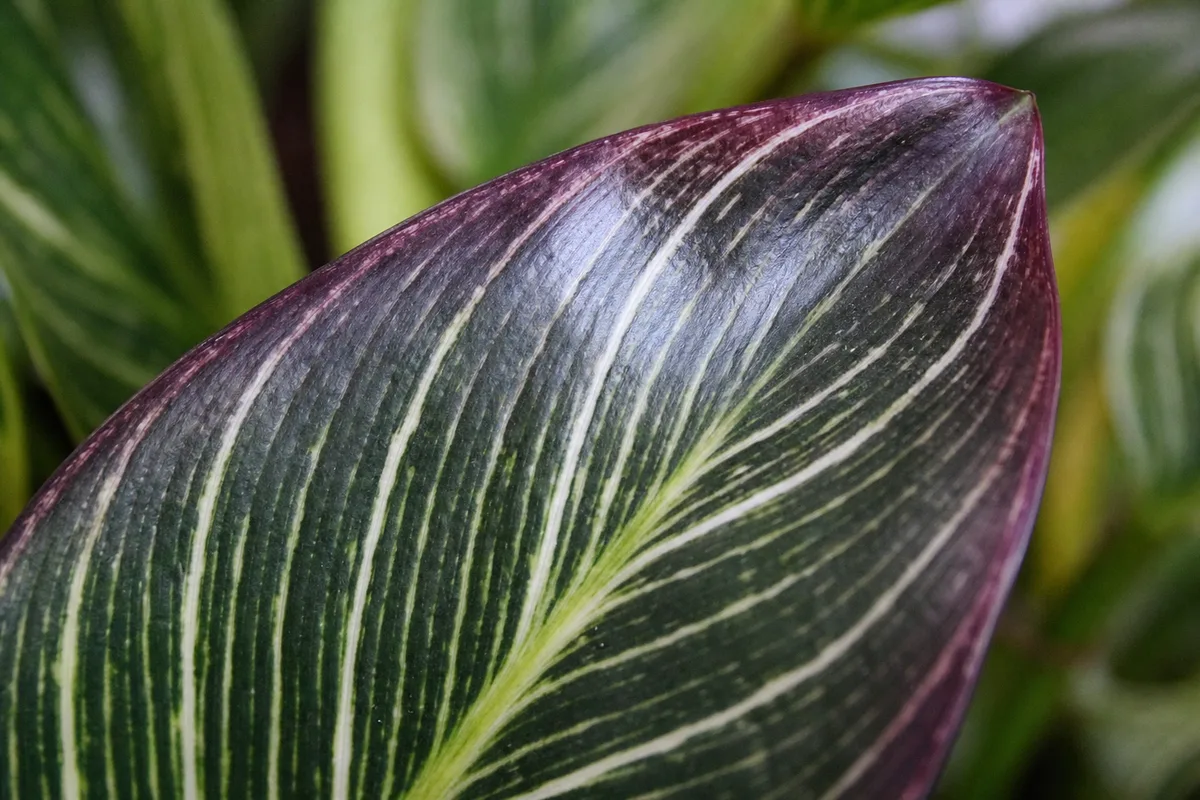
Purple Leaves symptoms on Philodendron Birkin - compare with healthy tissue on the same plant.
- Single burgundy or purple-tinged leaf - Often on an older or newly mature leaf while surrounding foliage stays normally variegated
- Part-red, part-white striping - One leaf shows mixed burgundy and pinstripe sections instead of clean green-and-white contrast
- Solid dark burgundy new leaves - Entire new foliage emerges purple-red with little or no white striping
- Purple flush on leaf undersides or margins - Especially after nights near a cold window
- Fading pinstripes with a reddish cast - Stripes narrow or disappear as leaves take on a darker overall tone
Purple from cold or light stress often appears on newest growth first or on the side facing a draft. Genetic reversion can look similar but may show up as one random dark leaf among otherwise normal pinstriped neighbors. Unlike yellowing from overwatering on Philodendron Birkin, purple Birkin leaves usually stay firm-not soft or translucent-unless cold damage has advanced to tissue death.
Why Philodendron Birkin gets purple leaves
Genetic reversion toward Rojo Congo
Birkin’s pinstripe variegation comes from an unstable chimeric mutation. The plant carries genetics from its Rojo Congo parent line, which produces dark green to burgundy-red leaves. When the mutation does not express fully in a new leaf, that parent coloring shows through as purple, burgundy, or reddish foliage.
This is why mature Birkins sometimes produce leaves with a reddish tone or thick pink-to-red variegation-not because the plant is sick, but because the unstable pattern shifts between cell layers. Collectors often see one dark leaf on an otherwise healthy specimen.
Cold stress and anthocyanin buildup
Philodendron Birkin prefers room temperatures from 65 to 85 °F and is not frost-tolerant. Cold drafts should be avoided. When temperatures dip-especially near winter glass-plants produce anthocyanins, protective pigments that tint leaves purple or red. Cool growing conditions increase anthocyanin accumulation, while warm stable rooms produce less of this stress coloring.
Birkin pressed against a cold window in winter is a common trigger. AC vents, unheated entries, and outdoor drafts through frequently opened doors cause the same response on cold-sensitive philodendrons.
Insufficient light favoring dark foliage
Birkin needs bright, filtered sunlight. In dim corners the plant prioritizes chlorophyll production for survival, and insufficient light can result in loss of variegation-sometimes toward darker green or reddish leaves rather than pale stretchy growth alone. Low light does not always mean leggy stems first; on variegated philodendrons, reversion toward darker parent coloring is a frequent early signal.
Phosphorus uptake problems (less common indoors)
Lower-leaf purpling along margins can occur with phosphorus deficiency, though this is rarer in typical houseplant care where balanced fertilizers supply adequate phosphorus. It becomes more likely when roots are stressed-cold mix, chronic overwatering, or a damaged root system that cannot take up nutrients even when they are present in the soil.
Stress stacking after Philodendron Birkin repotting guide or moves
Repotting, relocation, and temperature swings do not directly turn leaves purple, but they weaken stable expression of the variegation mutation. Birkin that was recently moved to a dimmer room or colder sill after repotting may push darker leaves for several weeks while it settles.
How to confirm the cause
Work through these checks in order:
- Count affected leaves - One purple leaf among many striped ones suggests genetic variation. Most or all new leaves purple points to reversion or stress.
- Timing - Did color change follow a cold night, window move, or heating-season draft? Cold-linked anthocyanin often appears within days of exposure.
- Location relative to glass - Leaves touching or facing winter window panes purple more than interior foliage.
- Light at leaf level - Dim placement with dark new growth fits light-driven reversion. Adequate bright filtered light with one random dark leaf fits genetics.
- New vs old growth - Purple only on lower older leaves with healthy striped new foliage may be normal aging or isolated reversion. Purple exclusively on newest leaves signals active stress or mutation shift.
- Soil and roots - Wet heavy mix for 10+ days plus purple lower leaves raises root stress and possible phosphorus uptake issues. Dry mix with limp leaves points to underwatering on Philodendron Birkin instead.
- Temperature - Room below 65 °F (18 °C) or plant sitting in a cold microclimate increases cold-stress purpling risk.
- Pest scan - Stippling, webbing, or sticky residue means pests-not purple pigments-are the problem.
If one firm purple leaf appears on a mature striped Birkin with stable care, monitoring is reasonable. If every new leaf for a month is solid burgundy, treat it as reversion or stress that needs intervention.
First fix for Philodendron Birkin
Move the plant to bright filtered light in a stable 65–85 °F (18–29 °C) spot away from cold drafts and winter window glass. Pull it back from the pane so leaves do not contact cold glass at night. Rotate the pot weekly so all sides receive even light-Birkin grows toward sunlight and uneven exposure can worsen one-sided stress coloring.
Do not repot, fertilize, or prune heavily on the same day. Wait two to three weeks and judge the next new leaves:
- Improved striping on fresh foliage means conditions were the issue.
- Continued solid burgundy new growth suggests reversion-prune back to the last node with strong pinstripes if you want to encourage variegated shoots.
If cold damage added black mushy tissue-not just purple tint-trim affected leaves with clean scissors and keep the plant warmer; tissue that has necrosed will not recover.
Step-by-step recovery
Once placement is stable:
- Hold watering until the top 3–5 cm of mix feels dry-match Birkin’s normal rhythm, not panic extra drinks.
- Watch the next two or three leaves - Recovery shows as clearer white pinstripes and greener background on new foliage.
- Prune reverted stems if needed - If a branch produces only burgundy leaves, cut back to a node below the last well-striped leaf to redirect energy.
- Increase humidity modestly if leaf edges brown while recovering-Birkin prefers 50–60% humidity.
- Resume diluted fertilizer only after new growth looks stable-never feed a cold-stressed or recently repotted plant hoping color will change.
Purple pigment in existing leaves is permanent. Success means healthy new striped leaves, not old ones turning white again.
Recovery timeline
| Situation | What to expect |
|---|---|
| One genetic purple leaf | No action needed; next leaves likely normal |
| Cold draft purpling | New leaves improve within 2–4 weeks after warming |
| Low-light reversion | Stronger striping on new leaves within 3–6 weeks after brighter placement |
| Persistent all-burgundy new growth | May not return to full Birkin pattern; pruning may redirect some shoots |
Slow growth is normal for Birkin-do not interpret a few weeks without new leaves as failure if the plant otherwise looks stable.
Lookalike symptoms
- Red leaves - Same reversion mechanism; red and purple both reflect Rojo Congo genetics surfacing.
- Yellow leaves - Usually overwatering or root stress; tissue turns yellow, not burgundy.
- Pale or white new leaves - Too much light or unstable mutation producing low-chlorophyll tissue; different from purple-red darkening.
- Brown-black cold spots - Tissue death from temperatures below 55 °F (13 °C); more serious than cosmetic purple flushing.
Mistakes to avoid
- Fertilizing immediately - Purple color is rarely a hunger signal on Birkin; feeding stressed roots can burn foliage.
- Repotting on day one - Unnecessary unless roots are rotting; adds stress on top of color change.
- Leaving the plant on a winter windowsill - Cold glass triggers anthocyanin and can progress to real cold injury.
- Pruning every purple leaf - One mature burgundy leaf does not threaten the plant; over-pruning weakens a slow grower.
- Assuming purple means disease - Fungal spots have halos or spreading margins; reversion purple is usually uniform across the leaf blade.
How to prevent purple leaves next time
Keep Birkin where bright filtered light reaches the foliage most of the day-east window or filtered south or west exposure. Maintain 65–85 °F year-round and pull back from cold glass in winter. Water when the top 3–5 cm dries; avoid chronically wet mix that stresses roots. Rotate weekly, wipe dust from glossy leaves so light penetrates, and accept that occasional burgundy leaves are part of owning an unstable variegated cultivar.
When to worry
Escalate care when purpling comes with black mushy patches, widespread limp stems, or leaves that darken and die after a freeze-exposed night-those signs suggest cold injury beyond cosmetic pigment. Also intervene if every new leaf for a month is solid burgundy and you bought Birkin specifically for pinstripes; corrective light and selective pruning are your best tools, but full genetic reversion may not be reversible.
A single firm purple leaf on an otherwise striped, upright Birkin in a warm bright room is not an emergency. Watch the next growth cycle before taking drastic action.
When to use this page vs other Philodendron Birkin guides
- Philodendron Birkin watering guide - Use for routine moisture checks before assuming purple leaves is the main issue.
- Philodendron Birkin problems hub - Browse all 42 common issues on this species.