Purple Leaves on Ponytail Palm: Causes, Checks & Fixes
Quick answer
Purple or reddish tint on Ponytail Palm leaves is a stress signal, not healthy foliage color. Cold drafts near windows and sudden moves into much brighter sun are the most common triggers; phosphorus uptake problems from cold, wet roots are second. First step: press the caudex to confirm it is firm, then move the plant to a stable 65–80°F spot away from cold glass and AC vents.
Purple Leaves on Ponytail Palm: Causes, Checks & Fixes
This guide covers purple leaves on Ponytail Palm. See also the general Purple Leaves guide, watering, and light pages for this plant.
Purple Leaves on Ponytail Palm: Causes, Checks & Fixes
Quick answer
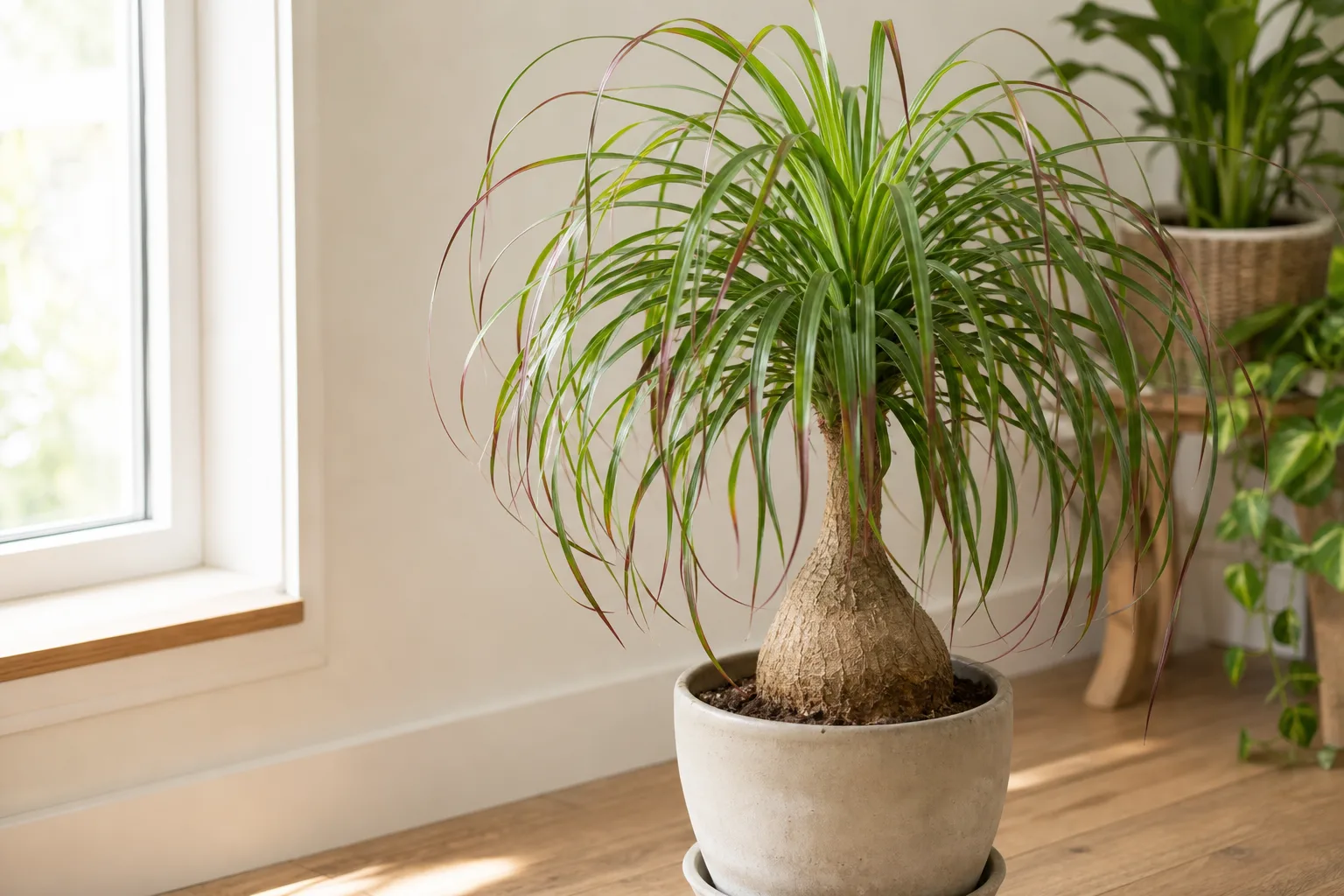
Purple or reddish leaves on Ponytail Palm (Beaucarnea recurvata) are not normal foliage color. Healthy plants have bright green, strap-like leaves cascading from the top of the swollen caudex. When those leaves develop a purple, wine, or reddish-brown flush, the plant is building anthocyanin pigments under stress-most often cold exposure near windows, doors, or AC vents, or sudden increases in light after a move to a sunnier spot or outdoor porch.
First step: press the caudex. If the base feels firm and solid, move the pot to a stable, draft-free spot where temperatures stay roughly 65–80°F (18–27°C) and leaves no longer touch cold glass. Do not fertilize, repot, or prune heavily until you know whether chill, sun acclimation, or root stress caused the color change.
What purple leaves look like on Ponytail Palm
Ponytail Palm leaves are long, narrow straps that hang like a fountain from the crown. Purple stress looks different from the occasional brown tip or naturally aging lower leaf.
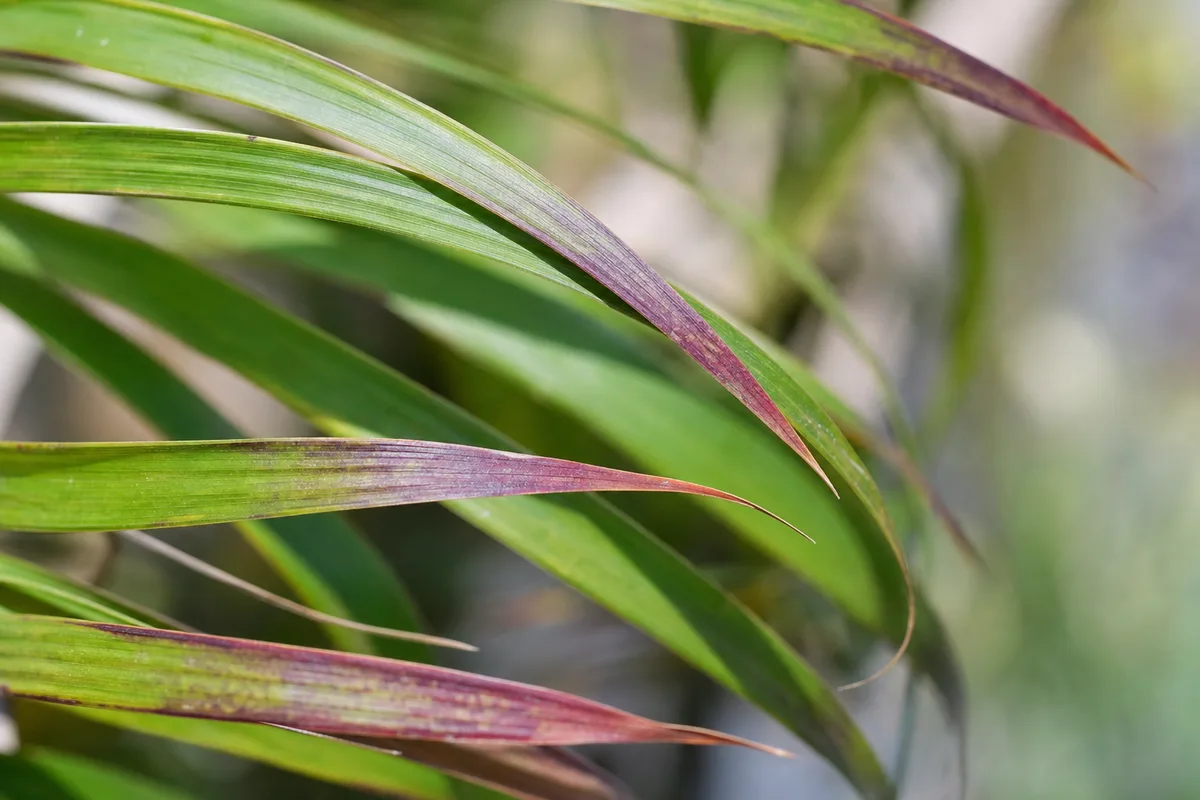
Purple Leaves symptoms on Ponytail Palm - compare with healthy tissue on the same plant.
Cold-related purple
- Reddish-purple or wine-colored blush on leaf edges, tips, or whole straps-often on foliage closest to a window, exterior door, or AC register
- Leaves may feel cool where they press against winter glass
- Mild cases show color only; severe chill can add limp straps, blackened patches, or widespread discoloration within a day or two
Sun-stress purple
- Red-brown or purple tint that appears within days of moving the plant to a much sunnier window, grow light, or outdoor porch
- Often affects the most exposed straps while interior leaves stay greener
- The caudex stays firm and soil smells normal-this pattern is protective coloration, not rot
Phosphorus-related purple
- Older lower straps turn unusually dark green with purple-brown margins or undersides-a pattern extension guides link to phosphorus uptake failure
- New crown leaves may stay small or slow
- Mix often stays damp because stressed roots use little water, even though the caudex still feels firm
Not purple-leaf ponytail
- Beaucarnea recurvata does not have a stable purple-leaf form. A permanent wine-red base on new growth may indicate a different Beaucarnea species such as B. guatemalensis, which NYBG notes can show a red tinge at the leaf base-not a stress symptom on a typical recurvata.
Why Ponytail Palm gets purple leaves
Ponytail Palm is native to dry Mexican habitats and stores water in its caudex. It tolerates bright light and drought, but that resilience does not extend to cold roots or abrupt environmental swings.
Cold and draft stress
Tropical and subtropical houseplants respond to chilling by building anthocyanins-protective pigments that can make foliage look red or purple. NYBG notes that leaves discolor when exposed to cold temperatures, and temperatures dipping into the low 50s°F can seriously harm the plant. Straps on a cold windowsill or beside a winter door often purple on the exposed leaves first. Cool growing environments increase anthocyanin accumulation, which is why a plant that looked fine all summer can blush purple after the first cold snap near glass.
Sudden increase in light
Ponytail Palm wants strong light and can take full sun once acclimated. When a plant moves from a dim corner to blazing direct sun in one step, straps can darken to a red-brown hue in strong sunlight as the plant builds sunscreen pigments. Wisconsin Extension recommends gradual acclimation when moving container plants outdoors to prevent sunburn-indoor light jumps follow the same logic.
Phosphorus uptake problems
Lower-leaf purpling along margins often tracks phosphorus deficiency-but in pots the issue is usually uptake, not empty fertilizer. Wet substrate, poor root health, low root-zone temperature, or pH drift can limit phosphorus even when fertilizer is present. Ponytail Palm has low fertilizer needs and is more often overfed than starved; purple lower straps plus damp mix and stalled crown growth fit uptake failure better than a bare windowsill chill.
Root stress from overwatering
Overwatering is the most common cause of failure for Ponytail Palm overview. Chronic wet feet weaken roots and can mimic deficiency symptoms while the caudex softens. Purple straps plus a mushy base point here-not a simple anthocyanin flush on a firm trunk.
How to confirm the cause
Work through these checks in order:
- Caudex firmness - Press the swollen base gently. Firm and solid supports environmental stress (cold or sun). Soft, wrinkled, or mushy means rot investigation comes first.
- Location history - Did color change follow a cold night, open window, new AC placement, winter move closer to glass, or a jump to much brighter sun?
- Touch test - Feel straps against the pane versus interior foliage. Cold-contact leaves purple first in chill cases.
- Light change timeline - Purple appearing within a week of a sunny-window or porch move, with firm caudex and dry-ish mix, strongly suggests sun-stress anthocyanins.
- Pattern on the plant - All straps evenly tinted after a room-wide cold drop suggests temperature. Purple only on oldest lower straps with dark green blades and wet soil suggests phosphorus uptake failure.
- Soil moisture - Probe deep near the caudex. Soggy mix for a week or more supports root stress; nearly dry mix with purple after a light increase points back to sun or temperature.
- New crown growth - If the newest strap shows purple while unfurling, chill or active root failure is still ongoing. Clean green new leaves after a warm, stable move mean the worst has passed.
First fix for Ponytail Palm
Make one correction first:
If the caudex is firm: move the plant away from cold drafts and stabilize temperature. Place it several feet back from winter window glass, off the AC path, and out of the blast zone of exterior doors. Aim for the 65–75°F comfort range NYBG recommends indoors. Let it sit there one week before Ponytail Palm repotting guide or feeding.
If purple followed a sudden light increase and the caudex is firm: either leave the plant in place and watch for stabilization, or pull it slightly back from the harshest direct rays and acclimate over 10–14 days of gradual exposure. Do not stack a repot and fertilizer on the same day you move it.
If the caudex is soft: skip feeding and reduce watering immediately. Treat root failure before worrying about leaf color-see root rot on Ponytail Palm guidance for this plant.
Step-by-step recovery
After the plant is in a stable warm spot with a firm caudex:
- Wait 48–72 hours - Mild anthocyanin blush often stops spreading once temperature steadies.
- Adjust watering - Allow the mix to dry between waterings; reduce significantly in winter. In better light and warmth, the pot should lighten on a predictable multi-week rhythm, not stay damp.
- If lower straps stay dark green with purple margins and crown growth is stalled - After two weeks of corrected care, apply a light cactus or balanced fertilizer at half strength during active growth only. Do not feed a plant with a soft caudex or sour soil.
- Prune only dead tissue - Trim fully blackened or mushy straps at the base with clean scissors. Leave lightly purple straps until new growth looks normal; they will not re-green but still photosynthesize.
- Repot only if roots are failing - Brown, mushy roots or mix that never dries warrant fresh gritty cactus mix and a pot with drainage-not a routine response to a one-night chill on a firm caudex.
Recovery timeline
Mild cold blush on a few straps often stops worsening within days of a warm move. New bright green crown leaves typically appear within several weeks to a few months-ponytail is a slow grower even in good light. Purple lower straps from phosphorus uptake issues fade slowly; they may stay tinted until you remove them during normal grooming after the plant pushes clean new foliage. Sun-stress red-brown color often softens back toward green over weeks if light is stable. Severe black, water-soaked tissue after a freeze does not recover-cut it away and judge success by a firm caudex and unstressed new straps.
Lookalike symptoms
| What you see | Likely cause | How to tell it apart |
|---|---|---|
| Bright green cascading straps | Normal ponytail color | Present since purchase; no sudden wine-red shift |
| Brown dry tips only | Water, light, or mineral stress | Tips only; caudex firm; no purple wash |
| Yellow lower straps, wet soil | Overwatering | Yellowing without purple margins; caudex may soften |
| Brown crispy patches on exposed straps | Sun scorch without acclimation | Bleached or tan dead zones, not uniform purple blush |
| Black mushy straps after a freeze | Severe cold injury | Water-soaked collapse, not a light purple flush |
| Permanent red at leaf base on new growth | Possible B. guatemalensis | Red present since early growth; not a sudden stress blush |
| Long bare caudex, pale weak straps | Not enough light | Stretching without purple; see leggy growth pattern |
Mistakes to avoid
Do not blast a chilled plant with grow lights to warm it-fix room temperature first. Do not fertilize heavily hoping purple straps green up; overfertilizing leads to soft, weak growth on ponytail palm. Do not move from a dark shelf to blazing midday sun in one jump. Do not repot, prune every strap, and relocate on the same day-stack one environmental fix at a time. Do not ignore a soft caudex because the purple looks mild; rot and anthocyanin blush need opposite responses.
How to prevent purple leaves next time
Keep ponytail palm in the sunniest window available without pressing foliage against cold glass. In winter, pull the pot inward or add a sheer curtain so straps do not rest on the pane. When increasing light-especially before summer outdoors-acclimate over 10–14 days. Water when the mix is nearly dry, using gritty cactus mix so roots stay oxygenated. Avoid parking the caudex beside AC vents, frequently opened doors, or unheated porches. If lower straps purple every winter on the same sill, the placement-not the plant-is the problem.
When to worry
Escalate if purple turns to black water-soaked tissue, the caudex softens or smells sour, or every new crown strap arrives purple-tinted while soil stays wet for weeks. A faint reddish edge on one or two window-side straps after a single cold night is common and usually reversible on a firm caudex. Judge the plant by a solid trunk base and clean green color on the next unfurling strap-not by whether old purple patches disappear.
Conclusion
Purple leaves on Ponytail Palm mean the plant is stressed-usually by cold air, by a sudden jump into much brighter sun, or by roots too wet and cold to take up phosphorus-or you may have a different Beaucarnea species if red has been present since early growth. Confirm with caudex firmness, placement, overnight temperature, recent light changes, and soil moisture near the base. Move to a draft-free, warm spot first on a firm caudex; adjust water and feeding only after new crown growth shows normal bright green straps.
When to use this page vs other Ponytail Palm guides
- Ponytail Palm watering guide - Use for routine moisture checks before assuming purple leaves is the main issue.
- Ponytail Palm problems hub - Browse all 5 common issues on this species.