Brown Tips on Ponytail Palm: Causes, Checks & Fixes
Quick answer
Brown tips on Ponytail Palm usually mean underwatering, dry indoor air, or mineral buildup from tap water-not disease. First step: lift the pot-if soil is bone-dry and the caudex is firm, water deeply once; if tips brown on wet soil, check drainage and light instead.
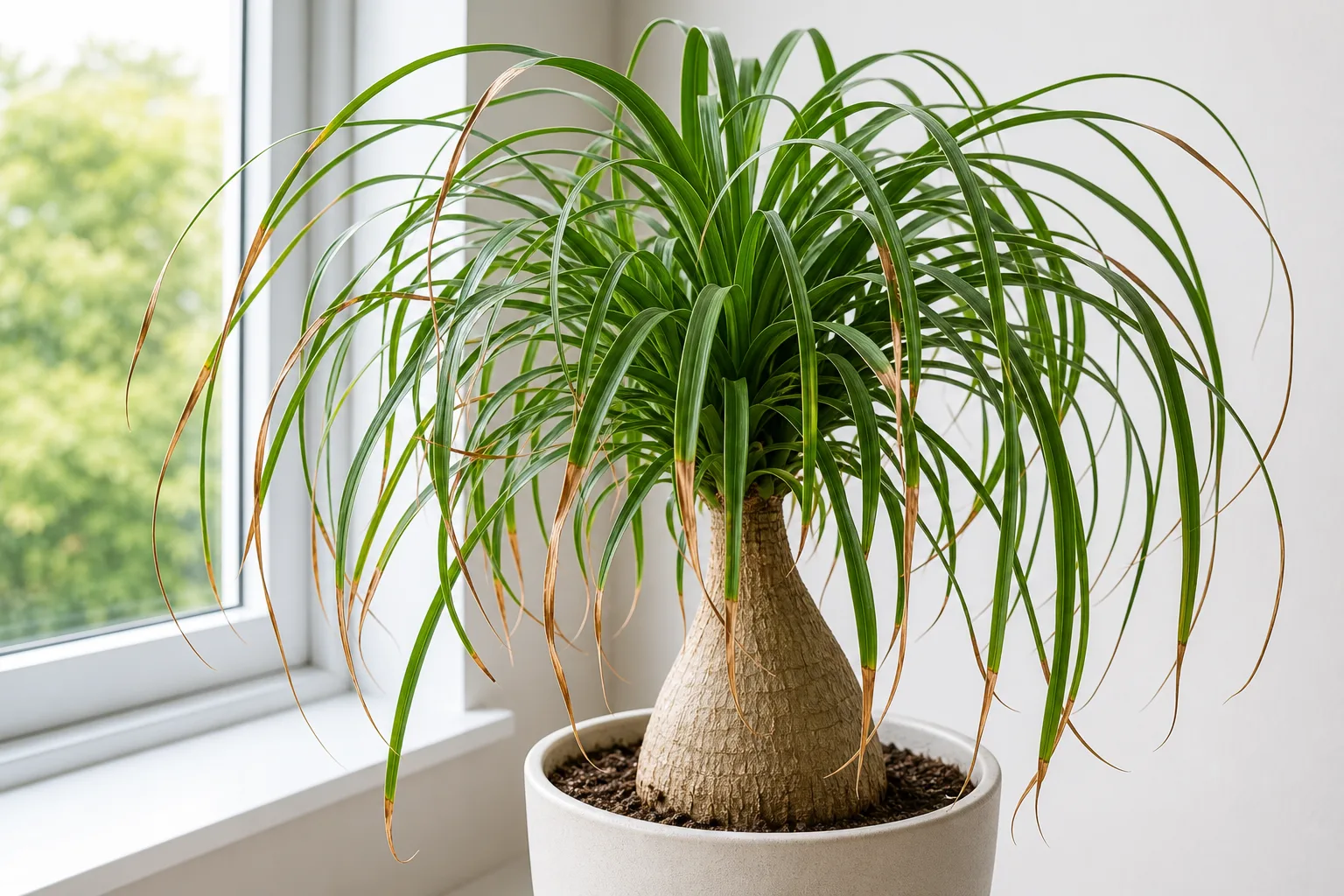
Brown Tips on Ponytail Palm: Causes, Checks & Fixes
This guide covers brown tips on Ponytail Palm. See also the general Brown Tips guide, watering, and light pages for this plant.
Brown Tips on Ponytail Palm: Causes, Checks & Fixes
Quick answer
Ponytail Palm (Beaucarnea recurvata) stores water in its swollen caudex and long strap-like leaves, so tip brown rarely means “water more every day.” Most indoor cases trace to underwatering, dry winter air, fluoride or salt buildup from tap water, or normal aging of the lowest leaves-not fungal leaf spot.
The plant is drought tolerant and prefers bright light with periods of dry soil. Owners who fear caudex rot sometimes under-water for months; heat vents and forced-air heating then crisp leaf tips even when the caudex still feels firm.
First step: lift the pot and check soil dryness top to bottom. A light, dusty pot with crispy tips means one deep soak until water runs from drain holes, then resume a full dry-down rhythm. Wet heavy soil with browning means stop daily panic-watering and inspect drainage-see overwatering and root rot. If moisture is normal but tips brown on newest growth after tap watering, switch to filtered or rainwater.
What brown tips look like on Ponytail Palm
Tip necrosis on Beaucarnea is narrow and terminal-not random spots across the blade.
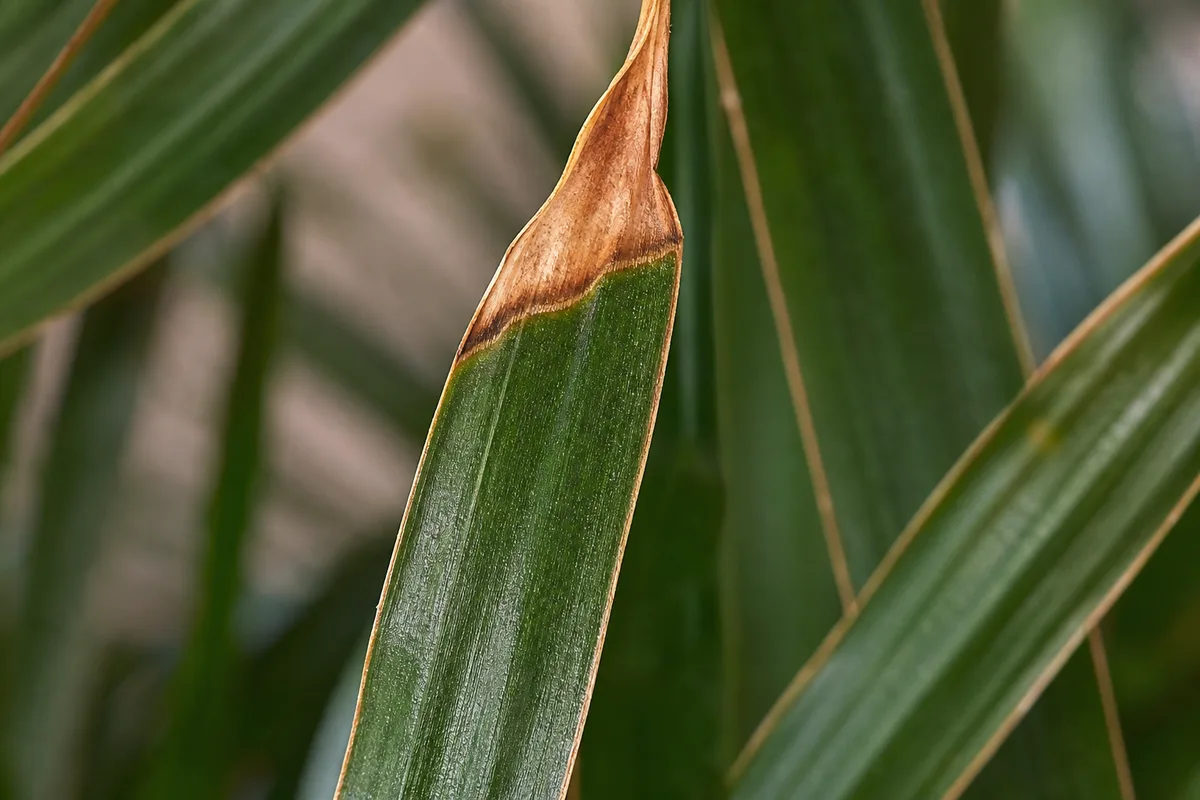
Brown Tips symptoms on Ponytail Palm - compare with healthy tissue on the same plant.
Underwatering tips:
- Tan to brown crispy points on strap leaves, sometimes creeping slightly down margins
- Dry, lightweight pot; soil may pull from pot walls
- Slight caudex wrinkling while base stays firm-not soft
- Often worse on outer leaves in hot sunny windows
Low humidity / heat stress:
- Brown tips and margins on leaves nearest radiators, AC vents, or fireplaces
- Soil moisture may be normal-the stress is atmospheric
- Common in heated winter rooms when humidity drops below 30%
Fluoride or salt burn:
- Even brown bands at tips of newest leaves after repeated tap-water top watering
- May follow white crust on pot rim or soil surface
- Outer lower leaves unaffected if the issue is recent water quality
Normal lower-leaf aging:
- One or two oldest strap leaves at the bottom brown at tips, then fully fade
- Caudex firm; soil on a normal dry-down schedule
- New crown leaves open green and clean
Not brown tips (different problems):
- Soft caudex on wet soil - overwatering or rot, not tip burn alone
- Whole-leaf yellow on wet mix - root stress; see yellow leaves
- Webbed stippling - spider mites in dry heat; see spider mites
Why Ponytail Palm gets brown tips
Fear of overwatering leads to chronic drought. The caudex buffers short dry spells, but months without deep watering still depletes strap leaves-especially in bright windows where transpiration is high. Small sips that never reach the root zone make the problem worse.
Dry indoor air strips leaf tips. Long strap leaves lose moisture fastest at the points where vascular supply tapers. Forced-air heating can drop humidity below 30% while the caudex still holds reserves-tips fail before the whole plant looks stressed. See low humidity.
Tap water minerals accumulate. Beaucarnea is sensitive to fluoride and salts in municipal water. Repeated top watering without occasional flushing leaves minerals in the mix; newest leaves show tip burn first.
Normal senescence on mature plants. Lower strap leaves age out over years on a slow-growing specimen. Tip brown on the oldest one or two blades while the crown pushes fresh growth is expected-not a care emergency.
How to confirm the cause
- Pot weight and soil dryness - Lift the pot. Light and dusty through the root zone confirms underwatering. Heavy and cool days after watering suggests a different problem.
- Caudex firmness - Firm with slight wrinkling fits drought. Soft or mushy on wet soil means rot-switch diagnosis immediately.
- Which leaves failed - Newest tips only after tap water suggests fluoride. Outer leaves near vents suggest humidity. Bottom oldest leaves suggest aging.
- Water source - Note whether you use tap, filtered, or rainwater. White rim crust supports salt buildup.
- Microclimate - Map distance to heat registers, fireplaces, and single-pane winter glass.
| Sign | Pot | Caudex | Which leaves | Likely cause |
|---|---|---|---|---|
| Crispy tips | Light, dry | Firm, maybe wrinkled | Many straps | Underwatering |
| Crispy tips | Normal | Firm | Near heat vent | Low humidity |
| Even tip bands | Normal | Firm | Newest growth | Fluoride/salt |
| Tip brown only | Normal | Firm | 1–2 bottom | Normal aging |
| Yellow + soft base | Heavy, wet | Soft | Lower canopy | Overwatering |
First fix for Ponytail Palm
If the pot is light and soil is dry: Water deeply and slowly until water runs from drainage holes. Empty the saucer after 30 minutes. Do not water again until soil is fully dry throughout-often two to four weeks indoors. One deep correction beats daily shallow drinks.
If soil moisture is normal but tips are crisp near heat sources: Move the pot away from vents and add a humidifier or pebble tray in the same room-not misting, which barely shifts humidity for this caudex plant.
If newest tips brown after tap water: Switch to filtered, distilled, or rainwater for the next several months. Flush the pot with a full soak and drain twice to leach surface salts.
Make one fix first. Do not repot, fertilize, and trim on the same day before you know which variable helped.
Step-by-step recovery
- Correct water rhythm - Deep soak when dry; wait for full dry-down. See the watering guide.
- Trim dead tips - Cut only the brown tissue with clean scissors, following the leaf curve.
- Improve placement - Bright light; tolerates direct sun indoors near a window, away from dry heat paths.
- Adjust water quality - Use low-mineral water if tap burn is suspected.
- Monitor caudex - Firmness should hold. Softening on wet soil requires an overwatering workflow, not more tip trimming.
Recovery timeline
- Underwatering: Tips stop spreading within one to two weeks after proper deep watering; new crown leaves clean in three to six weeks.
- Humidity: Existing tip damage stays; new growth shows fewer crisp margins within one month of stable RH.
- Fluoride: New leaves improve after two to three months of filtered water and occasional flushing.
- Normal aging: Remove the spent lower leaf when fully brown; no further spread.
Old tip tissue never re-greens. Judge recovery by new strap leaves from the caudex crown.
Mistakes to avoid
- Do not water daily because tips look dry-that causes rot on Beaucarnea faster than tip burn hurts it.
- Do not cut entire strap leaves unless fully dead; partial green tissue still photosynthesizes.
- Do not fertilize a drought-stressed plant before rehydrating-salts worsen tip burn.
- Do not confuse tip necrosis with underwatering collapse when the whole leaf is limp and the pot is dry-that needs the same deep soak but on a faster timeline.
How to prevent brown tips next time
Match watering to full dry-down cycles, not fear or calendar. Use well-drained container culture with open drain holes. Keep the plant in bright light away from heat blasts. Prefer low-mineral water if your tap routinely burns sensitive species. Inspect houseplant pests during weekly care-mites in dry air mimic tip stress with stippling.
Ponytail Palm is listed as non-toxic to cats and dogs by the ASPCA, so tip trimming and water changes are safe around pets-still keep cut leaves out of reach.
For full species context, see the Ponytail Palm overview.
When to use this page vs other Ponytail Palm guides
- Ponytail Palm watering guide - Use for routine moisture checks before assuming brown tips is the main issue.
- Ponytail Palm problems hub - Browse all 5 common issues on this species.
- Yellow Leaves on Ponytail Palm - Different entry point when symptoms overlap with brown tips.