Yellow Leaves on Ponytail Palm: Causes, Checks & Fixes
Quick answer
Yellow leaves on Ponytail Palm are usually normal aging of one lower strap, overwatering on wet mix, or insufficient light slowing dry-down. First step: press the caudex for firmness, probe soil three to four inches deep, and lift the pot - then stop watering if the base is spongy on heavy wet soil.
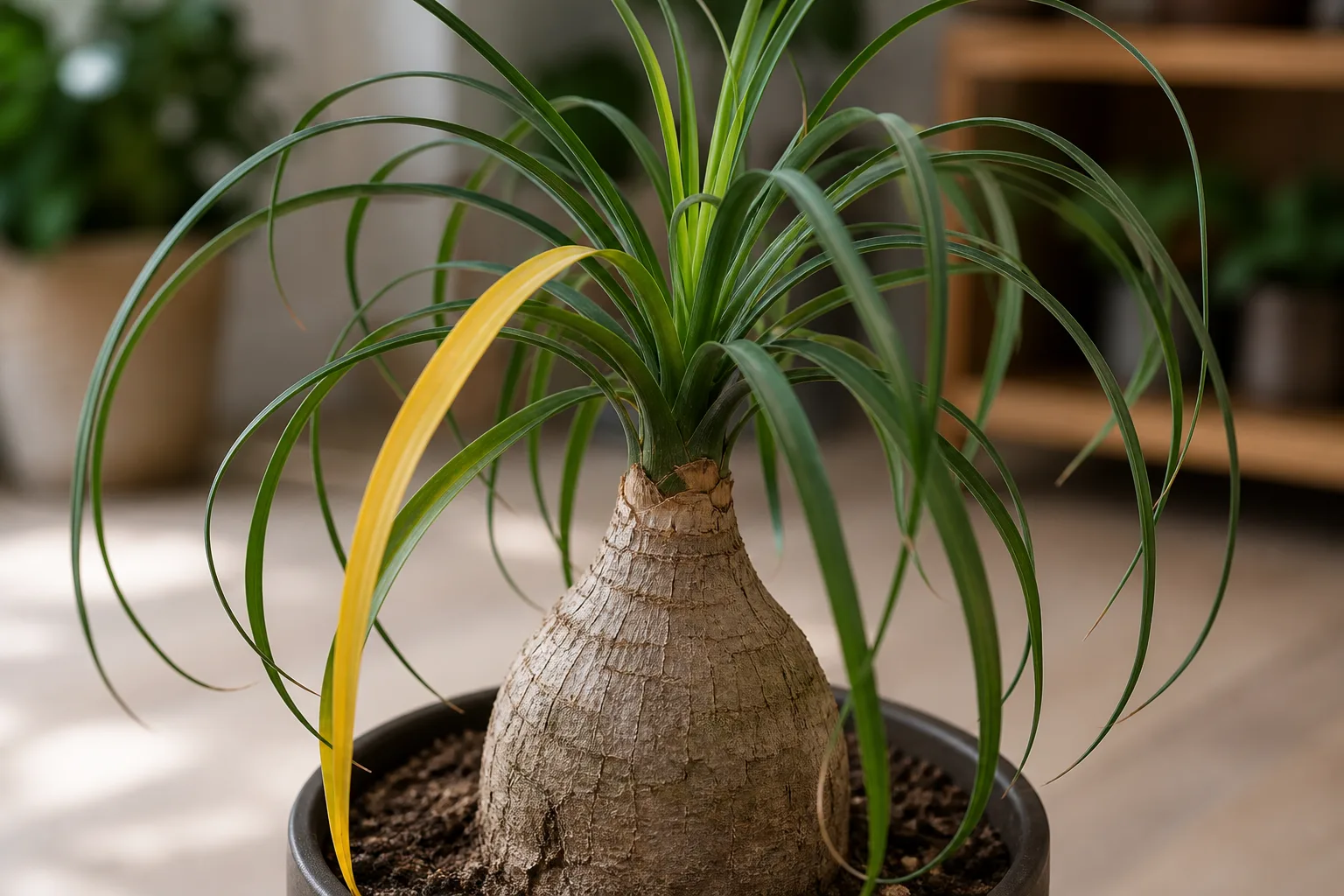
Yellow Leaves on Ponytail Palm: Causes, Checks & Fixes
This guide covers yellow leaves on Ponytail Palm. See also the general Yellow Leaves guide, watering, and light pages for this plant.
Yellow Leaves on Ponytail Palm: Causes, Checks & Fixes
Quick answer
Yellow leaves on Ponytail Palm (Beaucarnea recurvata) fall into three buckets: one aging lower strap on a firm caudex (normal), several straps yellowing on wet, heavy soil (overwatering or root decline), or pale slow yellowing in a dim room where mix stays damp because the plant uses little water (low-light slow-dry trap).
This is a caudiciform succulent - not a true palm - with a swollen base that stores water for weeks. Yellow straps do not re-green; judge recovery by firm caudex, stopped spread, and clean new growth from the crown.
First step: press the caudex gently, probe soil three to four inches deep, and lift the pot. Firm base + one dry yellow lower leaf → remove the leaf, no water change. Firm base + wet heavy pot + several yellow lowers → stop watering until mix dries completely. Spongy caudex on damp mix → stop water and inspect roots - see root rot.
For soak-and-dry rhythm and seasonal intervals, pair this page with the watering guide and overview hub.
What yellow leaves look like on Ponytail Palm
Yellowing on Beaucarnea reads differently from thin tropical foliage. The strap leaves are tough, leathery, and slow to show stress - so pattern and context matter more than color alone.
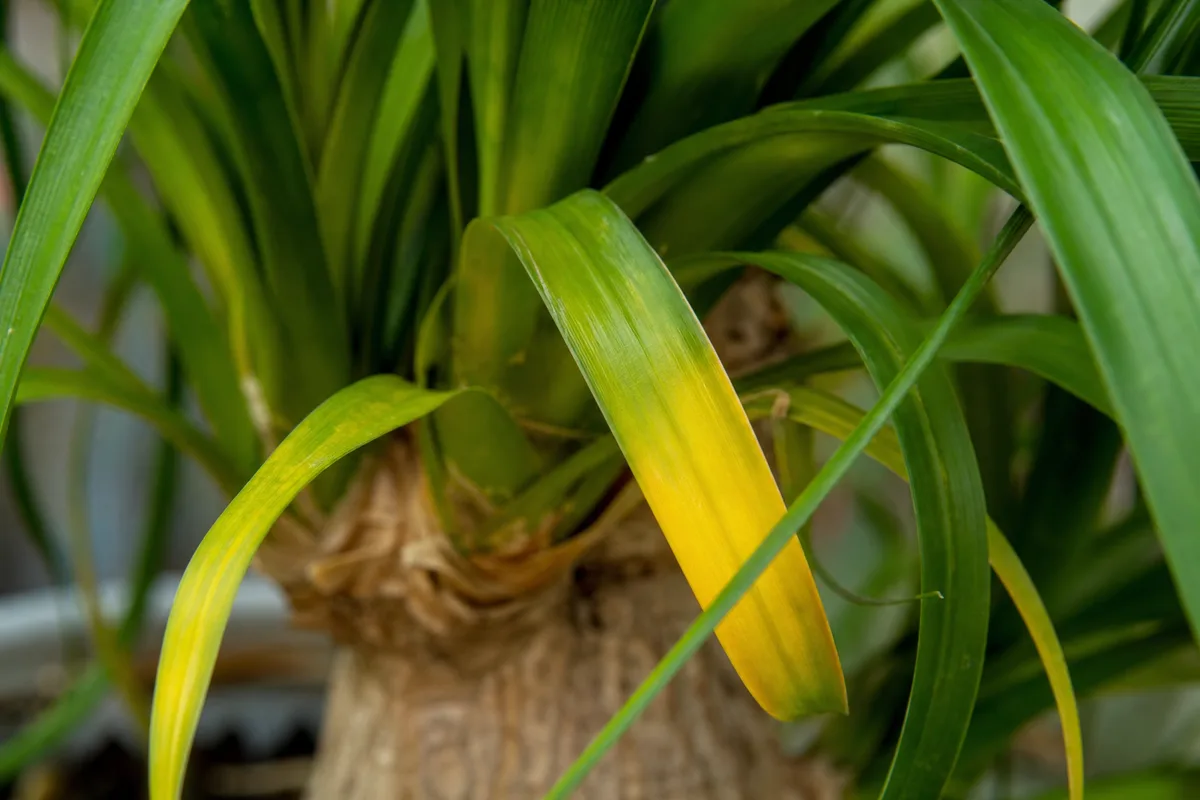
Yellow Leaves symptoms on Ponytail Palm - compare with healthy tissue on the same plant.
Normal aging (no action beyond removal)
- One lower strap at the outside of the leaf fountain turns yellow, then tan, then dry
- Happens while new green straps emerge from the crown center
- Caudex stays firm; pot weight is normal for your dry-down cycle
- Soil at depth is dry or drying - not cool and heavy days after watering
- Older leaves eventually turn yellow and dry up; these can be removed without harm
Overwatering stress (most common pathological cause)
- Several lower straps yellow at once - not a single aging leaf
- Pot stays heavy and cool many days after the last soak
- Skewer at depth comes out dark or stuck with particles while topsoil looks pale
- Caudex may still feel firm early, then softens as rot advances
- Leaves may detach with a gentle pull when roots fail
- Sometimes limp straps on wet soil - uptake failure, not thirst
Low-light slow-dry trap
- Pale yellow-green on multiple straps in a dim corner or north office
- You water on a reasonable schedule, but the plant transpires slowly and mix never fully dries
- Pot feels moderately heavy for weeks without a clear lightening cycle
- No sour smell yet - early stress before caudex softening
- Fix is brighter placement first, then adjusted dry-down - not more water
Underwatering lookalike (less common for yellow)
- Brown crispy tips and slight caudex wrinkling on very light, dry pot
- Lower leaves may dry brown rather than yellow uniformly
- See brown tips and underwatering when soil is bone dry throughout
Why Ponytail Palm gets yellow leaves
Yellow straps are a symptom, not a disease. On this species, the same color change comes from opposite care mistakes - which is why the caudex squeeze and soil depth check come before any fix.
Overwatering and root decline
Overwatering is the most common cause of failure for container ponytail palms. The swollen caudex stores water for drought, so owners assume frequent small drinks are safe. Roots in anaerobic mix fail first; lower straps yellow as the plant cannot support them. UF/IFAS lists root rots on wet soils as the primary disease concern - yellow lowers on heavy wet pots fit that pattern.
The low-light slow-dry trap
Ponytail palm wants full sun to partial shade indoors. In dim light, transpiration drops but many owners keep the same watering calendar. Mix stays damp while metabolism slows - mimicking overwatering stress without obvious soggy surface. This is the common office-desk failure: weekly water + north window → pale yellowing over six to eight weeks. Brighter light dries the pot faster and justifies more frequent checks, not more water per session - see not enough light.
Natural senescence
Slow-growing ponytail palms shed oldest straps from the bottom as the crown produces new leaves. University of Wisconsin Extension notes older leaves eventually yellow and dry; removing them is normal maintenance, not a rescue.
Winter calendar mismatch
Reduce watering significantly in winter and greatly reduce water in winter per extension guidance. Summer soak intervals overwater the plant in January when light and growth drop. Yellow lowers after the holidays often trace to unchanged frequency in a dim room, not a new pest.
Oversized pots and kindness watering
Small weekly top-ups on already-moist mix keep the caudex zone wet while the swollen base still looks plump. An oversized pot holds water the root system cannot use - yellow spreads while the caudex feels firm until rot reaches the storage tissue.
Ponytail Palm yellow-leaf quick reference
| Pattern | Caudex feel | Soil / pot | Urgency | First action |
|---|---|---|---|---|
| One lower strap yellowing | Firm | Dry to normal cycle | Low - aging | Remove leaf when loose |
| Several lowers yellow | Firm to soft | Wet at depth, heavy | Medium - stop spread | Withhold water; dry-down |
| Pale yellow, dim room | Firm | Damp weeks, moderate weight | Medium | Move to brighter light; lengthen dry cycle |
| Yellow + limp on wet soil | Softening | Soggy, sour smell | High - rot risk | Unpot; see root rot |
| Yellow + crispy tips | Firm, may wrinkle | Bone dry throughout | Low - drought | One deep soak; see underwatering |
| Yellow + brown tips only | Firm | Variable | Low - salts or age | Flush salts; trim tips; verify dryness before soak |
How to confirm the cause
Work through this checklist in order - stop when one branch clearly fits:
- Leaf count and position - One outer lower strap only, with green new center growth → likely aging. Three or more yellowing together → stress.
- Caudex firmness test - Press the swollen base above the soil line. Firm resists like a ripe pear. Spongy give on damp mix → overwatering or rot - act today.
- Pot weight - Lift the container. Still heavy five to seven days after watering → slow dry-down or excess volume.
- Soil at depth - Dry skewer three to four inches toward the bottom. Dark, cool, or clinging particles → wet even if the top inch looks ready. Wait for dry depth before the next soak per the watering guide - not surface color alone.
- Light level - Dim room + damp mix + pale yellowing → low-light trap before you blame pests.
- Recent watering history - Did you water while the pot was still heavy from the prior cycle? Calendar watering in winter is a frequent trigger.
- Smell and pull test - Sour odor or leaves that detach easily on wet soil → root damage; unpot if caudex softens.
- Season - November through March in a cool dim room → suspect winter overwatering before Ponytail Palm repotting guide or feeding.
If soil is bone dry throughout and the caudex is firm, yellow-brown lowers may be underwatering - withholding water will worsen that branch.
First fix for Ponytail Palm
One clear first action: run the caudex squeeze, soil depth probe, and pot-weight test above. Do not repot, fertilize, and prune on the same day - pick the branch that matches.
If one lower leaf is yellow on firm caudex and normal dry-down
Remove the strap when it pulls away easily or trim the dead portion with clean scissors. No watering change needed. Watch the next leaf cycle - if only one leaf ages at a time, the plant is healthy.
If several leaves yellow on wet, heavy soil and caudex is still firm
Stop all watering immediately. Move to bright indirect or direct sun (acclimated gradually) so the pot can dry - dark recovery corners slow evaporation. Empty saucers and cachepot runoff. Let mix go fully dry three to four inches deep before the next deep soak - often one to three weeks indoors. Do not fertilize during dry-down. Full protocol: overwatering guide.
If caudex is spongy on damp mix
Stop water and unpot today - yellow leaves are late-stage warning. Trim mushy roots, repot into dry fast-draining mix, wait one to two weeks before a cautious soak. Follow root rot rescue.
If pale yellowing in a dim room with damp-not-soggy mix
Improve light first - within a few feet of a south or west window, or add strong supplemental light. Then lengthen the dry window; do not compensate with extra water. See light needs and not enough light.
Step-by-step recovery
After the first fix matches the cause:
- Week 1 - Execute one correction only (stop water, move to light, or remove aging leaf). Note pot weight daily.
- Week 2–3 - For overwatering branch, confirm dry depth before one full soak and drain. Yellow straps will not re-green - look for no new yellowing.
- Week 3–4 - Expect new green strap growth from the crown in bright warm conditions once roots stabilize.
- Ongoing - Resume soak-and-dry rhythm: deep water when soil is dry three to four inches deep, roughly every two to four weeks in active growth, sharply less in winter - allow drying between applications.
Documented office example: Six-inch ponytail on a north desk, weekly small drinks, firm caudex, mix damp at depth for three weeks. Two lower straps yellowed together. Fix: stop water fourteen days until pot lightened, move to east window, one deep soak, drain fully. New green center strap visible at week three; old yellow leaves trimmed, not re-greened.
Recovery timeline
| Situation | Realistic expectation |
|---|---|
| Single aging lower leaf | Cosmetic only - next leaf may age in months |
| Overwatering, firm caudex | Spread stops after one full dry-down - one to three weeks |
| Several yellow lowers, roots intact | Old straps stay yellow; new growth in two to four weeks in good light |
| Low-light trap corrected | Color improves on new growth first; older pale straps may stay dull |
| Spongy caudex on wet mix | Uncertain - depends on rot depth; may need propagation salvage |
| Winter overwatering in dim room | Recovery slow - extend dry pause; do not rush soak |
Judge success by firm caudex, stable pot weight cycle, and clean new straps - not by saving every yellow lower leaf.
Causes to rule out
Before stacking treatments, confirm you are not misreading a sibling problem:
- Overwatering - heavy wet pot, soft caudex, sour smell, several yellow lowers together
- Root rot - spongy collapsing base, black mushy roots, wet-soil wilt all day
- Underwatering - light pot, dry throughout, firm caudex, crispy tips more than uniform yellow
- Brown tips - tip burn from salts, fluoride, or drought while caudex stays firm
- Not enough light - pale sparse crown, slow dry-down, no sour smell yet
- Pests - spider mites cause stippling and webbing on dry strap tips; scale and mealybugs at leaf bases - inspect before spraying a stressed plant
- Repot shock - yellowing one to two weeks after repot into heavy wet mix or a much larger pot; caudex often still firm but mix stays damp at depth
What not to do
Do not remove all yellow leaves at once if several are still partially green - stress the crown unnecessarily. Trim only fully dead straps.
Do not keep watering because leaves look limp when soil is wet - that is wet-soil wilt from root damage, not thirst.
Do not fertilize a yellowing ponytail before confirming roots and light; salts stress failing tissue.
Do not repot into a larger pot to “fix” yellow leaves - extra wet mix volume worsens slow dry-down.
Do not trust topsoil color alone in deep pots with cactus mix; the surface dries while the caudex zone stays damp.
Do not assume yellow always means overwatering - one firm-caudex lower leaf on dry mix is normal aging.
How to prevent yellow leaves on Ponytail Palm
- Water on signals, not calendar: firm caudex plus dry three to four inches deep - see watering guide
- Winter reduction: one deep soak every four to eight weeks or longer in cool dim rooms - reduce winter watering
- Bright light: strong window or supplemental light so the pot completes dry-down cycles - light needs
- Fast-draining mix and drainage holes: soil guide; empty saucers within thirty minutes
- Right pot size: one size up at repot only; oversized pots trap moisture
- Weekly inspection: check leaf bases and undersides for pests while you lift the pot for weight
Practical checks
Urgency check
Treat as urgent within 24 hours if:
- Caudex feels spongy or collapses on wet mix
- Several yellow lowers spread in one week while pot stays heavy
- Sour smell from drainage holes
- All-day limp leaves on saturated soil
Mild urgency: one yellow lower on firm caudex with normal dry-down - remove leaf and monitor.
Best inspection order
- Newest growth at crown center - green or pale?
- Count yellow straps - one vs. several?
- Caudex firmness above soil line
- Pot weight compared to your last dry baseline
- Skewer or finger three to four inches deep
- Light level and recent season change
- Roots only if caudex softens or smell persists after one week dry
Ponytail Palm care cross-check
Ponytail palm tolerates average indoor humidity; yellowing ties more to water and light than misting. The ASPCA lists Beaucarnea recurvata as non-toxic to cats and dogs - chewing can still cause vomiting, so contact your veterinarian if a pet shows persistent illness after eating plant material.
Related Ponytail Palm problems
- Ponytail palm overview - full care hub and caudex biology
- Watering guide - caudex dual check and soak-and-drain method
- Overwatering - wet-soil rescue when several leaves yellow together
- Root rot - spongy caudex and trim protocol
- Not enough light - dim-room slow-dry trap
- Brown tips - salt and drought lookalike
- Light needs - placement for healthy dry-down cycles
- Spider mites - stippling on dry strap tips with stress yellowing
When to use this page vs other Ponytail Palm guides
- Ponytail Palm watering guide - Use for routine moisture checks before assuming yellow leaves is the main issue.
- Ponytail Palm problems hub - Browse all 5 common issues on this species.
- Root Rot on Ponytail Palm - Different entry point when symptoms overlap with yellow leaves.