Calcium Deficiency on African Violet: Causes, Checks & Fixes
Quick answer
On African violet, true calcium deficiency is harder to confirm at home than generic symptom pages suggest. If the center of the rosette is pale, twisted, or failing to open properly, first rule out cyclamen mites, crown rot, and old salt-heavy mix before you add calcium products.
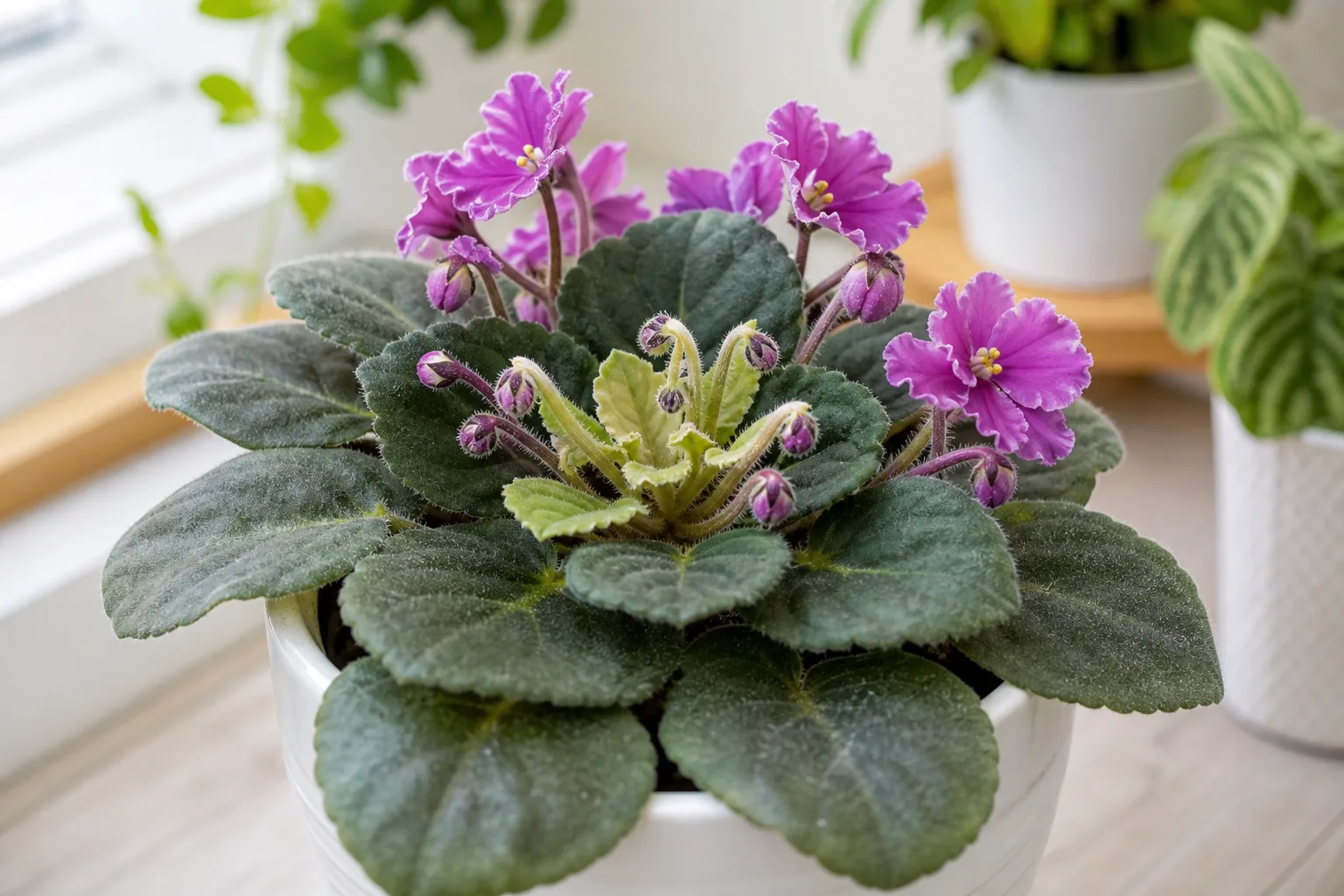
Calcium Deficiency on African Violet: Causes, Checks & Fixes
This guide covers calcium deficiency on African Violet. See also the general Calcium Deficiency guide, watering, and light pages for this plant.
Calcium Deficiency on African Violet: Causes, Checks & Fixes
Quick answer
On African violet, center growth problems deserve a cautious diagnosis. Calcium is an immobile nutrient, so deficiency symptoms show first on the youngest tissue rather than the oldest leaves, a pattern described in general nutrient-deficiency references from Iowa State Extension and Missouri IPM. But on violets, twisted crown growth and stalled buds can also come from cyclamen mites, crown rot, old salty mix, or chronic pH drift. That is why the best first move is usually inspection and root-zone reset, not a calcium supplement.
If the crown is still firm, the safest first fix is to repot into fresh African violet soil, water with room-temperature water, and restart weak routine feeding only after the plant settles. If the center is soft or collapsing, stop and switch to the crown rot workflow instead.
What This Problem Usually Looks Like on African Violet
Calcium-related trouble, when it really is calcium-related, tends to affect new center growth:
- small new leaves that stay pale or weak
- distorted or hooked young leaves
- buds that stall or fail to open cleanly
- a crown that looks worse than the outer leaf ring
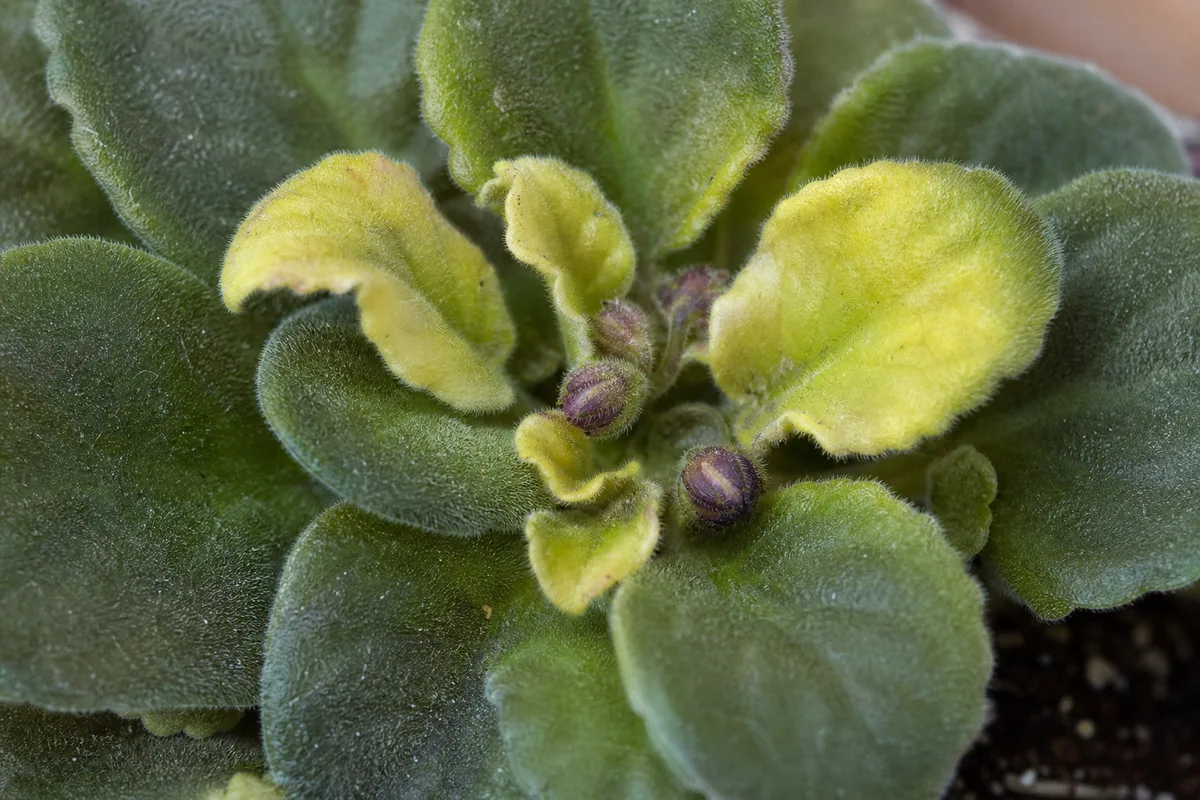
Use crown pattern, root condition, and potting-mix history together. Center distortion alone is not enough for a confident diagnosis.
What makes this page tricky is that the same visual zone is involved in several other problems. Penn State Extension describes crown and stem rots that can begin at the center, and African-violet grower references commonly warn that cyclamen mites can also distort the youngest leaves. So “pale twisted center” is a starting clue, not a full answer.
Why Calcium Trouble Is Usually an Uptake Problem, Not a Missing Bottle
Home growers often imagine a simple shortage in the fertilizer itself. More often, the issue is uptake:
- the mix has broken down and stays sour or dense
- salts have accumulated from repeated feeding without flushing
- irrigation water has pushed the root zone away from the slightly acidic range African violets prefer
- roots are stressed enough that normal feeding is no longer being used well
University of Minnesota Extension recommends regular repotting, a light soilless mix, and weak frequent feeding for African violets. Those habits matter because they protect the root environment that nutrient uptake depends on. When that environment degrades, adding more fertilizer often makes the plant harder to read.
Lookalikes You Should Rule Out First
Before you treat this as calcium deficiency, rule out the more common alternatives.
| Pattern | More likely cause | What to check next |
|---|---|---|
| Soft, wet, collapsing crown | Crown rot | Smell, crown firmness, saturated mix |
| Tight distorted center with no obvious salt crust | Pest pressure such as cyclamen mites | Magnification, stunting pattern, nearby plants |
| Yellow between green veins on new leaves | Iron deficiency | Interveinal pattern instead of general twist |
| Pale outer leaves first | Nitrogen deficiency | Oldest leaf ring, feeding history |
| Brown edges with crusted pot rim | Salt build up or fertilizer burn | White deposits, recent heavy feeding |
This is where many thin symptom pages fail: they jump straight from “hooked tips” to “add calcium.” That is not a good first decision on a violet.
How to Confirm Whether Calcium Uptake Trouble Is Plausible
Work through the plant in this order:
- Inspect the crown closely. If it is mushy, water-soaked, or smells bad, stop treating this as a nutrient issue.
- Check the age of the mix. University of Minnesota Extension recommends repotting regularly; a violet left in the same potting mix too long is harder to diagnose cleanly.
- Look for salt evidence. White crust on the pot rim or mix surface supports a chemistry problem more than a pure deficiency.
- Review water quality. University of Minnesota Extension advises avoiding softened water for violets because dissolved salts can accumulate.
- Consider feeding history. If you have not fed at all for months, deficiency is more plausible. If you have fed heavily, salt injury becomes more plausible.
If the crown is firm and the root zone has clearly been neglected, calcium uptake trouble becomes a reasonable working diagnosis. It is still a working diagnosis, not lab proof.
First Fix: Reset the Root Zone
The safest first fix is not a foliar calcium spray and not a strong supplement drench. It is to make the roots usable again.
Repot into fresh African violet repotting guidance using a light soilless violet mix. University of Minnesota Extension recommends a soilless medium and weak feeding for this crop, while Iowa State Extension reminds growers to use room-temperature water and avoid damaging the hairy foliage with rough handling or cold splashes.
After repotting:
- water once with room-temperature water
- let the plant settle before resuming routine fertilizer
- restart with weak balanced feeding rather than a calcium-heavy rescue dose
That sequence solves more real violet problems than chasing one element on day one.
Recovery Timeline
The center tells you whether the fix worked.
- Old twisted leaves usually stay twisted.
- New crown leaves should open more normally if the diagnosis and fix were correct.
- Buds may take longer than leaves to normalize.
Do not expect a dramatic change overnight. The useful question is whether the next growth looks healthier than the last one.
What Not to Do
Do not dump concentrated calcium products onto a stressed violet without ruling out rot, mites, and salt buildup first.
Do not diagnose calcium deficiency from one symptom photo alone.
Do not splash cold water over the crown; Iowa State Extension notes that cold water can mark African violet foliage.
Do not ignore the African violet watering guide while you troubleshoot nutrition. Wet roots can mimic or worsen almost every deficiency pattern.
Prevention
Most prevention is just steady violet culture:
- repot on a regular schedule
- use a light violet mix rather than dense soil
- feed weakly and consistently instead of alternating neglect with heavy doses
- flush salts occasionally
- avoid softened water
Those same habits also reduce risk for overfertilization on African violet and damaged roots on African violet.
When to Use This Page vs Other African Violet Guides
- Crown rot: use when the center is soft, wet, or collapsing.
- Iron deficiency: use when the newest leaves show interveinal yellowing.
- Nitrogen deficiency: use when the oldest leaves fade first.
- Salt build up: use when the pot rim and soil surface are crusted.
- African Violet problems hub: use when the pattern still does not fit.