Stunted Growth on African Violet: Causes, Checks & Fixes
Quick answer
Stunted growth on African Violet often starts in the crown-from cyclamen mites, cold, or salt stress. Inspect center leaves first before repotting or fertilizing.
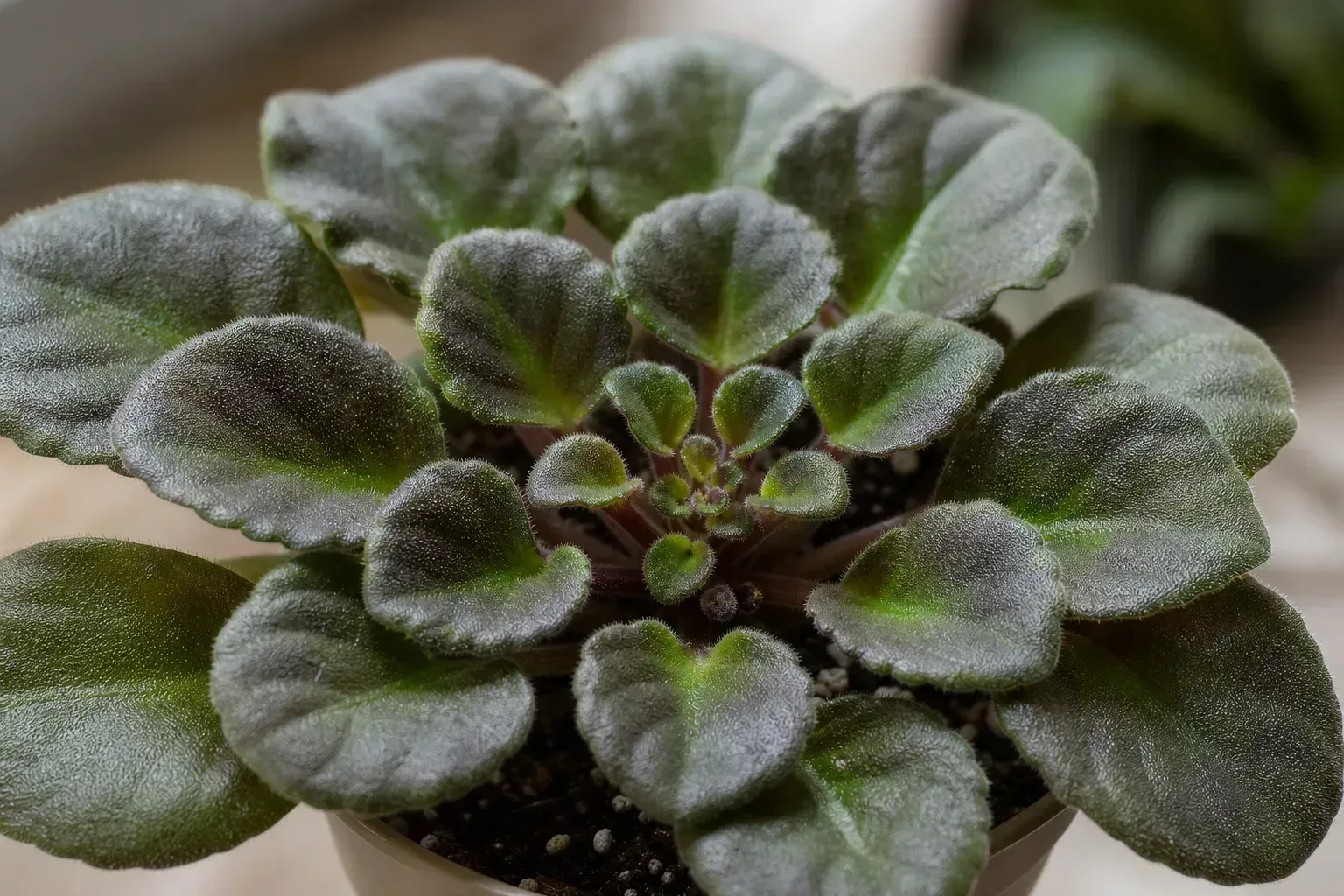
Stunted Growth on African Violet: Causes, Checks & Fixes
This guide covers stunted growth on African Violet. See also the general Stunted Growth guide, watering, and light pages for this plant.
Stunted Growth on African Violet: Causes, Checks & Fixes
Quick answer
When the center of your African violet stops producing normal-sized leaves-tiny, tight, curled, or hairy new foliage while outer leaves still look fine-you are dealing with stunted growth, not the gradual whole-plant slowdown covered on the slow growth guide. On Saintpaulia, that crown-only pattern most often means cyclamen mites hiding in leaf folds, though salt crust, root congestion, cold, and dim light can stall the whole rosette.
First step: inspect the crown with a magnifier before African Violet repotting guide or fertilizing. Isolate the plant if new leaves look distorted, brittle, or excessively hairy. Mites spread on hands, tools, and touching leaves-handle suspect plants last and keep them away from the rest of your collection until you know what you are treating.
What stunted growth looks like on African Violet
Read the newest center leaves, not the mature display ring around the pot.
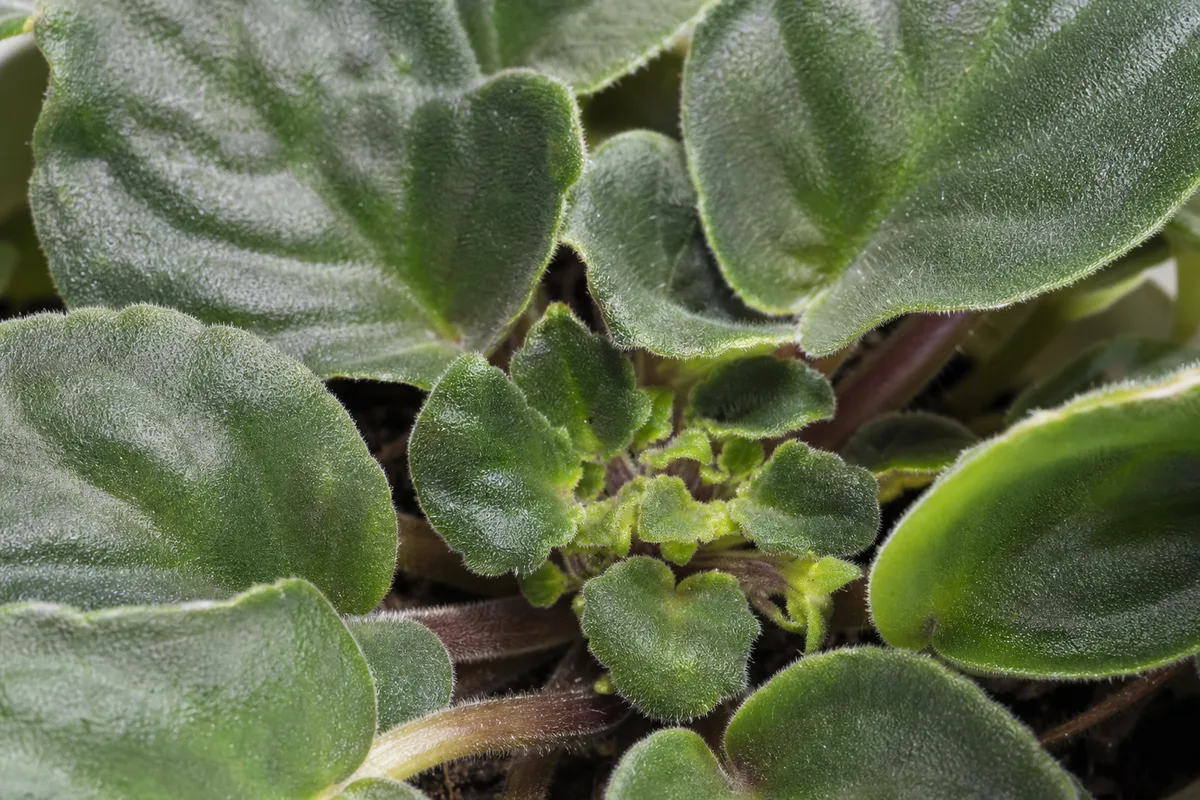
Stunted Growth symptoms on African Violet - compare with healthy tissue on the same plant.
Classic stunting on a violet rosette:
- New leaves stay noticeably smaller than leaves produced a few months ago, sometimes for many weeks in a row
- Center foliage looks tight, puckered, or curled downward while outer leaves remain full-sized
- New leaves feel brittle or unusually hairy, sometimes with a dull grayish cast
- Flower buds form but stay small, distorted, or fail to open
- Growth is crown-only-the problem is concentrated in the middle, not evenly across every leaf
What is not stunting:
- One lower leaf yellowing while the center stays firm and productive-that is normal aging
- A brief pause for one to two weeks after repotting-see transplant shock
- Gradual whole-plant sluggishness without crown distortion when light is dim-that pattern fits slow growth more than acute stunting
Crown-only vs. whole-plant patterns
| Pattern | Likely cause | What to check next |
|---|---|---|
| Center tiny, curled, hairy; outer leaves normal | Cyclamen or broad mites | Magnifier on leaf folds; isolate immediately |
| All leaves small and pale; white crust on pot rim | Salt buildup or weak roots | Scrape rim test; leach mix before feeding |
| Whole plant pale, leggy, few blooms | Not enough light | Distance from window; daily light hours |
| No new leaves; pot dries in a day | Root-bound congestion | Slide plant out; roots circling pot wall |
| Center black and soft on wet soil | Crown rot | Stop watering; crown firmness before any fix |
| Waxy white fluff in leaf crotches | Mealybugs | Alcohol swab test on visible pests |
That table is the fastest way to separate mite crown stunting from cultural stall. Mites attack the growing point; salts, light, and roots usually shrink the whole plant together.
Why African Violet gets stunted growth
Cyclamen mites (center-only stunting)
Cyclamen mites are one of the most serious pests of African violets and are often the primary mite damaging this species. They are microscopic-far too small for a naked-eye ID-and hide in the crown and petiole folds where new leaves emerge. They feed on new growth and inject a toxin that disrupts normal development, producing stunted, curled, brittle center leaves and distorted flowers.
Cyclamen mites favor high humidity and cool temperatures near 60 °F, which matches many indoor shelf setups. They spread when leaves touch neighboring pots or when you groom an infested plant before a healthy one. This is why crown distortion on an otherwise normal outer ring is the signature mite pattern-not generic “my plant is unhappy.”
Broad mites cause similar crown twisting on African violet and other gesneriads. Their toxic saliva distorts growing points and can mimic herbicide or nutrient damage. Treat broad mites the same way: isolate, consider heat dip or labeled miticide, discard hopeless cases.
Cultural causes (whole-plant stunting)
Salt buildup - Many growers bottom-water to keep fuzzy leaves dry. Water rises, evaporates at the rim, and leaves minerals behind. Lower leaves resting on a white crust get margin burn; severe buildup stalls the whole plant. This overlaps with fertilizer burn when feeding was recent.
Root-bound pots - African violets like slight snugness, but when roots circle solidly and the pot dries within a day of every watering, new leaves stay small because there is little fresh mix to support them.
Insufficient light - Without African Violet light guide or adequate grow-light hours, the rosette produces pale, undersized leaves across the plant, not just the crown. See not enough light if variegation fades and blooming stops alongside small foliage.
Cold drafts - Temperatures below about 60 °F slow cell expansion. Repeated cold near a window can produce small, stiff new leaves that look stunted but lack the hairy mite texture.
Crown rot on wet soil - Overwatering can make center leaves appear stunted and black before the crown collapses. Soft tissue on saturated mix is rot, not mites-see overwatering and crown rot guides before heat-treating a plant that may be dying from fungus.
How to confirm the cause
Work through this checklist in order. Stop when one cause fits clearly.
- Crown vs. whole plant - Is distortion limited to the center with normal outer leaves? Strong mite suspicion. Are all leaves small and pale together? Suspect light, salts, or roots first.
- Magnifier pass - Examine where the petiole meets the stem and inside young leaf folds. Mites are not visible to the naked eye; you are looking for texture-excessive hairiness, rusty dull color, tight downward curl-not webbing. Spider mites leave fine webbing on leaf undersides; cyclamen mites typically do not.
- Salt crust test - Scrape the pot rim. Hard white grit that returns after the mix dries supports salt buildup. Soft fuzzy growth in damp conditions is mold, not minerals.
- Pot weight and watering history - Heavy pot days after watering with sour smell points to wet roots. Very light pot with crispy wilted leaves points to drought, not stunting from mites.
- Root slide-out - Gently knock the plant from its pot. Firm pale roots in airy mix differ from brown mush. Tight circling roots against the pot wall confirm root-bound stress.
- Light audit - Can the plant receive bright indirect light most of the day, or roughly 12 to 16 hours under a grow light? Dim placement stalls the whole rosette.
- Temperature - Note drafts below 60 °F near winter windows. Cold damage can distort new leaves without mites.
- Pest cross-check - Waxy cottony patches in leaf crotches fit mealybugs, which also stunt leaves but are visible without magnification.
If the crown is distorted and salts, light, and roots look normal, treat for mites before fertilizing or repotting. Repotting a mite-infested plant without isolation spreads pests through your collection.
First fix for African Violet
Isolate the plant and inspect the crown before changing pot size, water routine, or fertilizer.
Move the violet away from neighbors so leaves do not touch. Handle it last when grooming. If center leaves are tight, hairy, and brittle with normal outer foliage, proceed on the mite path below. If the whole plant is pale with rim crust, start with salt leaching. If the crown is soft on wet soil, stop watering and assess for rot-do not apply heat.
When mites are the likely cause
- Isolate - Keep the plant separated for at least three weeks after treatment ends.
- Decide save vs. discard - Badly infested plants are often best discarded to prevent spread through a collection. Salvage only plants you are willing to monitor closely.
- Heat dip (valuable plants only) - Cyclamen mites are heat-sensitive and can be killed by immersing the whole plant, pot and all, in water held at about 110 °F for 30 minutes. Wisconsin Extension recommends 111 °F for 15 minutes as an alternative. Use a kitchen thermometer, stir gently, and maintain temperature-never guess. Water hotter than about 111 °F or dips longer than 30 minutes can scorch crowns and roots. Skip heat if the crown is soft, the plant is severely wilted, or you cannot hold stable temperature.
- Trim distorted growth first - Removing heavily infested center leaves before dipping can help water reach hidden mites.
- Labeled miticide option - For plants you will not discard, Clemson HGIC recommends miticides labeled for houseplants such as insecticidal soap or sulfur products applied outdoors in mild weather, with two to three sprays at three-day intervals. Hairy violet leaves protect mites-sprays must reach folds and the crown. Follow label directions exactly.
- Sanitize discarded pots - Soak pots from discarded plants in 1 part bleach to 9 parts water for 30 minutes before reuse.
When cultural stress is the likely cause
- Stop fertilizing - Do not feed to “push growth” when salts or root problems are present.
- Leach salts - Top-flush with room-temperature water until runoff flows from drainage holes; repeat once. Let the top inch dry before the next normal watering cycle.
- Repot if root-bound - Move into fresh African violet mix in a clean pot one size up only when roots circle tightly-not as a first response to mite suspicion.
- Relight - Move to bright indirect light or extend grow-light hours before any feed resume.
Change one major variable at a time after isolation. Simultaneous repot, fertilizer, and heat dip on a stressed violet often worsens stall.
Recovery timeline
Mite-damaged center tissue may never look normal again even after mites are gone. A return to normal appearance requires time and gradual pruning of distorted leaves. Expect months of slow replacement as you trim the worst center foliage and watch for new leaves opening at full size.
Cultural fixes show faster results. Once light, salts, and roots are corrected, new leaves often size up within three to six weeks during active indoor warmth. Judge recovery by new center leaves-not whether old stunted foliage expands.
If no appropriately sized new growth appears eight weeks after confirmed good conditions in spring or summer, re-inspect for hidden mites or root loss.
Lookalike symptoms to rule out
Slow growth (cultural stall) - The whole rosette adds leaves slowly but without crown distortion, tight curl, or excessive hairiness. Fix light, roots, and feeding rhythm on the slow growth page; that guide covers gradual stall, not acute crown failure.
Spider mites - Fine webbing on leaf undersides, stippled older leaves, and spread across the plant-not isolated to the crown. See spider mites for rinse-and-treat protocol.
Mealybugs - Visible white waxy patches in leaf crotches and along stems. Distortion follows visible pest clusters rather than microscopic crown-only stunting.
Nitrogen deficiency - Pale, small leaves often across the whole plant in old exhausted mix, without brittle hairy crown texture. Confirm with repot or light feed only after salts are ruled out.
Crown rot - Center leaves blacken and feel soft on wet soil. Heat treatment will not save a rotting crown-discard or propagate healthy outer leaves.
Transplant shock - Temporary stall one to two weeks after repotting with firm crown tissue. No progressive curl or hairiness.
What not to do
Do not fertilize a stunted African violet to force size when salts crust the rim or roots are weak-extra feed worsens burn and stall.
Do not handle infested plants before healthy ones; mites and eggs travel on fingers and tools.
Do not repot on day one when mites are suspected without isolating first-you can spread pests through shared bench space and fresh mix.
Do not assume webbing means cyclamen mites. Webbing points to spider mites; cyclamen mites hide in folds without obvious silk.
Do not heat-treat without a thermometer. Guessing water temperature risks crown scorch.
Do not return a treated plant to a shared shelf until you see several weeks of normal new center growth.
How to prevent stunted growth next time
Examine newly purchased plants and reject them if tips are curled or deformed-signs that may indicate mites before you ever see the pest. Quarantine new violets for two to three weeks and watch center growth.
Space pots so leaves do not touch. Mites and mealybugs cross on contact.
Refresh mix annually on actively growing plants and leach salts monthly if you bottom-water or wick-feed-especially with hard tap water.
Keep room temperatures above 60 °F for steady growth and inspect center leaves weekly during grooming.
Review the full African violet care guide for light, watering, and feeding baselines so cultural stall does not mask an emerging mite problem.
When to worry
Treat as urgent when the center stops producing leaves entirely, the crown feels soft on wet soil, distortion spreads to neighboring plants, or multiple violets on the same shelf show tight hairy centers at once-that pattern suggests a collection-wide mite outbreak requiring isolation of every plant.
A single violet with small new leaves in a dim winter corner is worth correcting but not an emergency if the crown stays firm and no pests are found. Seasonal slowdown with occasional normal-sized new leaves in adequate warmth is not the same as progressive crown stunting.
When to use this page vs other African Violet guides
- African Violet watering guide - Use for routine moisture checks before assuming stunted growth is the main issue.
- African Violet problems hub - Browse all 52 common issues on this species.