Whiteflies on Lavender: Causes, Checks & Fixes
Quick answer
Whiteflies on lavender cluster on undersides of soft new growth and bloom wands, fly up in clouds when disturbed, and leave sticky honeydew. First step: hang a yellow sticky trap at canopy height and inspect wand undersides with a hand lens before spraying.
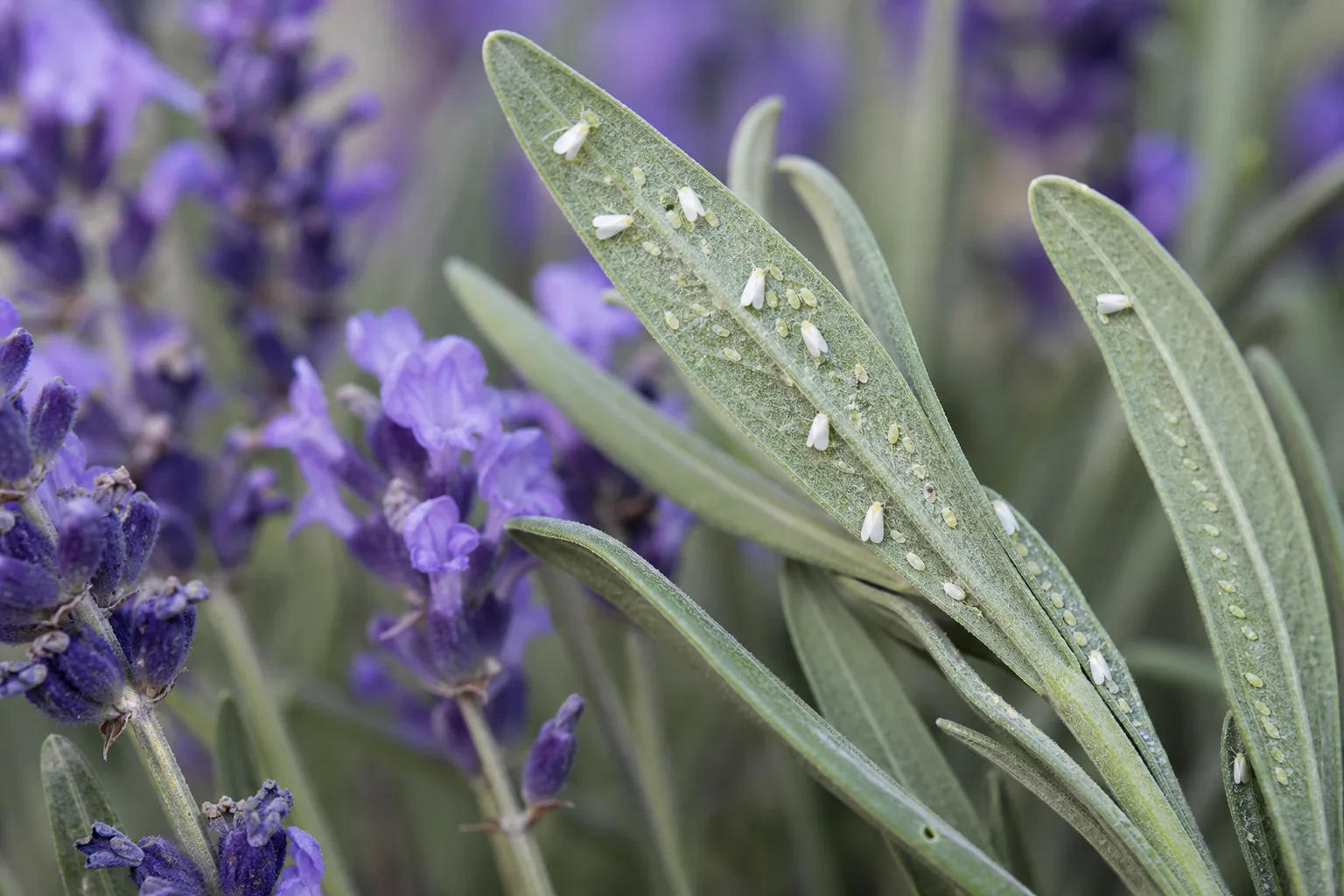
Whiteflies on Lavender: Causes, Checks & Fixes
This guide covers whiteflies on Lavender. See also the general Whiteflies guide, watering, and light pages for this plant.
Whiteflies on Lavender: Causes, Checks & Fixes
Quick answer
Whiteflies are tiny sap-sucking insects that colonize the undersides of soft new growth and developing bloom wands on English lavender (Lavandula angustifolia) and lavandin (L. × intermedia). Disturb the plant and adults rise in a brief cloud of white insects-the fastest field test on narrow silver needles where nymphs are hard to spot.
First step: hang a yellow sticky trap at canopy height beside the newest shoots and inspect wand undersides with a hand lens. That combination confirms active whiteflies and gives you a baseline count before you commit to repeated soap cycles on blooms you plan to harvest.
Container lavender moved from a greenhouse bench to a sunny balcony in early spring often shows the first clouds within days of wand elongation-pests that were barely visible indoors become obvious once tender bloom tissue pushes in warm outdoor light.
What whiteflies look like on lavender
On lavender, whitefly damage concentrates where the plant is most valuable and most vulnerable: new silver shoot tips and tight flower wands before petals open. Adults are tiny white-winged insects roughly 1–2 mm long. They rest on needle undersides and fly readily when disturbed-unlike aphids on lavender, which form stationary pear-shaped clusters on shoot tips.
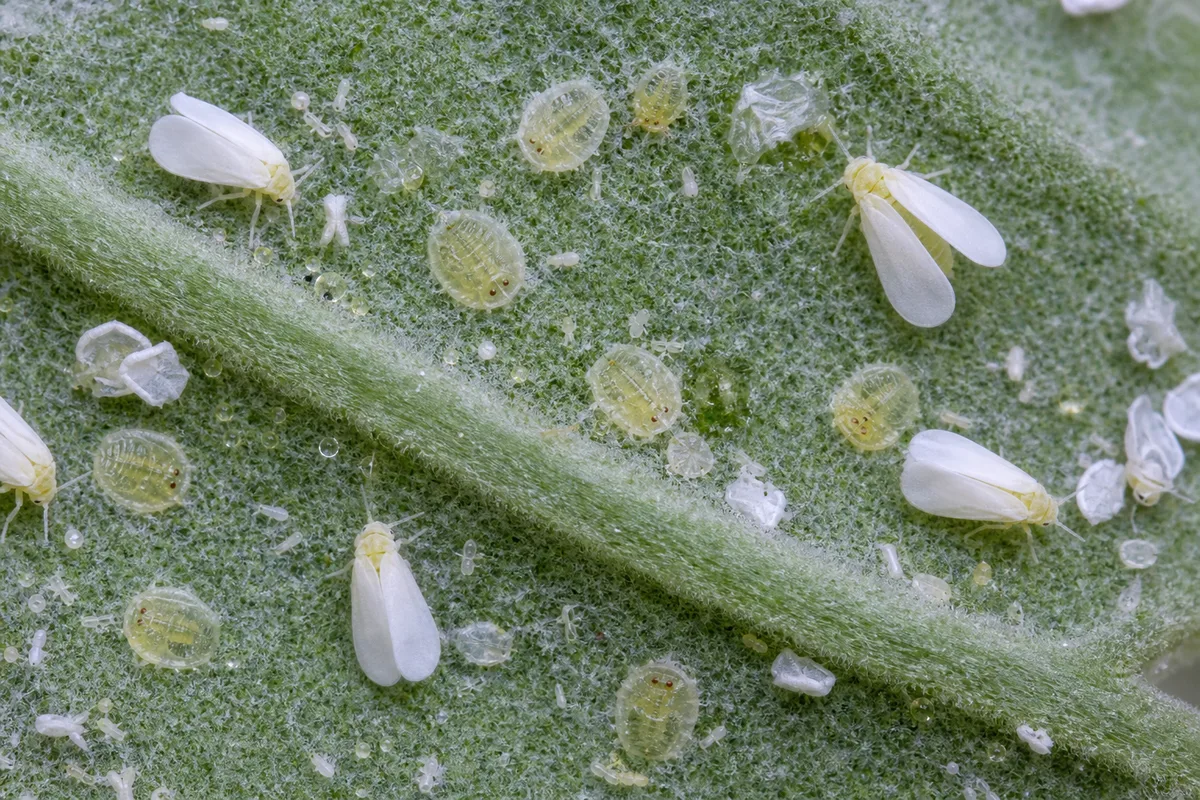
Whiteflies symptoms on Lavender - compare with healthy tissue on the same plant.
Typical signs on lavender:
- A white cloud rising when you brush or shake a wand over white paper
- Flat, oval, pale nymphs glued to undersides-these immobile stages cause most feeding damage
- Sticky honeydew on silver needles, pot rims, and bloom bracts; black sooty mold may follow in humid corners
- Yellowing or dull needles on heavily fed lower leaves when nymph populations are dense
- Ant trails on stems and pot edges-ants harvest honeydew and protect whiteflies from predators
Greenhouse whitefly (Trialeurodes vaporariorum) and sweetpotato or silverleaf whitefly (Bemisia tabaci) are common on herbs including lavender in greenhouse and windowsill culture. Nymphs look like flat pale scales on needle undersides, not cottony tufts like mealybugs.
Heavy pressure rarely kills established woody lavender fast, but it can ruin bloom quality, coat harvest wands with honeydew, and stunt soft spring growth until populations drop. If needles feel tacky without visible insects, cross-check the sticky leaves guide-honeydew from aphids, scale, and whiteflies overlaps on lavender.
Why lavender gets whiteflies
Lavender is a Mediterranean sun herb that prefers dry, well-drained soil and full sun. Whiteflies favor the opposite microclimate on real-world pots: protected soft tissue in warm, humid, shaded pockets where rinsing and predators miss nymphs tucked between overlapping stems.
Soft spring wands and protected inner growth
Lavender pushes its main bloom flush on soft spring shoots-exactly when whiteflies lay eggs on tender young growth and nymphs settle on undersides. English lavender wands are narrow; lavandin (L. × intermedia) produces longer bloom spikes with more underside surface for nymphs to hide. Both are herb hosts listed in greenhouse herb pest guides alongside rosemary, sage, and mint.
Culture mismatch: shade, nitrogen, and overwatering
Overfed shaded lavender produces lush soft shoots whiteflies prefer. Plants tucked against a north wall, crowded on a balcony rail, or stretching toward a dim window develop dense inner mounds that trap humidity. Correcting not enough light and lean culture helps long term, yet an established whitefly colony on wand undersides will not disappear from sun alone-you still need direct pest control.
Greenhouse-to-outdoor spring introduction
Container lavender overwintered in a greenhouse, sunroom, or bright indoor spot frequently arrives at spring outdoors with low-level whiteflies that explode once wand formation starts. The pest was present on tight buds and sheltered undersides all winter; warm outdoor air and rapid new growth simply make the cloud test obvious. Skipping quarantine on a new nursery pot before placing it beside harvest plants is one of the fastest ways to spread whiteflies across a balcony collection.
Ant mutualism
Ants protect whiteflies from natural enemies while harvesting honeydew. On lavender, ant trails on woody stems and pot rims strongly suggest sap feeders are active on nearby tissue-see ants on lavender for parallel control while you treat whiteflies.
In-ground lavender hedges in full sun are less prone to explosive outbreaks than cramped containers, but weedy edges and neighboring ornamentals can harbor alternate hosts that reinfest clean plants each spring.
How to confirm whiteflies vs. aphids, thrips, and mealybugs
Work through these checks in order before spraying anything beyond traps:
- Cloud-flight test - Brush or shake a flower wand over white paper. A brief cloud of tiny white insects confirms whiteflies. Pear-shaped clusters that stay put point to aphids instead.
- Underside nymph check - Use a hand lens on newest shoots and lower shaded needles. Flat pale oval nymphs glued to undersides confirm whitefly immature stages.
- Honeydew test - Rub a needle between fingers. Sticky residue that transfers to your skin supports sap feeders-not drought alone.
- Ant trails - Marching ants on stems suggest honeydew producers are being farmed nearby.
- Thrips rule-out - Silvery scrape marks with black frass specks and no flying cloud suggest thrips on lavender rather than whiteflies.
- Mealybug rule-out - White cottony tufts in stem axils stay stationary; whitefly adults fly when disturbed.
- Neighbor scan - Check other pots on the same rail. Whiteflies move short distances between touching foliage on crowded balcony setups.
Confirmed diagnosis requires flying adults or flat nymphs on undersides with honeydew or stippling, not yellow needles alone.
Lookalike symptoms
| Sign | Likely cause | Quick check |
|---|---|---|
| White cloud on disturbance | Whiteflies | Shake wand over paper |
| Sticky needles + soft green clusters | Aphids | Pear-shaped insects on shoot tips |
| Silvery streaks + black specks, no cloud | Thrips | Tap test; no flying white adults |
| White cottony tufts in axils | Mealybugs | Wax clusters at stem bases |
| Brown bumps on woody stems | Scale | Stationary shells, not flying insects |
| Dry silver needles, no stickiness | Normal glaucous bloom | Dry wax, not adhesive film |
| Uniform wilting + dry pot weight | underwatering on Lavender | Dry-down check |
First fix: traps, soap, ants, and culture correction
Hang a yellow sticky trap at canopy height beside the newest shoots and inspect wand undersides before any spray.
Traps monitor or reduce adult whitefly numbers while you confirm nymph density on undersides-where contact treatments must reach. Place the sticky surface level with the infestation zone on soft spring growth, not buried inside the woody base.
Do not spray soap, oil, and prune everything the same afternoon. Confirm the pest, set a trap baseline, then treat based on how far honeydew has spread across bloom wands you plan to harvest.
If ants are farming colonies, start parallel ant management per the ants on plant guide so lacewings and lady beetles can reach whiteflies once honeydew access is disrupted.
Step-by-step recovery
Once whiteflies are confirmed, work in this order:
Light infestation (cloud on one or two wands)
- Keep yellow traps at canopy height and note adult catch every three to five days.
- Hose adults off with a strong morning stream on wand undersides and inner branch joints-early populations can be held down by water sprays on sturdy plants. Let needles dry before afternoon heat on container pots.
- Gentle vacuum adults on small pots if clouds are localized-optional on balcony specimens where rinsing misses tight wand bracts.
- Improve sun and spacing - Move pots to the sunniest airy spot per the lavender light guide so new growth toughens after control.
Moderate infestation (honeydew on multiple wands, ants present)
- Apply insecticidal soap - Use a product labeled for ornamentals. Soaps and oils control only directly sprayed whiteflies; coat undersides until runoff, not just needle tops.
- Repeat every five to seven days for two to three cycles. MU Extension notes eradication usually requires applications at five- to seven-day intervals because eggs and pupae survive single sprays-the herb greenhouse guide cites a three- to five-week life cycle depending on temperature.
- Manage ants - Bait stations away from open blooms or barrier bands on pot rims so predators can reach nymphs.
- Wipe sooty mold off needles with a damp cloth once honeydew production stops-not before pests are controlled.
- Hold heavy nitrogen fertilizer while the plant is pest-stressed.
Heavy infestation (cloud on most new growth, bloom wands coated before harvest)
- Prune worst infested wands into a bag rather than the compost pile if petals are not yet open and salvage is unlikely.
- Combine traps, repeated soap, and ant control through one full generation cycle before judging failure.
- Escalate to horticultural oil or neem only after two soap cycles if trap counts stay high-test a few needles first and apply on calm mornings when temperatures are under 90°F to reduce phytotoxicity on sun-stressed lavender.
- Quarantine neighboring pots if multiple specimens on one rail show fresh clouds simultaneously.
Biological control in enclosed setups
Outdoors, lady beetles, lacewings, and parasitic wasps often help limit whiteflies when broad-spectrum sprays are avoided. In greenhouse or enclosed porch culture, commercial releases of Encarsia wasps can supplement soap on herbs-most parasitoids are geared toward greenhouse whitefly and work best before populations peak. Open balcony hedges rarely sustain biological control alone; traps plus repeated contact sprays remain the practical home approach.
Recovery timeline and what “clean” looks like on silver shoots
Scarred or honeydew-coated needles do not fully revert to perfect silver. Judge success by new clean shoot tips and unsticky developing wands, not old lower foliage.
- 48–72 hours - Adult clouds should thin after the first trap-plus-rinse or soap cycle; honeydew may still feel tacky until you wipe needles.
- 7–14 days - With repeated soap at five- to seven-day intervals, new silver tips should open without fresh nymphs on undersides.
- 2–4 weeks - Firm sun-grown lavender produces clean regrowth once trap catches fall and the cloud test stays clear for a week.
Worsening signs: honeydew coating most bloom wands before harvest week, sooty mold spreading across inner shaded needles, winged adults on every neighboring pot, or new tips staying sticky after two full soap cycles-these need faster escalation rather than waiting for petals to open on already ruined wands.
Balcony English lavender after a greenhouse winter often needs one disciplined trap-plus-soap cycle in early spring before wands elongate-clean silver regrowth on new tips within two to three weeks is a realistic outcome when treatment starts at the first cloud on soft shoots.
Harvest and bloom-wand safety after treatment
Culinary and craft harvesters should treat bloom timing as part of pest control-not an afterthought.
- Read the product label for harvest interval, re-entry timing, and ornamental vs. edible use before spraying wands you plan to cut.
- Apply soap on calm mornings so narrow needles dry within a few hours before midday sun on container pots-wet foliage plus heat raises burn risk on Mediterranean herbs.
- Do not harvest the same day as heavy soap or oil unless the label allows it; many contact products need a drying period in full sun.
- Rinse harvested wands under cool running water and inspect bracts for flat nymphs before drying for tea or sachets-even after the label interval passes.
- Avoid broad-spectrum sprays during open bloom when bees visit lavender; prefer targeted soap on tight buds before petals expand when possible.
If honeydew already coats wands you intended to harvest this week, decide whether to sacrifice the infested flush and treat for clean secondary growth, or treat and wait through the label interval-cutting coated blooms without pest control spreads nymphs to clean tissue on the same plant.
What not to do
Do not soap only tops of needles-undersides matter on narrow lavender wands where nymphs hide.
Do not ignore ants while spraying; protected colonies rebound quickly once honeydew access returns.
Do not use broad-spectrum insecticides as a first move on balcony lavender-products that wipe out predators often flare spider mites in the same hot dry conditions whiteflies favor.
Do not assume sticky needles mean overwatering alone; confirm sap feeders before changing your watering rhythm.
Do not compost heavily infested wands indoors without killing insects first.
Do not skip quarantine on a new nursery pot because the label says pest-free-inspect developing wands before placing it beside established harvest plants.
How to prevent whiteflies next time
Prevention on lavender is scouting plus culture-not permanent immunity.
- Quarantine new pots two weeks before placing them on a shared balcony rail.
- Hang yellow traps early when soft spring shoots appear-not only after honeydew shows on bloom wands.
- Inspect wand undersides weekly from late winter through the main bloom period.
- Keep full sun and lean gritty mix per the lavender overview and soil guide so new growth is firm, not nitrogen-soft.
- Control ants before they establish trails on woody stems.
- Inspect overwintered lavender before moving containers outdoors in spring-clouds often appear within days of wand elongation if whiteflies rode through winter indoors.
When to worry
Treat as urgent when:
- Honeydew coats most developing wands before harvest week
- Clouds rise from most new growth on an otherwise firm plant
- Sooty mold spreads across inner shaded needles within days
- Several lavender pots on the same rail show fresh clouds simultaneously
- New silver tips stay sticky after two full soap cycles at five- to seven-day intervals
Whiteflies rarely kill established woody lavender outright, but they can ruin an entire bloom cycle-the main reason most people grow the plant. Escalate treatment after two soap cycles if trap counts stay high rather than waiting for petals to open on wands already coated with honeydew.
For chronic greenhouse or sunroom infestations that return after three disciplined treatment cycles, contact your local extension office for identification help before applying systemic products near open harvest blooms.
Related lavender problems
- Lavender overview - Sun, soil, and harvest culture hub
- Sticky leaves on lavender - Honeydew symptom hub across sap feeders
- Aphids on lavender - Stationary clusters vs. flying cloud test
- Ants on lavender - Parallel control when ants farm honeydew
- Thrips on lavender - Silvery scarring without white clouds
- Spider mites on lavender - Webbing and fine stipple differentiation
- Lavender light - Full sun culture that toughens new growth
- Not enough light on lavender - Shaded soft growth that attracts pests
Conclusion
Whiteflies on lavender are a wand-stage problem first-confirm with the cloud-flight test on developing blooms, monitor with yellow traps at canopy height, and treat needle undersides with repeated morning soap through one full pest generation. Ant control and full sun lean culture prevent the soft shaded growth whiteflies prefer. Success means clean new silver shoots and harvestable wands without fresh honeydew, not perfect old needles. If clouds persist after two soap cycles, escalate to oil per label or seek extension help rather than harvesting coated blooms.
When to use this page vs other Lavender guides
- Lavender watering guide - Use for routine moisture checks before assuming whiteflies is the main issue.
- Lavender problems hub - Browse all 51 common issues on this species.