Whiteflies on Maidenhair Fern: Causes, Checks & Fixes
Quick answer
Whiteflies on Maidenhair Fern show as tiny white insects that fly when fronds are disturbed, plus flat nymphs on leaflet undersides and sticky honeydew. First step: isolate the fern and rinse every leaflet underside before applying any spray.
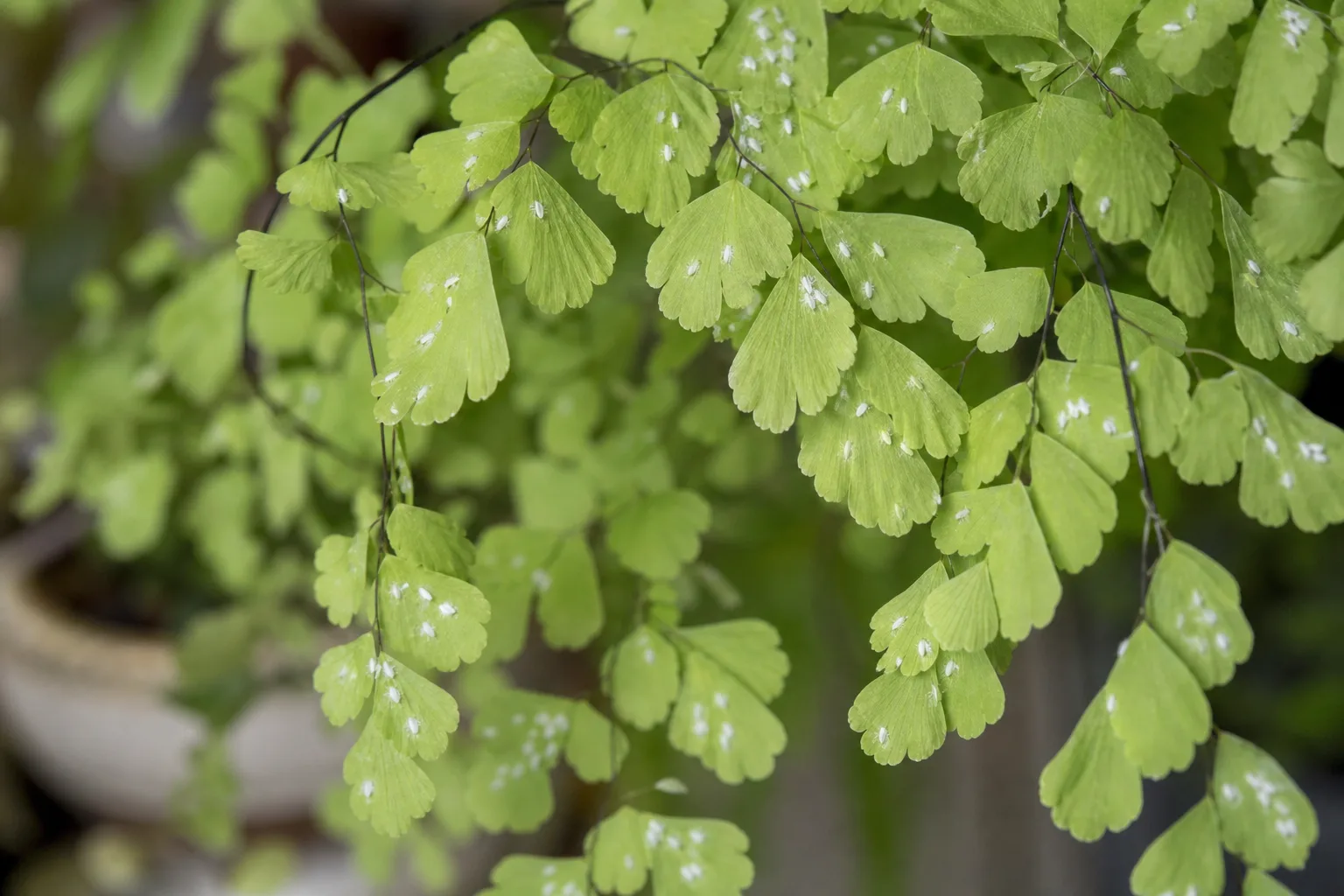
Whiteflies on Maidenhair Fern: Causes, Checks & Fixes
This guide covers whiteflies on Maidenhair Fern. See also the general Whiteflies guide, watering, and light pages for this plant.
Whiteflies on Maidenhair Fern: Causes, Checks & Fixes
Quick answer
Whiteflies on Maidenhair Fern announce themselves when you disturb the fronds: tiny white moth-like insects flutter up, then resettle on leaflet undersides. Flat pale nymphs stuck to those undersides do the real feeding damage, leaving sticky honeydew and yellowing, weakened fronds.
First step: isolate the fern and rinse every leaflet underside with lukewarm water before reaching for spray. Maidenhair Fern’s fine leaflets hide nymphs easily, and treating only the adults will not break the cycle.
What whiteflies look like on Maidenhair Fern
On Maidenhair Fern, whitefly damage concentrates where the plant is softest and most sheltered:
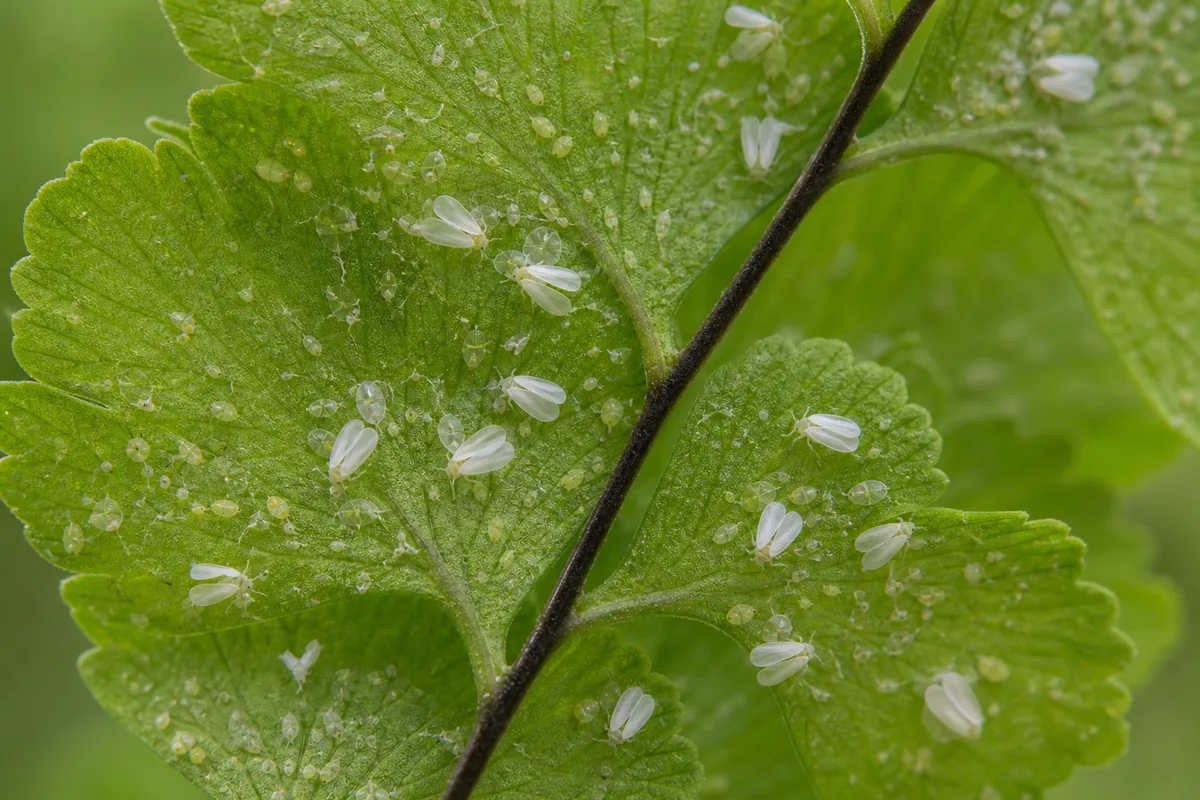
Whiteflies symptoms on Maidenhair Fern - compare with healthy tissue on the same plant.
- Adults - white, powdery, about 1/16 inch long; wings held roof-like over the body; fly in a small cloud when a frond is shaken
- Nymphs - flat oval disks on leaflet undersides, often along black wiry stems and new croziers; immobile once settled
- Honeydew - shiny tacky film on leaflets, pot rims, or shelves below the fern
- Sooty mold - black coating on honeydew that wipes off with a damp cloth
- Yellowing or stunted fronds - sap loss shows first on tender new growth and crowded inner leaflets
Do not confuse brown spore dots on fertile fronds with pests - those are normal reproductive structures on Adiantum, not insects.
Why Maidenhair Fern gets whiteflies
Warm protected windows and bathrooms - Whiteflies reproduce throughout the year indoors where temperatures stay warm. Maidenhair Fern’s preferred 16–24°C (60–75°F) range suits them as well as the plant.
Constant new frond production - Unfurling croziers and soft leaflets give whiteflies fresh feeding sites through spring and summer growth spurts.
Clustered humidity setups - Grouped ferns, terrariums, and bathroom shelves slow airflow. Whiteflies reproduce on sheltered undersides while adults drift to neighboring plants.
New plant introductions - Nursery ferns and mixed indoor displays often carry whiteflies before symptoms show on delicate foliage.
Honeydew feedback loop - Sticky residue attracts ants and grows sooty mold, which blocks light on fine maidenhair leaflets already sensitive to stress.
Unlike spider mites, whiteflies are not a dry-air pest. They can thrive on a well-watered fern in a humid room - so moisture alone does not prevent them.
How to confirm the cause
Work through these checks in order:
- Shake test - Hold white paper under a frond and tap the stem. A brief cloud of white insects confirms adults. Aphids and scale do not fly.
- Underside scan - Lift fronds and inspect leaflet backs with a hand lens. Flat pale disks in rows or clusters are nymphs.
- Honeydew check - Tacky leaflet surfaces or sticky pot rims confirm sap feeders. Hard water spots feel chalky when dry, not uniformly sticky.
- New growth focus - Whiteflies concentrate on newest croziers and fully expanded young leaflets.
- Exclude lookalikes - No cottony wax (mealybugs), no fine webbing (spider mites), no hard brown armored bumps (scale).
- Neighbor plants - Check other humidity lovers in the same room; whiteflies spread by flight.
If adults fly and nymphs sit on undersides with honeydew present, the diagnosis is whiteflies - not low humidity curl or fluoride tip burn.
First fix for Maidenhair Fern
Isolate the fern and rinse all leaflet undersides thoroughly.
Move Maidenhair Fern away from other plants. In a sink or shower, use lukewarm gentle spray angled upward so water contacts the undersides of every leaflet and crozier. Support delicate fronds with your hand to limit breakage. Let foliage dry in Maidenhair Fern light guide the same day.
This single step knocks down adults, dislodges some nymphs, and washes fresh honeydew before sooty mold spreads across fine leaflets.
Do not spray insecticide on day one if you have not confirmed nymphs on undersides. Do not fertilize a pest-hit fern - soft nitrogen-rich growth gives whiteflies more tissue to colonize.
Step-by-step recovery
After the initial rinse:
- Repeat gentle washing every two to three days until flying adults are rare on inspection.
- Apply insecticidal soap labeled for houseplants if nymphs remain after several rinses. Cover undersides completely; test one frond first because maidenhair leaflets are thin.
- Hang a yellow sticky trap just above the fern to catch adult whiteflies - useful for monitoring, not as the only treatment.
- Re-treat at five- to seven-day intervals for four to five cycles to catch newly hatched nymphs through one full generation.
- Wipe honeydew from leaflets with a damp cloth to slow sooty mold while insects are being cleared.
- Hold fertilizer until two weeks pass with no live nymphs on inspection.
- Quarantine two weeks after the last whitefly sighting before returning the fern to a mixed display.
For light new infestations, vacuuming sluggish morning adults with a handheld vacuum can reduce flying populations before washes - freeze the bag contents afterward.
Recovery timeline
Knockdown rinses show results within two to three days when colonies are moderate. A full soap course through four to five label-interval applications typically takes three to four weeks because eggs and pupae survive single sprays.
Judge success by clean unfurling croziers and no flying adults on shake tests - not by old yellowed leaflets, which may stay dull until replaced.
Lookalike symptoms to rule out
Aphids - Soft pear-shaped clusters on new tips; do not fly in clouds. Often ant-associated.
Mealybugs - White cottony wax in stem joints; no powdery flying adults.
Spider mites - Fine stippling and webbing in dry conditions; mites are microscopic compared with visible whiteflies.
Fungus gnats - Small dark flies at soil surface; larvae live in mix, not on leaflet undersides.
Low humidity stress - Crispy leaflet margins without stickiness, flying insects, or sooty mold.
Mistakes to avoid
Do not treat only when you see flying adults - nymphs on undersides sustain the population.
Do not use homemade dish soap on delicate maidenhair leaflets; burns show quickly on thin tissue.
Do not apply heavy horticultural oil without label clearance for ferns and indoor use.
Do not return an isolated fern after one spray - overlapping generations need repeated cycles.
Do not ignore sticky traps showing rising catch counts while fronds look only slightly pale.
How to prevent whiteflies next time
Quarantine new ferns at least two weeks; isolate them before placing among established plants; inspect croziers and leaflet undersides before placing near established Maidenhair Fern.
Scout weekly during active growth - the same crown checks you already use for watering cues.
Use yellow sticky traps near windowsill collections for early adult detection; remove or reduce traps once natural enemies or manual control take over.
Improve airflow between grouped humidity plants without drying the root ball - a small fan on low across the room helps more than misting leaflets.
Inspect after outdoor summer stays - patio time can introduce whiteflies that ride indoors on autumn move-in.
Maidenhair Fern care cross-check
Whitefly recovery still needs stable moisture and medium indirect light. Do not let pest stress coincide with a dried-out root ball - collapsed fronds from drought make it harder to judge whether yellowing came from insects or watering gaps.
Keep humidity in the 60–80% range the fern prefers, but let frond crowns dry by evening after washing treatments.
Maidenhair Fern is non-toxic to cats and dogs; still keep soaps and traps away from pets during application.
When to worry
Escalate when new croziers stop unfurling, sooty mold coats most leaflets, white clouds appear on daily checks, or whiteflies spread to multiple humidity-grouped plants within a week.
Consider discarding only if the fern has lost most viable crowns, nymphs blanket every frond after repeated labeled treatments, and no clean new growth appears for a month. Most established maidenhair specimens recover when isolation and underside-focused treatment start early.
Conclusion
Whiteflies on Maidenhair Fern are confirmed by flying adults, flat nymphs on leaflet undersides, and honeydew - not by dry-air damage alone. Isolate, rinse undersides before you spray, and repeat treatment through a full life cycle while watching new croziers for clean growth. That path respects this fern’s delicate foliage while targeting the immobile stages that actually drain sap.
When to use this page vs other Maidenhair Fern guides
- Maidenhair Fern watering guide - Use for routine moisture checks before assuming whiteflies is the main issue.
- Maidenhair Fern problems hub - Browse all 55 common issues on this species.