Whiteflies on Petunia: Causes, Checks & Fixes
Quick answer
Whiteflies on petunias cluster on leaf undersides and fly up when stems are shaken, leaving sticky honeydew and yellowing foliage. Confirm with the shake test, isolate the basket, and spray undersides with insecticidal soap every four to five days until adults stop appearing.
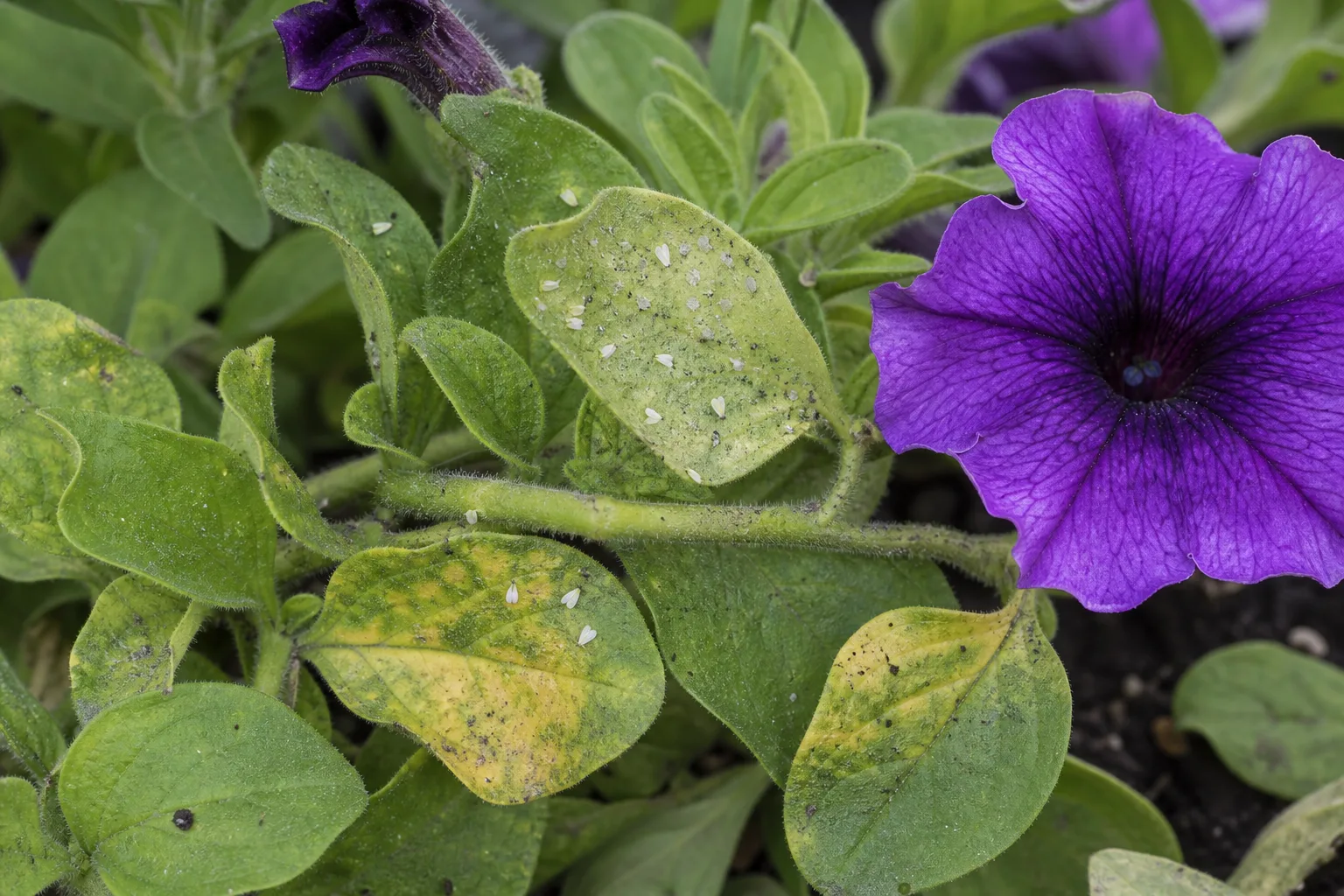
Whiteflies on Petunia: Causes, Checks & Fixes
This guide covers whiteflies on Petunia. See also the general Whiteflies guide, watering, and light pages for this plant.
Whiteflies on Petunia: Causes, Checks & Fixes
Quick answer
Whiteflies on petunia are sap-sucking insects that hide on leaf undersides and erupt in clouds when disturbed. They weaken blooms, yellow foliage, and coat leaves with sticky honeydew that grows sooty mold. First step: shake a stem to confirm flying adults, move the basket away from neighbors, and spray insecticidal soap thoroughly on undersides every four to five days.
Why Petunia gets whiteflies
Petunias spend the season in warm, sunny containers-often hanging baskets with limited airflow and mixed plantings. Extension reports document sudden whitefly outbreaks on petunia baskets while nearby plants stay clean, which fits how these pests hitchhike on new stock and then concentrate on soft, fast-growing petunia foliage.
Trailing petunias expose a large leaf surface close to the pot rim, where undersides stay humid and sheltered. That microclimate suits whitefly nymphs, which feed on the underside and are easy to miss until adults are everywhere.
Overwatered or nitrogen-heavy petunias push tender new leaves-preferred whitefly food. Drought-stressed plants are also vulnerable because sap becomes more concentrated. Neither condition causes whiteflies by itself, but both make infestations worse once pests arrive.
Mixed greenhouse baskets are a common introduction route. Warm porch walls and reflected heat speed whitefly reproduction the same way greenhouse conditions do.
What whiteflies look like on Petunia
- Cloud of tiny white, moth-like insects when you shake or brush stems.
- Flat, oval pale nymphs glued to leaf undersides-often on lowest leaves.
- Yellowing or dull leaves from sap loss, starting on older lower foliage.
- Shiny sticky honeydew on leaves, rails, or patio surfaces below the basket.
- Black sooty mold growing on honeydew-coated leaves.
- Reduced bloom or weak flowers when infestation is heavy before peak season.
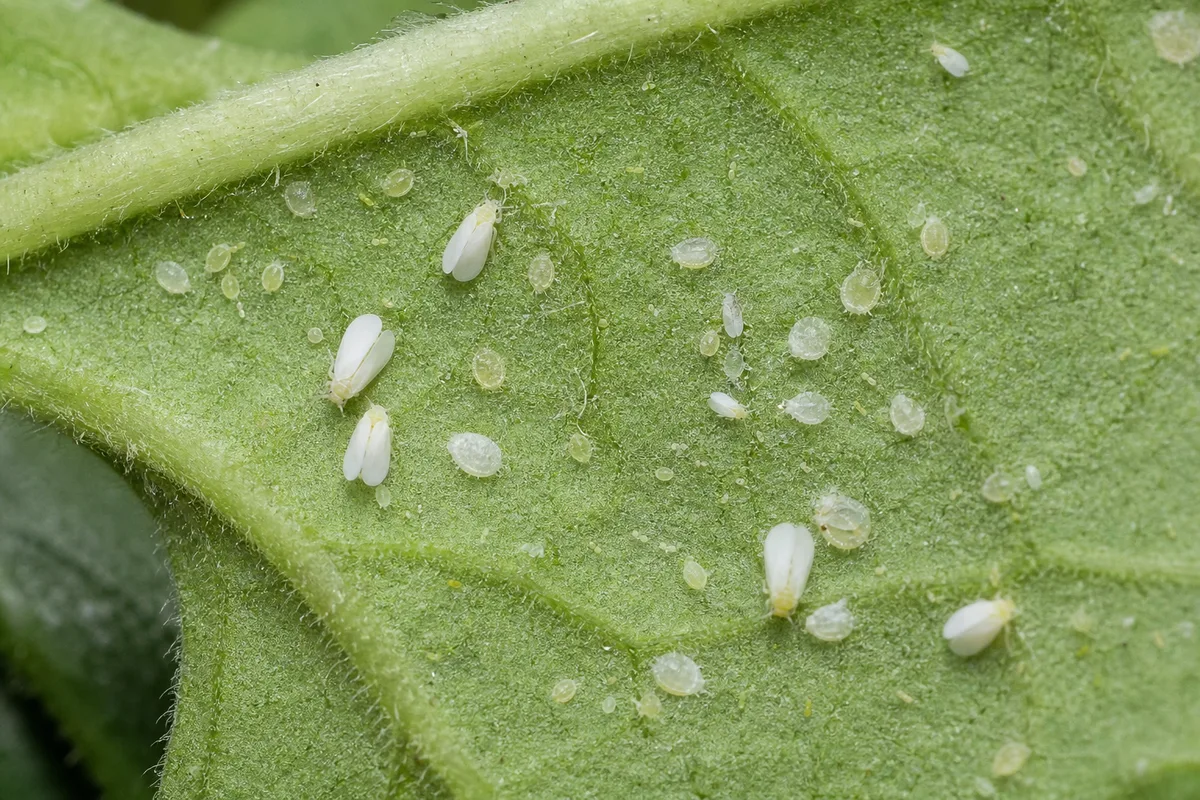
Whiteflies symptoms on Petunia - compare with healthy tissue on the same plant.
On Wave-type trailing petunias, the lowest hanging stems often show the worst nymph clusters because spray and rain miss them.
How to confirm the cause
- Shake test over white paper-flying white insects confirm whiteflies.
- Underside inspection with a hand lens for flat nymphs and waxy cast skins.
- Honeydew check-sticky residue that returns within days after rinsing points to active sap feeders.
- Rule out aphids-aphids stay put and do not fly in clouds; look for pear-shaped clusters on new tips.
- Rule out powdery mildew-white fungal patches sit on upper leaf surfaces, not flying insects.
- Rule out thrips-silvery scrape marks and slender bodies, not moth-like fliers.
If only one basket is affected while a neighbor two feet away is clean, whiteflies were likely introduced on that plant rather than a yard-wide environmental trigger.
First fix for Petunia
Isolate the affected basket immediately so adults cannot drift to other containers. Spray insecticidal soap labeled for ornamentals, covering the entire plant but focusing on leaf undersides and lowest stems where nymphs hide. Repeat every four to five days through at least three cycles to catch newly hatched nymphs-soap kills on contact and has little residual effect.
Apply in early morning or late evening when temperatures are below 90°F and foliage is not drought-stressed, so soap does not burn soft petunia leaves. Rinse honeydew-coated leaves with plain water before the first soap application if sooty mold is heavy.
Step-by-step recovery
- Move the basket away from other ornamentals on the porch or balcony.
- Shake stems to gauge population size; note whether nymphs cover lowest leaves.
- Spray soap on undersides until runoff; hit stem crotches and pot rim foliage.
- Hang yellow sticky traps just above the canopy to catch flying adults-traps monitor and reduce adults but do not replace undersurface sprays.
- Repeat soap on a four- to five-day schedule until shake tests show few or no fliers for a full week.
- Trim heavily yellowed or sooty lower stems if they block spray coverage on healthy growth above.
- Resume balanced feeding only after new growth emerges clean-avoid high-nitrogen pushes while pests are active.
Recovery timeline
First soap application knocks down adults within days, but nymphs on undersides need repeat sprays. Expect two to three weeks of treatment before populations collapse. New clean leaves and normal bud set within two weeks after the last flying adults disappear signal recovery.
Lookalike symptoms
| Sign | Likely cause | Key difference |
|---|---|---|
| Cloud when shaken | Whiteflies | Flying adults, nymphs on undersides |
| Sticky tips, no flight | Aphids | Clusters on new growth |
| Stippling + webbing | Spider mites | No flying insects; tap test shows moving specks |
| White powder on tops | Powdery mildew | Fungal coating, not insects |
| Silvery leaf scars | Thrips | No honeydew clouds |
Mistakes to avoid
Do not assume one spray finished the job-whitefly eggs and pupae survive single applications.
Do not spray only the top of trailing petunias-the worst nymph colonies sit on undersides of lowest stems.
Do not return an isolated basket to a mixed display until shake tests stay clean for two weeks.
Do not use broad-spectrum pyrethroids as the first response-they kill lady beetles and lacewings that help suppress whiteflies and may not eliminate established populations.
Do not compost heavily infested trimmings near healthy garden beds if you are still treating active adults.
Petunia care cross-check
While treating whiteflies, keep watering at the base so foliage stays as dry as practical-overhead watering on honeydew-coated leaves invites sooty mold and does not reach undersides where nymphs feed. Check that the basket drains within hours after watering; stressed roots weaken petunia recovery.
Confirm the plant still gets five to six hours of direct sun. Shade alone does not cause whiteflies, but weak leggy petunias recover more slowly after heavy sap loss.
How to prevent it next time
Quarantine new baskets two weeks before grouping them on a rail or hook. Scout undersides weekly during warm months-especially lowest leaves on trailing varieties. Preserve beneficial insects by using soap or horticultural oil before broad-spectrum chemicals. Avoid excess nitrogen during peak bloom season. Improve airflow between crowded baskets if your porch traps heat.
When to worry
Replace or discard the basket if whiteflies persist after four to five properly timed soap cycles, buds abort across the plant before bloom, or infested baskets threaten a large mixed display you cannot isolate. Severe honeydew and sooty mold on most leaves may not be worth saving late in a short annual season-starting fresh with clean stock is sometimes faster than fighting an entrenched population.
Conclusion
Whiteflies on petunia are manageable when you confirm them with the shake test and treat undersides on a repeat schedule-not with a single top-only spray. Isolate affected baskets, focus soap on hidden nymphs, and judge success by clean new growth rather than perfect old leaves. Warm-season container petunias reward early scouting more than late rescue sprays.
When to use this page vs other Petunia guides
- Petunia watering guide - Use for routine moisture checks before assuming whiteflies is the main issue.
- Petunia problems hub - Browse all 40 common issues on this species.