Thrips on Lemongrass: Causes, Checks & Fixes
Quick answer
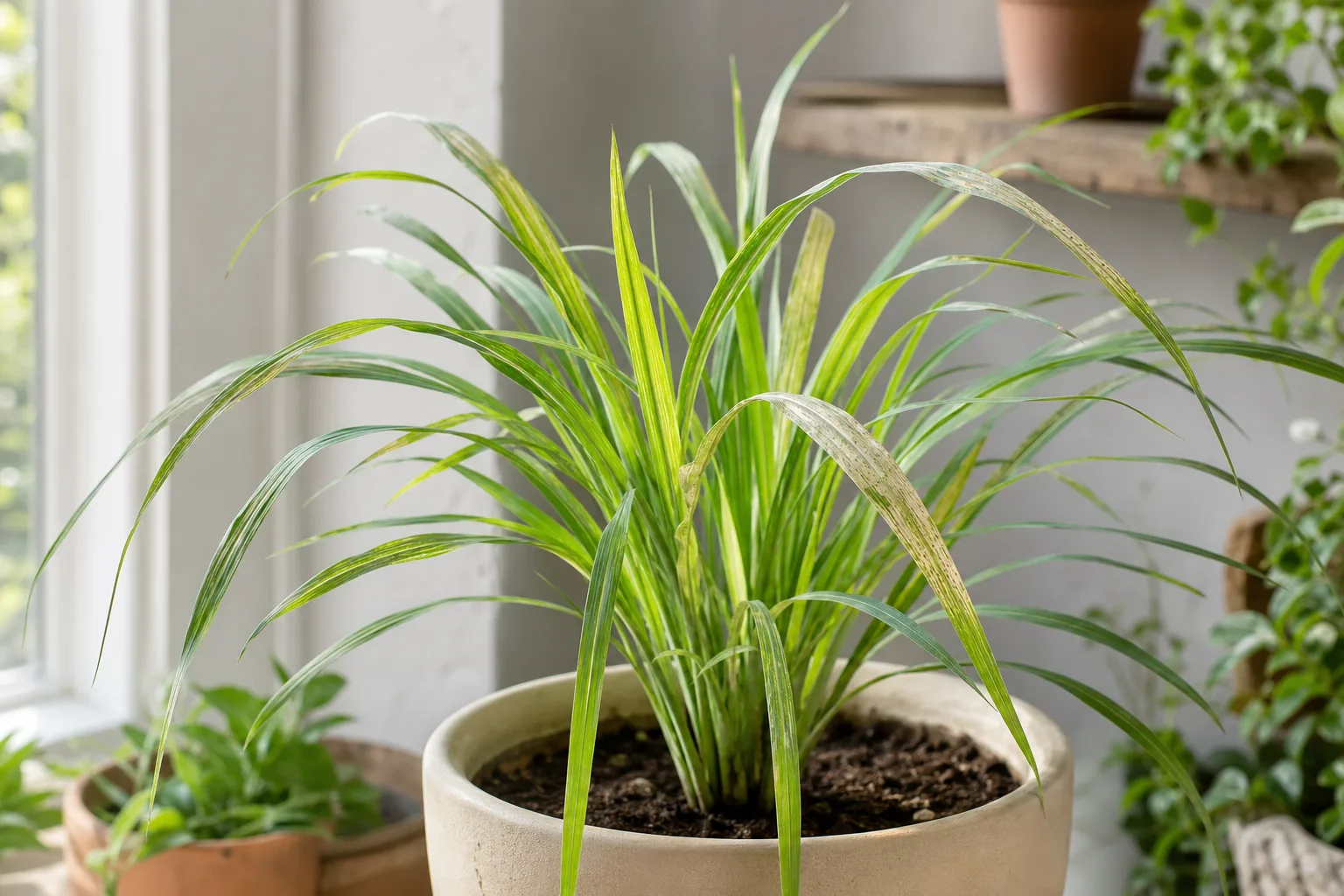
Thrips on Lemongrass scar tender new blades with silver streaks and black varnish-like specks. First step: isolate the clump, rinse all blades with a strong water stream, and inspect new shoots before applying any spray.
Thrips on Lemongrass: Causes, Checks & Fixes
This guide covers thrips on Lemongrass. See also the general Thrips guide, watering, and light pages for this plant.
Thrips on Lemongrass: Causes, Checks & Fixes
Quick answer
Thrips on lemongrass leave silver streaks and tiny black specks on tender new blades-not the sticky shine aphids produce. Thrips feed by scraping leaf tissue with rasping mouthparts, then suck the released sap, which scars long grass blades in linear streaks.
First step: isolate the clump and rinse every blade with a strong water stream, focusing on new shoots at the crown. Confirm slender insects on a shake test over white paper before you reach for sprays. If thrips are present, repeat rinsing and follow with insecticidal soap on new growth-not a single one-time treatment.
Why Lemongrass gets thrips
Lemongrass (Cymbopogon citratus) pushes soft new tillers constantly during warm months, especially after you cut stalks for cooking. That harvest rhythm creates a steady supply of tender tissue thrips prefer over older woody outer stems.
Outdoor clumps in full sun with rich, consistently moist soil grow fast from spring through fall. Active summer regrowth keeps producing vulnerable shoots-exactly when thrips populations surge in hot, dry, or sheltered conditions.
Thrips often arrive on infested nursery herbs, divisions from a friend’s garden, or neighboring plants on a shared patio. Lemongrass grown indoors or on sheltered balconies faces extra risk because natural predators are scarce and airflow is weaker than in an open herb bed.
Dense blade clusters also hide thrips. The narrow sheaths where new shoots emerge trap moisture and shelter insects better than the exposed upper portions of older stalks.
What thrips look like on Lemongrass
Early signs:
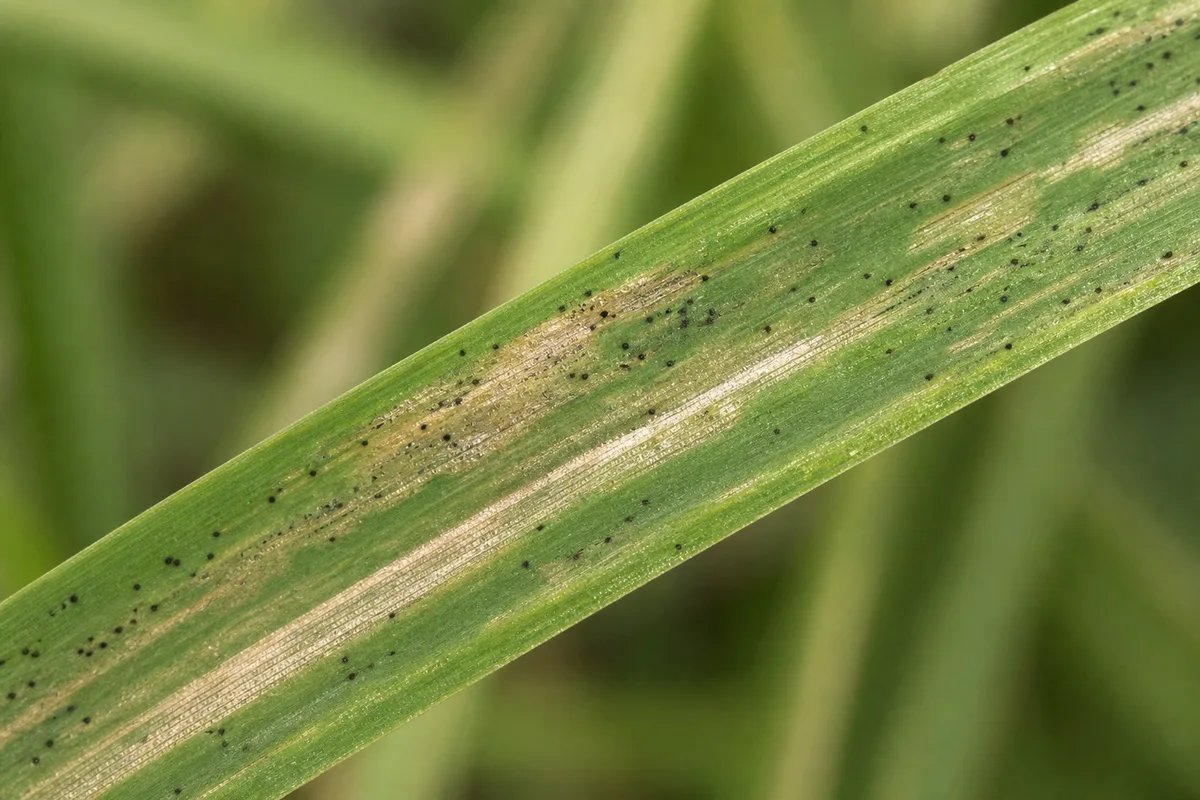
Thrips symptoms on Lemongrass - compare with healthy tissue on the same plant.
- Silvery or bronze streaks running along blade length, often on the newest growth
- Tiny black varnish-like dots (thrips frass) scattered on scarred blades
- Pale, slightly distorted young shoots still inside their sheaths
- Slender yellow, brown, or black insects visible when you part blades at the crown
Heavier infestations:
- Widespread silvering across most new tillers after a harvest flush
- Stunted or twisted young blades that fail to unfurl cleanly
- Reduced vigor in the clump even though soil moisture looks adequate
- Thrips appearing on shake tests from multiple stems
Unlike aphids, thrips rarely leave sticky honeydew on lemongrass blades. Unlike spider mites, they do not produce fine webbing. The combination of linear silver scarring plus black frass on new shoots is the hallmark pattern on grass blades.
How to confirm the cause
Work through these checks in order:
- Target the right tissue - Inspect blades emerging after your most recent harvest cut, not the older woody outer stalks thrips may have already passed over.
- Silver streak pattern - Thrips scarring follows blade length in streaks and flecks. Uniform yellowing at the base with mushy roots points to overwatering on Lemongrass, not thrips.
- Frass dots - Look for pinhead black specks on scarred tissue. These excrement spots distinguish thrips from drought browning or salt burn at tips.
- Shake test - Hold a suspect blade over white paper and tap sharply. Slender, fast-moving insects one-sixteenth of an inch long confirm thrips.
- Honeydew check - Rub a scarred blade between your fingers. Sticky residue with ants nearby suggests aphids, not thrips.
- Webbing check - Fine silk between blade bases indicates spider mites in hot dry pockets, not thrips.
- Neighbor scan - Check basil, mint, and other herbs sharing the same bench or window. Thrips move between soft-leaved companions quickly.
If silver streaks appear but no insects show on repeated shake tests, re-check after a warm afternoon when thrips are more active-or consider whether recent cold stress or fertilizer burn caused superficial blade bleaching.
First fix for Lemongrass
Rinse the entire clump with a strong stream of water, directing spray into blade sheaths and along both sides of new shoots.
This single step knocks thrips off foliage and washes away larvae before they settle deeper into the crown. Hold the pot at an angle so runoff does not pool in the crown. Rinse in morning sun so blades dry the same day.
Do not apply insecticide on day one without confirming insects. Do not harvest scarred stalks for cooking until you have rinsed thoroughly and any later spray intervals have passed per label directions.
Step-by-step recovery
After the initial rinse:
- Isolate the clump away from other herbs for at least two weeks after the last live thrips sighting.
- Repeat water rinses every two to three days until shake tests show no insects on new shoots.
- Apply insecticidal soap to new growth if rinsing alone does not clear the population within a week. Coat blade sheaths and emerging shoots thoroughly; soap must contact insects directly.
- Hang blue or yellow sticky traps just above the blade canopy to catch flying adults. Traps reduce populations but do not replace sprays on sheltered tissue.
- Trim only heavily distorted blades you would not cook with anyway. Leave healthy older stalks to keep photosynthesizing while new tillers recover.
- Scout neighboring herbs on the same surface. Treat adjacent basil or mint if they show matching silver streaks.
Outdoors, minute pirate bugs and predatory mites sometimes control thrips once soap sprays reduce heavy colonies. Avoid broad-spectrum insecticides on culinary clumps unless label directions explicitly allow edible herbs and you accept harvest restrictions.
Recovery timeline
Water knockdown shows results within two to three days when populations are moderate. A full soap course with label-interval repeats typically takes one to two weeks through one harvest regrowth cycle.
Scarred blade tissue does not turn green again-the damage stays visible until you cut those stalks at the base. Judge recovery by clean new tillers emerging from the crown, not by old streaked blades.
If new shoots stay silvered and distorted after three weeks of consistent treatment, the infestation may be reinfecting from nearby hosts or soil-dwelling pupae. Escalate scouting before assuming the clump is lost.
Lookalike symptoms to rule out
Aphids cluster as soft-bodied groups on new shoots and leave sticky honeydew. Pear-shaped bodies with tail pipes distinguish them from thrips.
Spider mites cause fine yellow stippling and webbing in hot dry conditions, especially on indoor clumps near heating vents. Mites are rounder and slower than thrips on a shake test.
Drought stress browns leaf tips and thins stalks while soil stays dry several centimeters down. No insects appear on shake tests.
Salt or fertilizer burn browns blade tips after heavy feeding or hard water buildup. Damage concentrates at margins, not as random silver streaks with black frass.
Leaf miners leave winding tunnels inside blades, not surface silver streaks. Lemongrass leaf miners are uncommon but possible on stressed clumps.
Mistakes to avoid
Do not harvest scarred blades for tea or cooking until insects are gone and any soap residue is rinsed off per label guidance.
Do not treat once and stop. Thrips reproduce quickly in warm weather and pupate in soil or litter, so one application rarely breaks the cycle.
Do not confuse lemongrass’s natural citrus aroma with pest control. While research shows lemongrass oils can repel some thrips species in laboratory settings, growing plants still get infested in real gardens.
Do not pile nitrogen fertilizer on a thrips-hit clump hoping to push growth-that produces more soft tissue thrips prefer.
Do not return an isolated clump to a mixed herb bench until shake tests stay clean for at least two weeks.
Lemongrass care cross-check
Thrips outbreaks worsen when basic care slips. Run this quick cross-check:
- Light - Clumps in less than six hours of direct sun grow weak, pale shoots that stay stressed longer after pest damage. Move pots to full sun before escalating chemicals.
- Water - Soil should stay moist during active growth without staying soggy at the crown. Chronic wet crowns invite fungal problems that compound thrips stress.
- Airflow - Crowded pots on a humid balcony trap insects. Space clumps so blades do not interlock with neighbors.
- Harvest rhythm - Regular cutting is healthy, but each cut exposes new tissue. Inspect within two days of every harvest during warm months.
How to prevent thrips on Lemongrass
Scout new shoots weekly from late spring through peak summer growth. The window after each harvest cut is when thrips damage shows first.
Quarantine new divisions or supermarket-rooted stalks for ten to fourteen days before planting beside established harvest clumps.
Use sticky traps as early-warning tools in greenhouses and on sheltered patios-not as the only control method.
Keep outdoor clumps in open sun with spaced placement. Remove fallen blade debris around pots to reduce pupation sites in litter.
Inspect herbs you buy at markets or receive as gifts before setting them beside culinary lemongrass.
When to worry
Treat as urgent when most new tillers show heavy silvering within days of a harvest cut, when thrips appear on multiple herbs in the same cluster, or when regrowth stalls entirely despite adequate water and sun.
Replace severely weakened clumps that fail to push clean shoots after four weeks of consistent treatment-lemongrass is easy to restart from fresh divisions or supermarket stalks, and nursing a woody exhausted clump costs more effort than a clean restart.
A few silver streaks on one new blade after a mild infestation is not urgent if shake tests clear within a week of rinsing. Judge by spread rate, not a single scar.
Conclusion
Thrips on lemongrass target the tender shoots your harvest cuts keep producing-not the whole clump at once. Silver streaks with black frass on new blades tell you what you are fighting. Rinse first, confirm with a shake test, then repeat soap on new growth until the next tiller flush comes in clean. That path protects your kitchen harvest without unnecessary chemicals on a plant you actually plan to cook with.
When to use this page vs other Lemongrass guides
- Lemongrass watering guide - Use for routine moisture checks before assuming thrips is the main issue.
- Lemongrass problems hub - Browse all 52 common issues on this species.
- Curling Leaves on Lemongrass - Different entry point when symptoms overlap with thrips.
- Brown Tips on Lemongrass - Different entry point when symptoms overlap with thrips.
- Yellow Leaves on Lemongrass - Different entry point when symptoms overlap with thrips.