Mosaic Virus on Lemongrass: Causes, Checks & Fixes
Quick answer
Suspected virus on lemongrass means do not harvest mottled stalks for cooking-isolate the clump first. Irregular yellow-green mosaic and twisted regrowth after harvest cuts point to virus, not rust stripes or miner tunnels. Home gardens cannot cure infected tissue; discard and restart from clean stock.
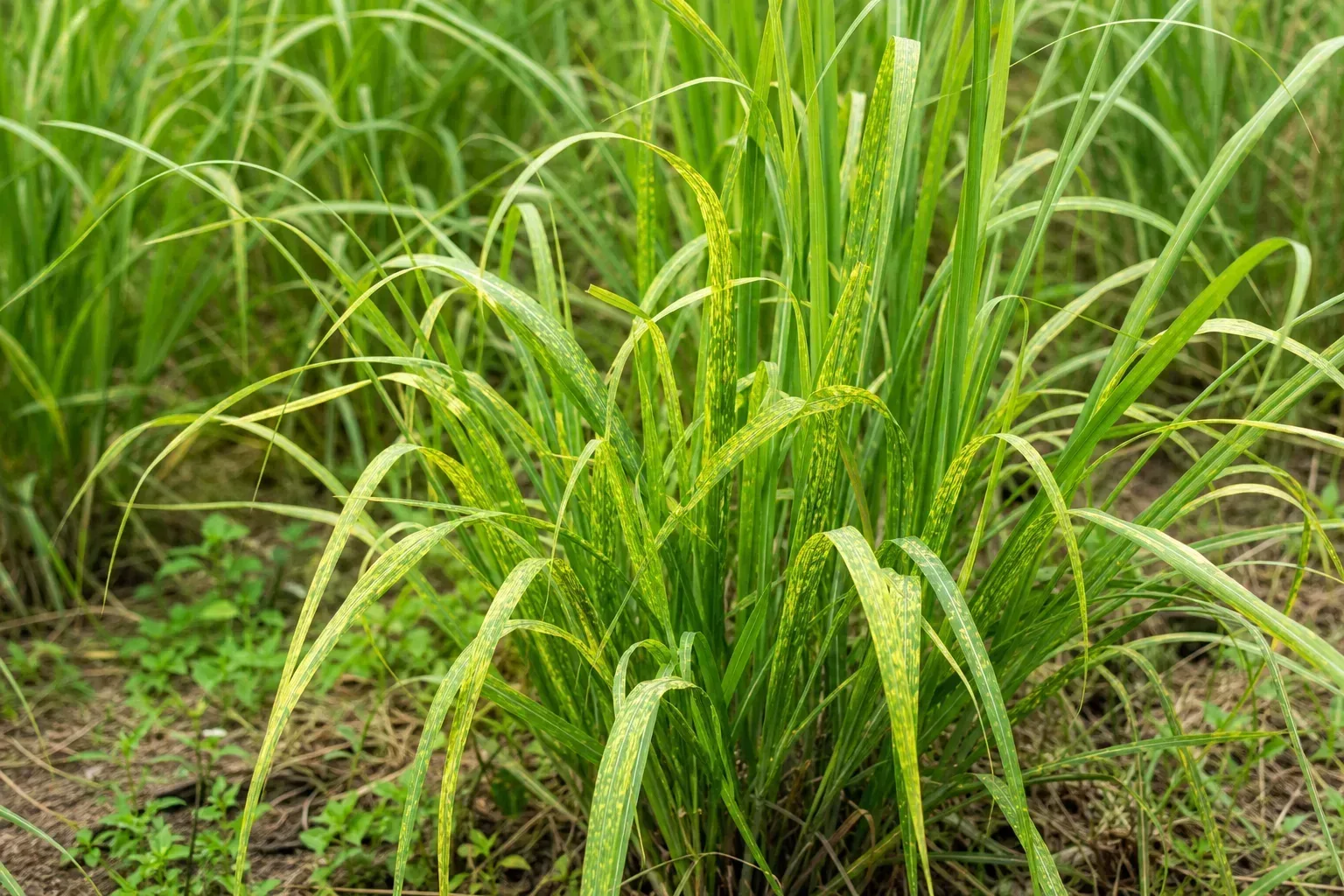
Mosaic Virus on Lemongrass: Causes, Checks & Fixes
This guide covers mosaic virus on Lemongrass. See also the general Mosaic Virus guide, watering, and light pages for this plant.
Mosaic Virus on Lemongrass: Causes, Checks & Fixes
Quick answer
If you cut lemongrass for the kitchen and new blades come back twisted, streaky, or mottled instead of uniform green, treat the clump as a virus suspect before you feed, spray, or harvest again. Do not cook from mottled stalks-isolate the clump immediately.
True mosaic virus on lemongrass (Cymbopogon citratus) shows irregular yellow-green patchiness and distorted new shoots with no home-garden cure. Your first fix is containment: move the suspect away from neighbors, stop divisions, and compare the pattern against lemongrass rust stripes and leaf miner tunnels before you discard. For species culture basics, see the lemongrass overview.
Plant viruses cause mottling, distortion, and stunted growth without a curative spray. On a fast-growing culinary grass in full sun, virus-affected blades look unevenly chlorotic while stalk bases may still feel firm-which confuses growers into fertilizing or fungicide trials that waste time while healthy neighbors stay at risk.
What mosaic virus looks like on lemongrass
Typical virus patterns on grass blades:
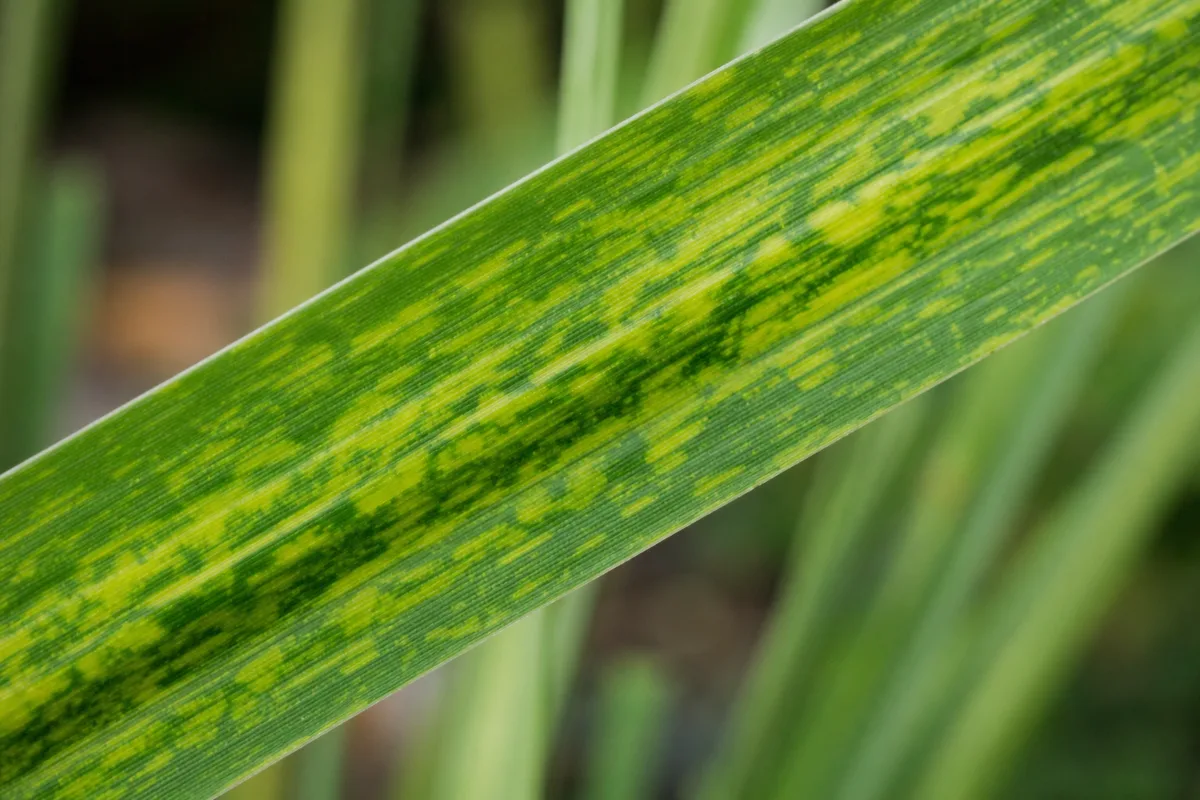
Mosaic Virus symptoms on Lemongrass - compare with healthy tissue on the same plant.
- Irregular yellow-green mosaic - Patchy discoloration along the blade, not a single crisp brown tip line
- Distorted or narrow new shoots - Twisted, streaky, or slowed regrowth after harvest cuts
- Uneven color on the same blade - Unlike uniform nitrogen pale-out across the whole clump
- Persistent symptoms - Mottling remains after correcting water, light, and fertilizer for two to three weeks
Leaf miners leave serpentine tunnels inside tissue when you hold blades to light; mites cause stippling and webbing on undersides; rot causes wilting with wet soil. Virus patterns stay visible on affected shoots without those signs.
Research on Cymbopogon spp. has documented sugarcane mosaic virus (SCMV) in Brazil, and cucumber mosaic virus (CMV) on C. citratus in India with yellow stripes and tip necrosis confirmed by ELISA and RT-PCR (Journal of Phytopathology; Australasian Plant Disease Notes). Home growers rarely learn which virus is present-symptom overlap is wide-but naming matters because both are systemic, incurable in place, and managed through discard and clean restart rather than fertilizer.
Why lemongrass gets mosaic virus
Infected propagation stock - Divided clumps, grocery-rooted stalks, or nursery pots that arrived with subtle mottling on one tiller. See lemongrass propagation for clean division technique after you rule out virus.
Sap transmission - Viruses spread through contaminated tools and hands when cutting blades or dividing clumps without sterilizing between plants. Lemongrass growers harvest often, which raises contact risk in mixed containers.
Vector insects - Aphids transmit some plant viruses as they feed on tender shoots; CMV spreads through many aphid species in non-persistent feeding. Control aphids on lemongrass on fast summer regrowth to reduce spread risk-not to cure an already infected clump.
No soil cure - Fungicides and fertilizers do not reverse viral mottling. Misdiagnosis wastes weeks while healthy neighbors in shared pots remain exposed.
How to confirm the cause
Work through these checks in order:
- Pattern - Mosaic mottling versus uniform yellow from drought or nitrogen? Whole-clump pale growth often tracks yellow leaves from culture stress, not patchy virus on one division.
- Internal tunnels - Hold blades to light; miners show lines, virus does not. See leaf miners on lemongrass when tunnels are the main finding.
- Mite check - Stippling with webbing on undersides? That pattern fits spider mites better than mosaic.
- Care correction test - Fix water and light for 14 days; virus mottling persists on affected shoots.
- Spread map - One division affected in a pot versus whole clump pale from nutrient issue?
- Root health - Firm roots with mottled blades support virus over rot.
- Rust cross-check - Lemongrass rust (Puccinia nakanishikii) starts as tiny yellow spots that become elongated brown streaks along leaf veins with cinnamon-brown pustules on the underside-not random surface mosaic. Rust is common on lemongrass in humid regions and is managed differently from virus discard.
When confirmation is strong, prioritize containment over cosmetic trimming. Home diagnosis is presumptive; lab testing confirms virus identity when stakes are high (see below).
First fix for lemongrass
Isolate the clump immediately. Do not harvest mottled stalks for cooking or share divisions with other growers.
Discard severely affected plants-bag and trash, or burn where allowed. Infected plants cannot be cured; saving them risks neighboring herbs and divisions.
Restart from clean stock: uninfected nursery divisions or fresh supermarket stalks rooted in clean water and potted in new mix per the propagation guide. Sterilize shears with alcohol between cuts on remaining healthy clumps.
If only one side of a large outdoor row shows mottling, remove those plants and monitor neighbors weekly through one regrowth cycle.
Recovery timeline
Infected tissue does not recover clear color. Replacement clumps from clean sources should show uniform green new blades within two to three weeks in warm sun with regular moisture during active growth-that window is a practical regrowth benchmark for container growers, not a guarantee in cool weather or winter slowdown. Do not judge success on old mottled blades-only on new divisions.
Distorted regrowth without mottling after a harvest cut may instead point to deformed new growth from cold, mites, or mechanical damage-route there when color stays uniform but shape is wrong.
Mosaic virus vs. rust vs. leaf miners
Humid-climate growers most often confuse virus mottling with rust stripes or miner tunnels. Use this table before you discard a whole row:
| Symptom | Virus mosaic | Lemongrass rust | Leaf miners |
|---|---|---|---|
| Pattern | Irregular yellow-green patches on blade surface | Brown streaks aligned with veins; yellow flecks first | Serpentine tunnels inside blade when backlit |
| Underside | No pustules; may see mite stippling separately | Cinnamon-brown erupting pustules | Visible tunnel lines, not surface powder |
| After care fix | Persists on affected shoots 2+ weeks | May spread in humid warm rain; fungicide path for rust, not virus | New tunnels stop when miners are controlled |
| First action | Isolate and discard suspect clump | Trim affected blades; improve airflow; see rust notes on powdery mildew page | Remove mined blades; scout for adult flies |
Rust rarely kills lemongrass outright but can defoliate heavily in warm, wet weather (Hawaii PD-57). Virus discard is still the right call when mosaic and distortion persist without pustules or tunnels.
Causes to rule out
- Nutrient deficiency - Often uniform pale new growth across the whole clump in low light; see yellow leaves.
- Lemongrass rust - Vein-aligned brown stripes and underside pustules, not random mosaic (PlantVillage).
- Leaf miners - Internal tunnels, not patchy surface mottling.
- Cold damage - Browning after sub-50°F exposure, not summer mosaic.
- Chemical burn - Sudden tip burn after fertilizer overdose on wet roots.
What not to do
Do not apply fungicide expecting mottling to fade. Do not propagate from mottled blades. Do not reuse pots and saucers from discarded infected clumps without scrubbing and fresh mix. Do not share stalks or divisions from a suspect pot with community gardens or neighbors.
How to prevent mosaic virus next time
Buy from reputable sources; quarantine new divisions before planting beside harvest clumps. Control aphids on tender regrowth after each cut. Sterilize tools between clumps during division season. Grow in full sun and well-drained soil for vigorous clean regrowth you can inspect easily after every pruning pass.
When to submit for lab testing
Home visual checks are enough for most kitchen containers: isolate, compare rust and miners, discard if mosaic persists. Submit tissue to a university plant diagnostic clinic when you manage commercial rows, propagation trays for sale, or large outdoor blocks where destroying plantings has major cost. Extension services use ELISA, RT-PCR, or similar assays to confirm virus identity (UF/IFAS Plant Diagnostic Center). Bring symptomatic blades plus healthy comparison tissue from the same clump; note whether symptoms followed a recent division or grocery-stalk import.
Related lemongrass care guides
- Lemongrass overview - culture, light, and seasonal rhythm
- Lemongrass propagation - clean division and grocery-stalk restart
- Lemongrass pruning - harvest cuts and regrowth inspection
- Aphids on lemongrass - vectors and tender-shoot scouting
- Leaf miners on lemongrass - tunnel differential
- Spider mites on lemongrass - stippling lookalike
- Deformed new growth - distortion without mottling
- Yellow leaves - whole-clump chlorosis
- Powdery mildew on lemongrass - rust stripe cross-check
Conclusion
Mosaic virus on lemongrass is a confirm-and-discard problem-especially when mottling follows harvest regrowth or appears on one division in a shared pot. Rule out rust stripes and miner tunnels, isolate immediately, and restart from clean stock. For humid-climate stripe confusion, use the comparison table above before you trash a healthy clump.