Deformed New Growth on Lemongrass: Causes, Checks & Fixes
Quick answer
Deformed new growth on lemongrass usually shows on the freshest crown tillers right after a harvest cut-twisted sticky shoots, thin pale blades, or sudden crinkling-not on old woody outer stalks. First step: inspect only the newest crown shoots for aphids and honeydew before you repot, spray, or feed.
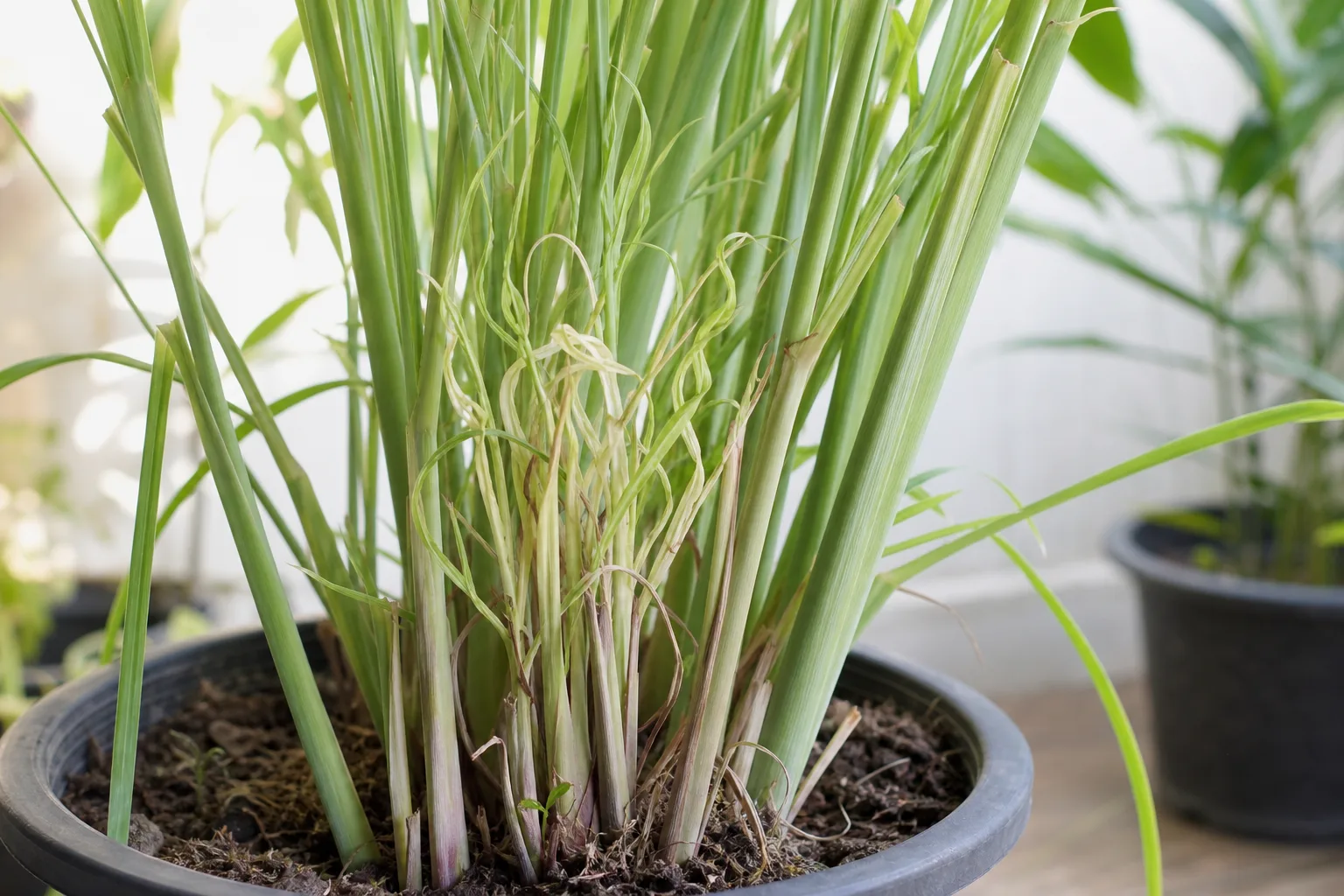
Deformed New Growth on Lemongrass: Causes, Checks & Fixes
This guide covers deformed new growth on Lemongrass. See also the general Deformed New Growth guide, watering, and light pages for this plant.
Deformed New Growth on Lemongrass: Causes, Checks & Fixes
Quick answer
You cut lemongrass for the kitchen, and within a week the fresh crown shoots look wrong-twisted, crinkled, pencil-thin, or pale-while older outer stalks still seem fine. That pattern is what this page covers: deformed new growth on the tender tillers emerging from the clump base, not the normal woody thickening of harvested stems.
First step: kneel at the crown and inspect only the newest shoots for aphids, sticky honeydew, and spray timing before you repot, prune heavily, or spray anything. Lemongrass is a clumping grass that spreads by tillers from the base; healthy new blades should be straight, green, and firm. Twist, stunting, or sudden crinkle on the freshest tissue signals stress-not the natural widening of a mature harvest clump.
This page is the multi-cause diagnostic hub for crown deformation. For single-cause deep dives, jump to aphids on lemongrass, root-bound lemongrass, chemical damage, leggy growth, not enough light, or stunted growth once you know which branch fits.
What deformed new growth looks like on lemongrass
Deformation always targets rapidly expanding crown tissue-the shoots your last harvest cut encouraged-not the lignified outer ring you already trimmed for cooking.
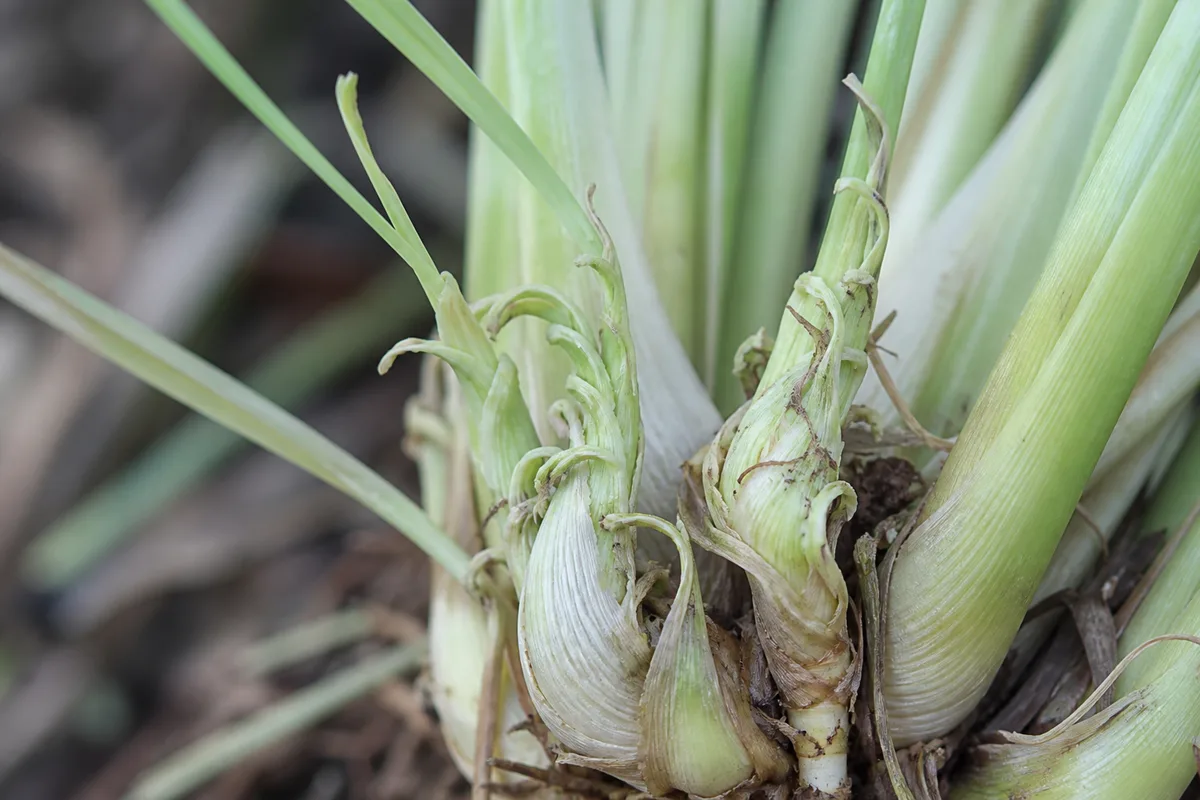
Deformed New Growth symptoms on Lemongrass - compare with healthy tissue on the same plant.
By likely cause:
- Aphids - Newest blades curl or twist; leaves look shiny from honeydew; soft-bodied insects hide along inner sheaths; ants may farm the colony on tender regrowth.
- Herbicide drift - Sudden cupping, puckering, or strap-shaped new blades within days of nearby lawn treatment; often windward-side or whole-rail pattern on balcony pots; no insects or stickiness.
- Root-bound stress - Thin wiry tillers that never thicken despite warm sun and regular water; pot dries out fast; roots peek from drain holes-see root-bound lemongrass for the full root-lift protocol.
- Low light - Pale yellow-green distorted shoots indoors or in deep winter shade; blades may stretch weakly-distinguish from root-bound stunting using the comparison table below and not enough light.
- Nutrient lack - Uniform paleness and stalled thickening in the same pot for two or more years without division; exhausted mix despite watering on schedule.
- Spider mites or thrips - Fine stippling, silver streaks, or dusty webbing on blade undersides rather than aphid honeydew-cross-check spider mites if no stickiness appears.
Normal, not deformation: outer harvest stalks thicken and brown at the base while inner new shoots stay green and straight. That outer woodiness is expected clump aging.
Why lemongrass gets deformed new growth
Lemongrass (Cymbopogon citratus) is a fast-growing sun-loving clumping grass. Each kitchen harvest removes outer stalks and forces fresh tillers from the crown-exactly the soft tissue aphids prefer. Piercing sap feeders cause puckered, curled, or stunted new flushes while older blades may look untouched.
Container clumps outgrow pots quickly. Fibrous roots circle walls until crowns cannot support thick new stalks-even when foliage still looks green from the outside. Pot-bound conditions slow growth and weaken new tillers before obvious circling roots show at the drain hole.
Indoor or overwintered plants in dim windows produce thin pale shoots that mimic root stress but lack circling roots and fast dry-down-overlap with leggy growth when blades stretch toward glass.
Lemongrass on patios and lawn edges sits in the drift path for growth-regulator herbicides. These systemic products translocate to actively growing tissue, so cupped, puckered, or misshapen new growth appears on crown tillers first-often within days of a neighbor’s spray event. See chemical damage on lemongrass for rinse and recovery detail.
How to confirm the cause
Work through this numbered crown inspection checklist in order. Stop when one cause is clearly confirmed-do not stack repot, heavy prune, and spray on the same day.
- Harvest context - When did you last cut outer stalks for the kitchen? Deformation on shoots that emerged after that cut is the diagnostic window; ignore woody outer stems.
- Aphid and honeydew check - Part inner sheaths on the newest tillers. Pear-shaped aphids, shiny sticky blades, or ant trails confirm pests-treat before anything else. Full treatment steps live on aphids on lemongrass.
- Spray history - Note lawn herbicide, pesticide, or cleaner use within the past 72 hours. Sudden crinkle on multiple new tillers without insects points to drift-document date, wind direction, and affected pots.
- Light log - Compare hours of direct sun. Full sun is required for best growth; pale weak tillers in a north window in winter suggest light, not roots.
- Root lift - If stunting persists in warm sun with no spray event and no aphids, slide the clump out 5–10 cm. Circling roots, minimal loose mix, and water running through in seconds confirm binding-proceed to root-bound division steps.
- Mix age - Same pot and peat-based mix for two or more years without refresh? Nutrient exhaustion can stunt tillers even when roots are not yet a solid mat.
- Mite stippling - If blades show fine speckling or webbing without honeydew, inspect undersides with a lens before assuming aphids.
Symptom comparison table
| Pattern | Newest tillers | Insects / residue | Pot / roots | Timing |
|---|---|---|---|---|
| Aphid twist | Curled, sticky, often one clump section | Aphids, honeydew, ants | Normal unless also bound | Days after soft regrowth flush |
| Herbicide crinkle | Cupped, strap-shaped, twisted | None; may follow spray odor | Roots often firm | 24–72 h after nearby spray |
| Root-bound stunting | Thin, never thicken in warm sun | None | Fast dry-down, circling roots | Builds over months in same pot |
| Low-light pale shoots | Pale, weak, may stretch | None | Normal roots; dim placement | Winter windowsill or deep shade |
| Nutrient lack | Pale, stalled across clump | None | Old collapsed mix; moderate roots | Years without repot or feed |
| Normal woody outer stems | Inner shoots straight and green | None | Healthy | Outer stalks only thicken/brown |
If two causes overlap-aphids on post-harvest regrowth of a root-bound clump-fix pests first, then address roots on a separate day once crowns are clean.
The first fix to try
Inspect the newest crown shoots for aphids and honeydew; if present, blast tender regrowth with a forceful water rinse before any other intervention.
Aphids are the most common reason kitchen clumps show twisted fresh tillers right after a harvest cut. A forceful water rinse knocks colonizers off soft tissue; follow with labeled insecticidal soap on new shoots per product label if insects return-details on repeat timing and harvest safety sit on the aphids guide.
If crowns are pest-free but roots circle a dense mat, your first fix becomes spring division and fresh mix-not fertilizer. If a spray event lines up with sudden crinkle, rinse blades and stop nearby treatments-see chemical damage. If the pot is light, roots are loose, and the plant sits in dim light, move to full outdoor sun when frost-free before Lemongrass repotting guide.
Make one correction first. Stacking repot, heavy prune, and spray on the same day obscures which fix worked and stresses an edible clump unnecessarily.
Step-by-step recovery by confirmed cause
Aphid-twisted crown tillers
- Rinse newest shoots thoroughly, targeting inner sheaths where aphids hide.
- Apply labeled insecticidal soap in early morning or evening-not in hot midday sun.
- Repeat per label until clean straight tillers emerge; old twisted blades can stay until the next harvest trim.
- Do not harvest distorted pest-coated blades for cooking until new tissue is clean.
Root-bound thin tillers
- Water the clump the day before dividing.
- Tip out, divide into sections with three to five stalks and firm roots each.
- Repot into fresh perlite-rich mix in wide containers-do not slide the intact root pancake into a slightly larger pot.
- Resume watering when the top 3–4 cm dries during active growth.
- Hold fertilizer two to three weeks until new straight shoots appear.
Herbicide-crinkle on new shoots
- Rinse the entire clump with clean running water for several minutes.
- Stop all nearby lawn and foliar sprays until regrowth is clean.
- Trim severely distorted blades at the base; protect the crown even when outer tissue looks hopeless.
- If the crown base softens, salvage firm outer divisions-center tissue may not recover.
Low-light pale distortion
- Move to the brightest frost-free location-lemongrass wants full sun with well-drained rich soil.
- Do not repot solely for pale winter tillers if roots are healthy; light correction often straightens the next flush.
- Compare against leggy growth if blades stretch tall and thin rather than crinkle.
Nutrient-starved mix
- Confirm roots are not circling and pests are absent.
- Repot into fresh mix or top-dress and feed lightly with balanced fertilizer only during active warm months.
- Do not heavy-feed while aphids cover soft shoots-that pushes weak distorted tissue.
Recovery timeline
Clean new tillers often appear within one to two weeks after pest control or division in warm sun. Old distorted blades remain until cut at harvest-they do not un-twist.
Herbicide-damaged crowns may need two to three weeks for clean regrowth; severely softened bases may only recover from outer divisions.
Low-light correction shows in the next tiller flush after light improves-sometimes longer indoors in cool winter rooms.
Judge success by straight new tillers safe for kitchen harvest, not by old twisted leaves still attached to woody bases.
Lookalike symptoms to rule out
- Normal woody outer stems - Old stalks thicken and brown at base while inner shoots stay fine; not a deformation problem.
- Damping off - Seedling collar collapse on young plants, not mature tiller distortion in harvest clumps.
- Mosaic virus - Rare; mottled pattern across the clump, not only new tips after one harvest cut.
- Cold damage - Frost blackening after a freeze night, not gradual twist in warm active growth.
- General stunting - Whole-clump pause without twist pattern-start with stunted growth if every shoot stalls uniformly.
What not to do
Do not fertilize heavily while aphids cover soft shoots-that pushes weak tissue aphids prefer. Do not ignore root-bound stress and keep feeding exhausted mix. Do not harvest distorted pest-infested or herbicide-twisted blades for cooking until new clean regrowth appears. Do not repot, heavily prune, and spray on the same day. Do not assume every thin tiller means roots-check light and pests first in warm weather.
How to prevent deformed new growth
- Inspect within two days of every harvest cut during warm months-the post-kitchen-cut crown is your earliest warning window.
- Divide or repot every one to two years before clumps burst pots and thin tillers become chronic.
- Keep containers in full sun when frost-free; weak indoor winter light produces pale tillers that look like deformation.
- Shield culinary clumps when treating nearby lawns with herbicides-drift hits grass crowns at balcony height.
- Scout neighboring pots on shared benches before winged aphids colonize fresh regrowth.
When to worry
Escalate when every new tiller is stunted, roots circle a rigid ball, and soil stays wet in cool weather-repot before rot follows root-bound stress. Herbicide-crinkled crowns that soften at the base may not recover from the center; save outer divisions. Combined aphids plus binding is common after a heavy harvest year-treat pests first, divide second.
Not urgent: aphid twist on a few shoots after one harvest cut if treated within a week; a single pale tiller on an otherwise healthy clump in a dim winter window.
Lemongrass care cross-check
Straight new tillers after each harvest cut are the quality signal for culinary clumps. Distortion on newest shoots always deserves inspection before the next kitchen cut- woody outer stems can mislead you into thinking the clump is fine. For full culture context, see the lemongrass overview.
Related lemongrass problems
Use this page when crown tillers look wrong after regrowth and you need to separate causes. Drill down by confirmed branch:
- Aphids on lemongrass - honeydew, rinse-and-soap protocol on harvest regrowth
- Root-bound lemongrass - circling roots, division technique, fast dry-down
- Chemical damage on lemongrass - herbicide drift rinse and recovery
- Leggy growth on lemongrass - stretchy thin shoots in low light
- Not enough light on lemongrass - pale weak tillers indoors
- Stunted growth on lemongrass - whole-clump growth pause
- Spider mites on lemongrass - stippling without honeydew
- Lemongrass overview - placement, light, watering, and harvest rhythm
Conclusion
Deformed lemongrass tillers point to pests, roots, light, nutrients, or drift-not to normal clump widening. Diagnose on the newest crown shoots after your last kitchen cut, use the comparison table to separate aphid twist from herbicide crinkle and root-bound stunting, fix one cause at a time, and judge recovery by straight clean regrowth before the next harvest.
Action checklist: inspect crown → confirm cause in table → one fix → wait for straight new tillers → harvest only clean tissue.
When to use this page vs other Lemongrass guides
- Lemongrass watering guide - Use for routine moisture checks before assuming deformed new growth is the main issue.
- Lemongrass problems hub - Browse all 52 common issues on this species.