Soil Too Acidic on Pothos: Causes, Checks & Fixes
Quick answer
Soil too acidic on pothos usually means pH has dropped below 6.0 in old peat-heavy mix. First step: test the potting mix pH at the root zone-if readings sit below 5.5, repot into fresh potting mix with 20–30% perlite rather than adding lime blindly.
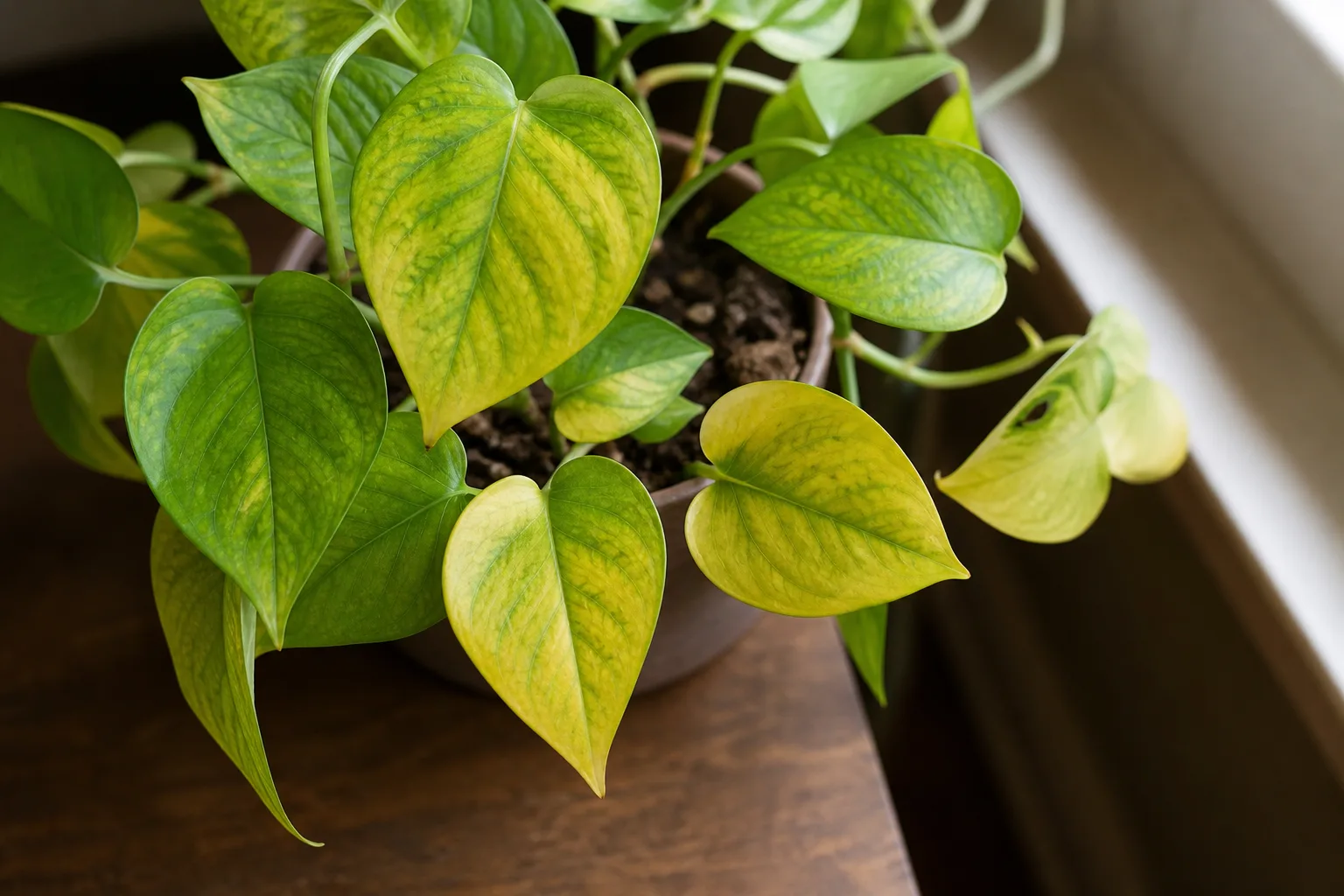
Soil Too Acidic on Pothos: Causes, Checks & Fixes
This guide covers soil too acidic on Pothos. See also the general Soil Too Acidic guide, watering, and light pages for this plant.
Soil Too Acidic on Pothos: Causes, Checks & Fixes
Quick answer
Pothos (Epipremnum aureum) grows best in slightly acidic to neutral mix around pH 6.0–6.5-not in soil that has drifted strongly acid. When peat-based potting mix ages, compacts, or gets pushed lower with acidifying amendments, pH can fall below 5.5. That is when nutrients stop moving normally and manganese can become toxic below pH 5.2.
First step: test the moist potting mix at the root zone with a pH meter or soil test kit. If readings are below 5.5 and the plant shows stunted, pale, or oddly patterned new growth, repot into fresh standard potting mix with 20–30% perlite. Do not dust lime onto the surface without a confirmed reading-wrong amendments can overshoot and create a different problem.
What acidic soil looks like on Pothos
Acid-damaged pothos rarely collapses overnight. The pattern builds slowly because this vigorous vine replaces leaves gradually, and golden or jade cultivars can mask early chlorosis behind variegation.
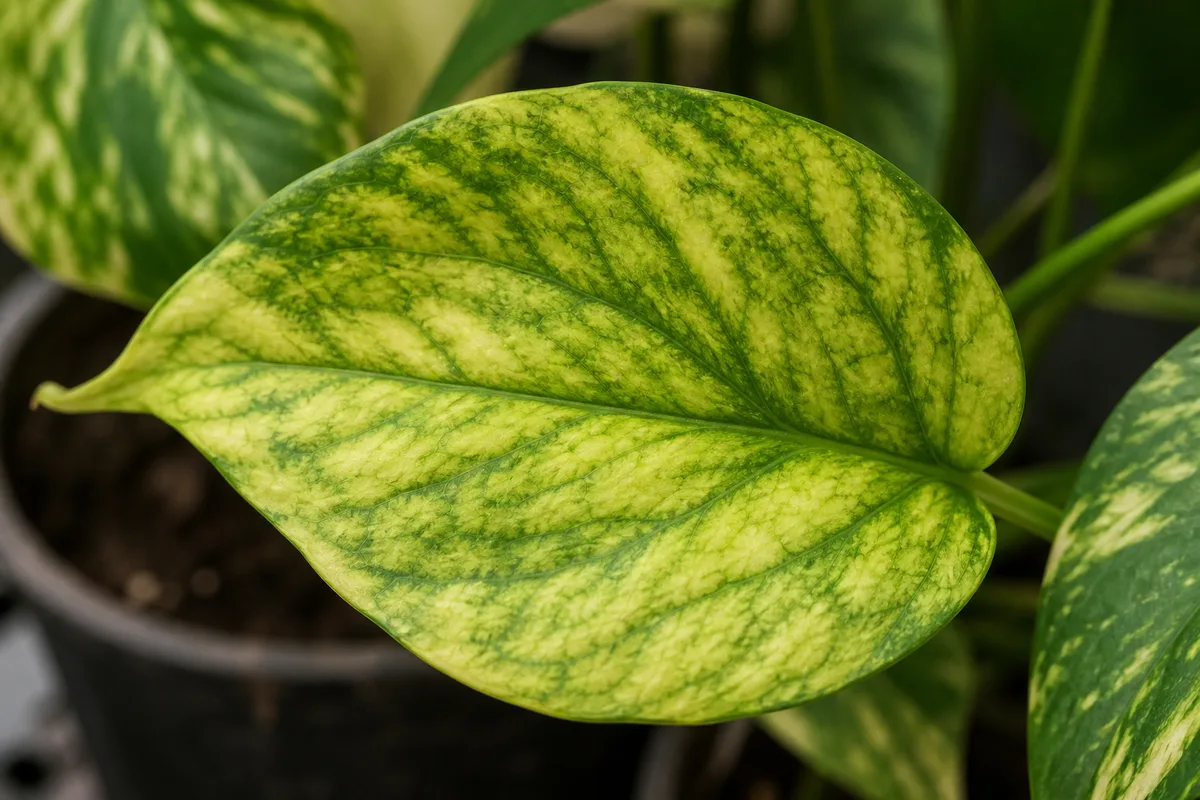
Soil Too Acidic symptoms on Pothos - compare with healthy tissue on the same plant.
Typical above-ground signs include:
- Stunted new leaves that unfurl smaller than older ones, even in Pothos light guide
- Yellowing with dark green veins on mature leaves-a pattern that can follow manganese toxicity in highly acidic mix
- Dull variegation on fresh growth while stems stay firm, not mushy
- Slow vine extension for weeks despite a normal Pothos watering guide at the top 2 inches of mix
- Older leaf edges turning brown without the crispy tip pattern typical of dry air alone
- Mix that smells sour and pulls away from the pot sides when dry
What acidic soil does not look like: limp vines with wet, heavy soil (overwatering), interveinal yellowing only on brand-new leaves in otherwise alkaline tap-water crust conditions (often iron lockout from high pH), or sudden whole-plant wilt with black soft nodes (root rot on Pothos).
On golden pothos, nutrient stress sometimes shows as more green in new leaves as the plant compensates for weak uptake-so variegation loss plus small leaf size together point toward the root zone, not just light stress alone.
Why Pothos gets overly acidic soil
Pothos is an aroid that wants open, well-draining mix-not the same bag of peat sitting in a pot for three or four years. Peat-based indoor mixes acidify as they decompose and compact, shrinking air pockets roots need.
Common triggers in home care:
- Never Pothos repotting guide a pothos that has been in the nursery peat blend since purchase
- Pure ericaceous or peat-heavy compost used without perlite or bark to balance structure
- Acidifying “hacks”-vinegar in water, piled coffee grounds, or elemental sulfur meant for garden beds
- Soft water or rainwater in a peat pot that already trends low, without occasional mix refresh
- Over-fertilizing with ammonium-based products in old acid mix, which can nudge pH down over time
- Oversized pots holding wet, anaerobic peat that breaks down faster at the center of the root ball
Pothos tolerates average humidity and is not a heavy feeder, so when a normally fast-growing vine stalls in decent light with sensible watering, the mix itself deserves scrutiny. Soil pH controls which nutrients roots can absorb-even when fertilizer is present, an overly acid root zone can leave phosphorus and some macronutrients less available while manganese surges.
How to confirm the cause
Work through these checks before repotting or adding lime:
- Pot age and mix type - Has the same peat-heavy soil been in the pot more than two years? Is the surface crusted but the center still dark and spongy?
- pH test - Probe moist mix from the middle of the root ball, not only the dry top layer. Below 5.5 supports acidity; 6.0–6.5 fits pothos’s target range.
- Watering cross-check - Allow the top 2 inches to dry. If soil stays wet for a week in bright light, compaction may overlap with acidity; note both.
- New growth comparison - Measure the newest leaf against one from a few months ago. Progressive shrinkage with firm stems fits nutrient stress more than sudden wilt.
- Root peek - Slide the plant out. Firm white roots in sour-smelling black peat suggest mix failure. Mushy roots point to rot-handle that first.
- Amendment history - List any coffee, vinegar, sulfur, or ericaceous-only repots in the last year.
If pH reads 6.0–6.5 and symptoms persist, rule out low light, underwatering, and salt buildup before treating acidity that is not there.
First fix for Pothos
Test pH, then repot into fresh balanced mix if readings are below 5.5.
That single action removes decomposed acidic peat and resets the root zone near pothos’s preferred 6.0–6.5 range without guessing lime rates indoors. Choose a pot only one size larger with drainage holes. Blend standard potting mix with 20–30% perlite-the same airy structure Clemson Extension recommends for pothos generally.
After repotting, water once lightly so mix settles, then resume your normal dry-down check at 2 inches depth. Hold fertilizer for four to six weeks until new growth looks stable.
If pH is only slightly low (5.5–5.9) and roots are healthy, a full repot is still safer than surface lime indoors, where over-correction can induce other micronutrient problems.
Step-by-step recovery
- Test moist mix from the root ball; photograph the reading for comparison after repot.
- Unpot gently and discard old peat-do not reuse sour or compacted material.
- Inspect roots; trim only mushy tissue with clean scissors.
- Repot at the same depth in fresh potting mix plus perlite; avoid burying nodes deeper than before.
- Place in bright indirect light so the pot dries predictably-pothos uses water slowly in dim corners, which compounds mix breakdown.
- Water when the top 2 inches are dry; empty saucers after every drink.
- Watch new leaves over the next two to three weeks. Larger blades with stable variegation mean the root zone is working again.
- Resume feeding at half-strength monthly in spring and summer only after two clean new leaves unfurl.
Trim fully yellow or brown older leaves after the plant pushes one healthy new leaf-cosmetic cleanup reduces energy spent on failing tissue.
Recovery timeline
Because pothos is a vigorous, fast-growing vine, expect visible improvement sooner than on slower cultivars. Within one to two weeks of repotting into correct mix, root tips should look white and active when you gently tease the edge of the ball.
New leaves that unfurl larger over two to four weeks confirm recovery. Variegation may take an extra rotation of leaves to stabilize. Leaves already yellowed or bronzed will not fully regreen-judge success by fresh growth, not old damage.
If no improvement appears after four to six weeks with confirmed pH in range, inspect light intensity and pest-free undersides before a second repot.
Lookalike symptoms
- Soil too alkaline - Interveinal yellowing on newest leaves with pale veins; white crust on pot rim from hard tap water. Iron stays locked when pH is too high, the opposite chemistry.
- Overwatering - Yellow base leaves, wet heavy pot, possible root mush. Can coexist with old acidic peat; address drainage and rot before lime.
- Low fertility without pH drift - Pale, small leaves in fresh mix that tests near 6.5. Light feeding after stabilization helps; acidity is not the driver.
- Low light - Long internodes and mostly green new leaves without the dark-vein yellowing pattern. Moving closer to a window fixes variegation before repotting.
- Fluoride or salt burn - Tip browning on variegated margins with crusty soil surface. Flush or refresh mix; pH may still be normal.
Mistakes to avoid
Do not add garden lime to a houseplant saucer on a guess-indoor pots lack the buffer capacity of garden beds and pH changes from amendments take time and can overshoot. Do not pour vinegar or coffee grounds to “balance” alkaline tap water without testing; you may push an already peat-low pot further down.
Avoid repotting into pure ericaceous compost because pothos likes slightly acid mix-not the strong acidity meant for blueberries. Do not fertilize heavily on day one after repotting stressed roots. Skip misting as a pH fix; it does not change soil chemistry.
Wear gloves when handling cut vines-pothos contains calcium oxalate crystals toxic to cats and dogs.
How to prevent acidic soil next time
Refresh mix every one to two years, or when drainage slows and the pot smells earthy-sour. Use balanced potting mix with perlite rather than aged peat alone. Most ornamental plants prefer pH near 6.0–6.5-pothos sits comfortably in that band.
Match pot size to the root ball, keep bright indirect light so peat dries between waterings, and flush the pot occasionally if you fertilize with hard tap water. Treat a cheap pH probe as a yearly repotting tool, not a crisis gadget.
When to worry
Escalate if repotting into fresh mix with confirmed pH 6.0–6.5 produces no new growth for six weeks, roots turn mushy despite dry-down discipline, or brown necrosis spreads up stems. Take healthy stem cuttings with nodes as backup-pothos propagates readily from stem cuttings if the root ball cannot be salvaged.
Mild stunting with firm roots and a clear low pH reading is manageable. Severe acidity plus chronic wet peat often means rot has joined the problem-inspect roots before assuming pH correction alone will save the plant.
Conclusion
Soil too acidic on pothos means potting mix has dropped below the 6.0–6.5 range this vine uses best-usually from old peat, acidifying amendments, or compacted anaerobic mix. Test pH at the root zone, repot into fresh perlite-enhanced soil when readings fall below 5.5, and judge recovery by larger new leaves with stable variegation over the next few weeks. Refresh mix on schedule so acidity never builds quietly in the background.
When to use this page vs other Pothos guides
- Pothos watering guide - Use for routine moisture checks before assuming soil too acidic is the main issue.
- Pothos problems hub - Browse all 39 common issues on this species.